Bedroom, Beach House, or Both?
In the early spring of 2012, a business trip took me to Fort Lauderdale. Between conference sessions I found myself doing what anyone does when suddenly dropped into South Florida: walking outside. The ocean was at my doorstep, the air was warm, and palm trees seemed to line every street. One evening a colleague suggested dinner in a world-famous Cuban restaurant, which required driving through neighborhoods where canals served as backyards for mid-century houses surrounded by lush gardens and towering palms.
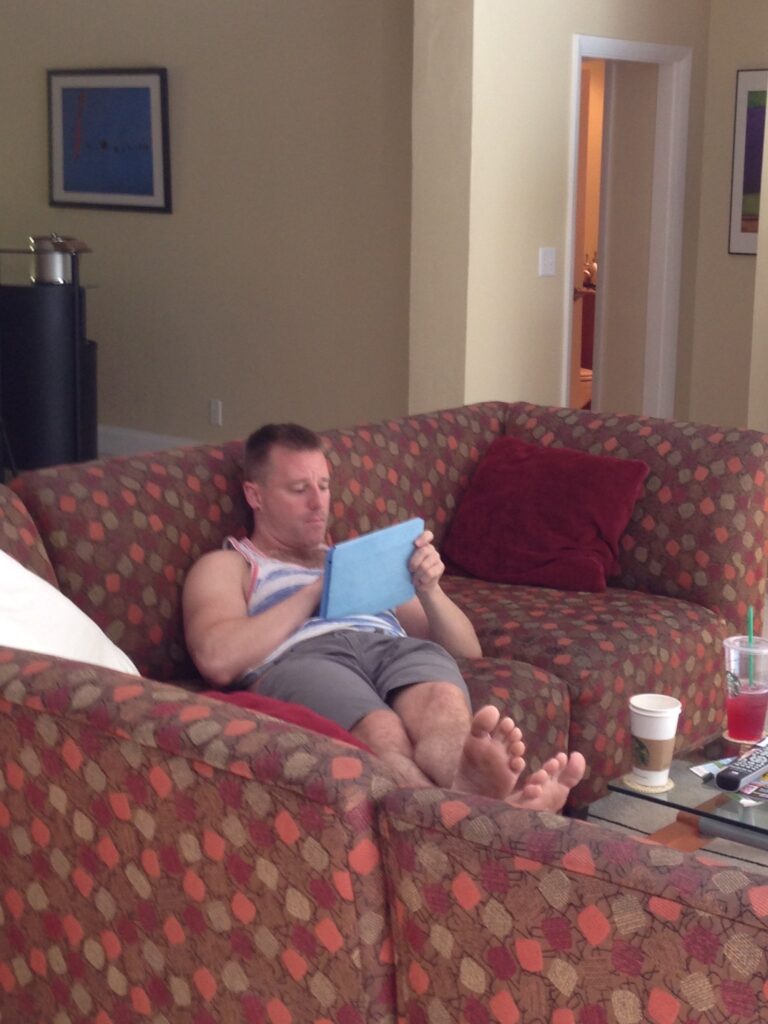
It was the kind of place where you start to imagine a different kind of life—morning coffee on a patio, evening walks along the water, windows open to Atlantic breezes. Back in the hotel room that night, I opened Zillow—at the time a brand-new app.
That’s when the realization hit me.
Florida was still overflowing with houses left behind by the Republican housing crash. Entire neighborhoods. Many were just blocks from the beach.
Meanwhile, back in Washington…
After two years of dating, Ramiro and I had reached that stage where couples begin having the conversation: Should we move in together?
I knew how I felt. Confirming how he felt was the stressful part.
When I returned from Fort Lauderdale, I decided to approach the subject with subtlety and sophistication.
“You know,” I said casually, “for what you’re paying to rent a studio in Bethesda, we could buy a beach house in Florida—if you moved in with me.”
Smooth. Very smooth.
To his credit, he didn’t say no—to either moving in or the beach house. So we started packing him up and casually browsing the South Florida coastal markets that make up the Miami metro area.
Then things escalated.
On November 6, 2012, Maryland—along with Maine and Washington—became the first states in the U.S. to approve same-sex marriage through a popular vote. A referendum, known as Question 6, asked voters whether to uphold or repeal the Civil Marriage Protection Act, which had been passed by the state legislature and signed by Governor O’Malley earlier that year. (A sharp contrast to California, which had infamously done the exact opposite a few years earlier.).
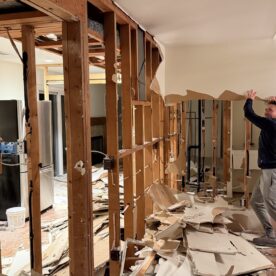
It quickly became clear that we were heading down the aisle. Which created a small logistical problem. We now had three major life events staring us down. Renovate the primary bedroom in our Bethesda house so it truly felt like our space. Get married—with all the expense that entails. Or buy a beach house in Florida.
Like everyone who isn’t Madonna or Beyoncé, we had to prioritize.
So we did what civilized, highly educated adults do when facing complex financial planning decisions. Rock-paper-scissors and a coin toss wouldn’t work—we had three options. So we did the next most mature thing: counted to three and shouted out our priorities.
“Beach House!”
“Bedroom!”
“Wedding!”
The good news: we were perfectly aligned. Investing in assets that would grow with our future was our top priority. Whatever money remained would fund a wedding celebration with family and friends.
And so the hunt began.
Why Florida
“Why Florida?” several friends asked when we shared our pre-wedding plans.
There were a few reasons. First, we both love beach vacations. Second, geographically it felt like a midpoint between Washington, D.C., and Argentina, where Ramiro’s family lives. Flights to South Florida from both places are easy to land—so to speak. But there was another reason we had to consider more seriously.
There are surprisingly few places in the world where it’s both safe—and comfortable—for gay couples to retire. Two generations before mine spent their entire lives in the closet. The generation just ahead fought through the AIDS epidemic, with devastating losses. Gen X, en mass, is the first generation where, at least in Western societies, we could realistically expect to live openly, and long enough, to live out a full retirement.
When you looked at where retiring gay couples were clustering in the United States, two places rose to the top of a very short list: Palm Springs, California and Wilton Manors, Florida. The latter had recently edged out San Francisco as the highest concentration of gay couples in the country. Which made South Florida feel less like a gamble—and more like a future.
Beach House Beta Test
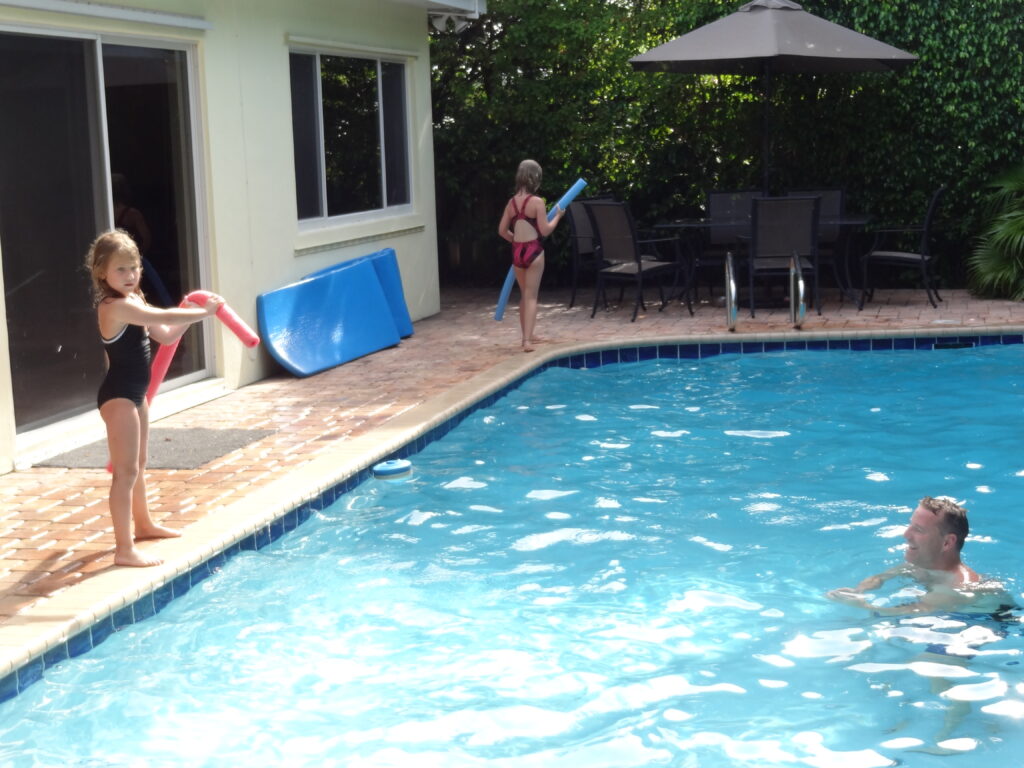
So over a long Fourth of July week, we brought my sister’s entire family—and our friend Michelle—down to Florida to begin the hunt. We vacationed as a scientific experiment: rent a house roughly in the neighborhood and price range we were considering and see if Fort Lauderdale actually felt like home. If we were serious about buying a future home, we wanted to know what everyday life felt like—not just what houses looked like online.
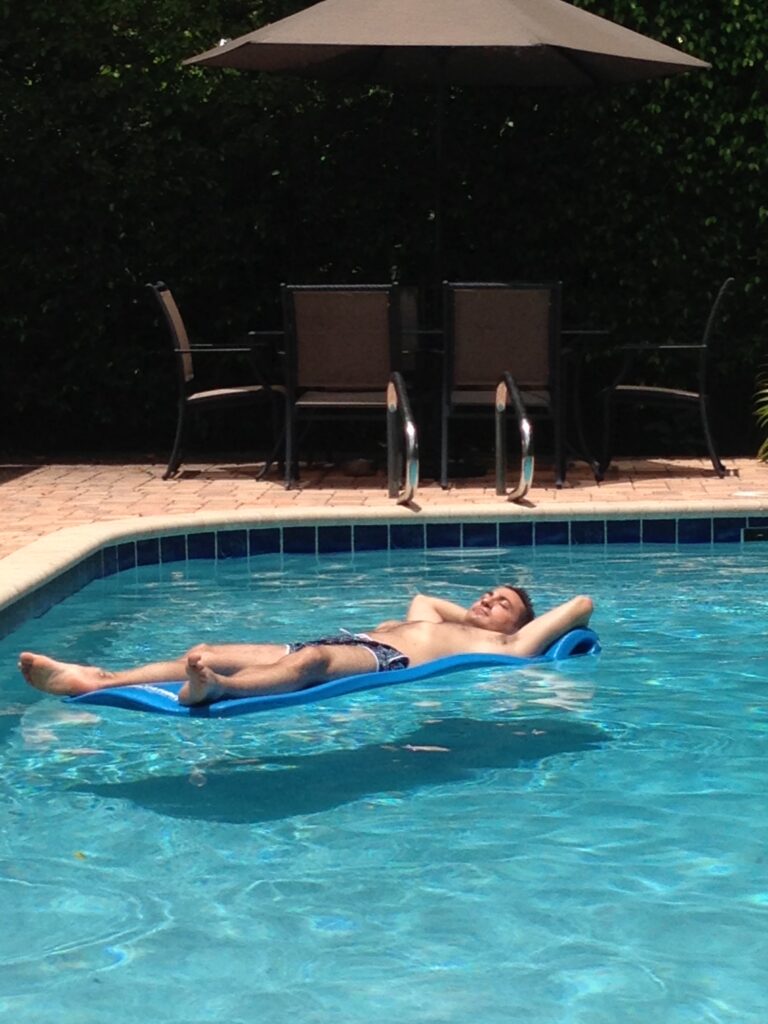
Over the course of a long week and two weekends, we confirmed what we suspected. We loved it. The sun, the beaches, the pools, drag happy hours—where we repeatedly had to pull Michelle off stage (never upstage a drag queen, as one firmly reminded her)—stormy afternoons, and the simple luxury of spending long days mostly outside. Mornings started slowly with poolside coffees. Evenings ended with cocktails harmonized by Atlantic breezes rustling palm trees. By the end of the trip, the question wasn’t whether Florida fit our lives. It was how quickly we could find a place that did.
Field Research in Fort Lauderdale
 Afternoons in the pool
 Enjoying being outside
 Sharks and minnows
 Ramiro can nap anywhere
 Researching Zillow
 Michelle upstaging a drag queen
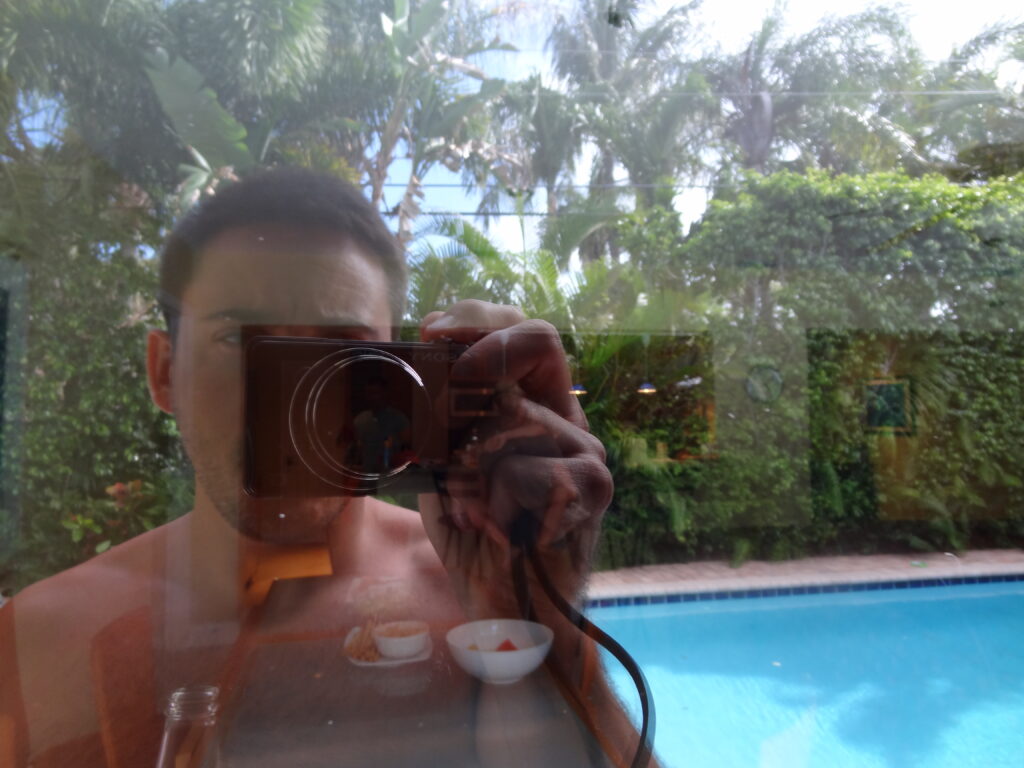 Still had cameras back then
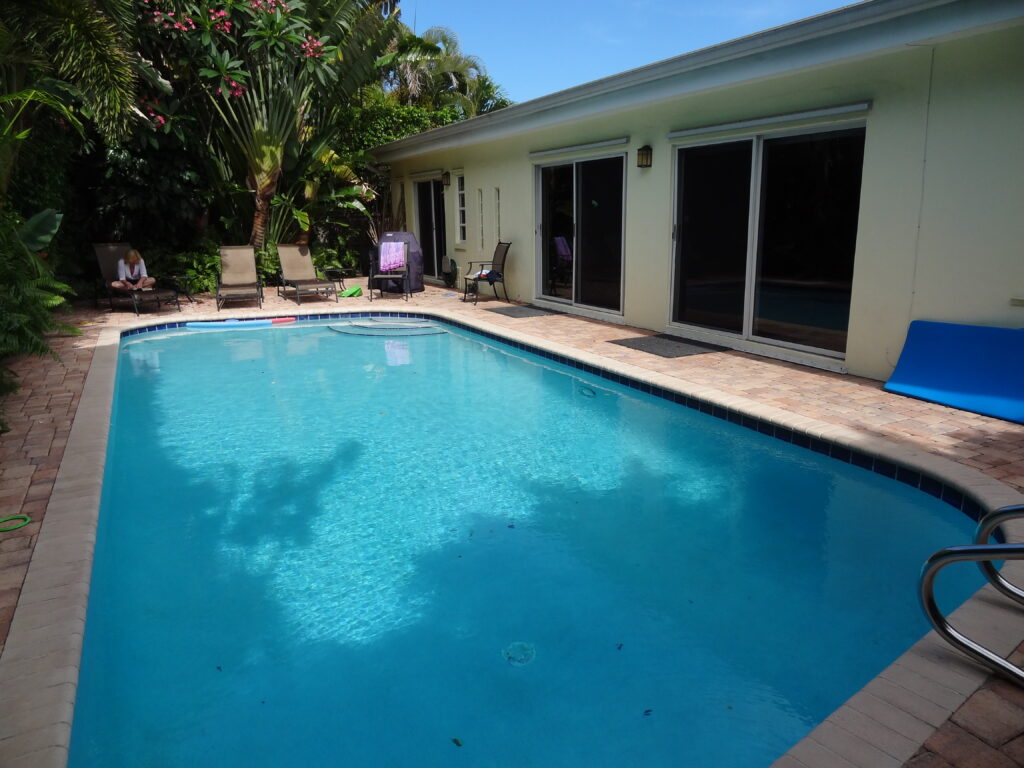 My perfect backyard: palms and pools … more importantly no grass!
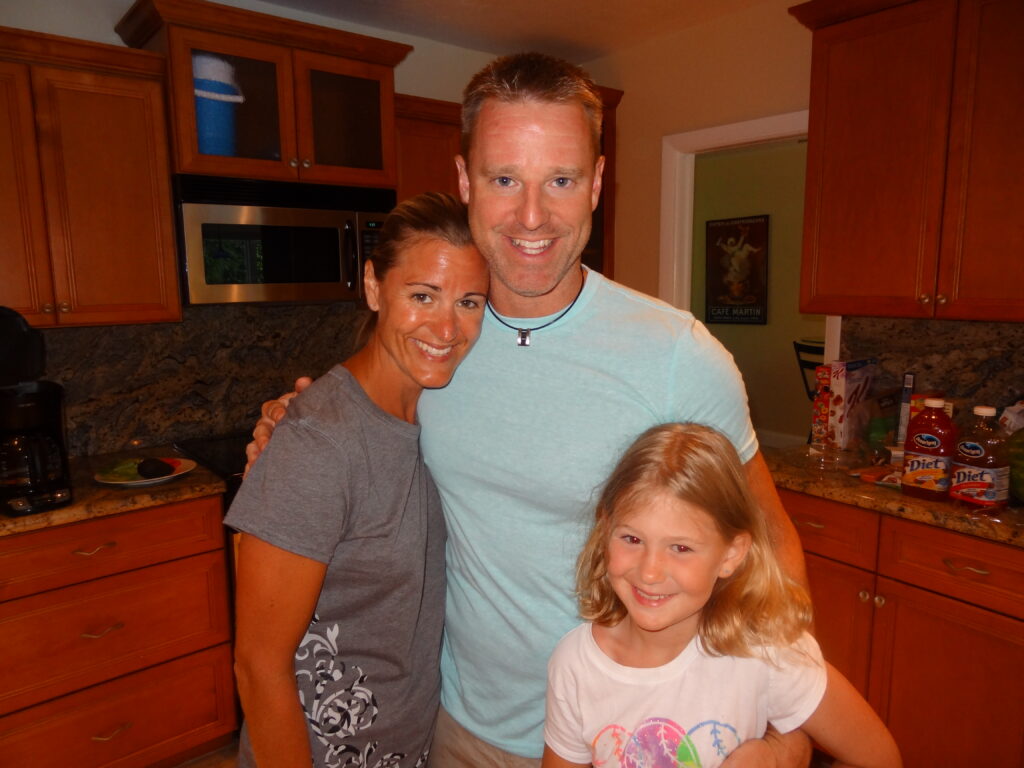 Everyone looked Willy Wonka-level tan in the redwood kitchen’s harsh lighting
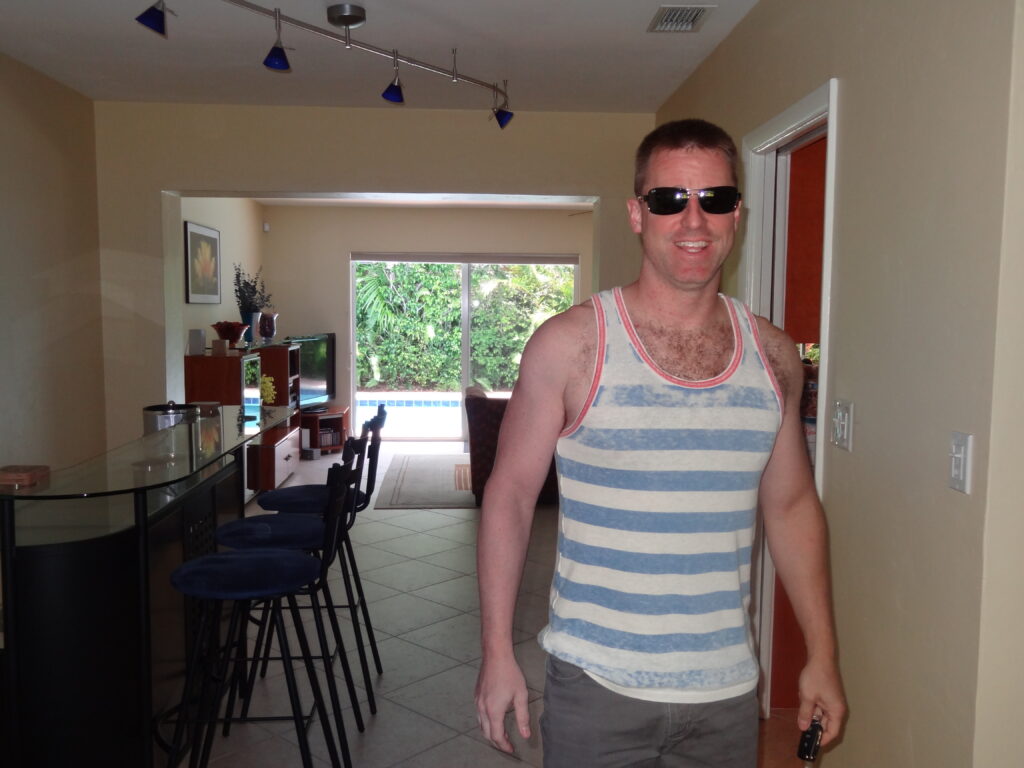 Ready for the Florida sun
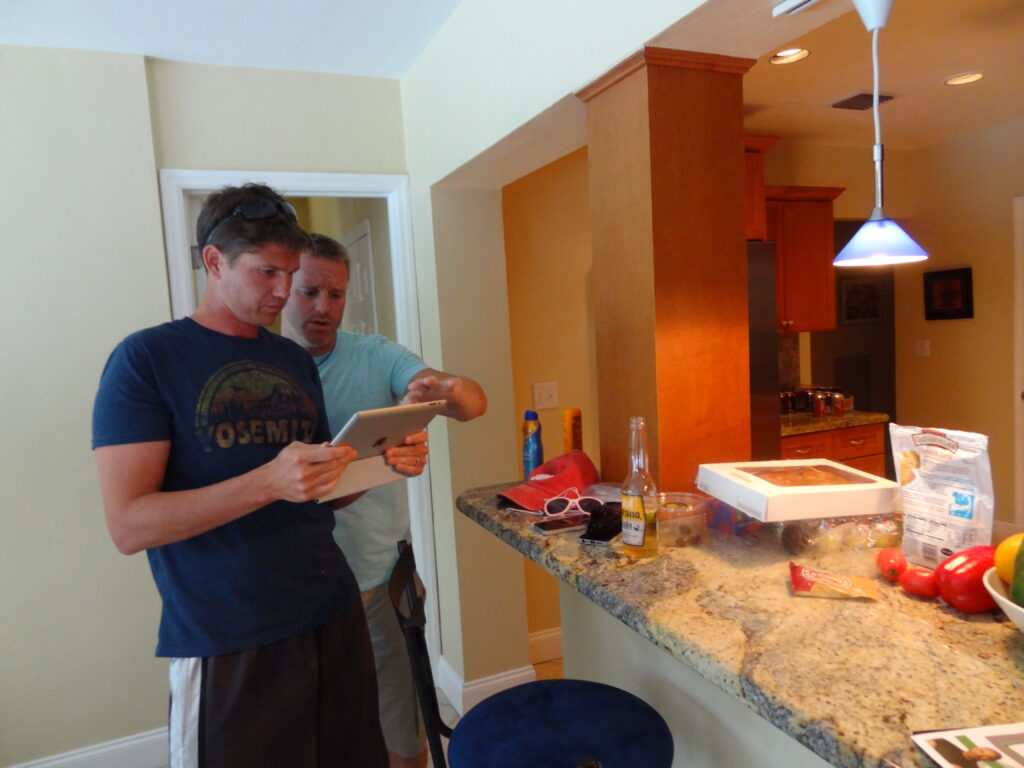 Tim approving our short list
 Enjoying the late evening sun
Double or Nothing
Our realtors, John and Brenda, had assembled an impressive list of houses for us—despite the ambitious wish list and the very tight budget we had given them. They had somehow found dozens of single-family homes in Wilton Manors under $200,000 (crazy when you consider the median price is now $835,000). Anticipation filled the morning… until the tours started.
None of the houses were remotely move-in ready. Every room needed a full overhaul—plumbing, electrical, flooring, trim, wallpaper removal, painting. Kitchens and bathrooms would have to be rebuilt from the studs. These weren’t the kind of projects we could chip away at on long weekends while still enjoying the sunshine and the beach. They were full-scale renovations. And living a thousand miles away, that simply wasn’t something we could realistically manage.
By the end of the day, as they dropped us off after nine long hours of touring no less than fourteen houses, Ramiro and I exchanged a quiet look. Then we turned back to John and Brenda.
“Thank you,” I said politely. “That was very informative. Hypothetically speaking… what could we get with a budget of $400,000?”
Brenda blinked. John’s ears perked up.
“Well,” she said carefully, “that would certainly open up more options.”
Turns out house hunting gets significantly easier when you double your budget.
The next morning John guided the Mercedes SUV into a neighborhood entrance marked Poinsettia Heights by a sturdy sign. He unfolded a paper map like a professor about to explain something important.
“Locals call it The Heights,” he said, tapping the center of the page. “It sits perfectly between Wilton Manors, the beach, and the Galleria Mall. Doctors live here. Pilots live here. Close to everything—but not party central. It’s peaceful and even in the worst traffic you are only twelve minutes from the sand.”
The location was better. Much better.
And that’s when we learned one of the most important rules of real estate: buy the location, not just the house. Houses can change. Walls move. Kitchens renovate. Paint dries. Location is permanent. There should be a saying emphasizing location in real estate.
The house we eventually bought proved the point perfectly. It was in the right place even if it wasn’t perfectly the right place. Everything else we would change in time. When the keys finally landed in our hands, it felt like a fun future was starting.
Surprisingly Strong Start
The house itself was a surprisingly strong start. Before it fell under Wells Fargo’s control, a commercial flipper had taken it through a full interior renovation. Porcelain hardwood-look floors ran throughout the whole house. Both full bathrooms were appointed with luxury tile and fixtures. The kitchen was enormous—brand new, modern, larger than our primary house, and finished with high-end appliances still wrapped in manufacturer plastic. The flippers had even squeezed in central air, a first for the modest, 2 bedroom + den bungalow built in 1952.
Of course, no house is perfect. The original 1952 roof was still in place—by 2013 that made it over sixty years old… well beyond living on borrowed time. Still, it was further evidence that the property wasn’t in a 100-year floodplain and had no history of hurricane damage—something we researched carefully. (Ironically, since buying the beach house, our primary home in Maryland has taken two direct hits from hurricanes—the eyewall literally passing overhead—while the house in Florida sat peacefully in sunshine.)
The windows weren’t impact-rated but had metal hurricane shutters, which meant someone had to physically install them whenever a storm was forecast. Living a thousand miles away, we knew that wasn’t a realistic option. Still, the fundamentals were there: great location, open layout, very large lot, and the heavy-lift interior work was done.
It was the perfect starting point—even if we were already making a list of things we needed to change.
Champagne at the Starting Line
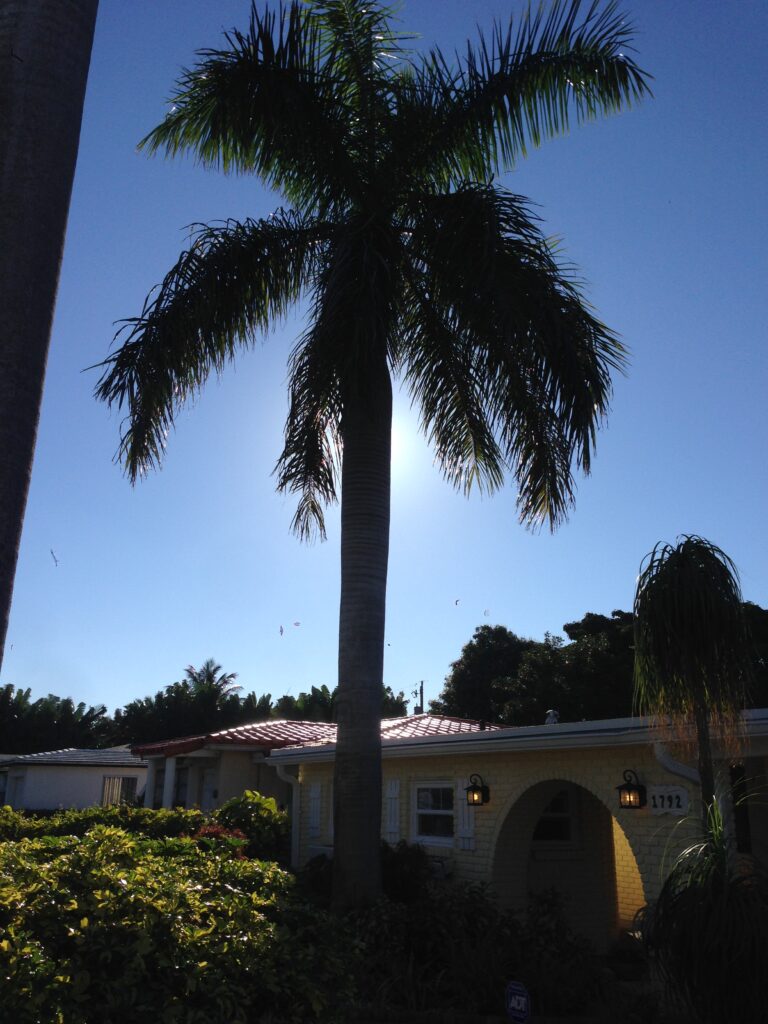 1 – Royal palm trees in the yard
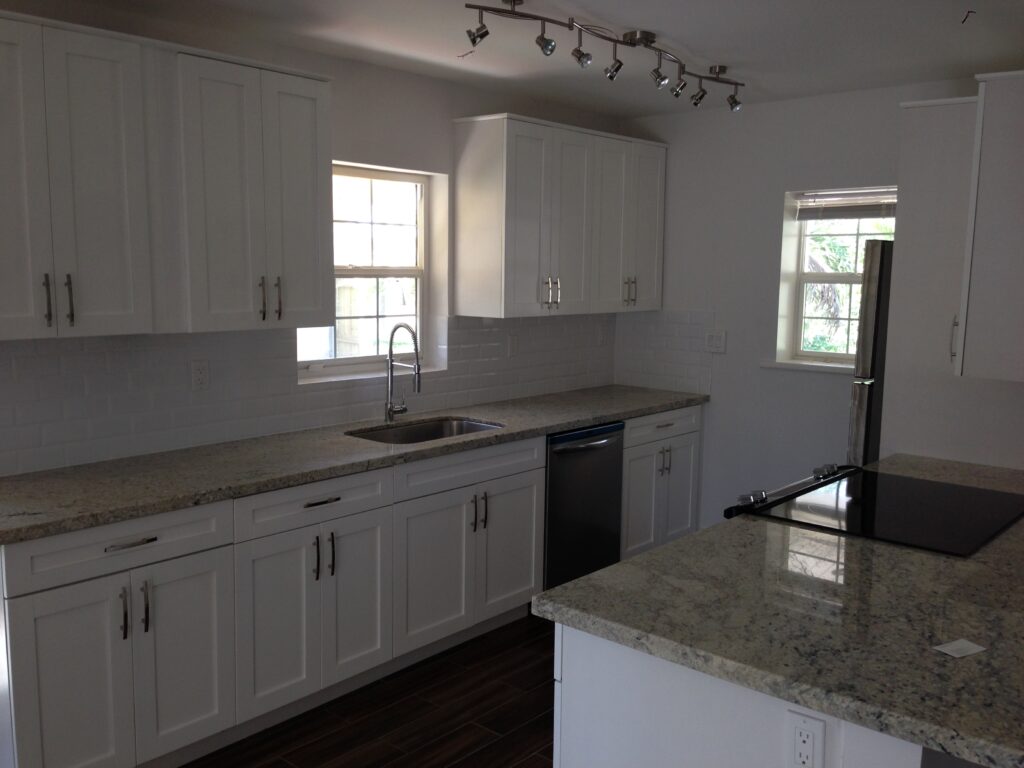 2 – Large modern kitchen
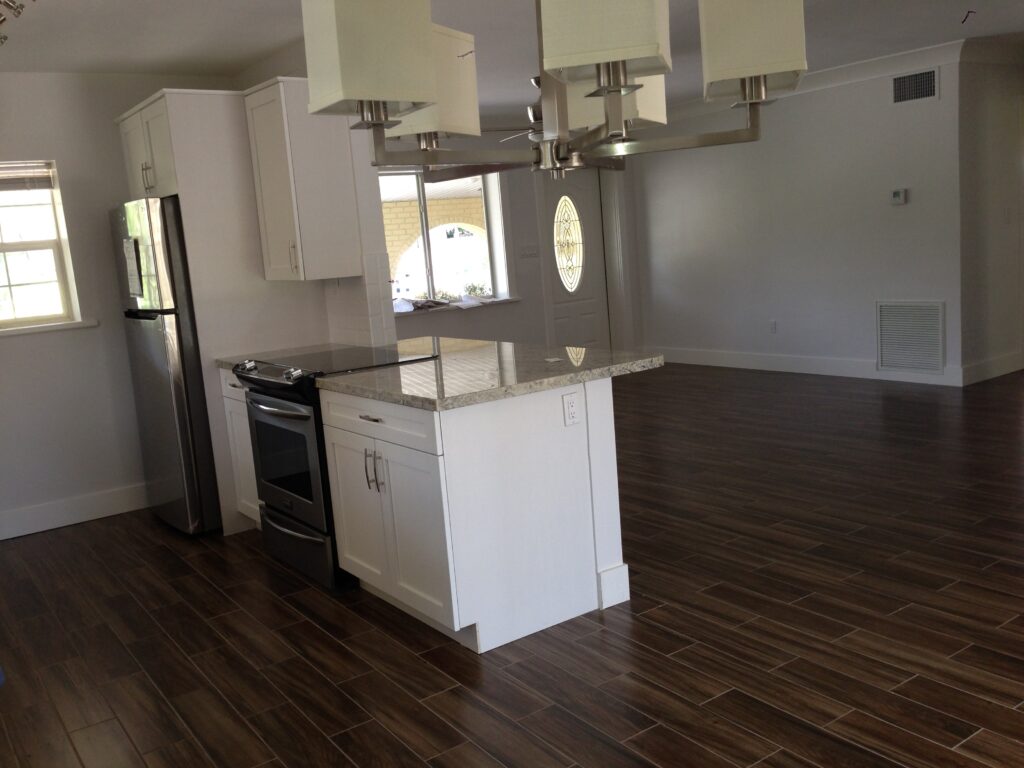 3 – Open plan between kitchen and living spaces
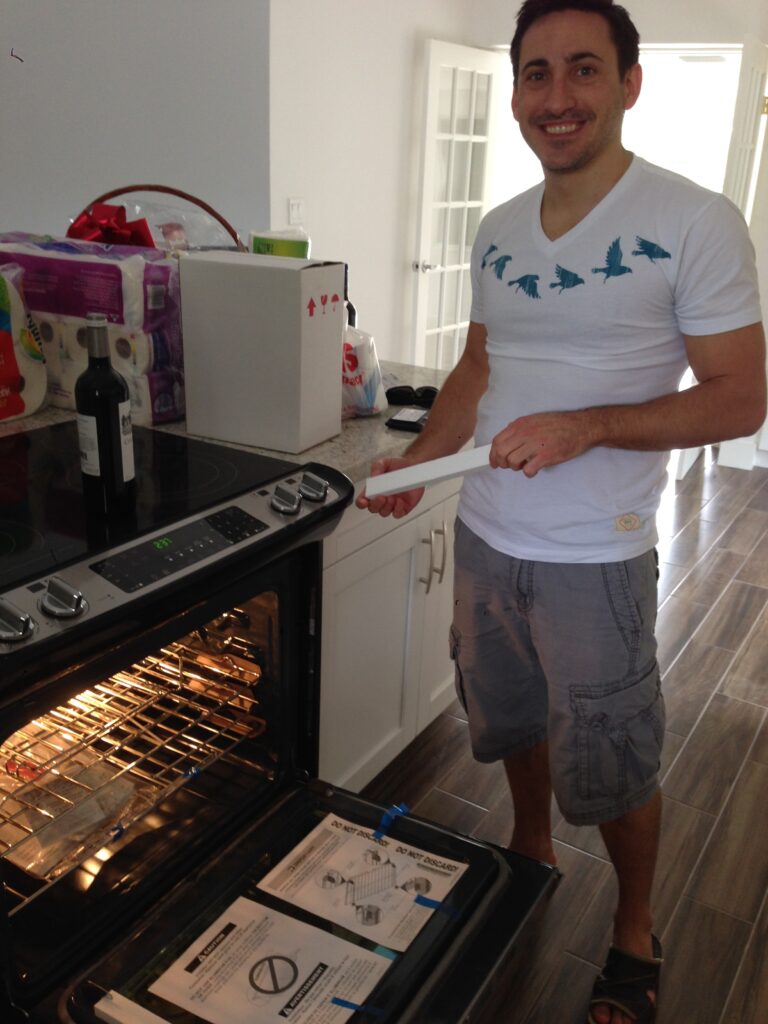 4 – Appliances still wrapped in plastic
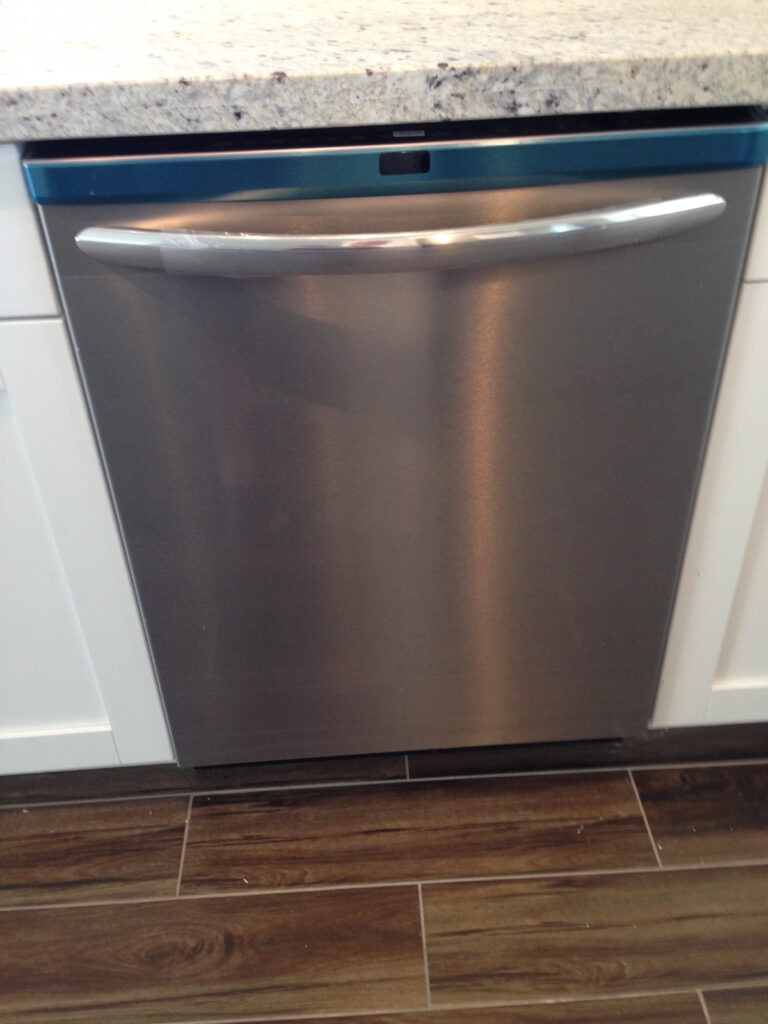 5 – Appliances still wrapped in plastic
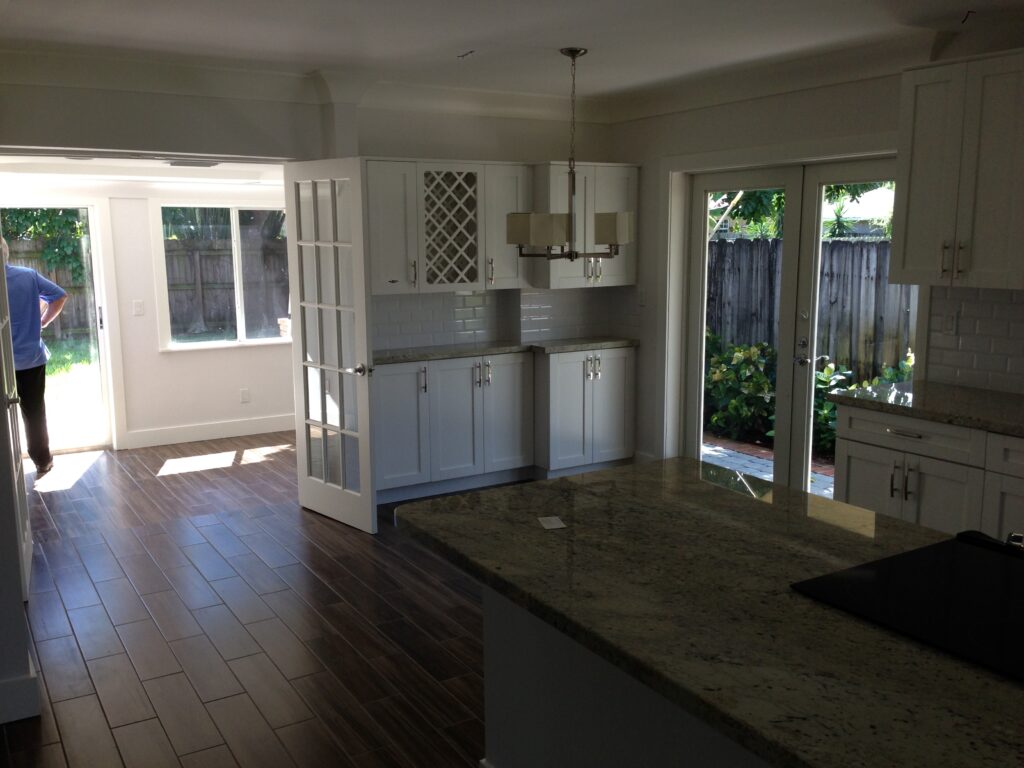 6 – Space for kitchen table and wine bar
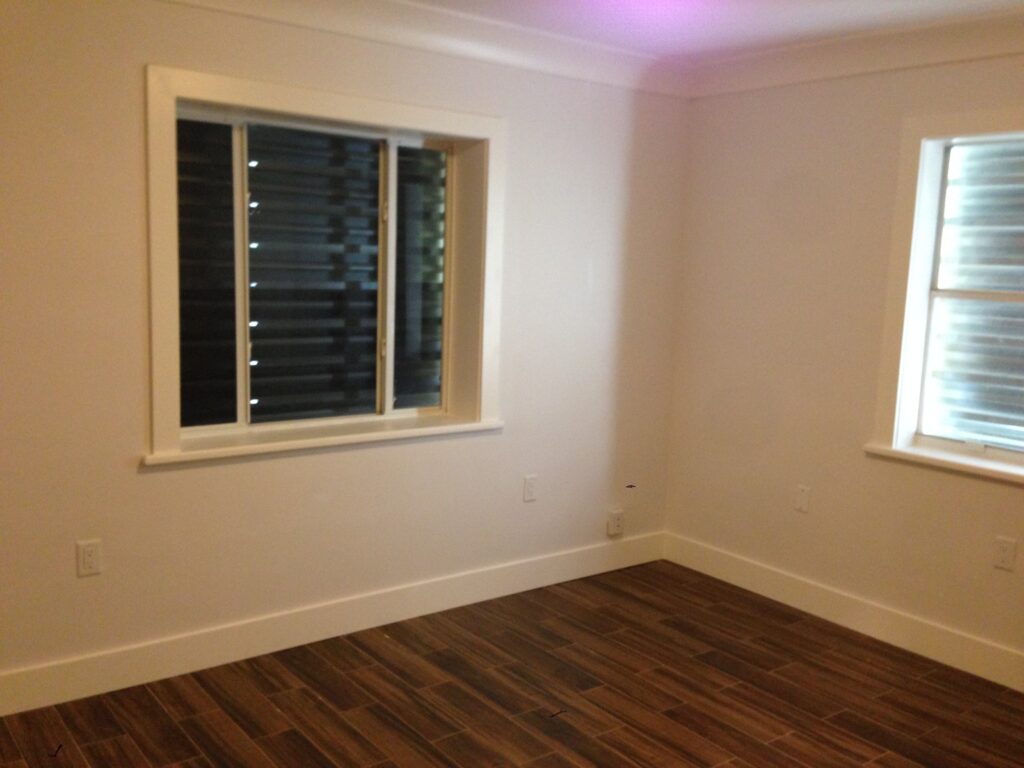 7 – Hurricane shutters a reminder of remote maintenance challenges
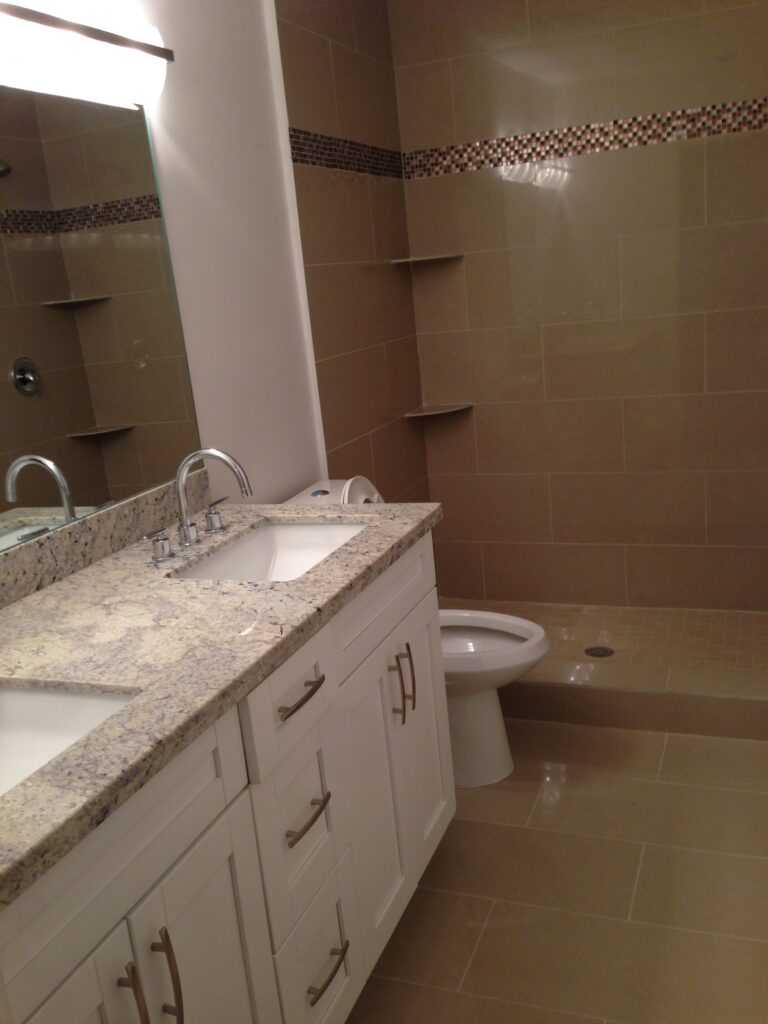 8 – Luxurious bathrooms
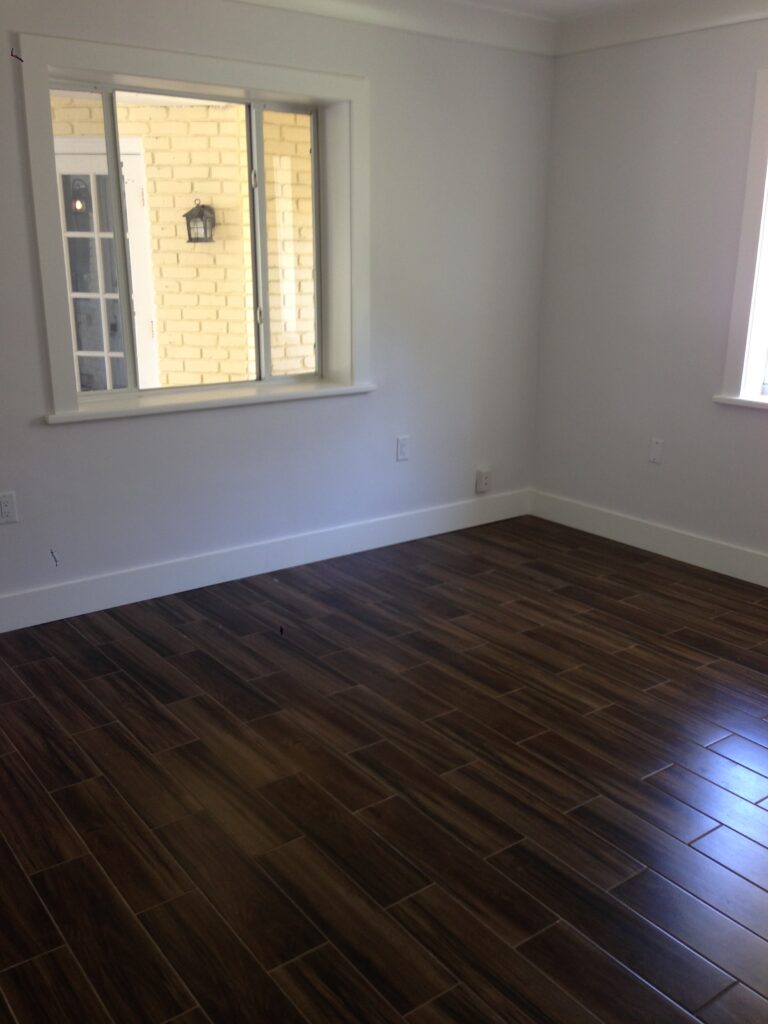 9 – Generous sized guest bedroom
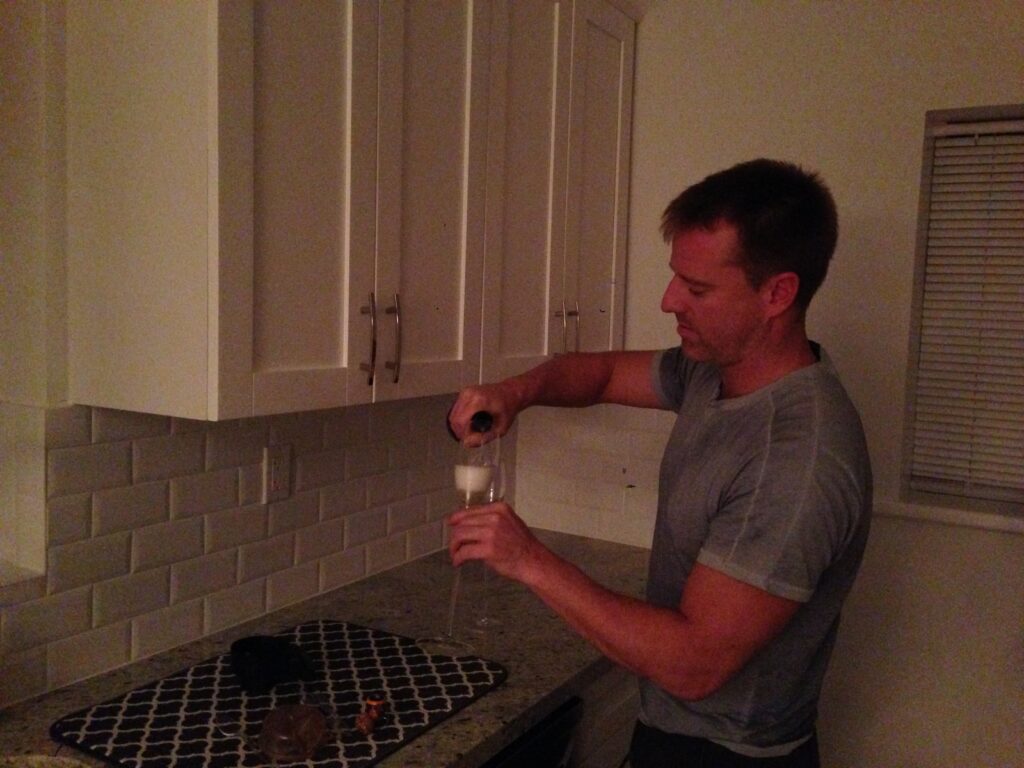 10 – First day closing celebration (after 8 hours of cleaning)
 11 – I find Moët looks good in any kitchen
 12 – Cheers!
Someone Has to Tell Him
Within the very first hour of owning the house, we were standing in the front yard staring at what would become our first project: a fortress-like brick wall—straight out of a Super Mario level—a large brick pathway that absorbed most of the tiny front yard, and a decaying fish pond.
As we stood there wondering what we had gotten ourselves into—as all new homeowners do—our next-door neighbor came over and introduced himself. He was with a woman who, for the longest time, we assumed was his wife.
“How’s it going? Are you the new owners?” he began. “I’m Bruce and this is Suzie.”
We exchanged introductions and warm handshakes. He joked that he and his wife were the token straight couple in the neighborhood. Then, without us asking—how could we, having known each other all of ten minutes—he jumped straight into helping with our yard.
“That fish pond filter seems to be dead. Do you need it fixed?” he asked.
“We were actually planning on removing it,” I replied. “It looks like something that requires a lot of maintenance, and this is a second home for us. We won’t be able to keep it up.”
“I’ll take it!” Suzie said with enthusiasm.
Before we could even respond, she sprinted—combat boots and a camo shirt—to a Subaru, grabbed a crowbar, and within minutes the fish pond was loaded into the back. As that was happening, Bruce didn’t waste any time either.
“Some of your sprinkler heads are broken. I have a repair kit—I’ll fix those for you.”
Before we could politely answer in any way, he was off, leaving the two of us still standing in a post-closing homeowner daze.
We spent the next hour or so with Bruce and Suzie, who we still believed to be his wife, inspecting the yard and beginning the simplification process. That became a common theme during our early trips to Florida: connecting with Bruce and his rugged, always combat-clad “wife.” We got to know the two of them fairly well but never quite figured out their relationship.
On one of the flights back to DC, I turned to Ramiro.
“One of us has to tell Bruce his wife is a lesbian.”
We rock-paper-scissored it.
I lost.
The next time we were in Fort Lauderdale, I was tasked with pulling Bruce aside and gently breaking the news. Only two weeks passed before we were back down and headed to his house for a barbecue.
“Hey guys,” he said. “I want you to meet my wife, Norie.”
He turned, and behind him she stood.
Stunned, a mix of confusion and relief washed over us. Bruce must have noticed the look on our faces.
“Nice to meet you, Norie,” I said after an uncomfortable pause. Turning back to Bruce, “Um… we thought Suzie was your wife.”
“Suzie? No,” he laughed. “She’s a longtime friend. She lives directly behind us with her girlfriend. You thought Suzie and I were married?”
By this point he and Norie were laughing so hard they could barely speak.
They laughed even harder when Suzie joined the conversation and we filled everyone in on my planned mission that day.
That became something of local lore. When new couples move into the neighborhood, it’s the first story they hear.
Bountiful Bricks!
Louis Kahn, the famously philosophical architect, once said, “Even a brick wants to be something.”
Hopefully, the bricks at our beach house wanted to be something in a landfill.
As my friend Tim suggested, I may have been a bricklayer in a former life, but a previous owner of this house actually was one. And it showed. Almost every surface had been covered in brick. Thankfully, the flippers had already removed the interior masonry, which left us with the exterior. That might not sound like a big deal, but it took two dumpsters and one almost-destroyed Volkswagen to simplify the situation..
Priority number one was the immensely ugly—and technically code-violating—brick fence lining the sidewalk. Behind it sat an equally unnecessary brick walkway curving through the front yard, with a focal point that can only be described as a miniature pedestrian traffic circle. And at its center: a David-peeing fountain.
The structure offended us so deeply that we had it removed within the first month of ownership. A landscaping crew recommended by a nearby plant shop demolished the entire thing, filled a construction dumpster to the hilt with bricks, and replaced it with fresh, low-maintenance landscaping—far better suited to a second home. Neighbors we hadn’t even met yet stopped us on the street to thank us for removing “the neighborhood eyesore.”
Front Yard Fortress
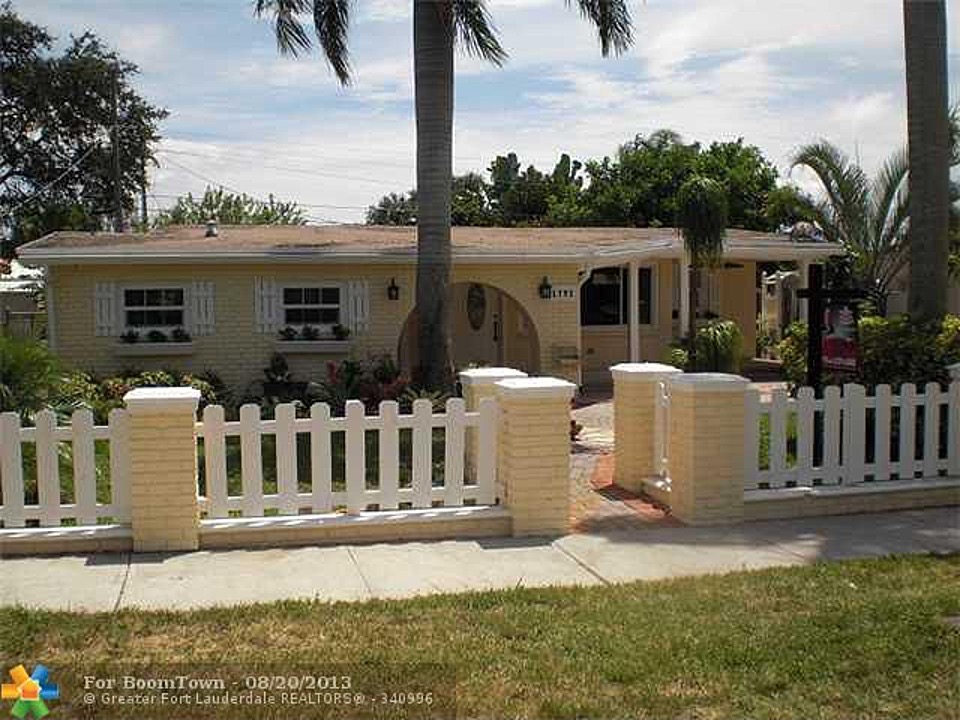 1 – Heinous “neighborhood eyesore” of bricks
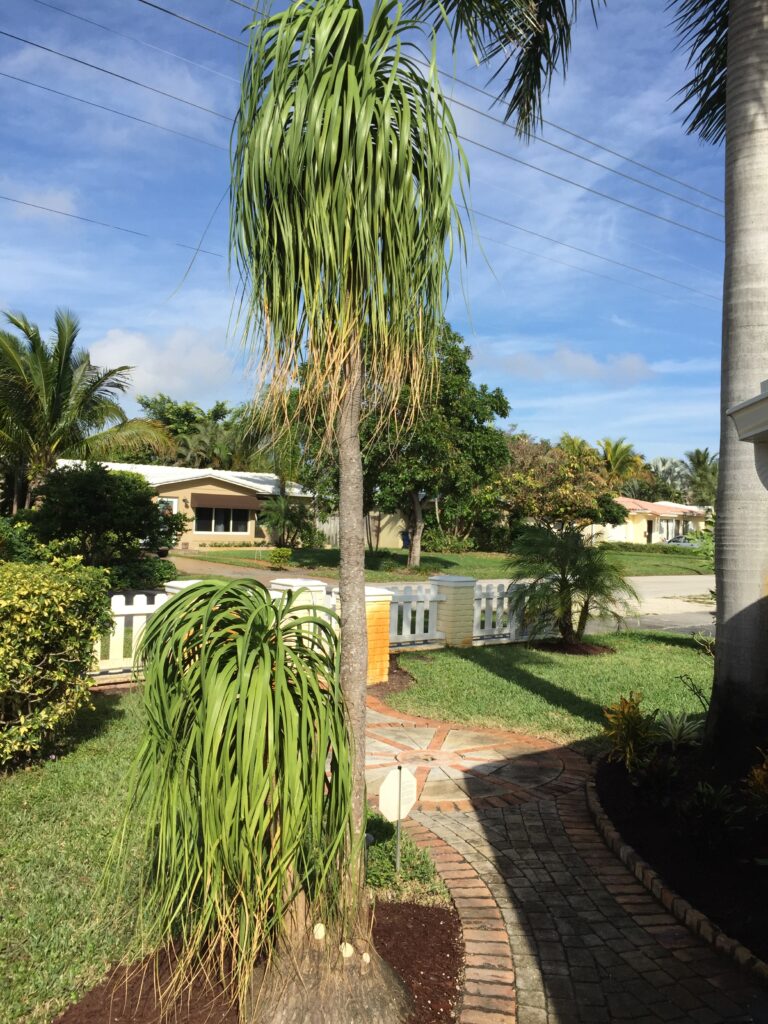 2 – Walkway with fountain circle, fish pond
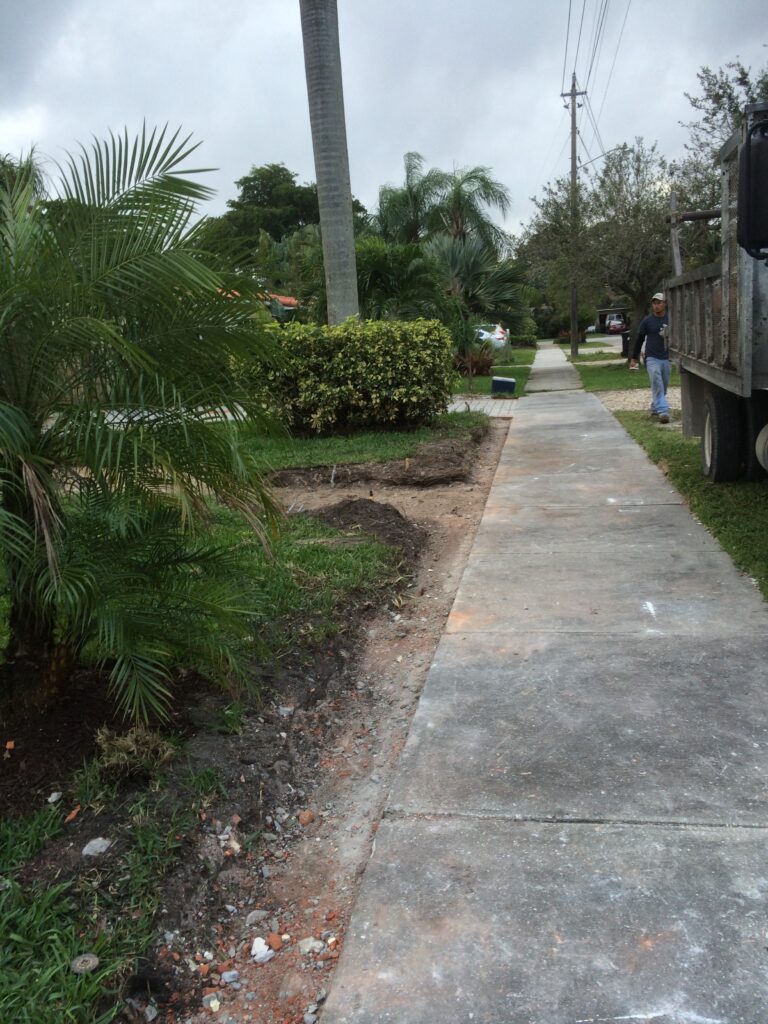 3 – Fence removed along sidewalk
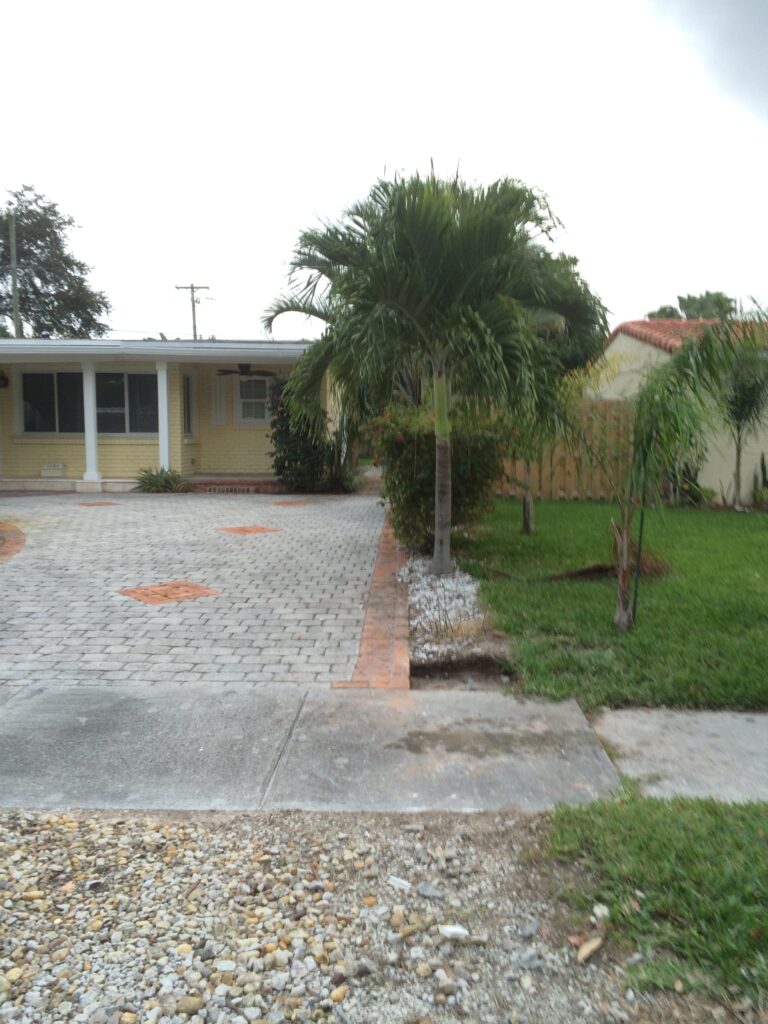 4 – Posts removed beside driveway
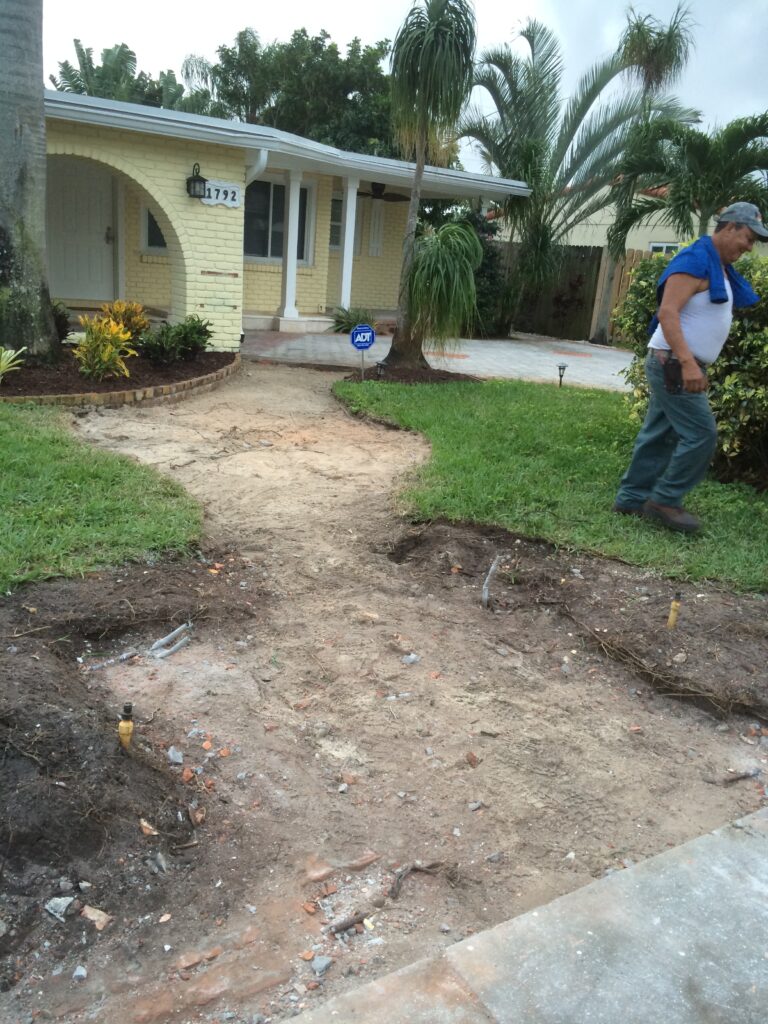 5 – Front walkway removed
 6 – Front bricks gone
Bricks and a Borrowed Volkswagen
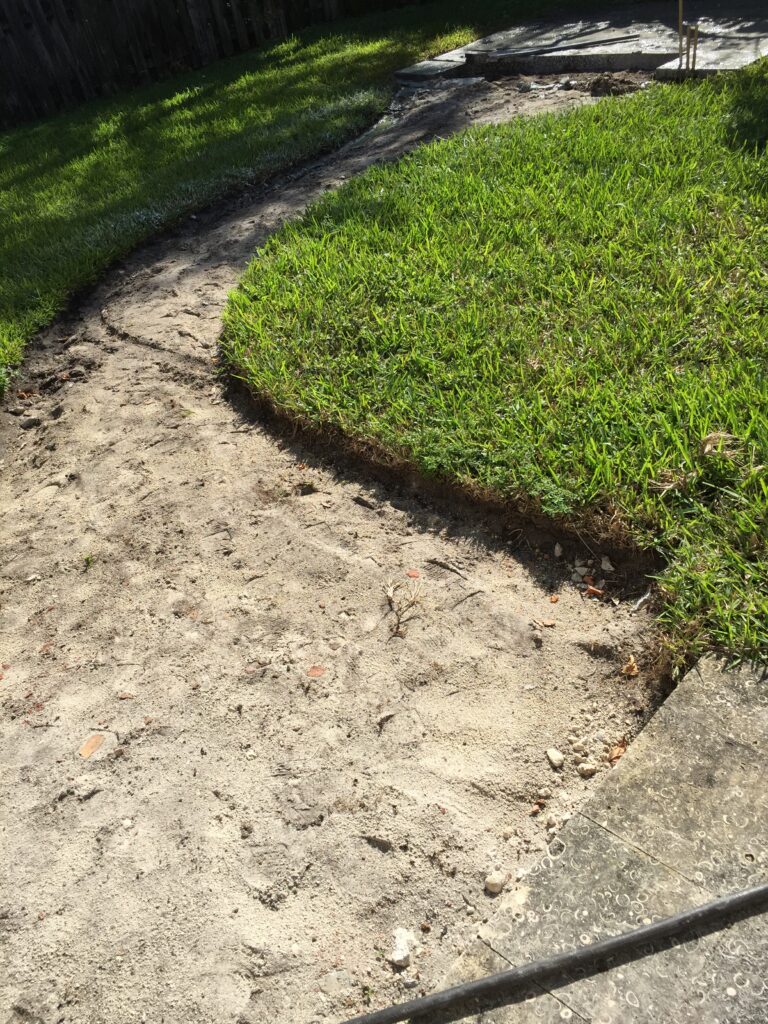
The second project Ramiro and I decided to tackle ourselves. The backyard contained a maze of brick paths leading to absolutely nowhere. Maybe there was an above-ground pool. Perhaps the previous owner was planning another Roman monument or two. Fortunately the bricks weren’t cemented to footings—just laid on sand—so they lifted easily enough.
One morning after running a half marathon with Norie—no idea how we still had energy—we started popping them up along the roughly thirty-foot-long, four-foot-wide maze of walkways. By the time we finished, we had uprooted roughly 455 bricks.
No need for a dumpster, we reasoned. We had a rental car.
A Volkswagen Golf.
So we loaded the bricks one handful at a time until there were none left in the yard. Only when we stepped back did we notice the vehicle sitting about an inch off the pavement and the suspension had achieved what automotive engineers might describe as zero bounce. We briefly considered unloading some but the transfer station was near enough and about to close—and besides, it was a rental.
Driving approximately 7 miles per hour for the three exits on I-95—which, in fairness, isn’t that unusual for Florida (hell, in any given stretch of roadway, at least 2% of drivers are, for a variety of reasons, backing up)—we crept toward the dump. When we arrived, a city worker spotted our tiny, flattened car and sprinted toward us in alarm.
“Are those bricks?” he asked, staring at the Golf. He could see them easily enough because we had to pile at least a dozen on the dashboard.
“Yes.”
“How many… in that car!?”
”We counted 455.”
“Oh my God,” he said. “That’s over a ton.”
He immediately waved us past several 18-wheelers to the front of the line.
“Drive around slowly,” he said. “And whatever you do—don’t drive over any speed bumps.”
That’s when we learned brick weight adds up surprisingly fast and a 2013 Volkswagen Golf has a maximum payload capacity of only 1,000 pounds, occupants included. The ton of bricks we had loaded weighed closer to 2,100. We were a teensy bit over, to use another automotive engineering term.
In any case, both we and the poor little VW survived the experience to enjoy other sunshine-filled Florida vacations.
455 Bricks vs. 1 Volkswagen
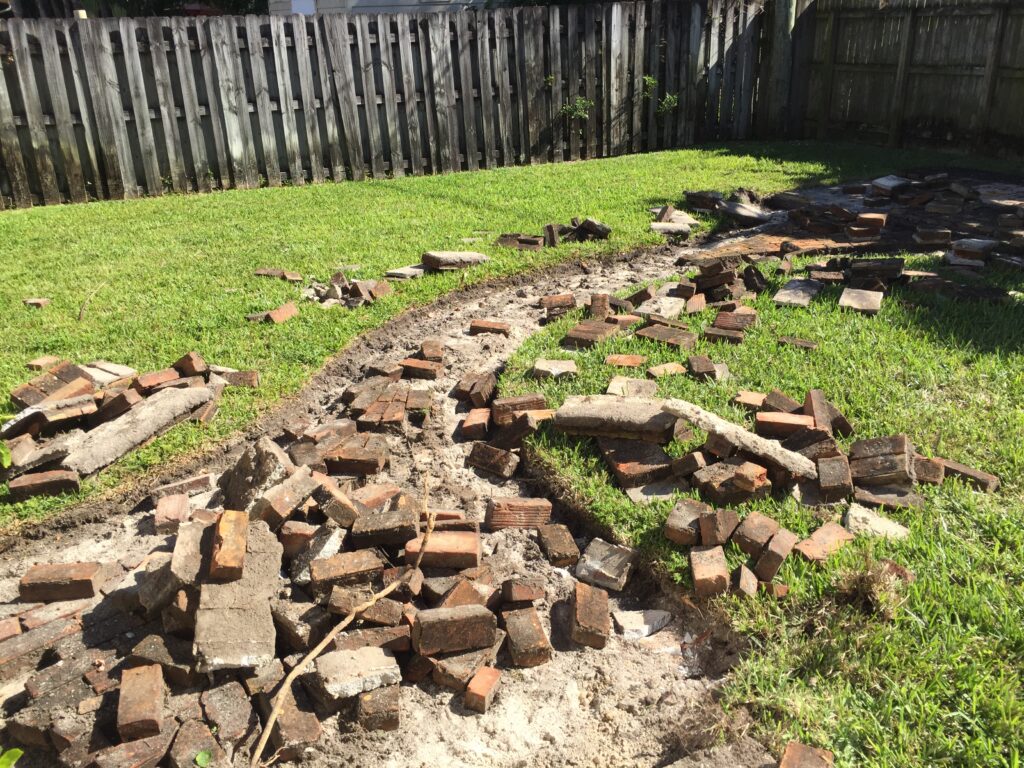 1 – One of three backyard curved sidewalks: 455 bricks to nowhere
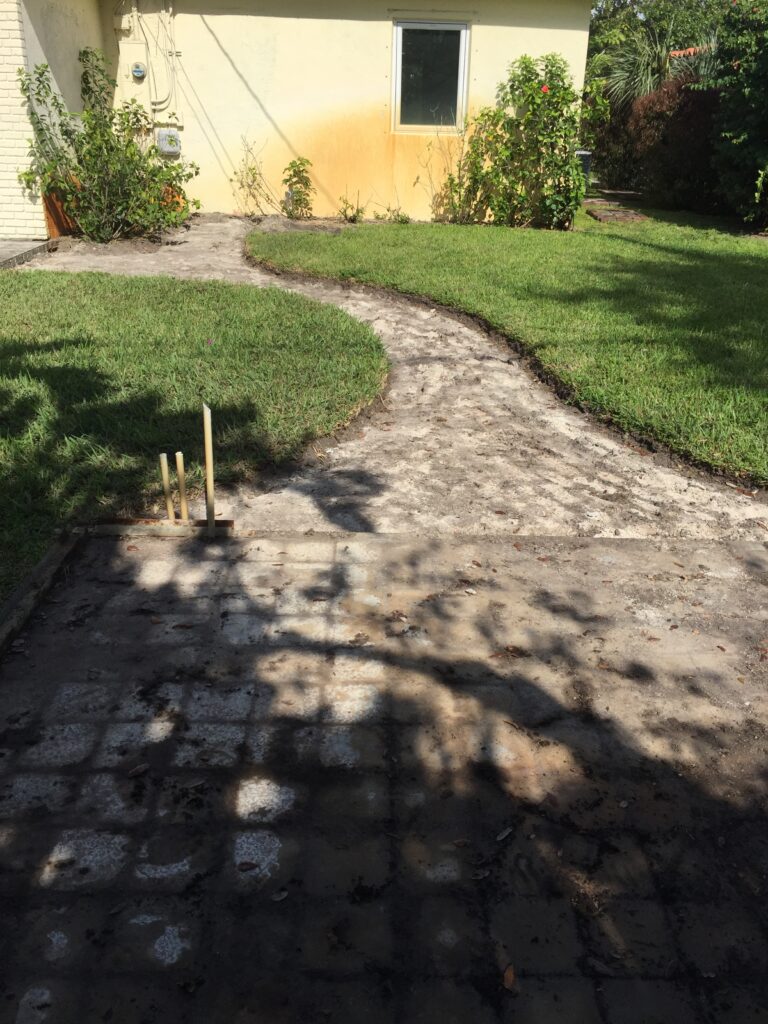 2 – Backyard bricks gone
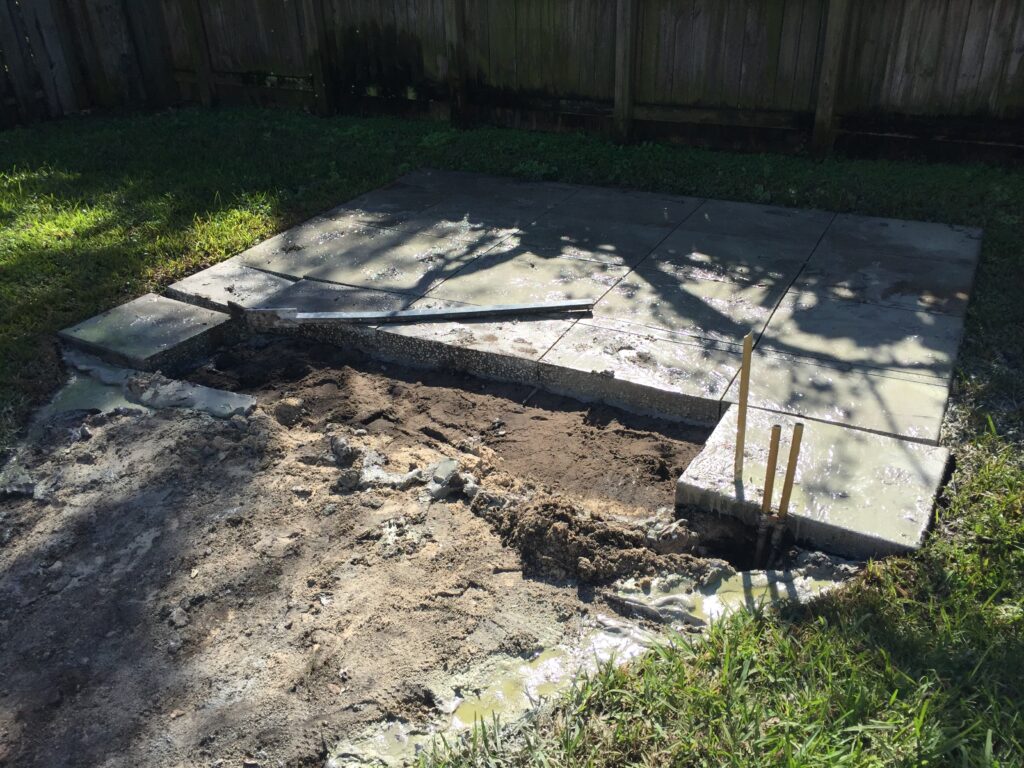 3 – Backward concrete pad we had cut and removed
Fireplace Falling
The final brick structure was a towering outdoor fireplace in the backyard—six feet wide, three feet deep, and nearly two stories tall. In Fort Lauderdale, you can count the number of nights over any given decade on one hand cold enough for a fire. Fireplaces, even outdoor ones, were as useful as snow blowers.
Michelle happened to be visiting the weekend we decided—on a whim—that it had to go that very second, so we put her to work in exchange for free lodging. Ramiro urgently had to return to work, somewhat hesitantly leaving the two of us to our mischievous selves—after making us promise not to do anything too crazy.
Us? Crazy? Okay, maybe some historic evidence existed… but really—how much trouble could we get into?
The plan was simple: I would knock down one layer of bricks at a time, and Michelle, using a highly useful bathroom trash can, would toss them into a dumpster. Yes, this time we had learned our lesson and rented one. Well, if I’m being honest, Ramiro had also returned the rental car when he flew home—or we probably would have tried loading another one up again.
Perfect Plan?
Ant Eviction
Very early the next morning—before the Florida heat kicked in—I borrowed a ladder and demolition hammer from Bruce, climbed to the top, and began removing the bricks one row at a time. After the first layer fell, I noticed something unsettling.
Ants.
Hundreds of ants. And piles of tiny white eggs. Nasty!
Michelle ran for the Raid—we didn’t want them relocating to the house. The ants died. I knocked out another row.
More ants.
More Raid.
More eggs.
This continued for 52 layers of bricks, 13 cans of Raid, and 2 very grossed out “demolition workers.”
By the end we had knocked out roughly 1,200 bricks—about 5,400 pounds, or nearly three tons of rental-car-destroying payload. Not included in that calculation: the weight—mental or otherwise—of millions of ants. (Later than night I closed my eyes, lying in bed and could still see the white eggs.)
When the last brick fell and the dumpster was full and gone, we did what any exhausted amateur demolition crew would do. We dressed up, went to Il Mulino and celebrated with heroic quantities of chicken parmesan and even more red wine… for the pain of course.
Brick Battles
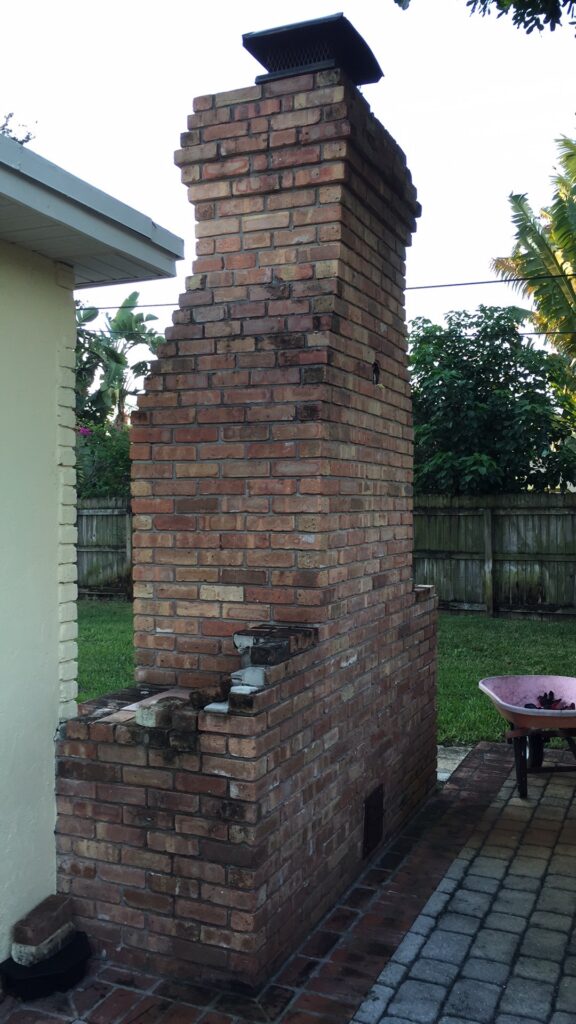 1 – Towering brick fireplace / ant condo
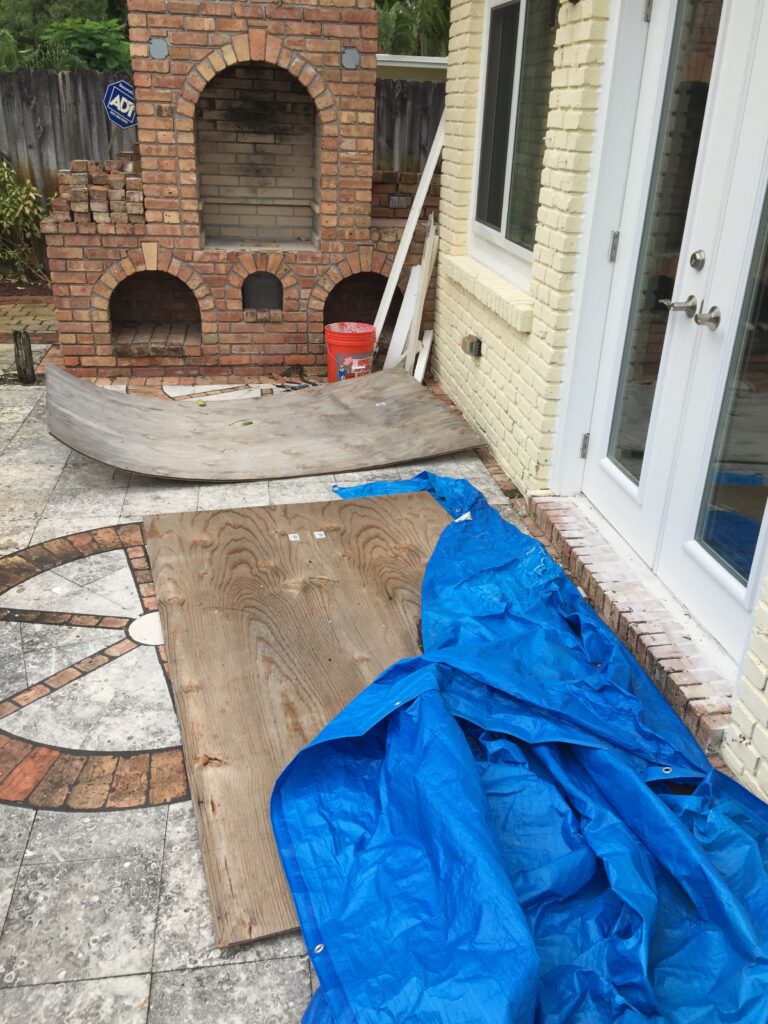 2 – When do you use a fireplace in Florida? Never
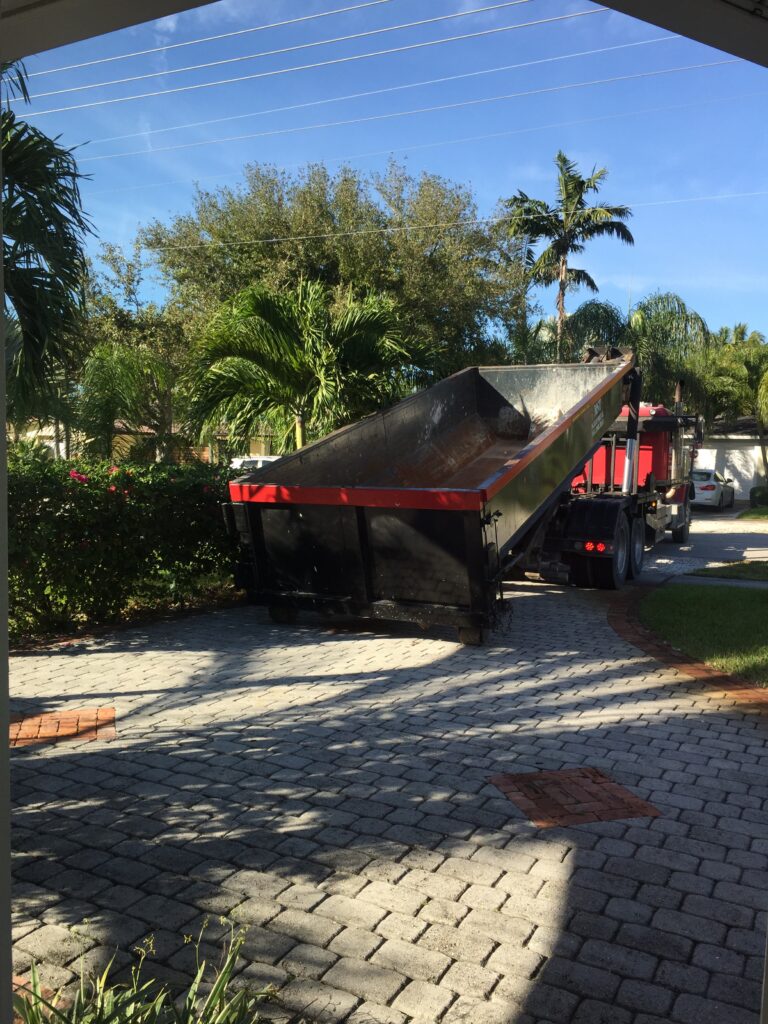 3 – This time we rented a dumpster
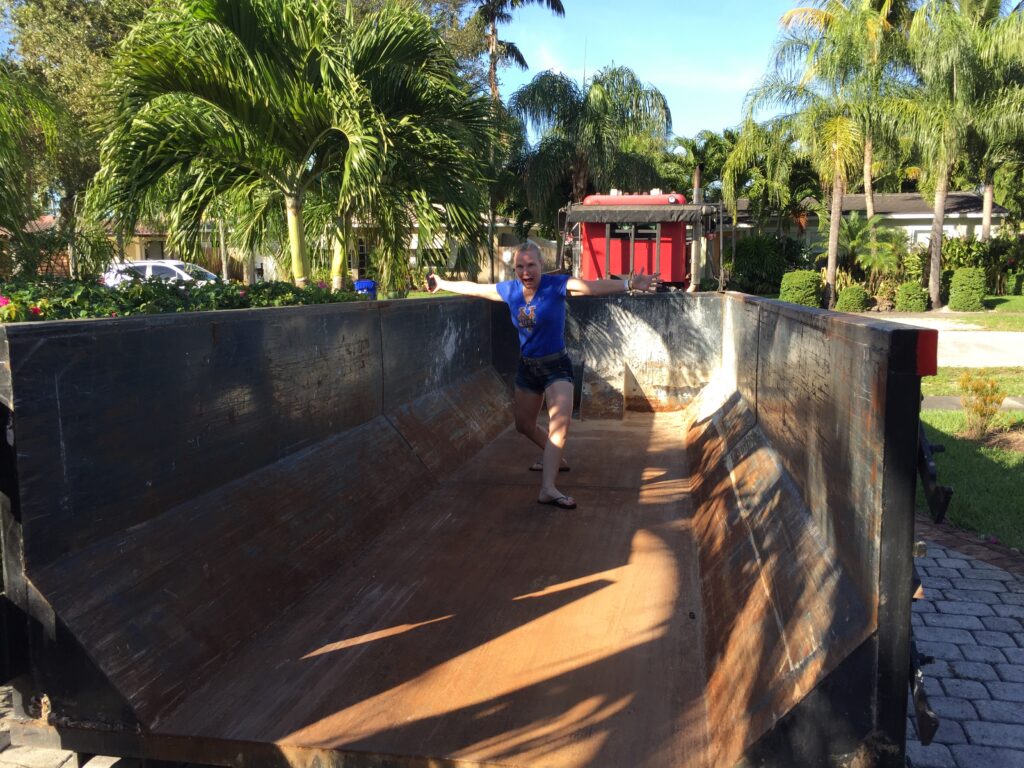 4 – Michelle, way more excited than the occasion called for 😉
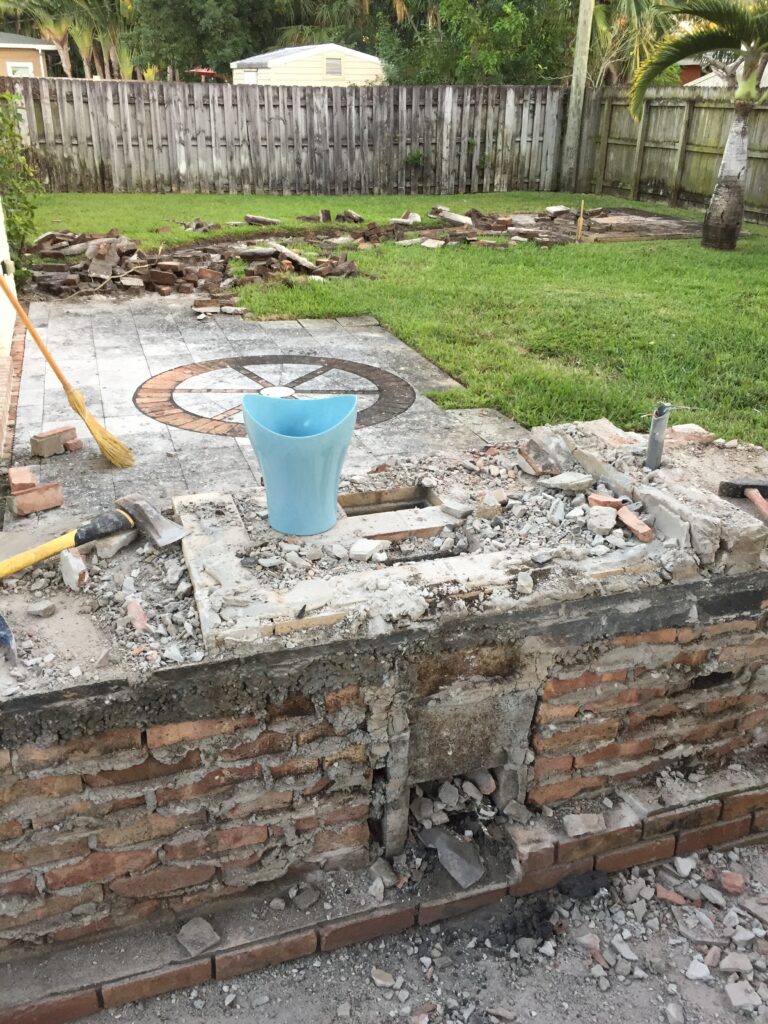 5 – Improv: wheelbarrow? Or bathroom trash can?
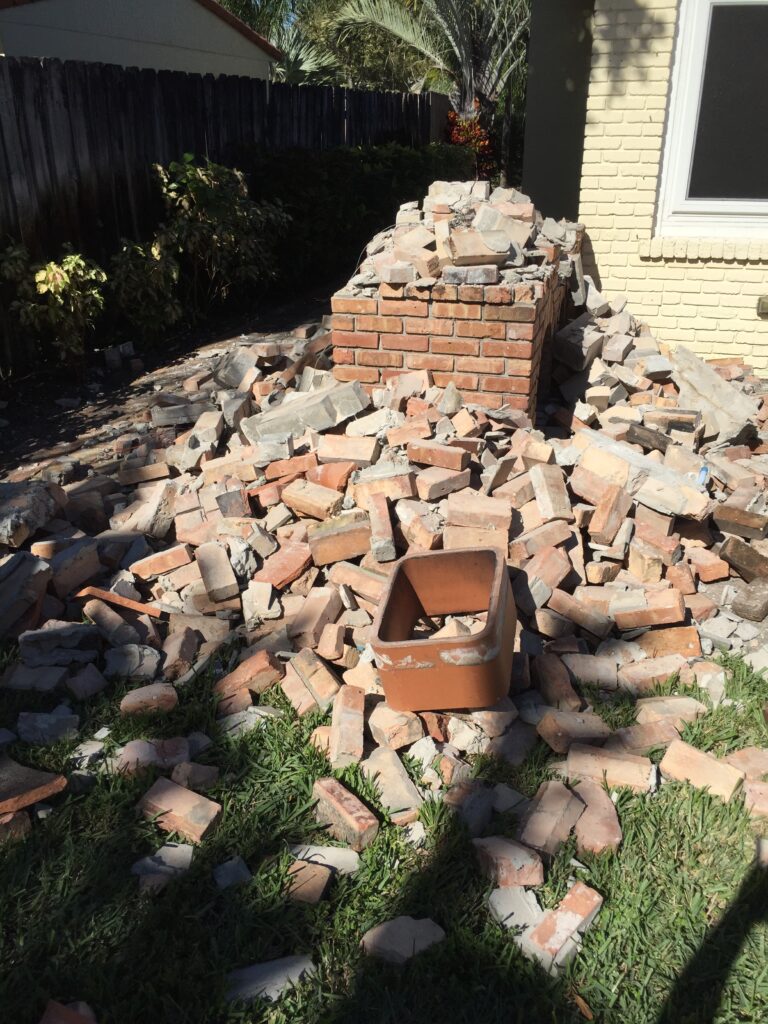 6 – Trash can (not Michelle?!?) wasn’t keeping up
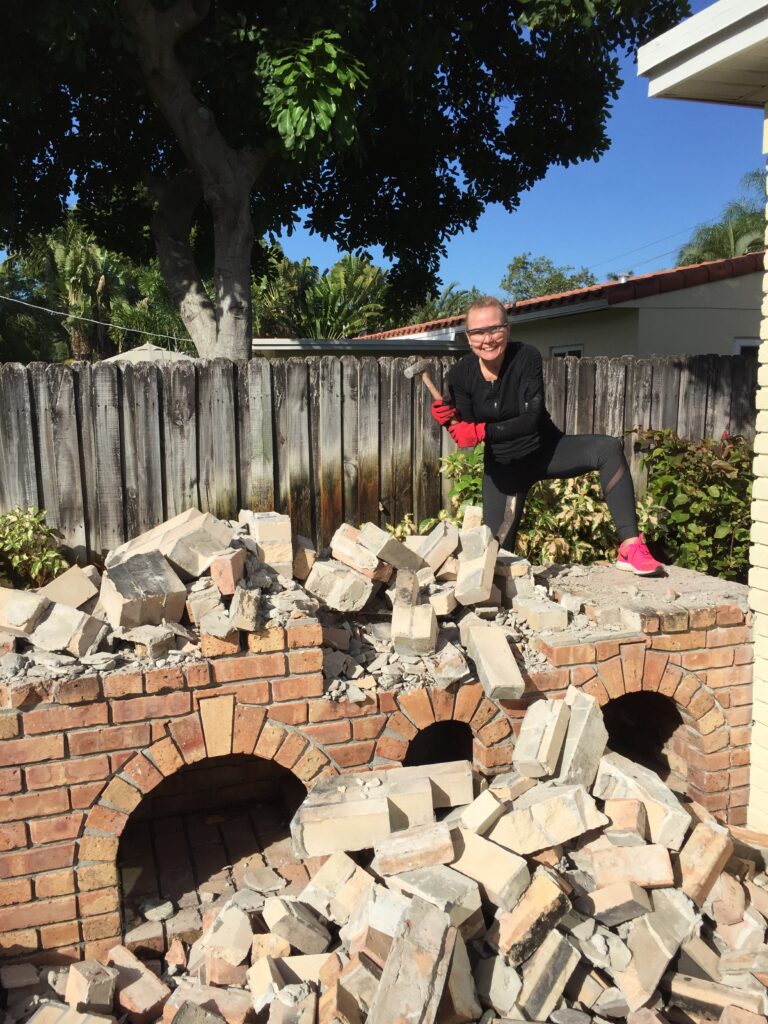 7 – Michelle takes a few swings
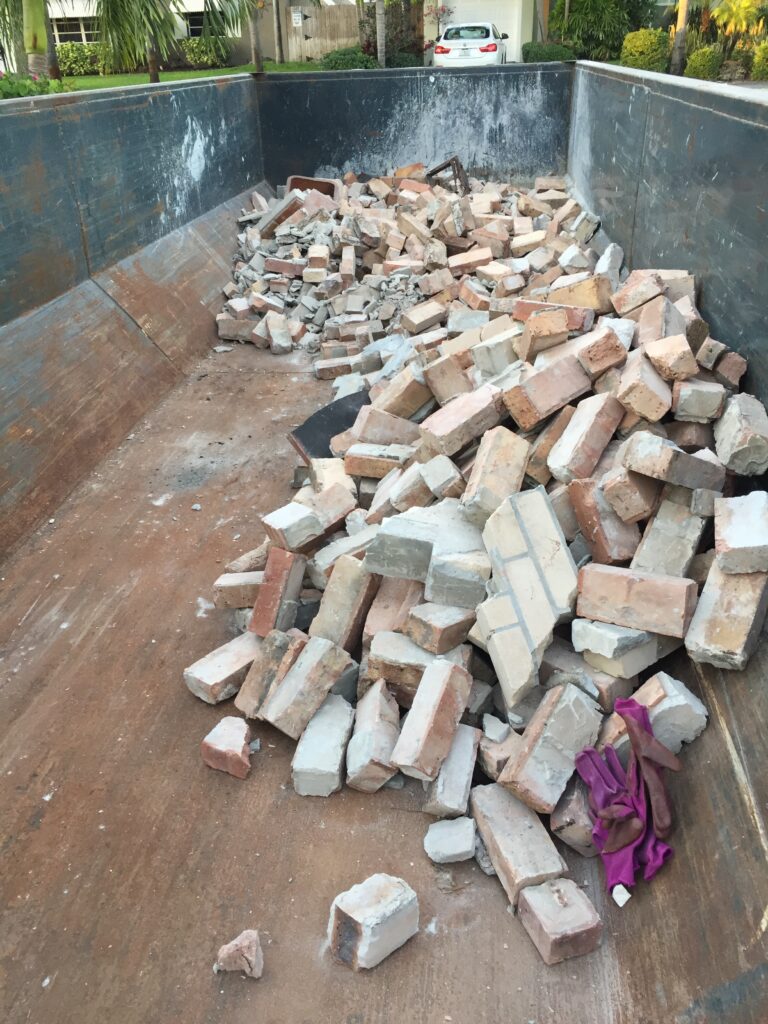 8 – Progress
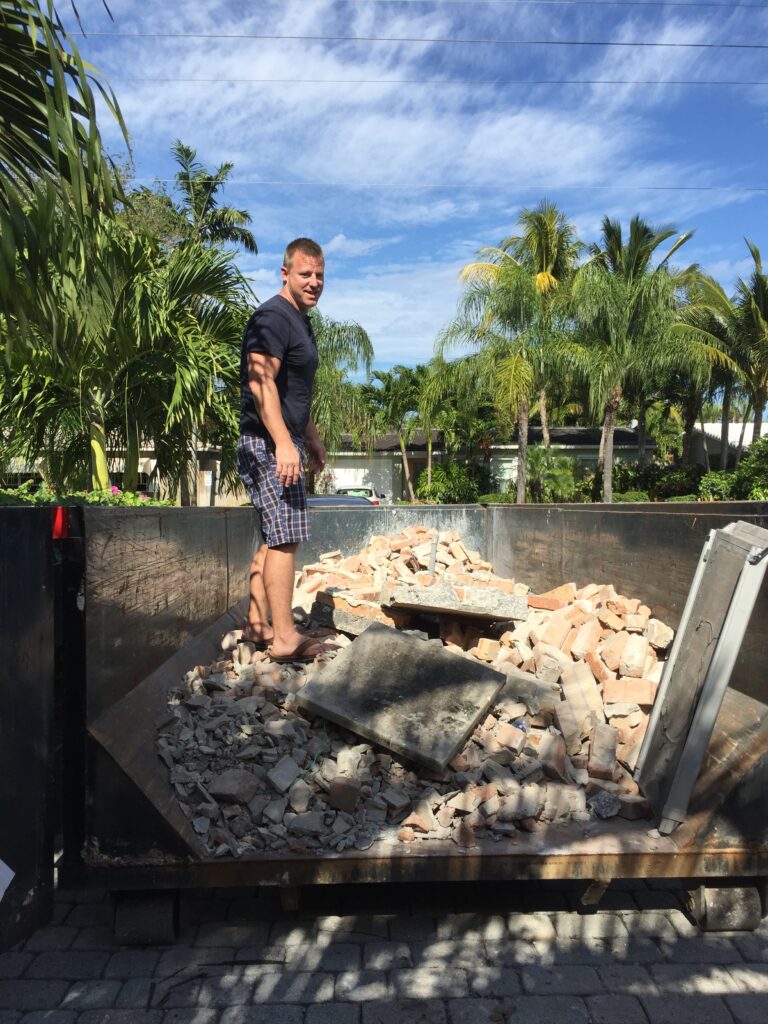 9 – The final load
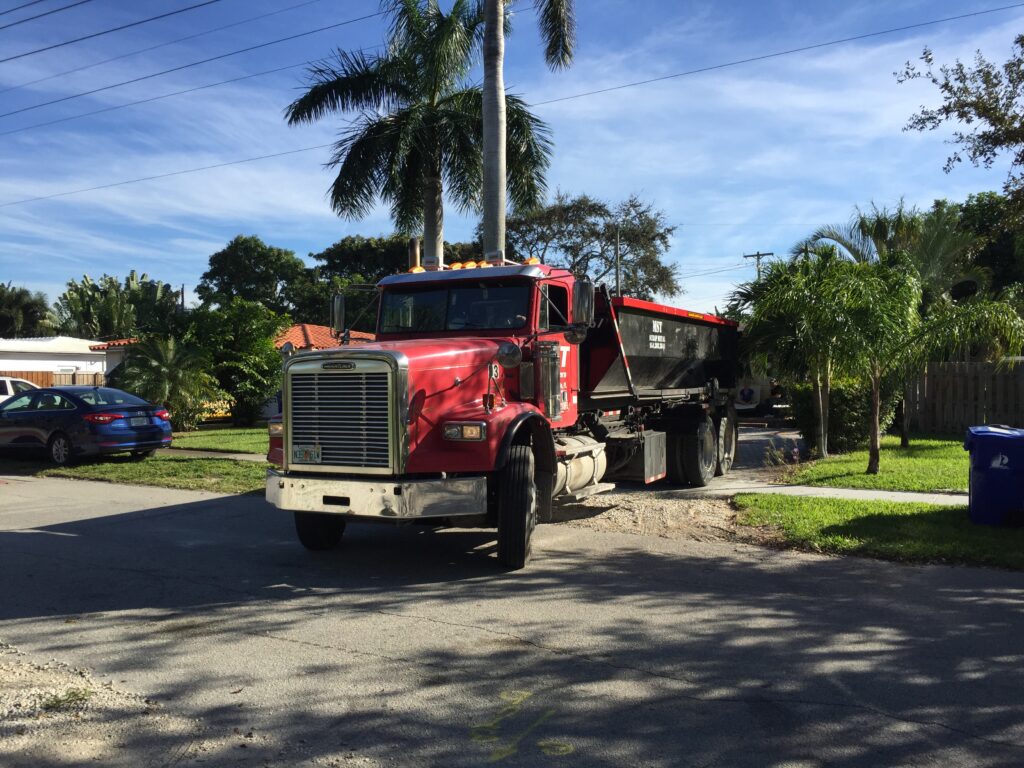 10 – Bricks leaving in something more fitting than a Volkswagen
Paint and Wedding Preparations
Since weddings have a remarkable ability to consume money, we were looking for ways to keep the celebration simple—and affordable. One solution was obvious: finish prepping the house ourselves and use it as a venue for some of the festivities. Even though we had owned the house for only a few months, we decided to host our joint bachelor party there over Valentine’s Day weekend—which meant accelerating the interior decorating rather dramatically.
We found a costal interior design magazine sporting a beach-appropriate color palette, drove over to Home Depot, and loaded up on paint. Little did we know that this innocent errand would begin a longstanding tradition of multiple Home Depot visits every single trip to Florida. It turns out houses—especially salt-pounded beach houses—always need repairs.
Ramiro, as you would expect from a scientist, is an extremely precise painter. Clean lines. Careful edges. Proper technique. I, on the other hand, thrive in a broad roller brush environment. Together we make a highly effective team.
Over a three-day weekend we painted the entire house—kitchen on Friday night, living room, dining room, bedrooms, and den on Saturday, with an hour at the beach between coats. Sunday we assembled furniture, hung blinds, and staged the house for the party we were only slightly more prepared to host.
The bachelor party itself was unconventional—like gay weddings should be. It was a joint celebration for both of us, attended mostly by couples—my sister and her husband, along with close friends. Instead of a party bus, we rented a wood-paneled Chrysler minivan, which should tell you everything you need to know. It helped that we were both marrying later in life, long past the phase when bachelor parties require separating the sexes and encouraging questionable judgment.
That said, there was still plenty of questionable judgment. Shared questionable judgement.
Brushes Before the Bash
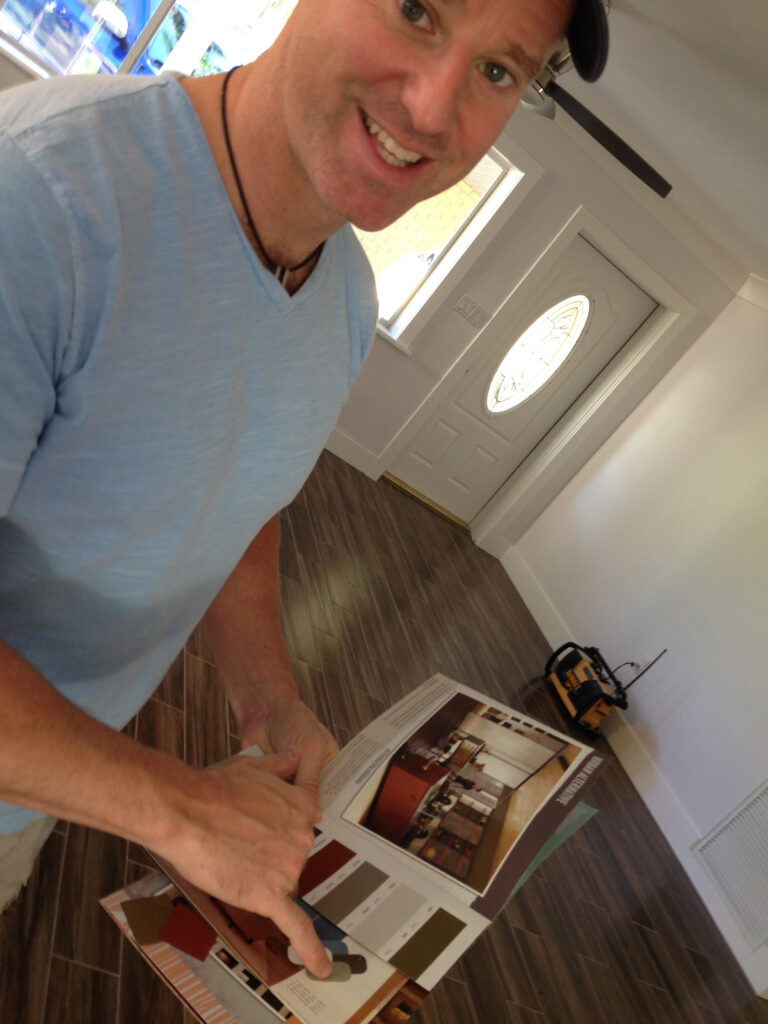 1 – Start with a brochure: someone does the color matching homework for you
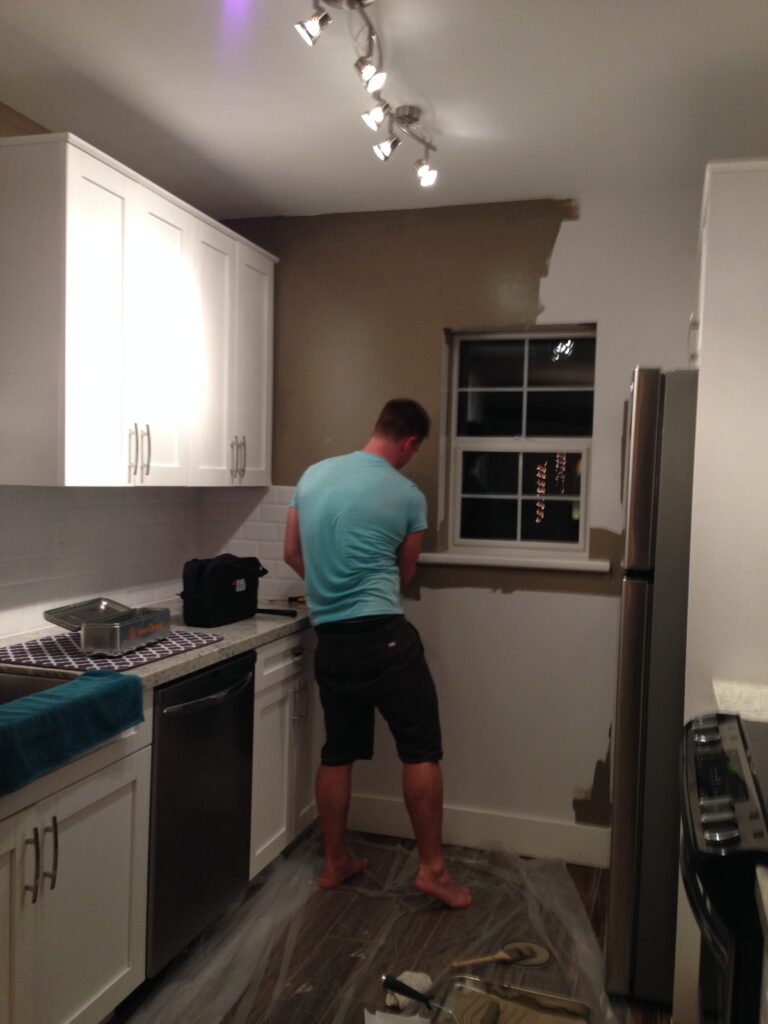 2 – I’m more of a broad brush painter
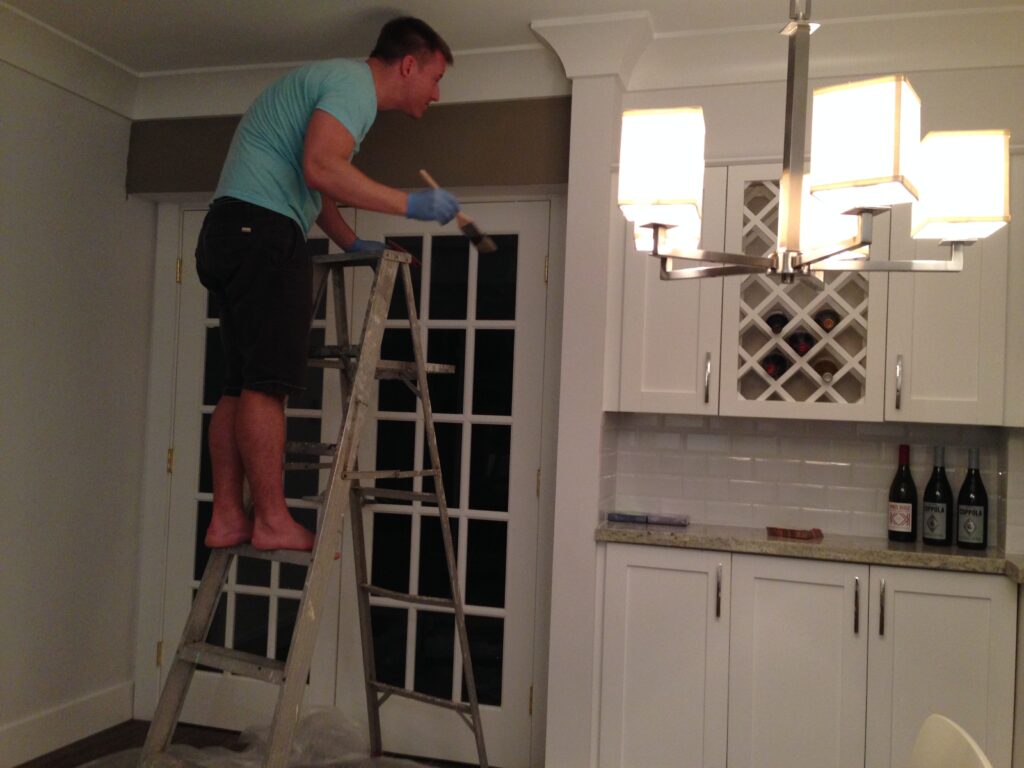 3 – Late night Friday painting the kitchen
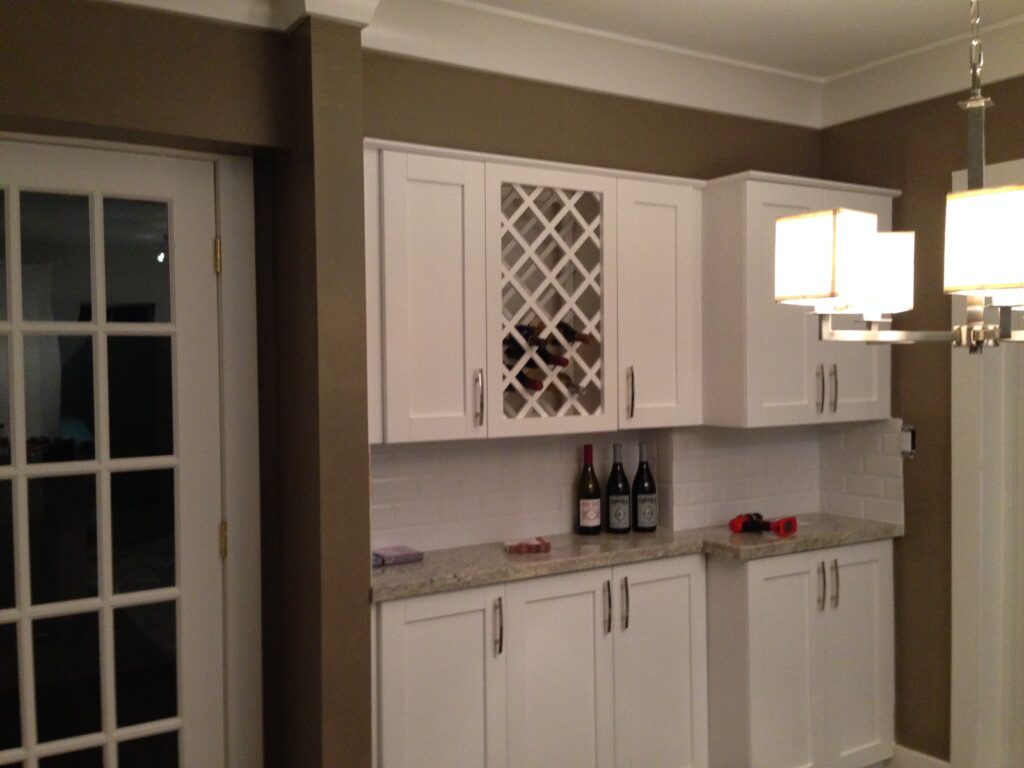 4 – Kitchen complete
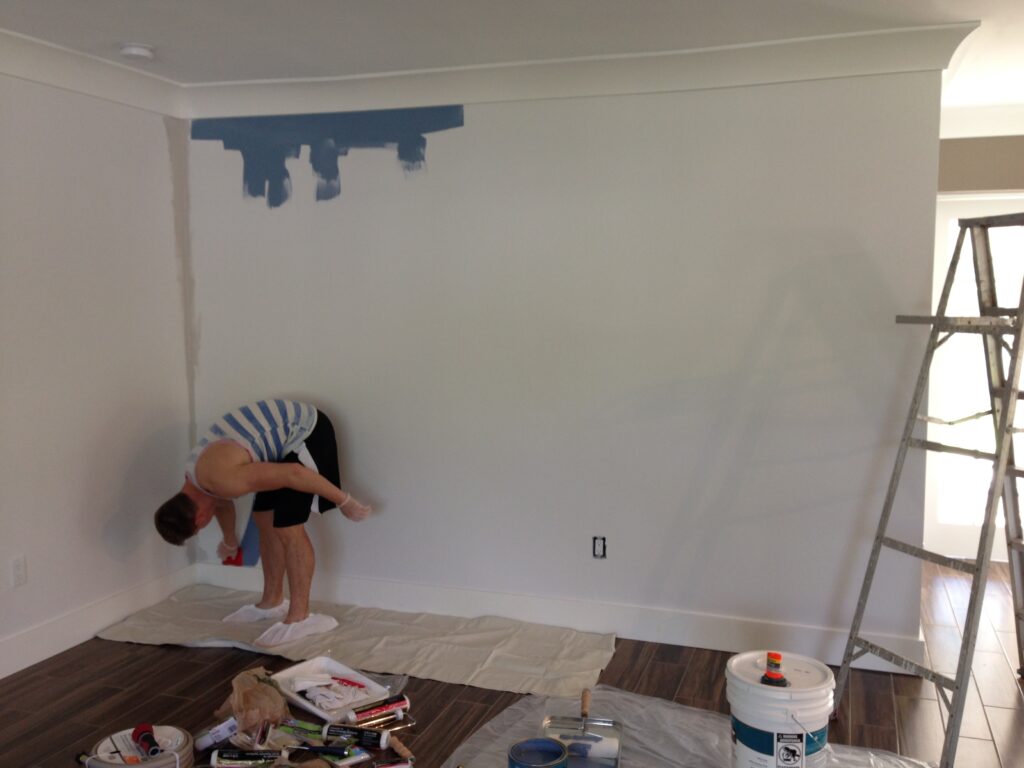 5 – Wanted a wall to remind people how close the ocean is
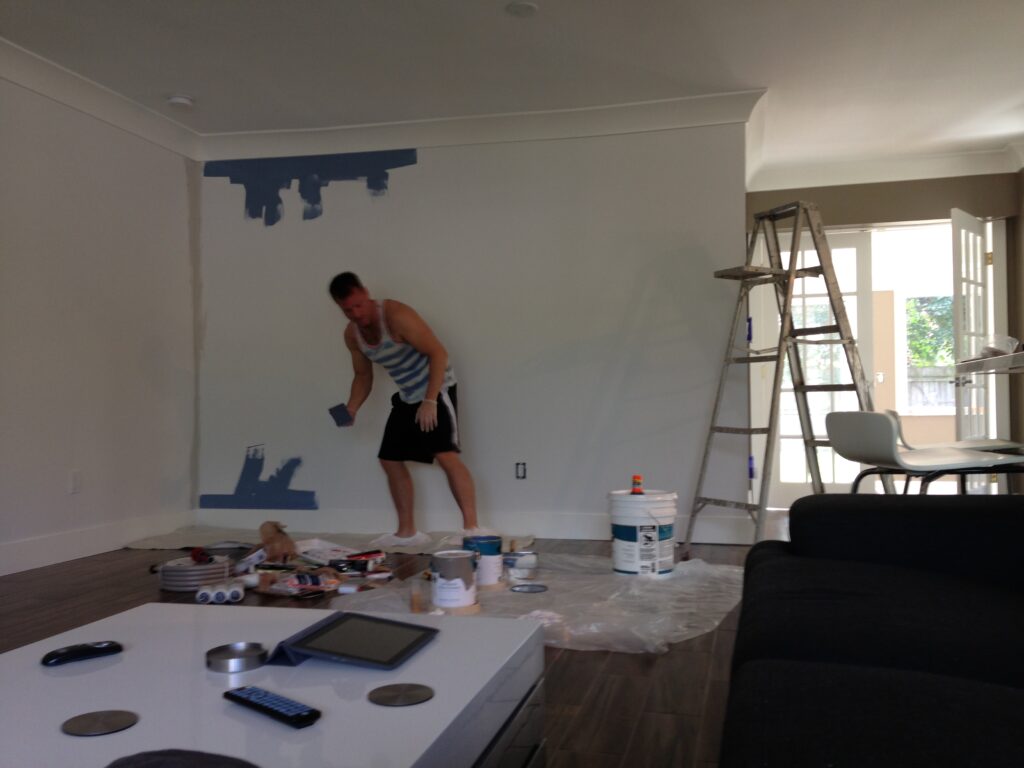 6 – Ocean wall painting
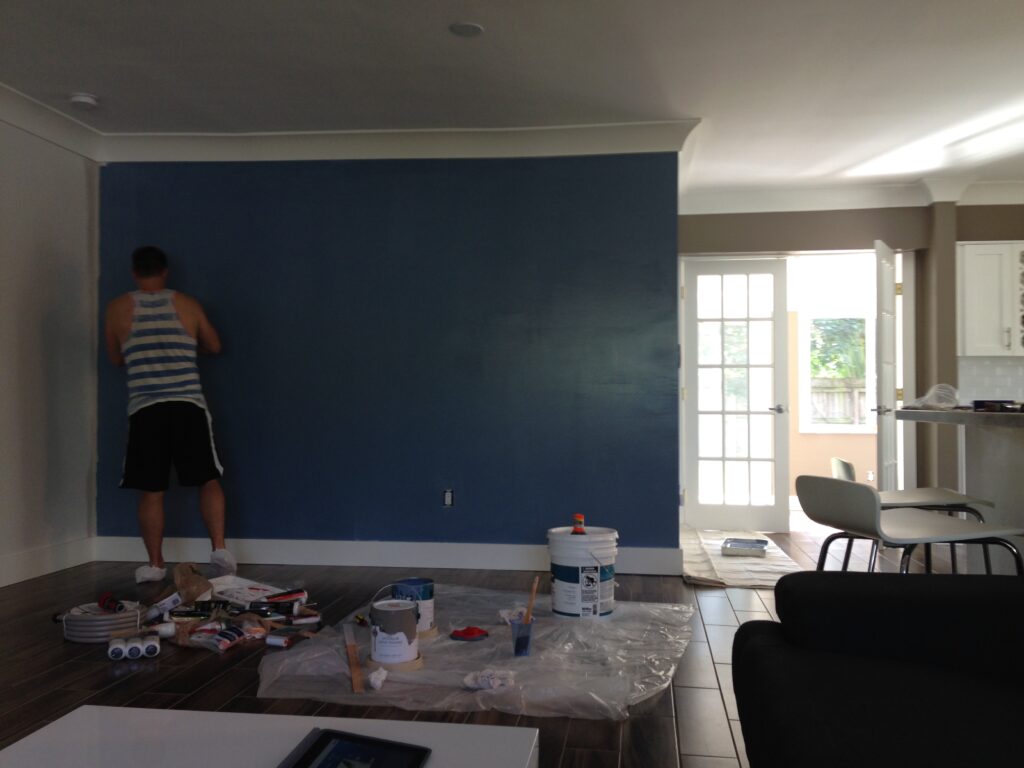 7 – Ocean wall complete
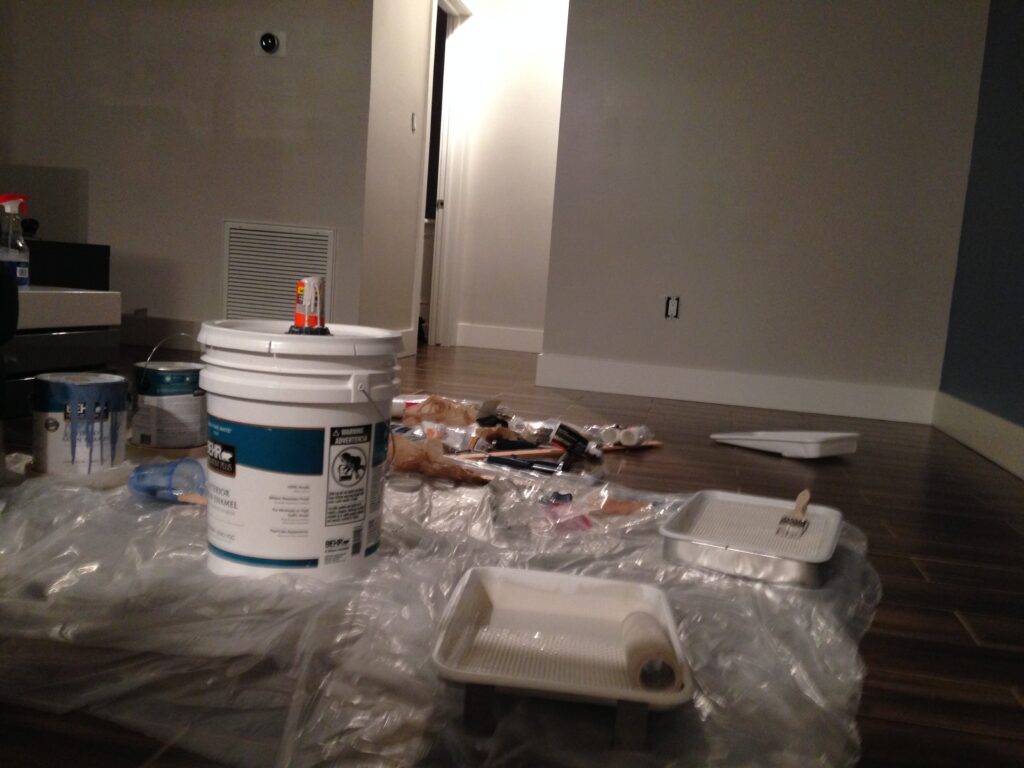 8 – Now we start on the neutral color in the rest of the house
 9 – An hour on the sand between coats along with…
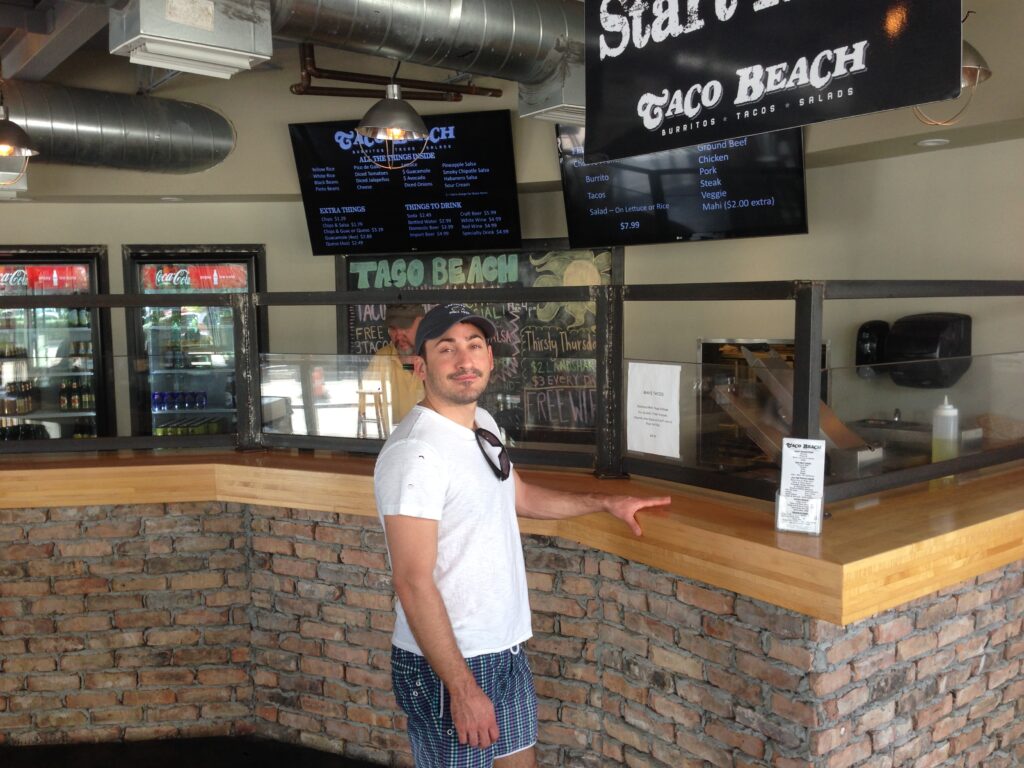 10 – …a taco or two
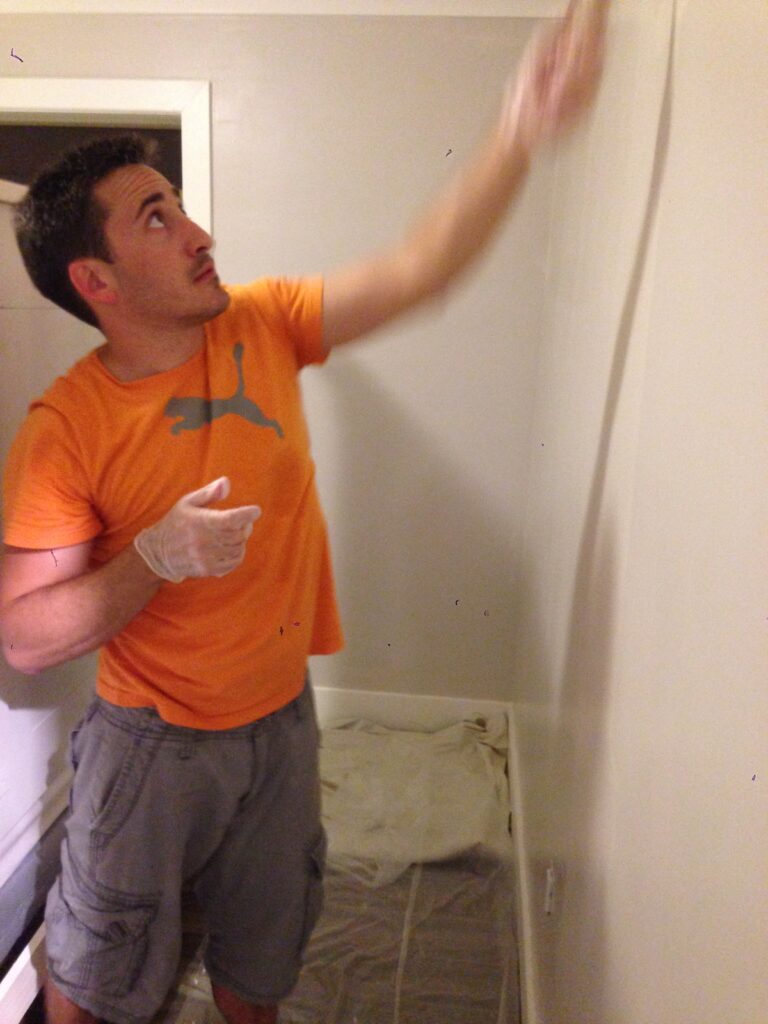 11 – Ramiro is a precision painter
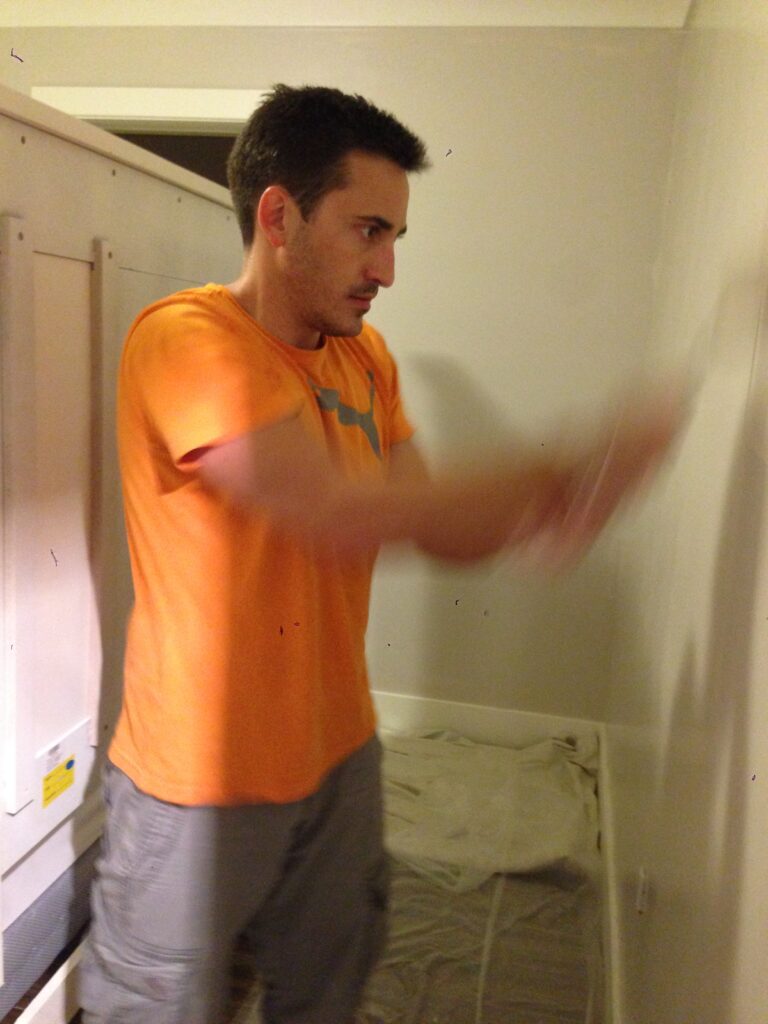 12 – Scientist seriousness … last wall to paint!
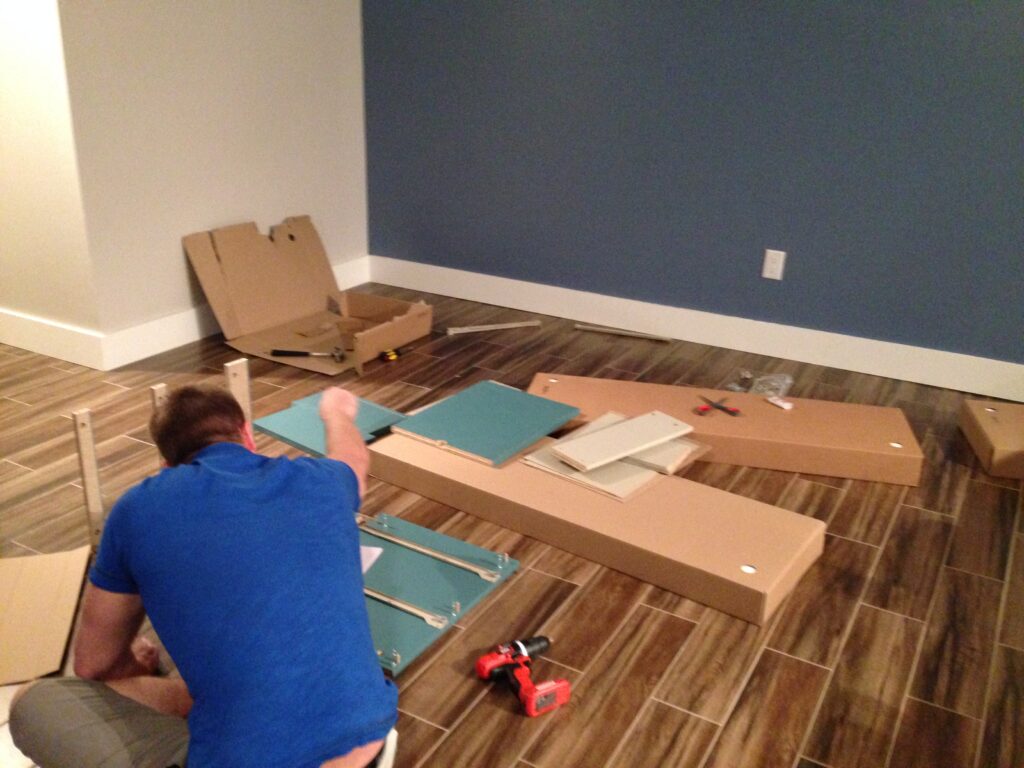 13 – Sunday furniture assembly
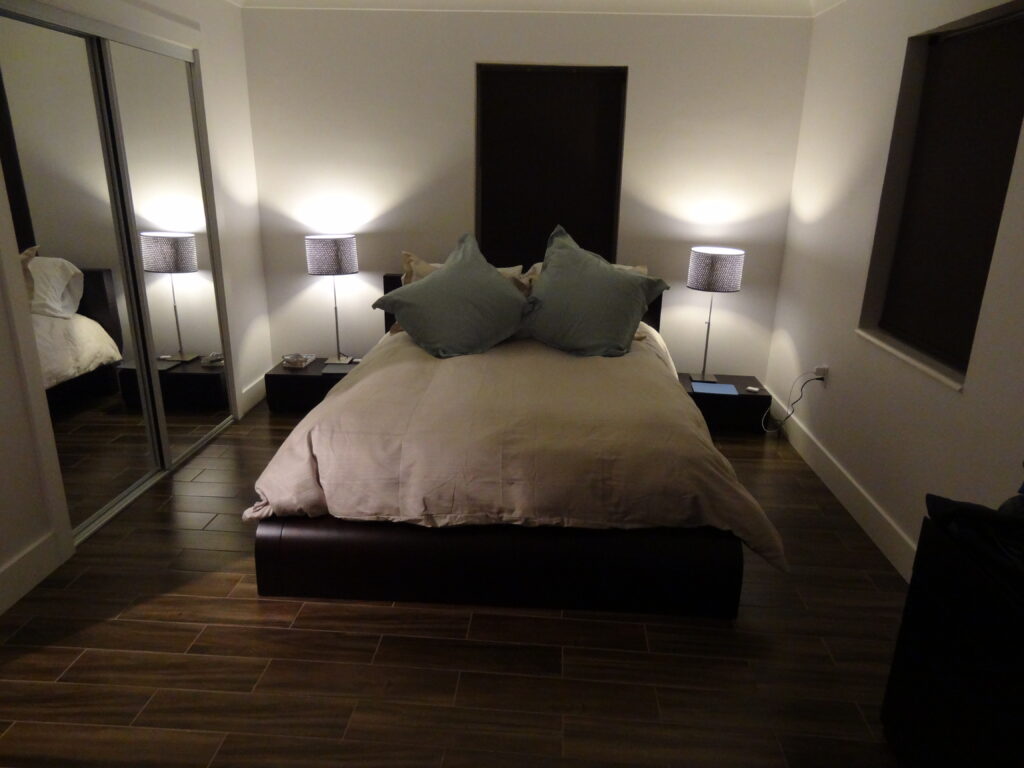 14 – Primary bedroom
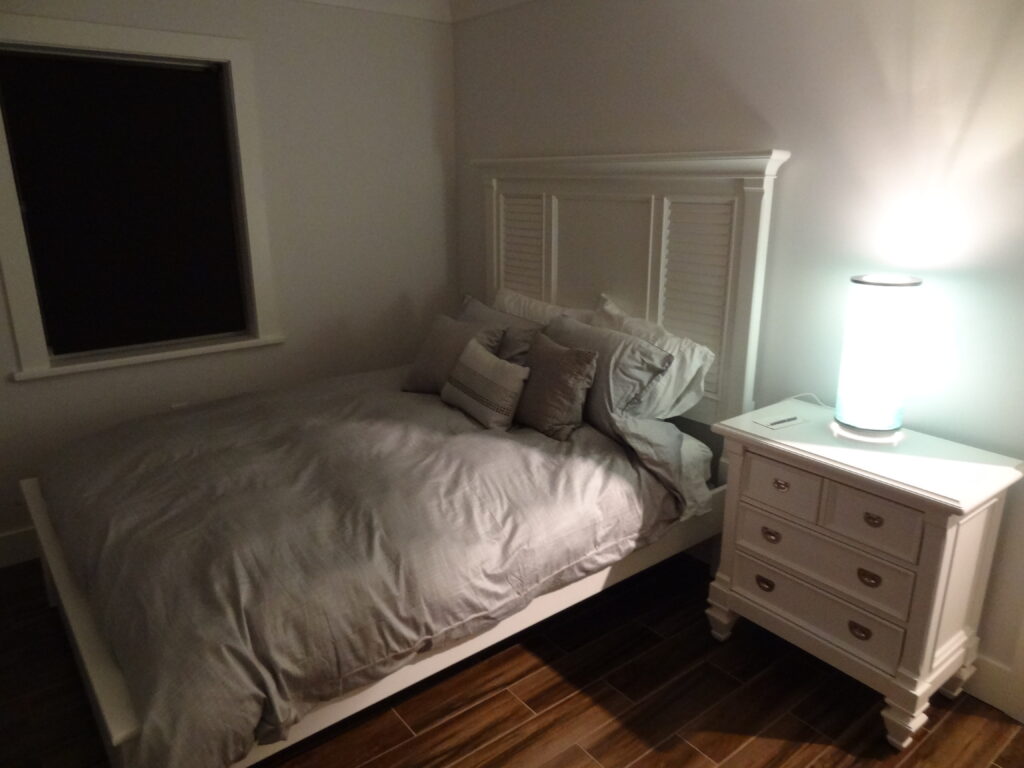 15 – Guest bedroom
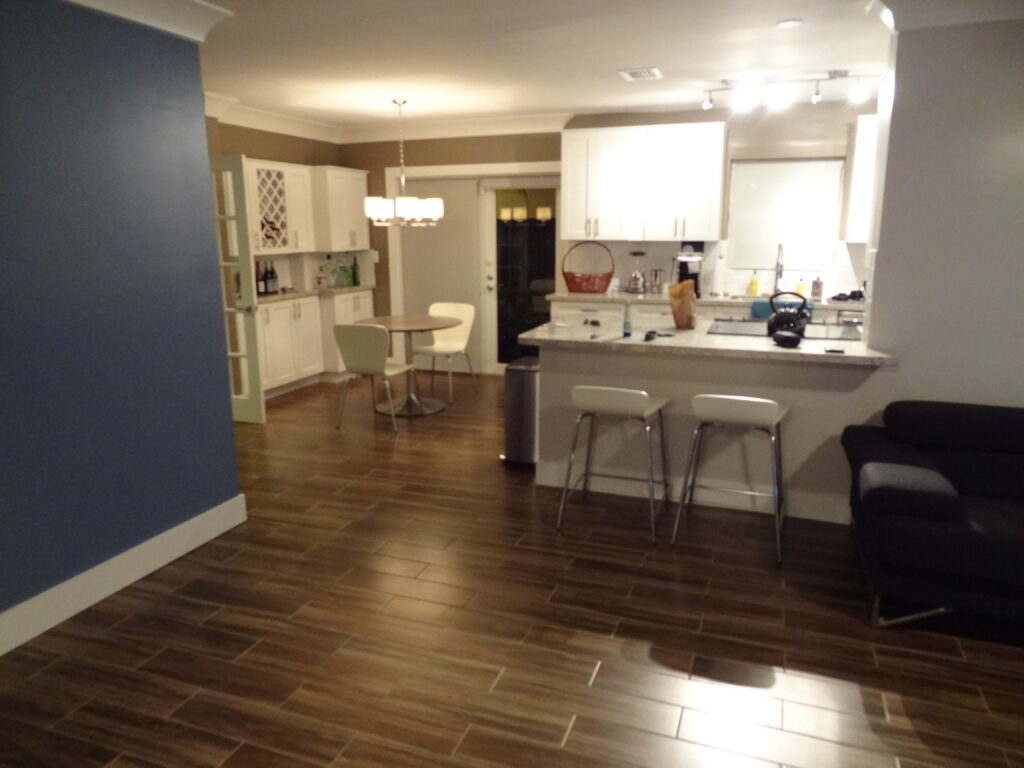 16 – Kitchen
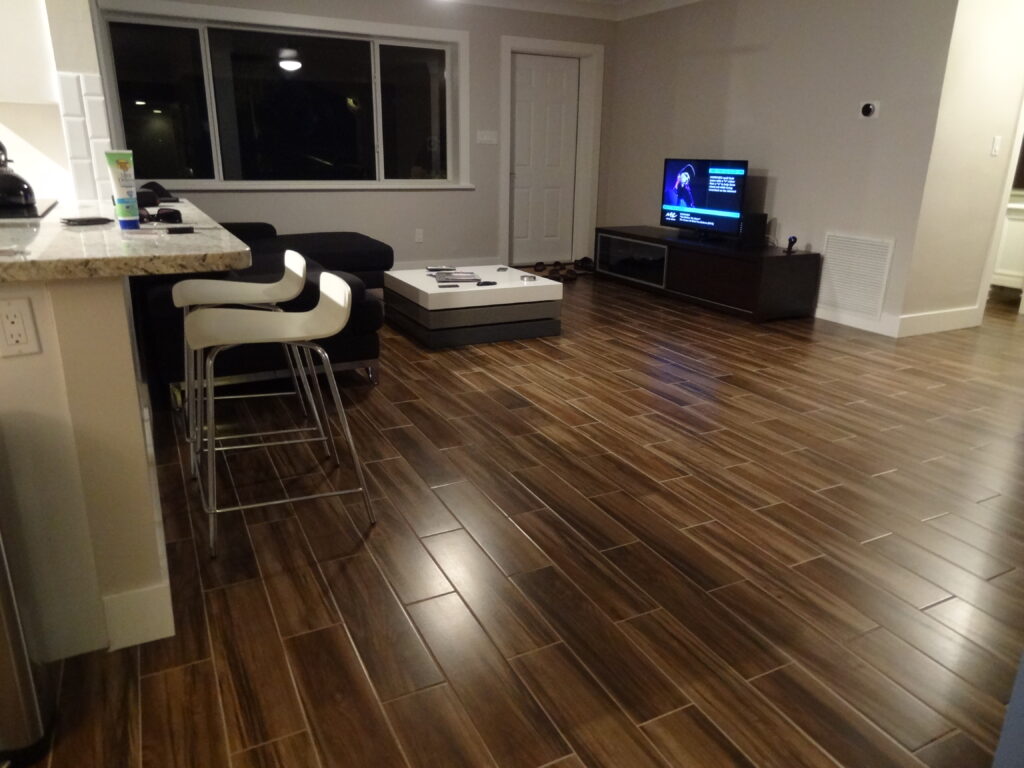 17 – Living room
Bruce’s Building Boost
Once again coming to our rescue, Bruce had recently been looking into hurricane windows for his own house and discovered that a local company offered better pricing if they installed multiple homes at the same time. If Bruce was doing his house and we were doing ours, the crew could complete both in one project. That sounded like exactly the kind of efficiency we liked.
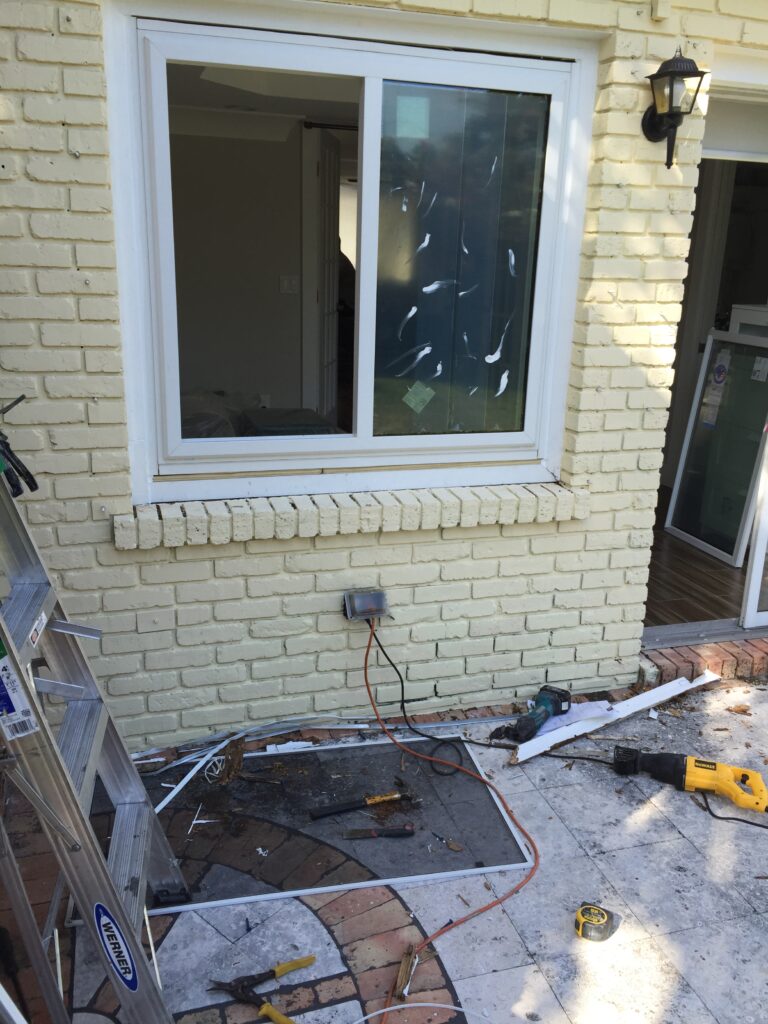
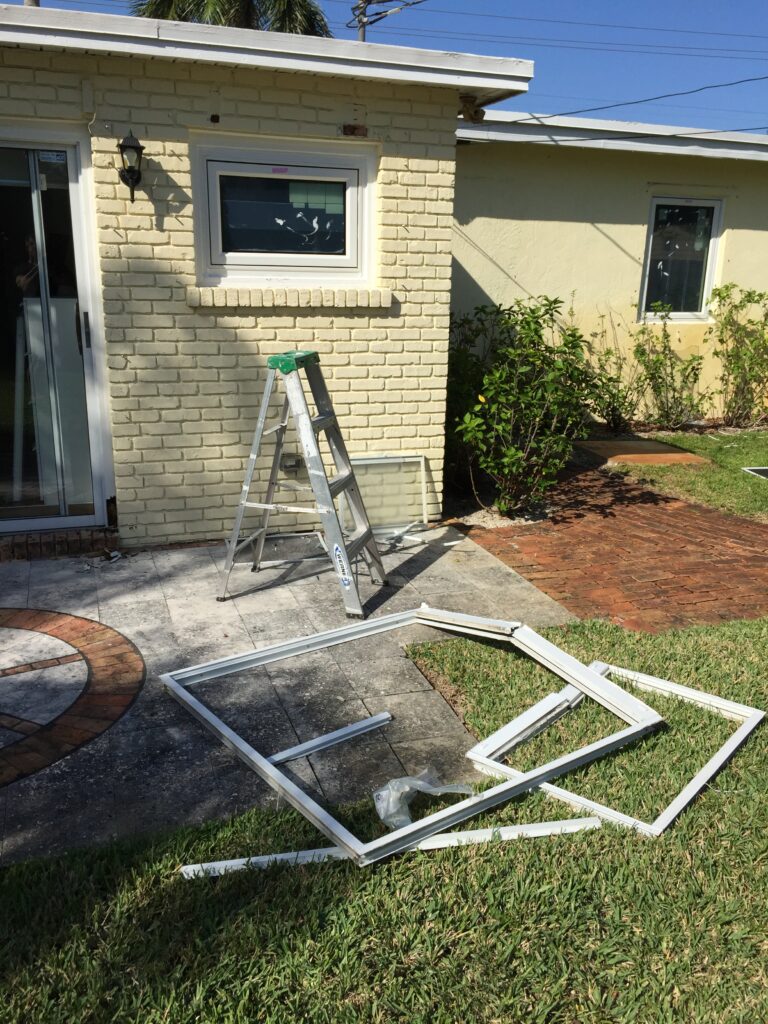
The upgrade made sense anyway. The original 1952 windows were single-pane with essentially zero insulation value and only basic storm protection. The new impact windows used laminated glass and reinforced frames designed to withstand hurricane winds and flying debris while also improving energy efficiency and security. Just as important for us, they eliminated the need to rush down to Florida every time a storm was forecast to install metal shutters. Instead of scrambling for a ladder every time the Weather Channel got excited, we could watch the radar and relax.
Shutters to Storm Windows
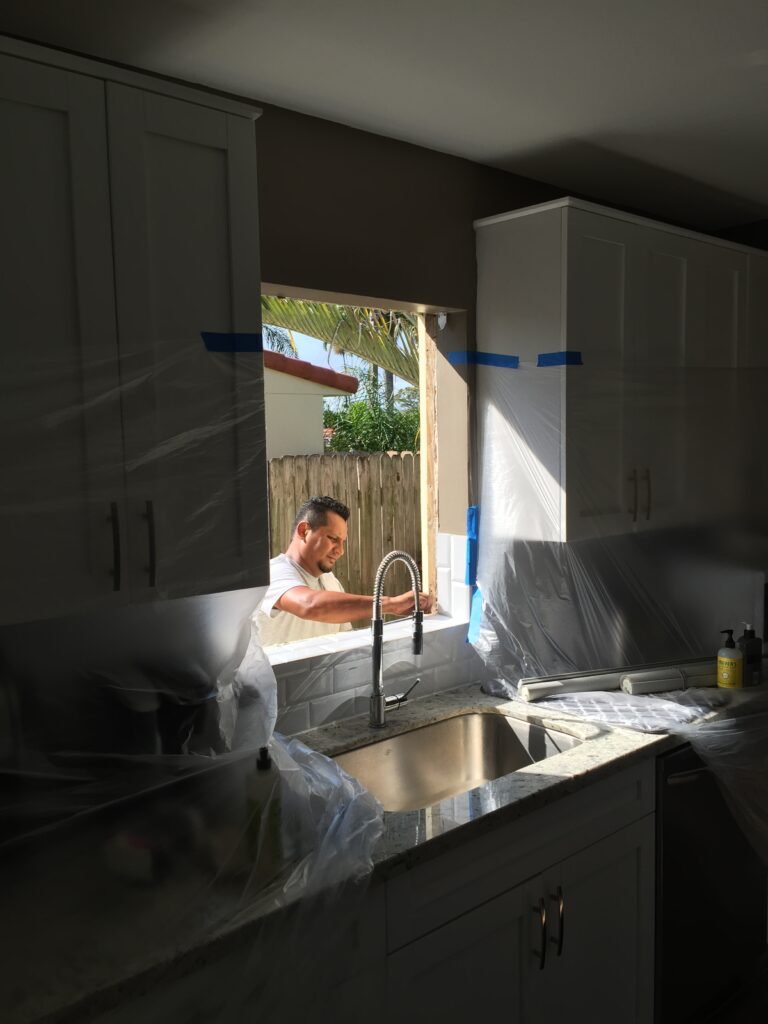 1 – Old windows removed
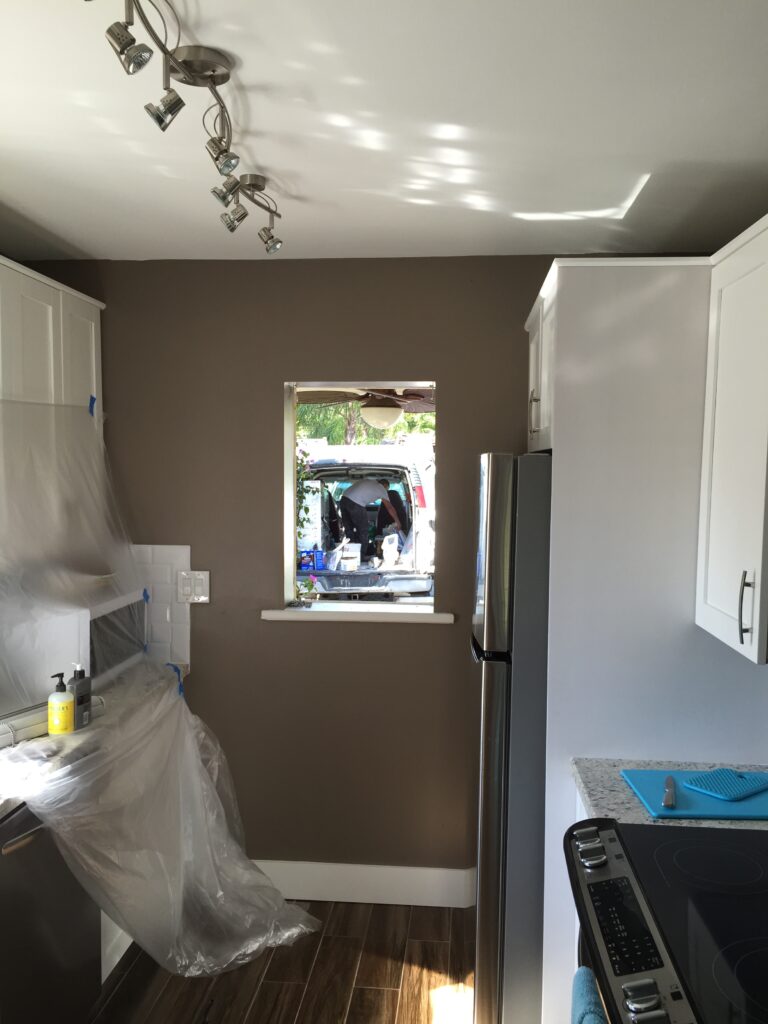 1 – Old windows removed
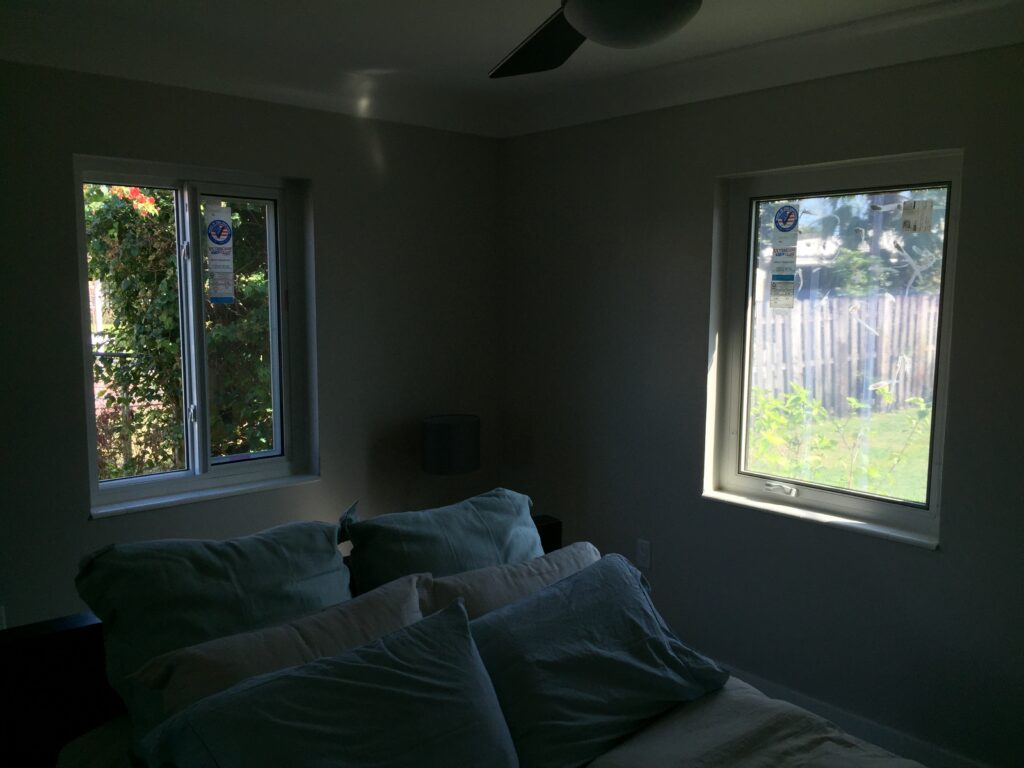 2 – Hurricane impact windows installed
 2 – Hurricane impact windows installed
 2 – Hurricane impact windows installed
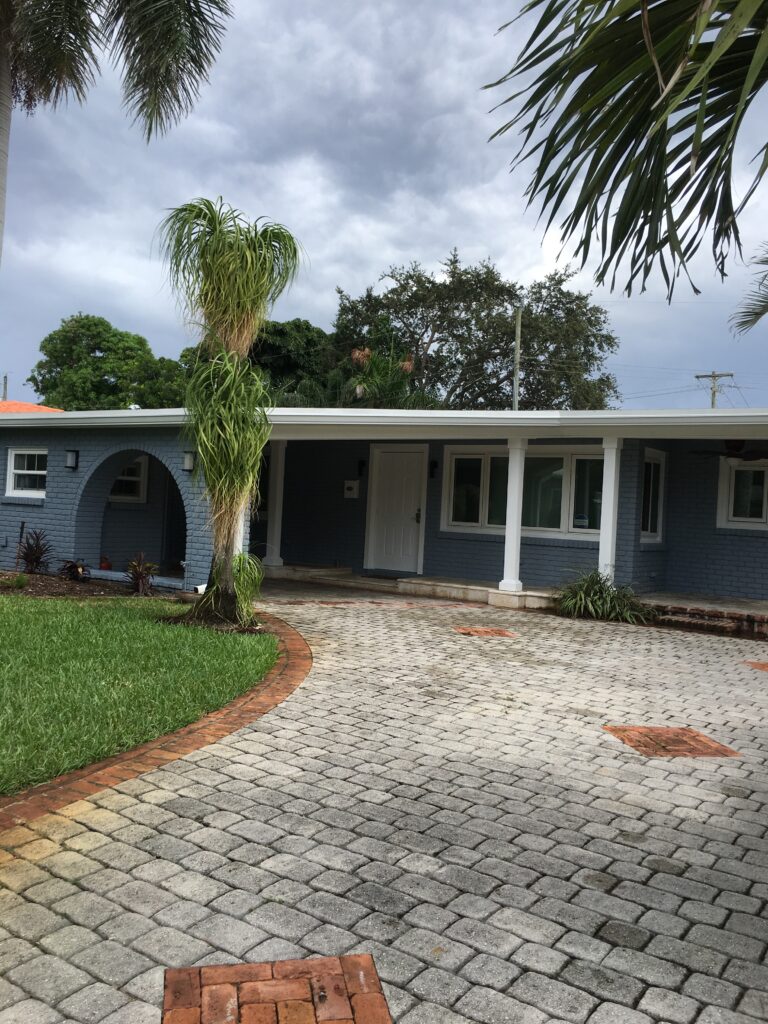 3 – Exterios paint job helped refresh the look
Rock Roof Reckoning
“You really have to see this,” my roofer shouted down, leaning over the edge of the house.
Words you never want to hear from a contractor.
I climbed the ladder to join him. It was my first time up—there had never been a reason to go before, at least not until our insurance company politely suggested they might drop us if we didn’t do something about it. There were no active leaks. No visible signs of past ones.
That illusion didn’t last long.
“There’s basically no roof here at all,” he said. “I’m shocked this isn’t leaking. Massively.”
He wasn’t wrong. As the sun broke through the clouds reminding us we were standing on a hot tar surface, I surveyed the scene.
“What exactly am I looking at?” I asked.
“I haven’t seen one of these roofs on a house in a long time,” he said. “Original—1952. Tar-and-chip construction.”
The system was fairly simple: sheets of plywood coated in a thick layer of hot tar, then covered with loose gravel that was quite literally tossed on top to protect it from the sun. It worked… for a while.
Then gravity took over.
Most of the rocks had long since migrated off the roof and into the gutters, which were now buckling under the weight. What remained was a patchwork of exposed tar, rotting wood, and holes large enough to make you question basic physics—which also happens to be my only working level of knowledge in the subject. Somehow—miraculously—there was no water getting through.
At that point, there wasn’t much to salvage. The contractors got to work.
All of the plywood decking was replaced, and while everything was exposed, we added metal hurricane ties to strengthen the structure against wind uplift—an essential upgrade in South Florida if you don’t want everything you own blowing down the street. The new system used a sealed membrane, heat-fused in place—no shingles to blow away—and was fitted with solar-powered ventilation fans to keep heat from building up in the attic.
When the work was finished, the house looked exactly the same from the street—always a little disappointing when you spend money on things you can’t actually see, but necessary. Structurally, however, it was now ready for whatever Mother Nature might throw at it… which, a month later, she did—at our Maryland house again, while the Florida one quietly basked in sunshine.
Roof Reboot
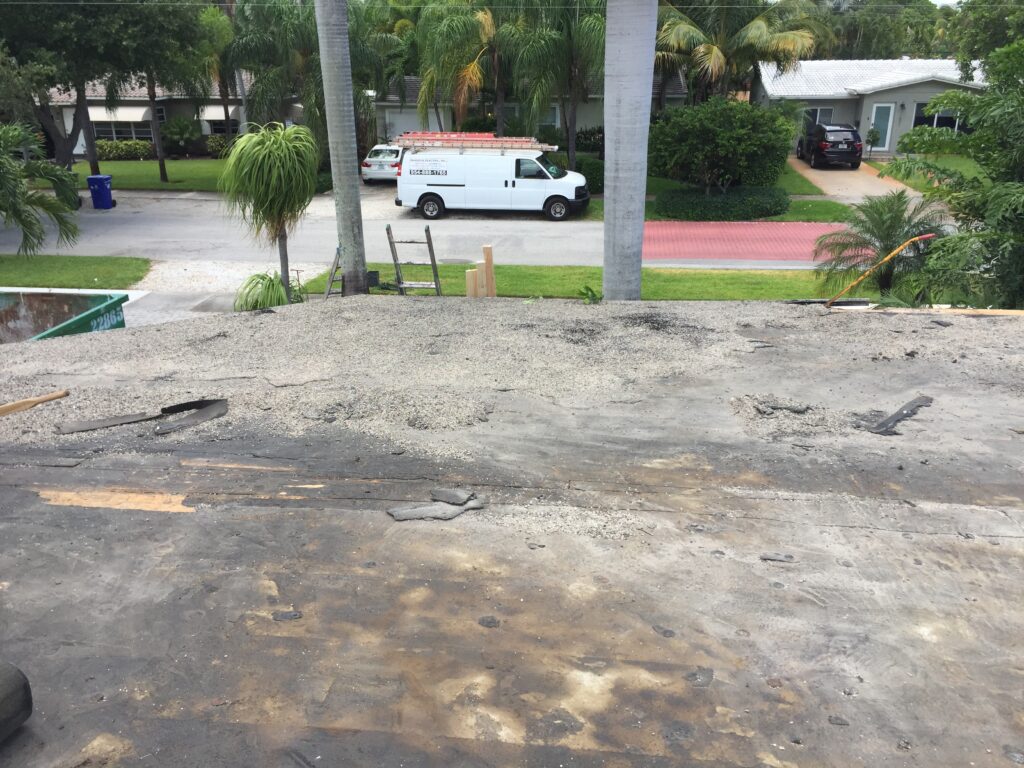 1 – I have NO IDEA how this roof wasn’t leaking
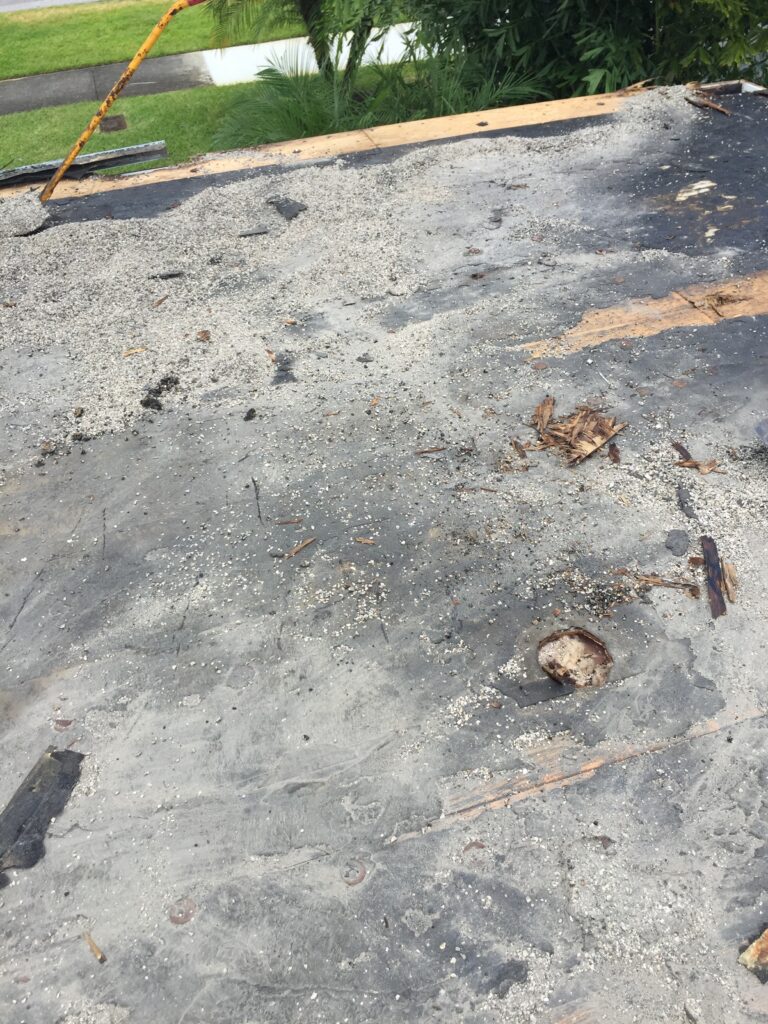 2 – there appeared to be holes everywhere
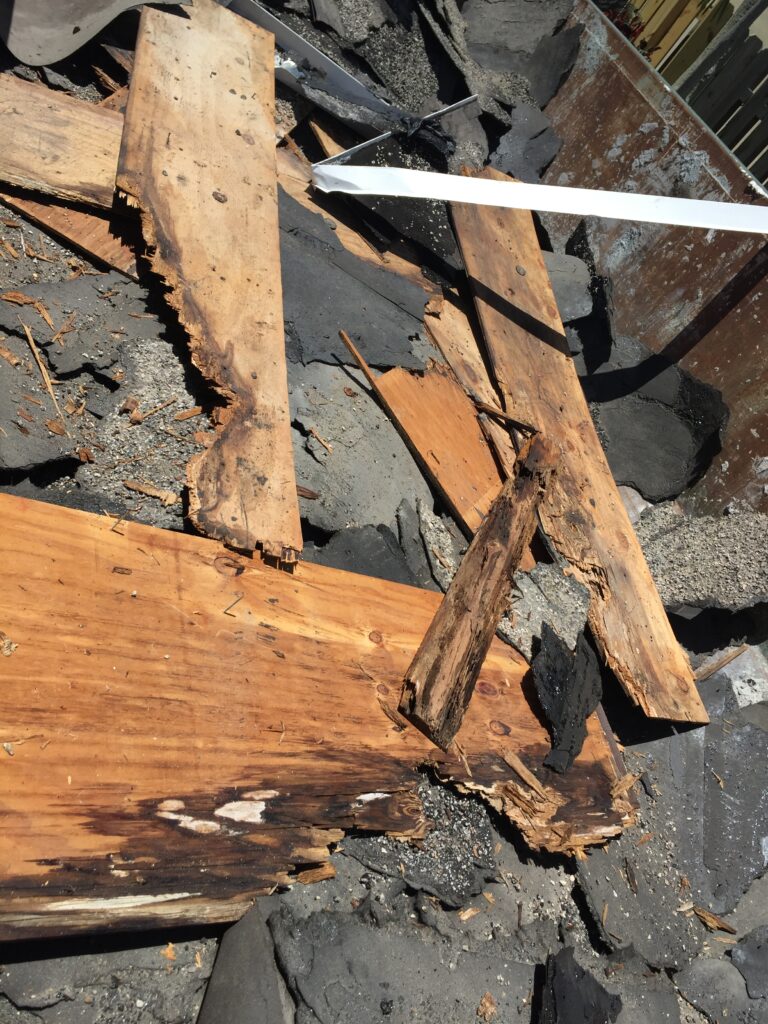 3 – Wood sheeting was rotten beyond repair
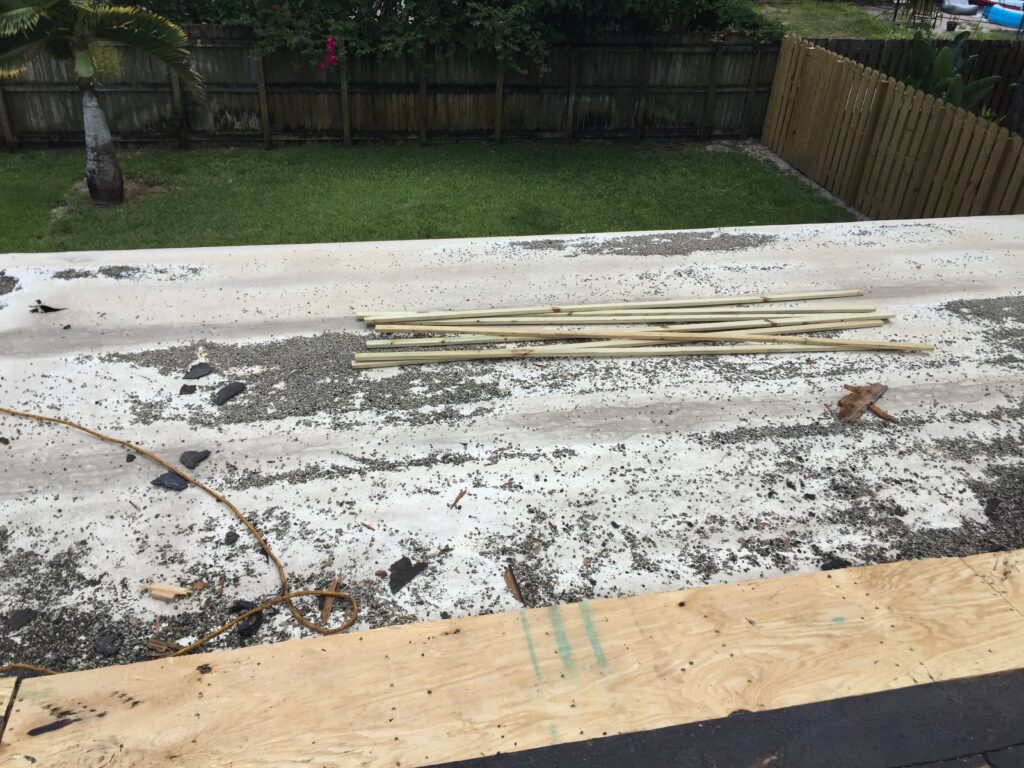 4 – Even bare, the new plywood sheets looked like a better roof
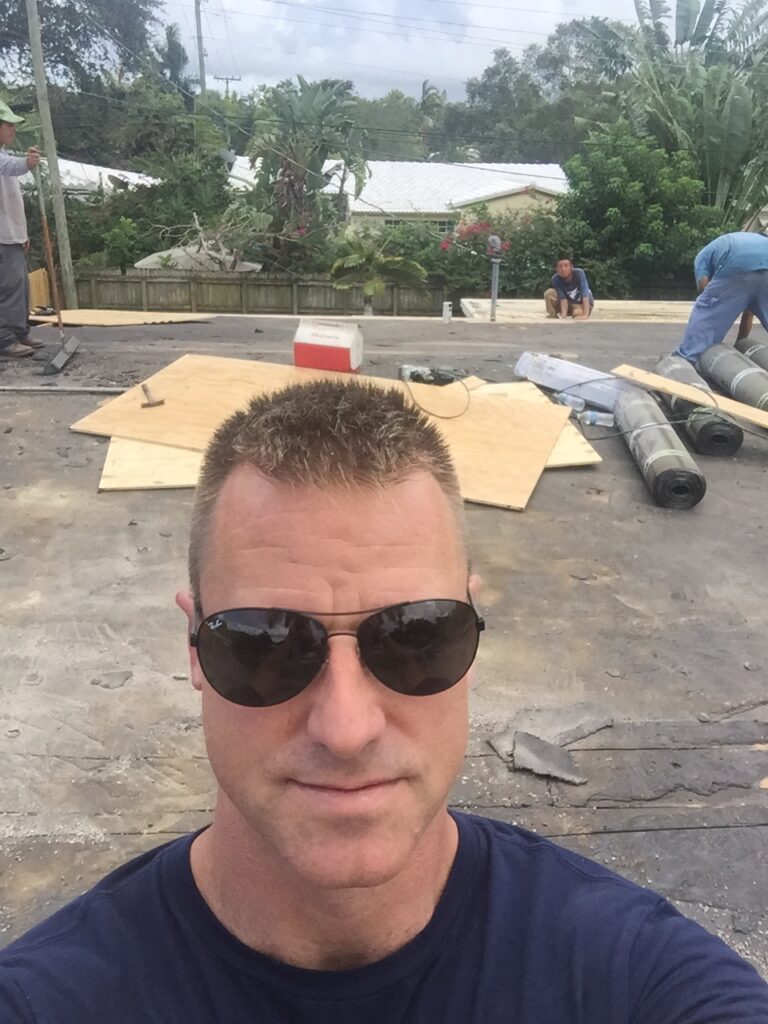 5 – I had to see it myelf
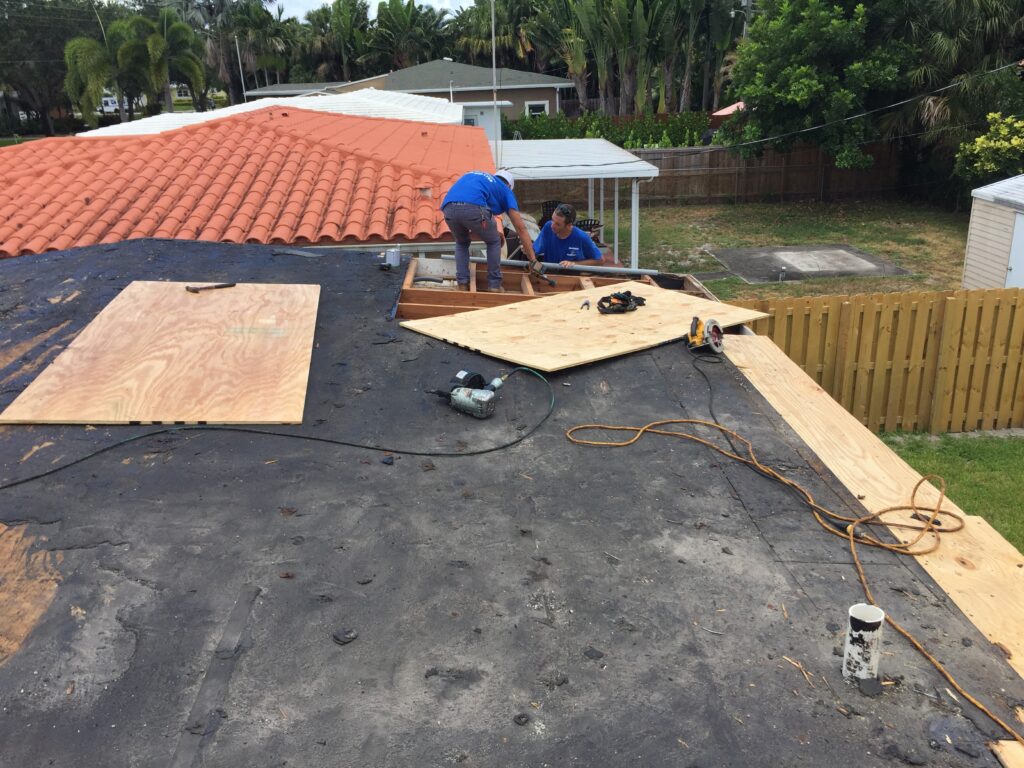 6 – workers begin full scale replacement
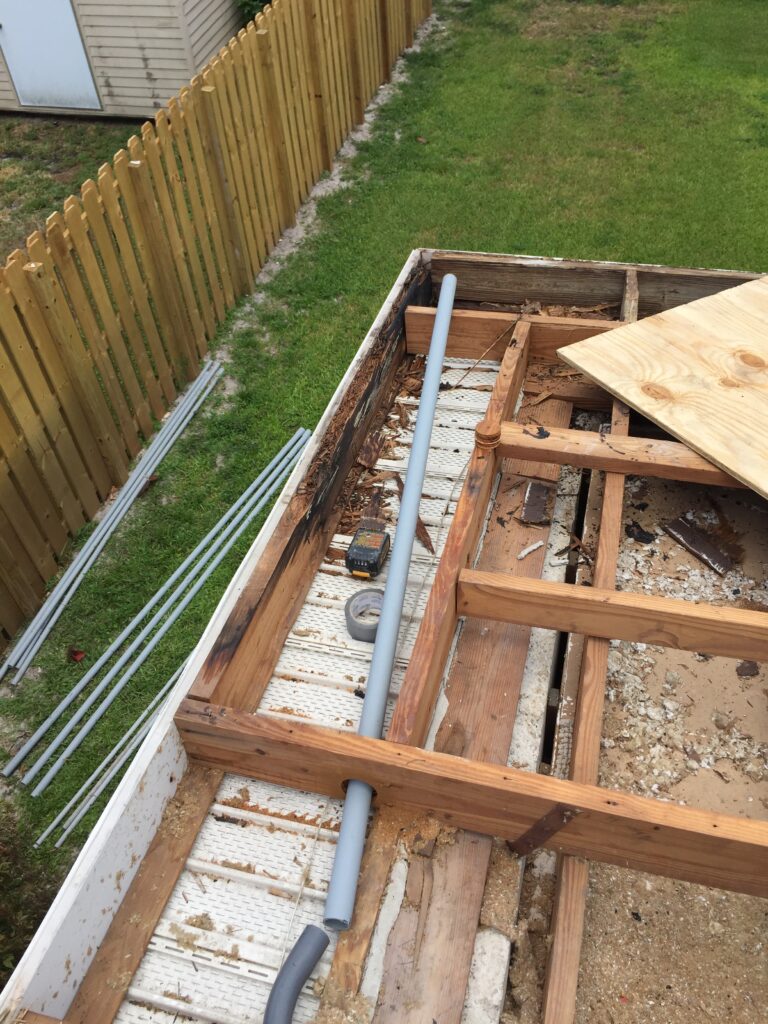 7 – down to the studs (den’s ceiling visible from above)
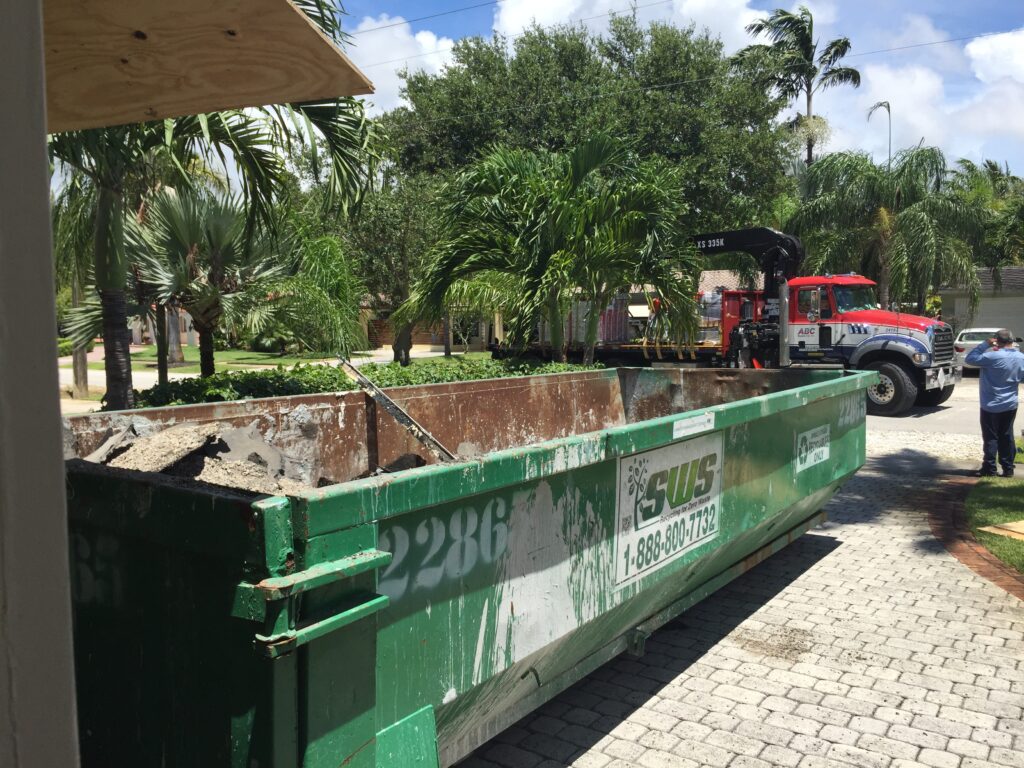 8 – Yes, this is dumpster #4
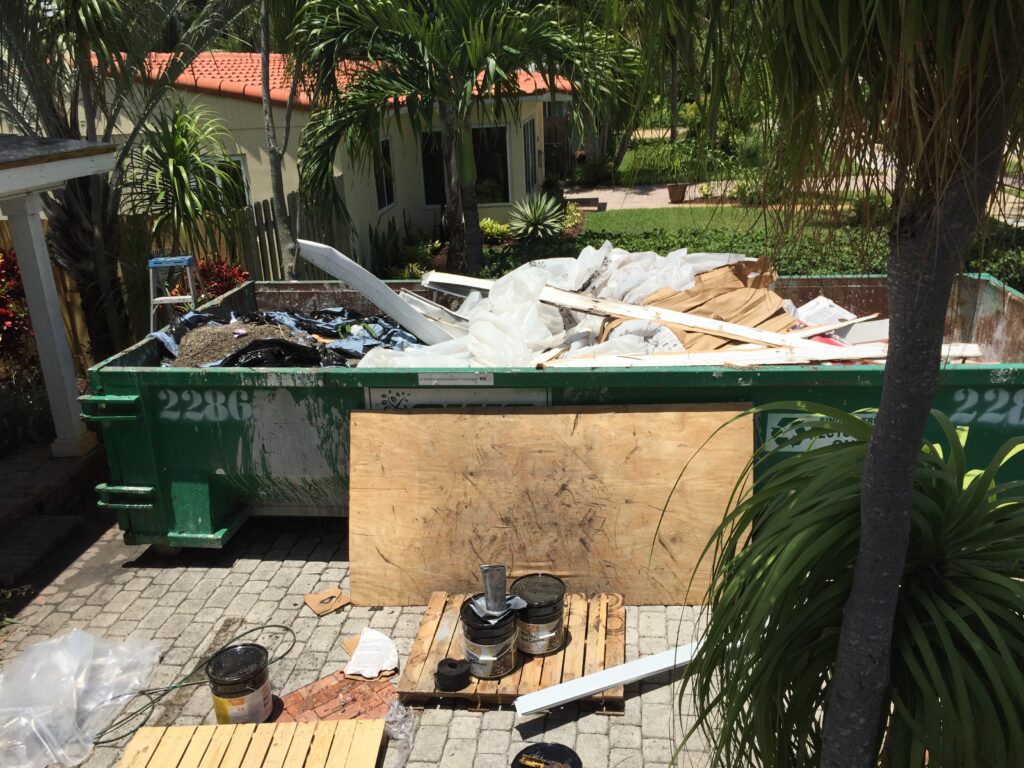 9 – I still think it would have fit into a rental car
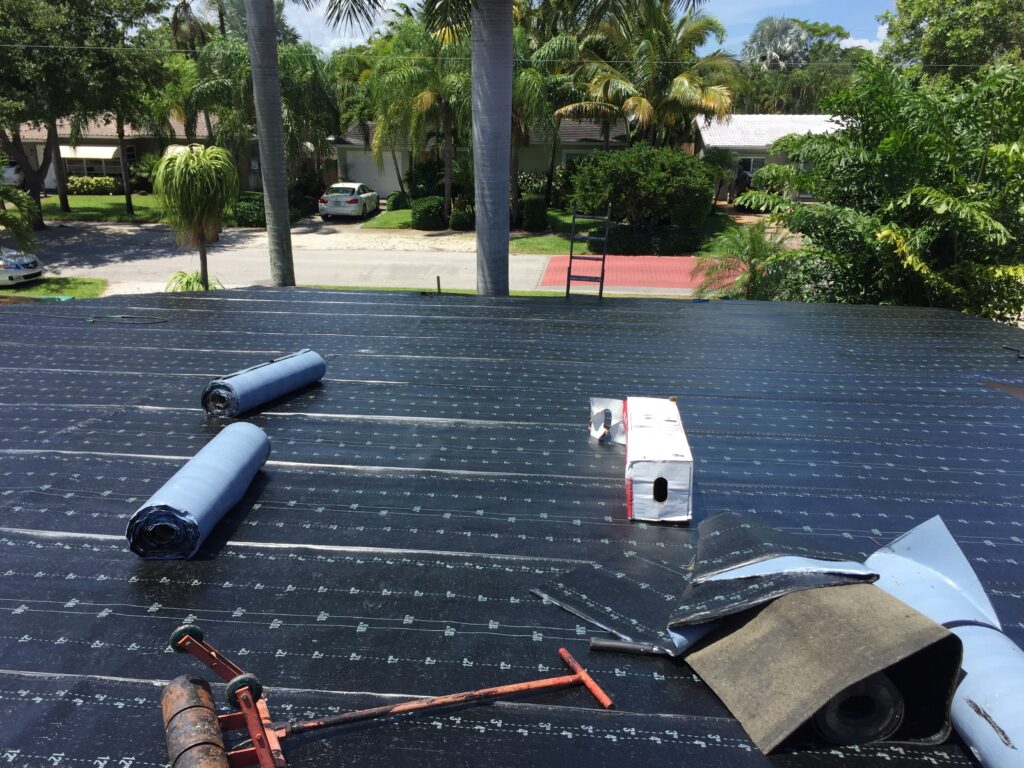 10 – New roof system: 100% glued down is best for hurricane speed winds
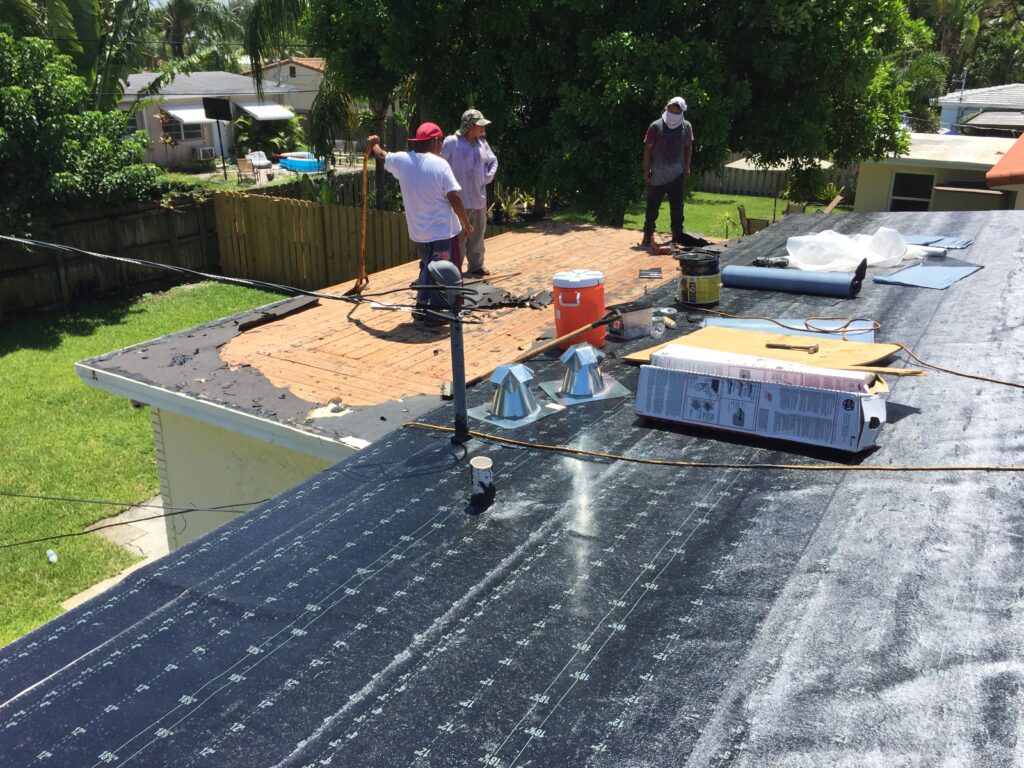 11 – rear addition gets a new roof also
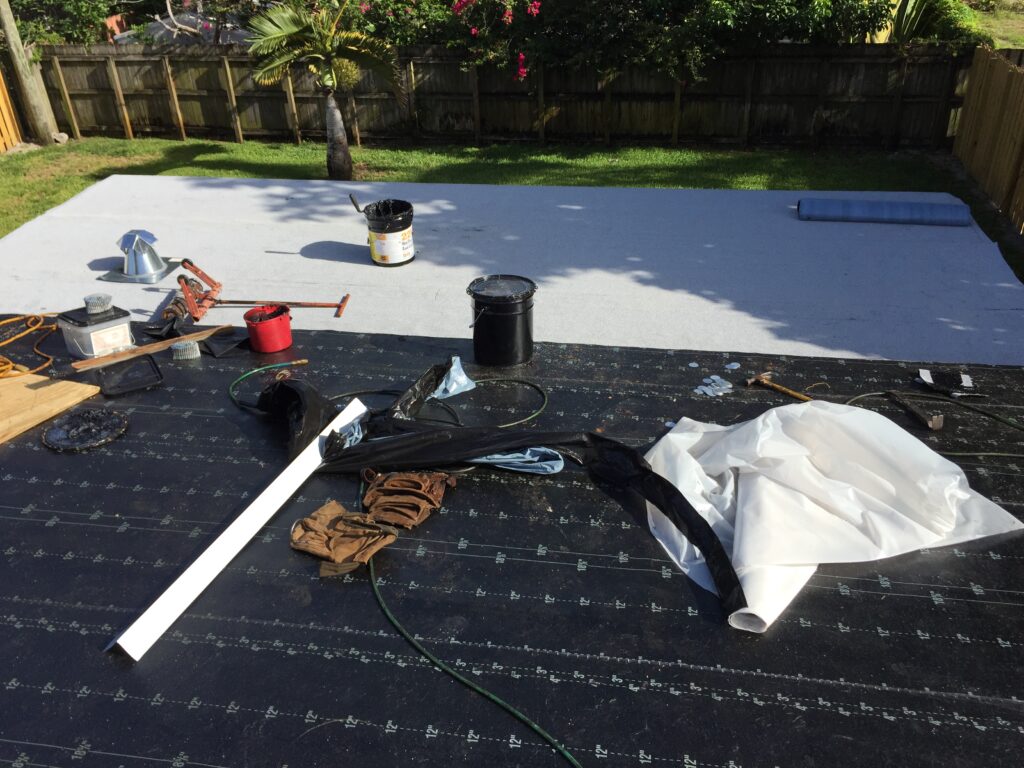 12 – The rear addition roof had to be white because less insulation
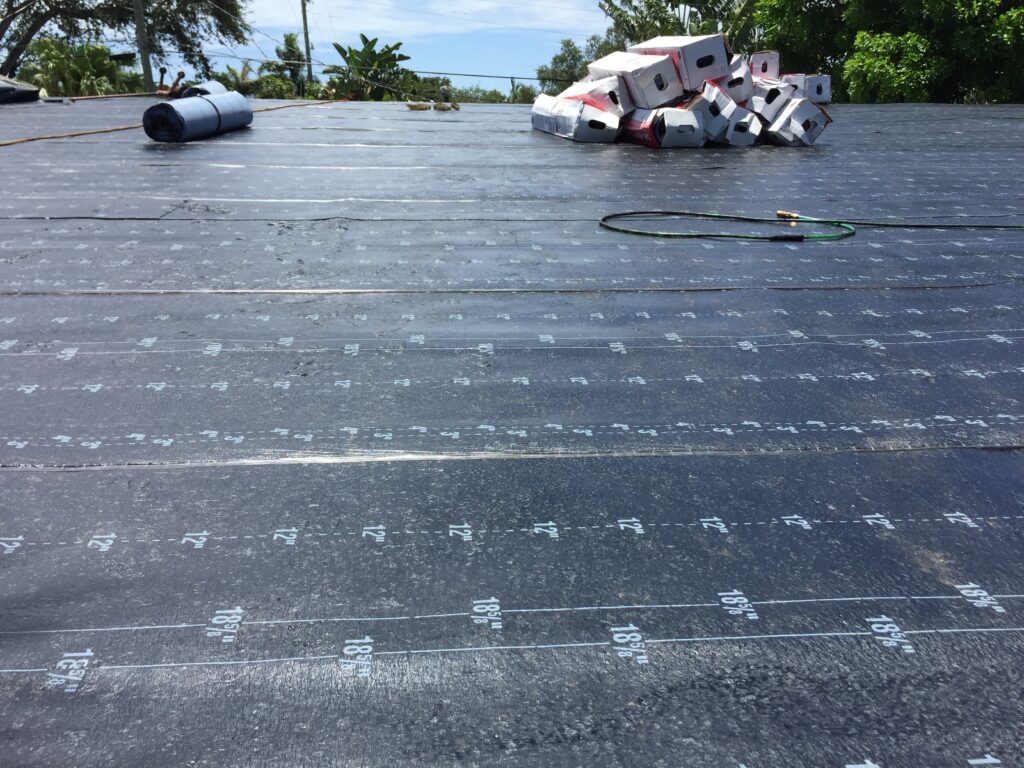 13 – Way more weather prepared than throwing rocks on top of a house? Time will tell
Fixer to Fabulous
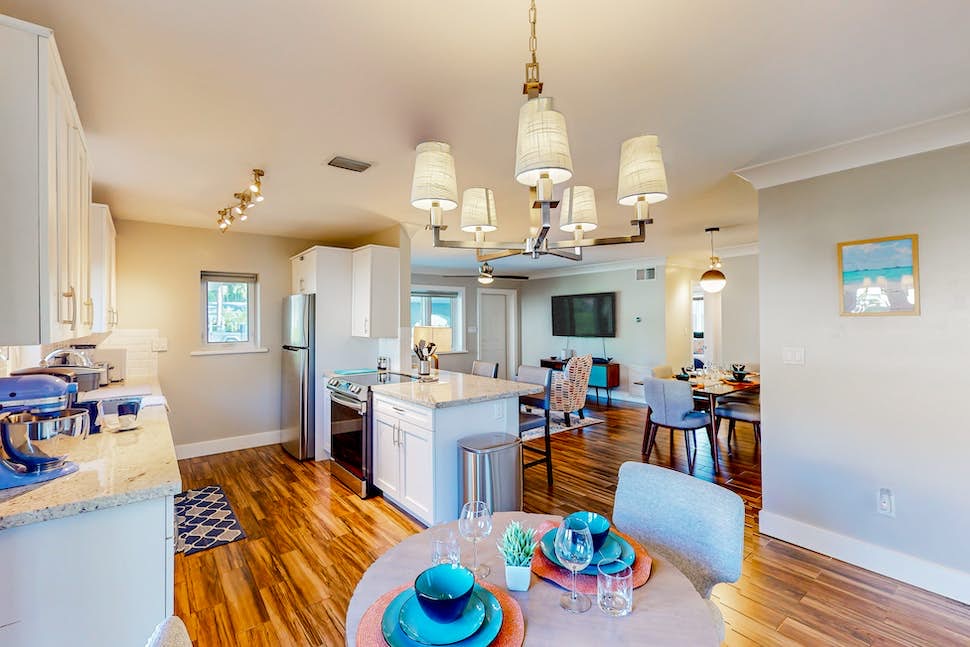
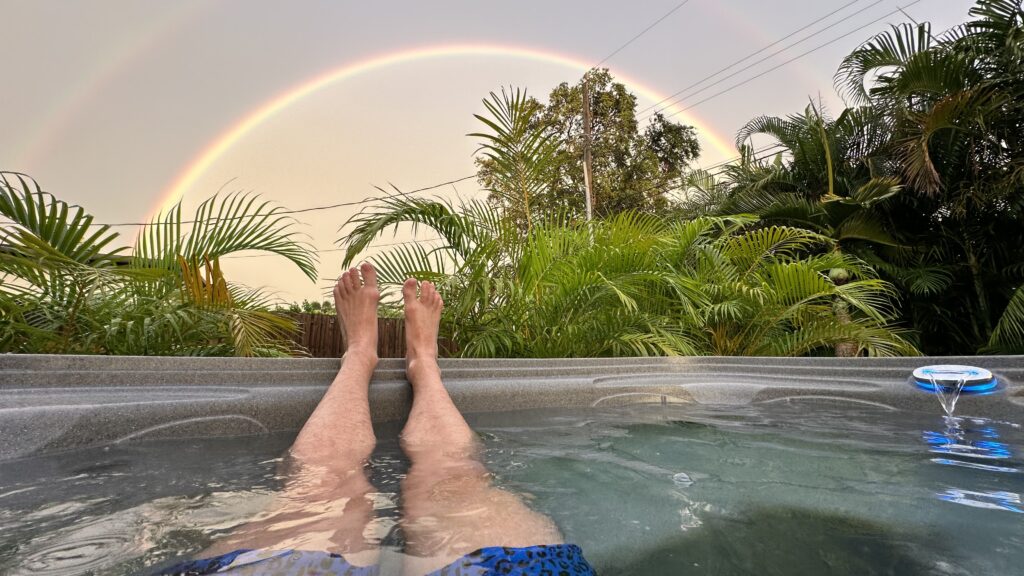
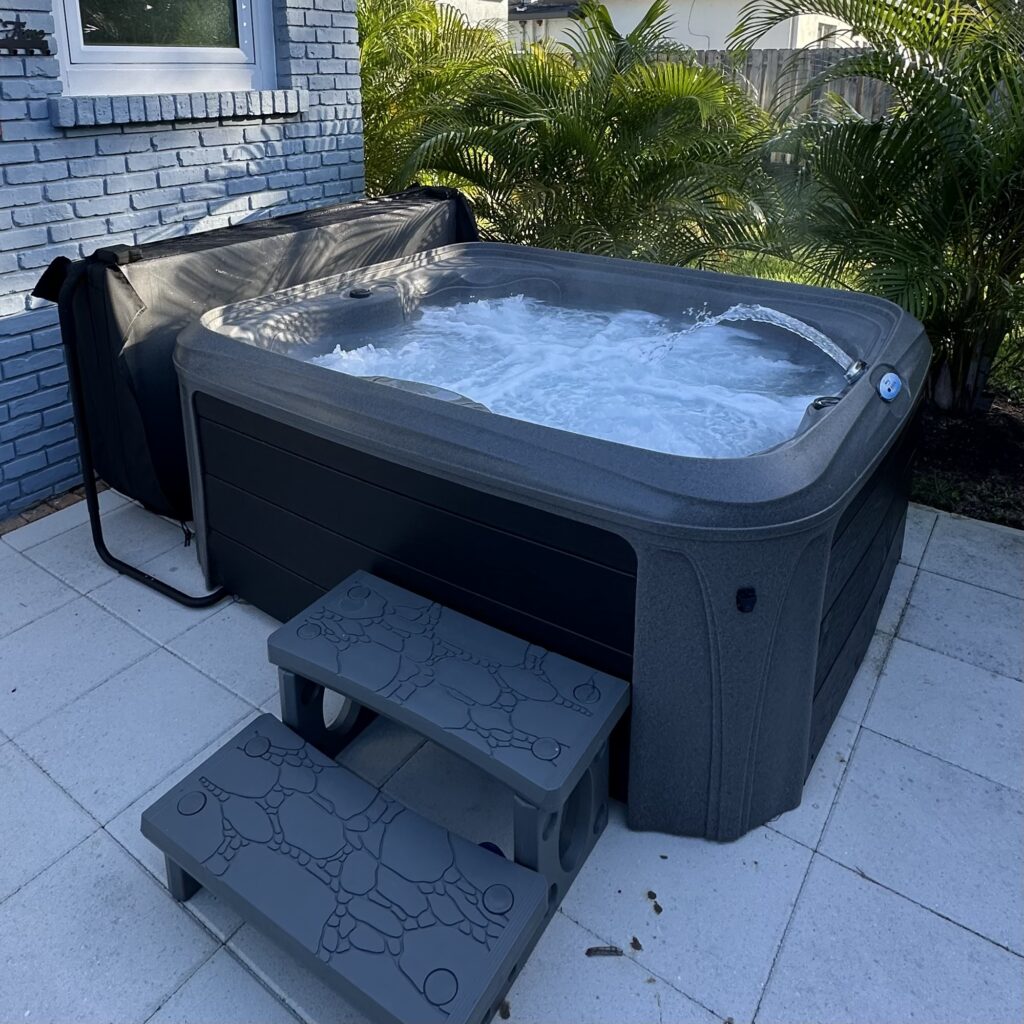
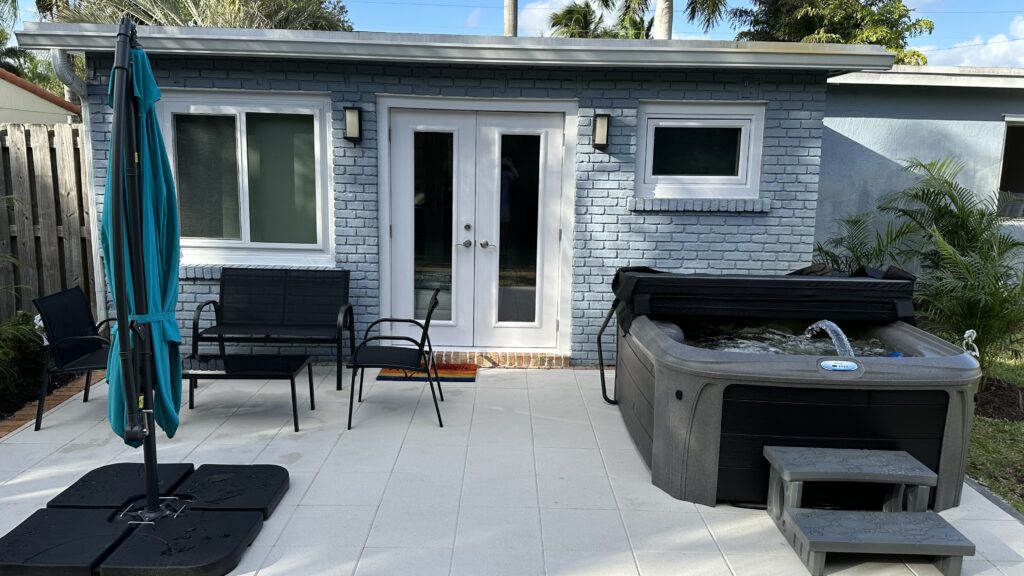
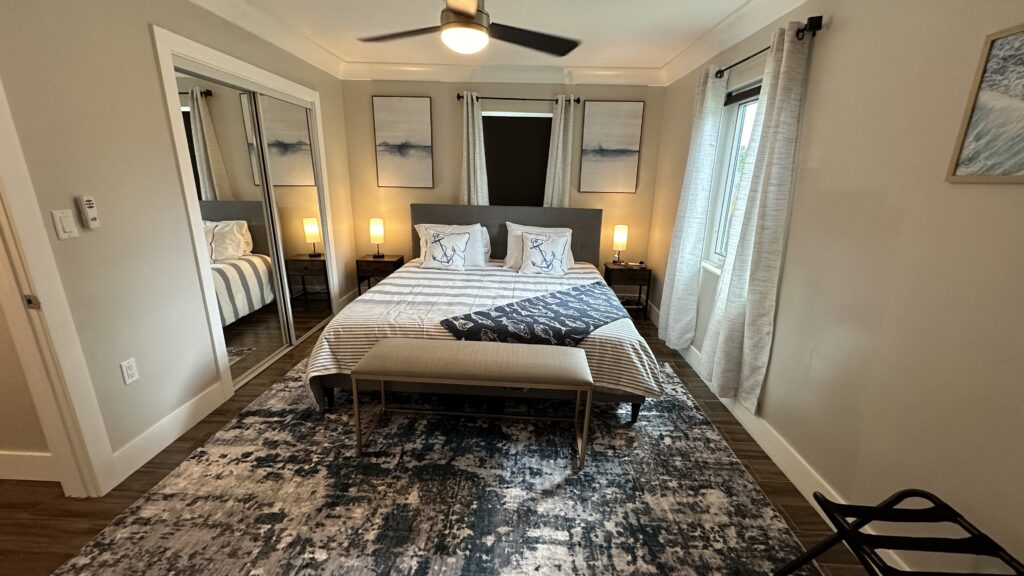
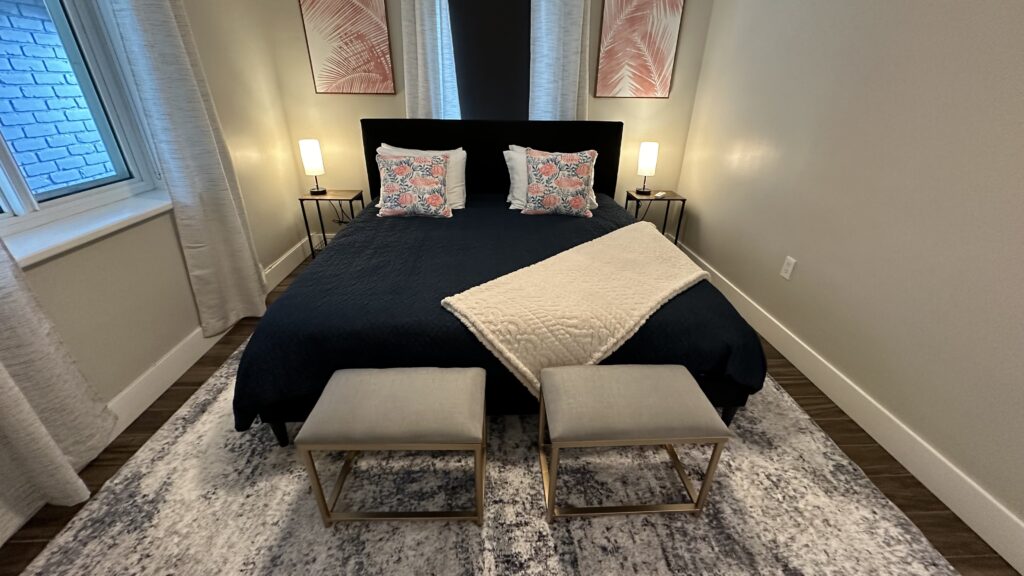
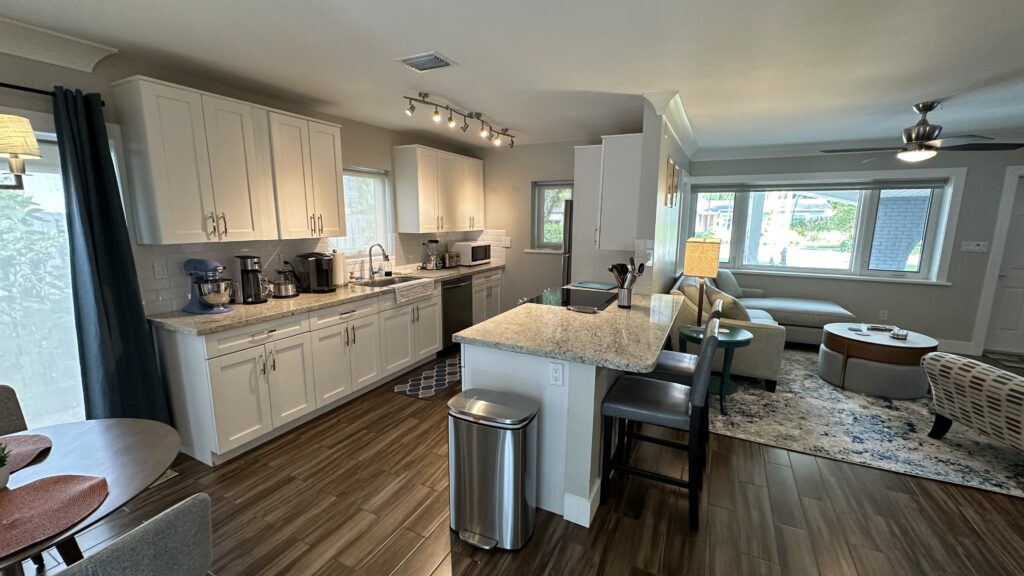
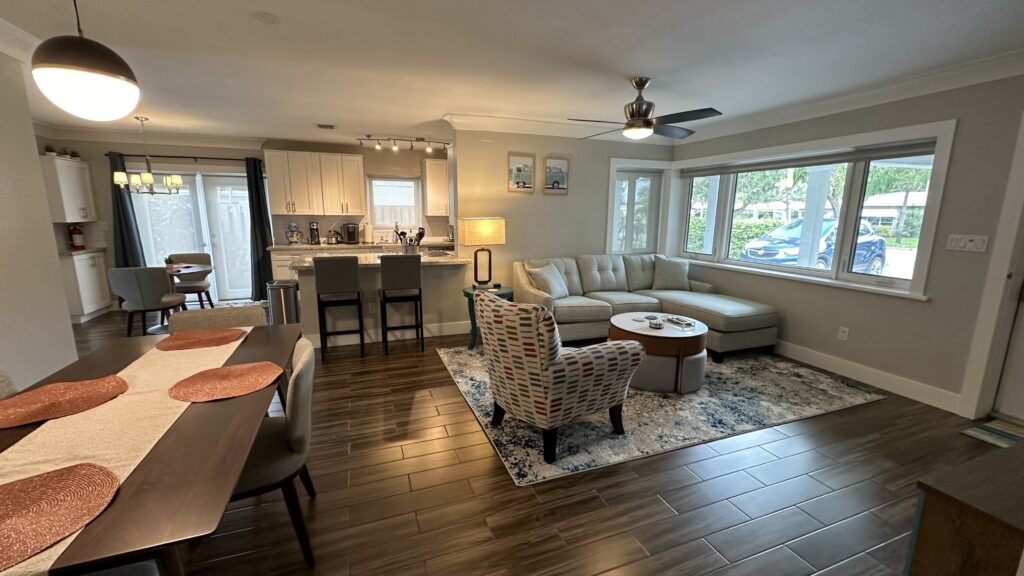
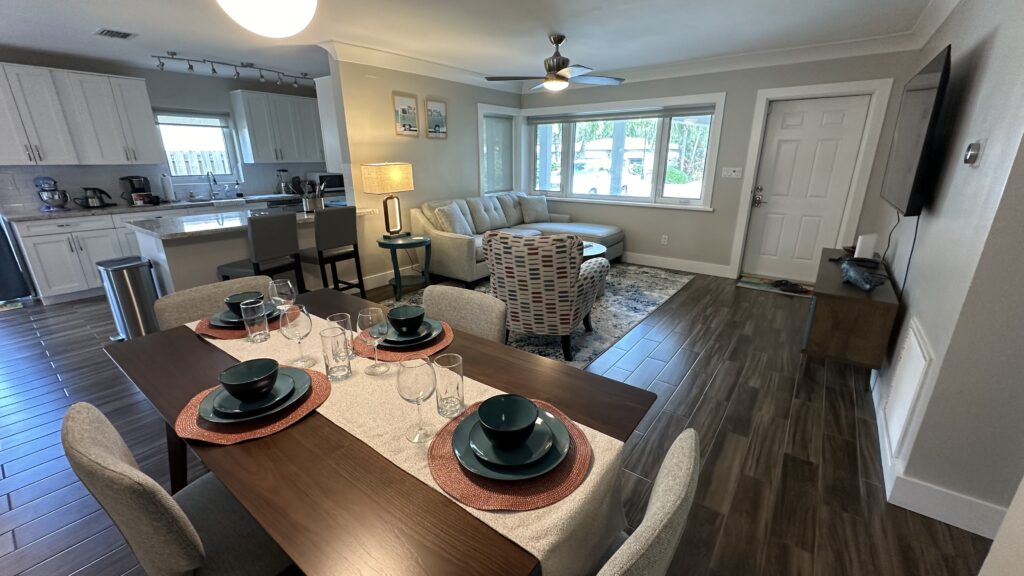
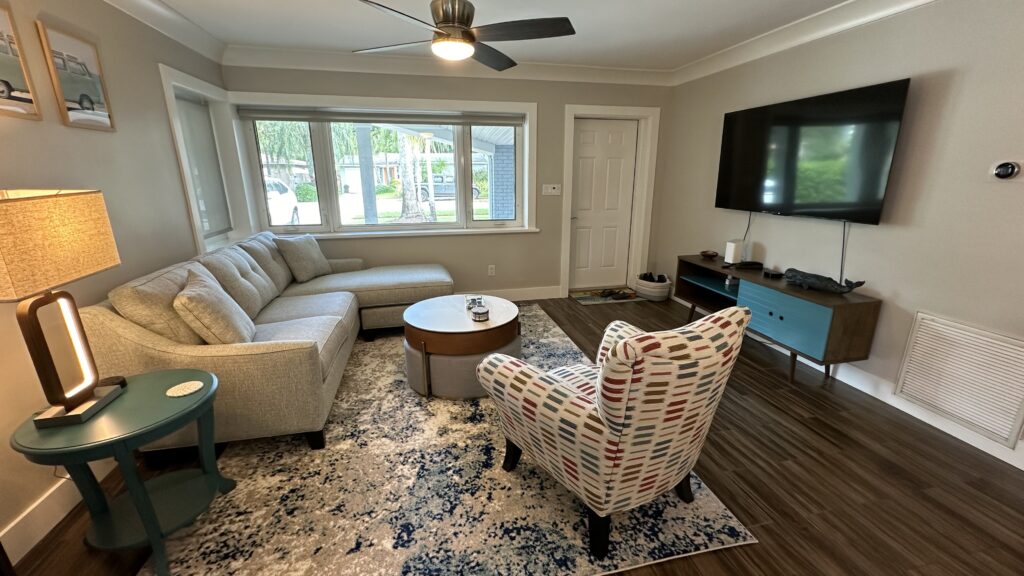
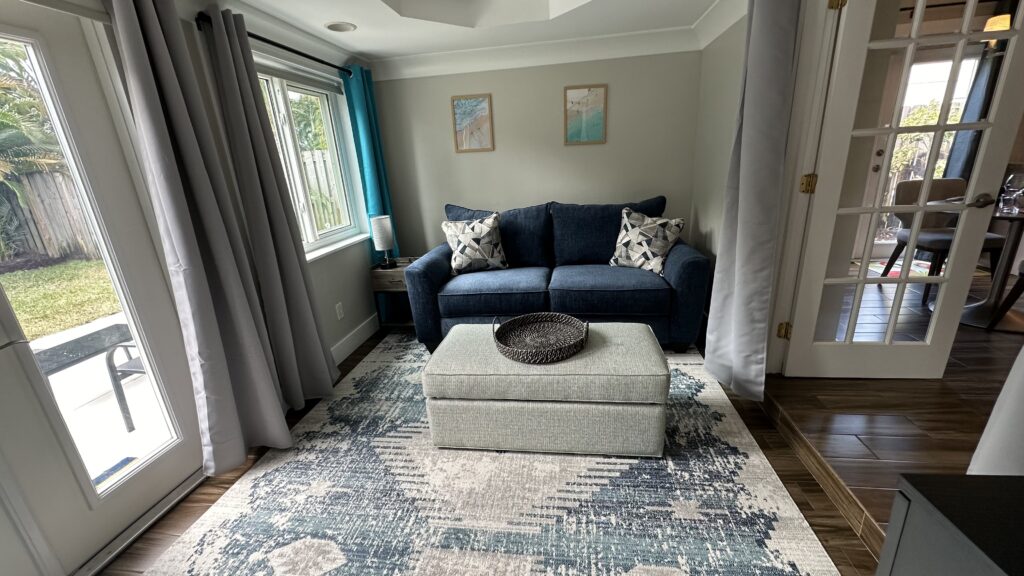
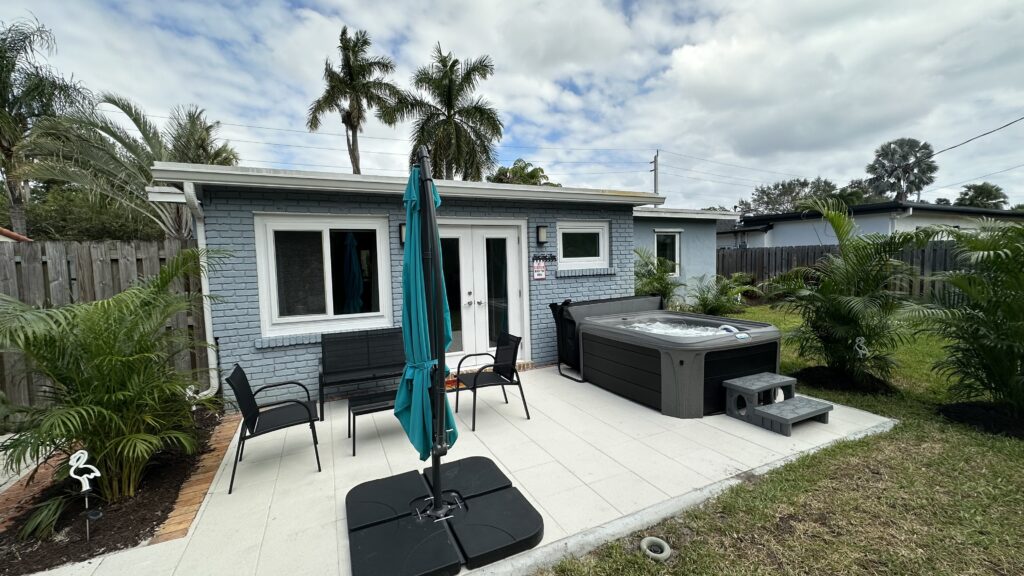
Over the years we’ve continued evolving the house, one project at a time—some planned, others decided in the moment. What began as a somewhat sterile beach bungalow has slowly grown into exactly what we hoped it would be: fun, relaxing, durable, safe, and ready for friends, family, neighbors, and the occasional unconventional party.
These days we also rent it out when we’re not there, which helps offset the sharply-rising cost of living in Florida while allowing other people to enjoy the house as well. Thankfully we work with a fantastic local company, Short Stay Florida, who handle the logistics and keep everything running smoothly while we’re back in Maryland. You can check out the listing here or find us on AirBnB.
Maintaining the house takes work, of course, and we still find projects every time we arrive—but none of that compares to the fun of sun, sand, and hosting family and friends. Even reading the guest reviews has become part of the enjoyment. As of this writing, we have 29 reviews, all five stars—each one a small reminder that the house we poured so much time and effort into has become a place other people love spending time in as well.
Experiment to Escape
What’s Next – Chapter 15
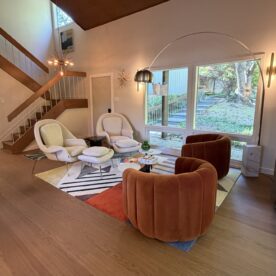
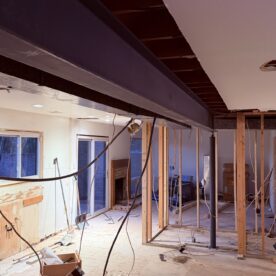
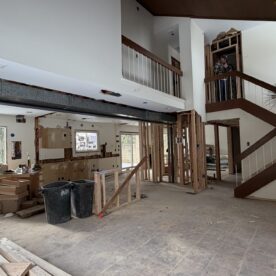
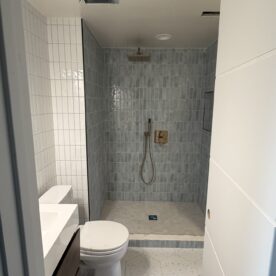
Back in Bethesda, construction on our mid-century restoration is picking up speed. The kitchen cabinets are in, the bathrooms are complete, and flooring is well underway. After months of planning, demolition, and decision-making, the house is finally starting to look—and feel—like a home again.
With furniture delivery just 25 days away and full move-in only 31 days out, our contractor is moving full steam ahead. The next chapter shifts from building to living: seeing how all of these decisions come together, and whether the spaces we imagined actually work the way we hoped they would.