Spa Touches & Stress Tests
Since Chapter 13, the house has crossed a meaningful threshold—from construction site to something that is almost operational. All three bathrooms are installed and mostly functional. There are still a few loose ends—the bathtub control valve need reconfigured, and the tankless hot water heater is still sitting in a box on the floor—but we’re close.
Showers run. Faucets flow. Water disappears exactly where it should. And the finishes—chosen by Ramiro and I after visiting what felt like every bathroom and kitchen shop within 100 miles—are finally coming together into something cohesive. Our philosophy was to restore to mid-century but also modernize with materials and techniques that would have been chosen, even appealing, to Frank Lloyd Wright and his peers, if they were options during their time. Design with intention: the best of mid-century without tipping into time capsule, so you don’t feel like you’ve walked into the set of Stranger Things.
That said, “done” is still requires some heavy lifting. The final touches—architectural lighting, high-efficiency heater fans, and towel warmers—are still waiting on the electrician’s last pass. These are the elements that quietly elevate a space from functional to something closer to a private spa. They’re also the kinds of details that matter in the Bethesda market—subtle, but noticeable to discerning buyers, not that we’re selling anytime soon.
And then there was the plumbing stress test—less glamorous, more consequential. A few issues surfaced, exactly as they should at this stage, before floors are down. Find it now, fix it now, forget it later. Because once the floors go in, the house stops forgiving and mistakes like leaking plumbing become very expensive.
Our Private Spa – Calm, Cohesive, and Creative
Tranquil Tones & Textured Balance
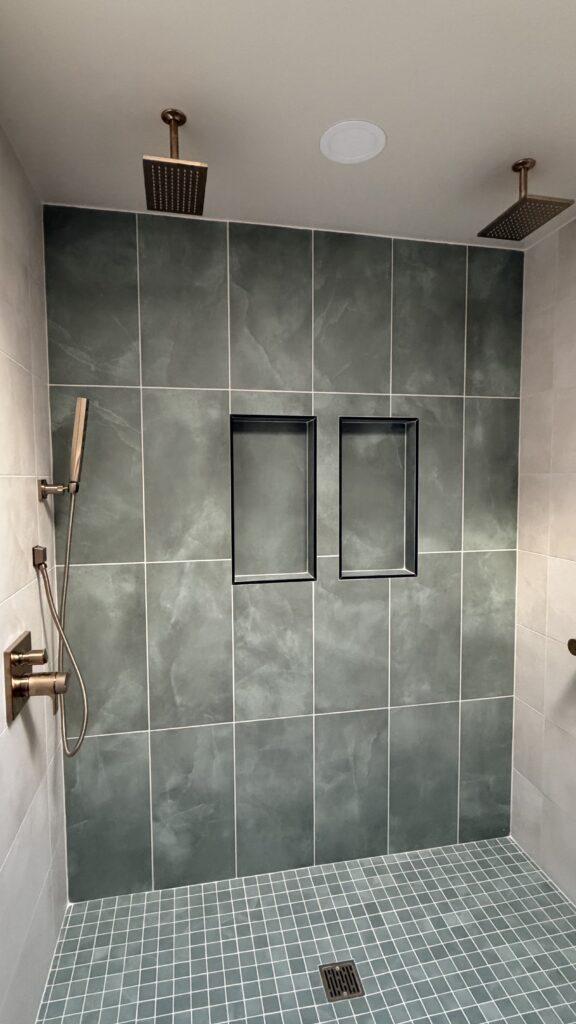
The primary bathroom came together better than we had hoped—which, in restoration terms, usually means everything sourced at different times from different places somehow aligns perfectly. All those trips hauling oversized samples—some nearly six feet long—through showrooms under the watchful eyes of staff bracing for impact finally paid off. The finishes don’t just work; they belong together.
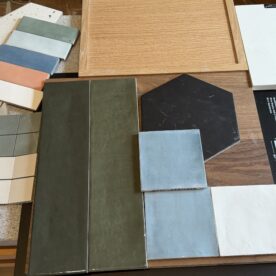
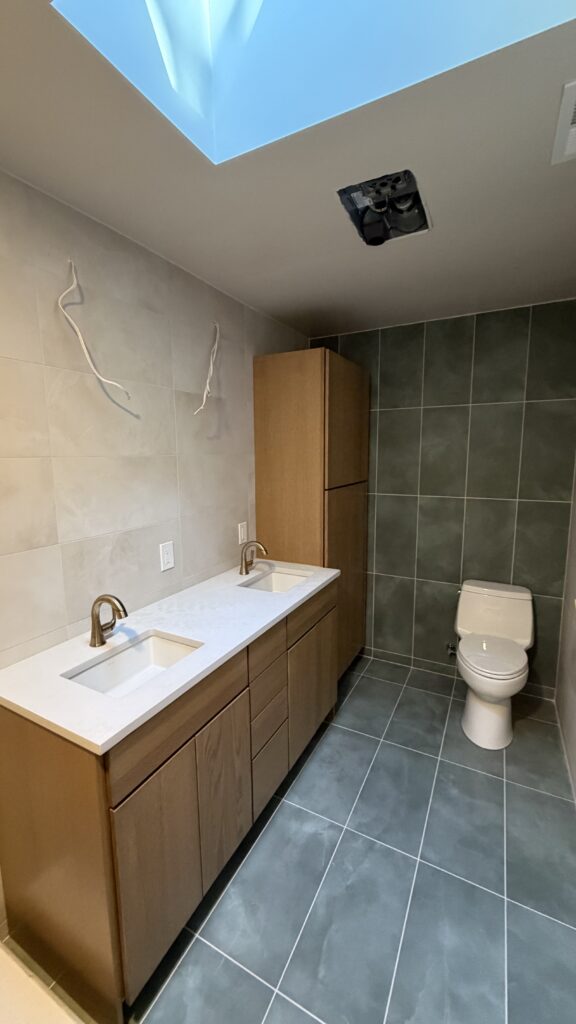
The high-movement sage green tile anchors the space, running down the back shower wall, across the floor, and up the opposite wall in one continuous gesture. It’s dramatic, but not loud—the feeling of stepping into a quiet valley. A sense of calm, understated luxury was always the goal.
The remaining walls, finished in a creamy, textured tile, keep the room from tipping too far into moodiness. Light where it should be, grounded where it matters. It’s a reminder that bold choices work when some materials know how to step back.
There’s also a subtle preview of what’s coming next. The same quarter-sawn oak cabinetry that will define the kitchen makes its debut here, paired with the same honed Caesarstone Cloudburst counters that will top the kitchen. A quiet thread of continuity across spaces—intentional, not repetitive. And the finishing touch: Delta’s new champagne line of fixtures landing the room exactly where we aimed—calm, cohesive, and creatively indulgent.
The Sky Bathroom – Terrazzo, Texture, and Thoughtful Touches
Floating Forms & Functional Fixes
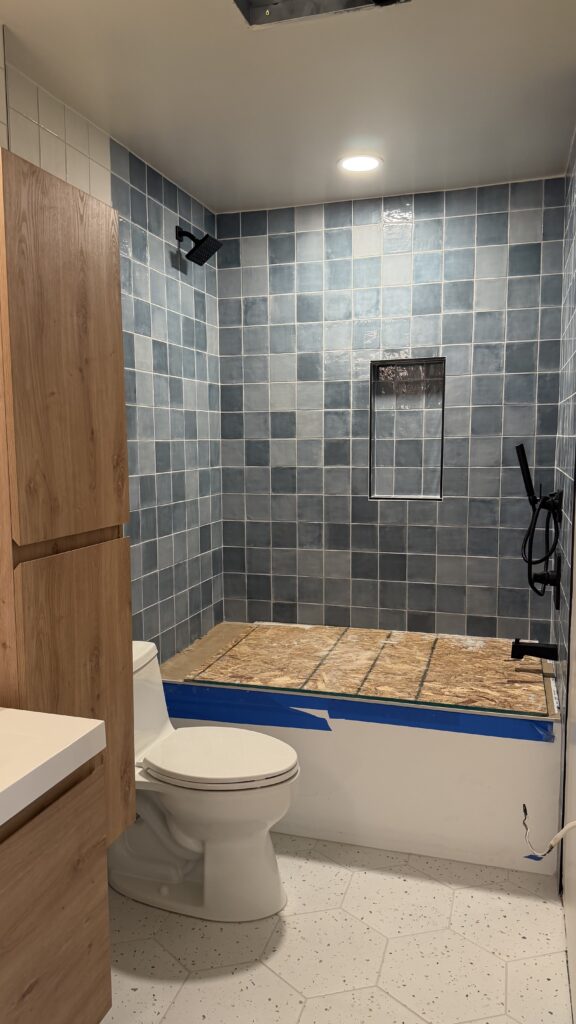
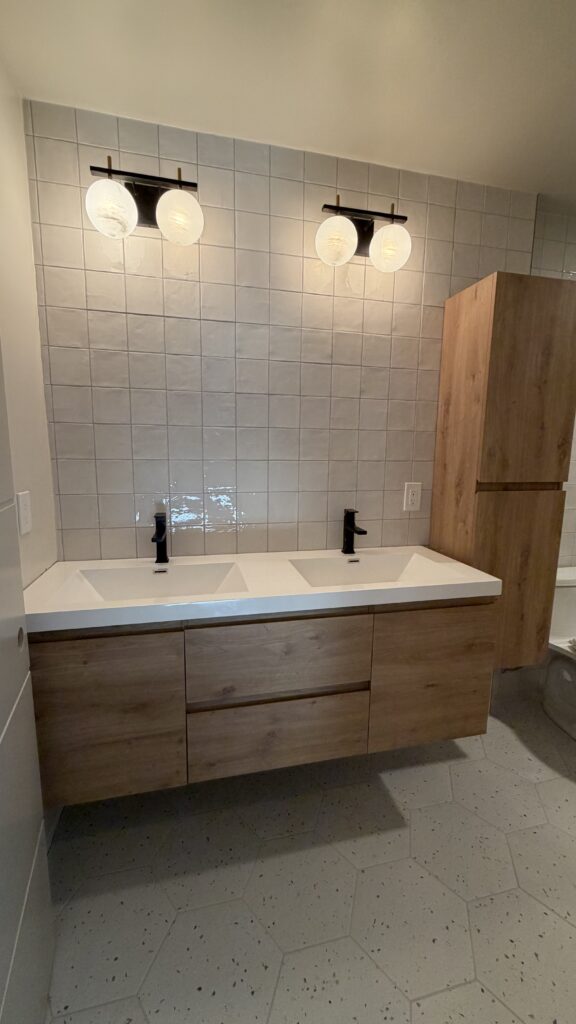
The Sky Bathroom is nearly complete, and like much of the house, it’s less about individual pieces and more about how they work together. The handle-free natural wood floating vanity was a deliberate choice—clean, quiet, and just enough warmth to balance the hand-cut tile without competing with it. It introduces a natural element into a space that could have felt cold, letting texture and variation carry visual weight. Floating vanities may cost a bit more, but in smaller spaces like this, they make the room feel noticeably larger—an easy win when restoring older homes.
Underfoot, the terrazzo floor brightens the room with a subtle nod to mid-century design. It adds energy without noise—just enough color to keep things interesting without overwhelming the space. Done wrong, terrazzo can take over a room. Done right, it feels like it was always meant to be there. Here, it reads less like a new addition and more like something original that we were lucky enough to preserve.
Matte black Delta fixtures and dual globe lights finish the space with just enough contrast. And then there are the details you don’t notice until you use the room—the shower head is positioned opposite the controls, so guests aren’t reaching through cold water to turn it on. Small decisions, but intentional ones. Because the goal was to design how the room works, not just looks.
Tiffany Martini Blue – First Floor Jack and Jill Bath
Powder Room to Proper Retreat
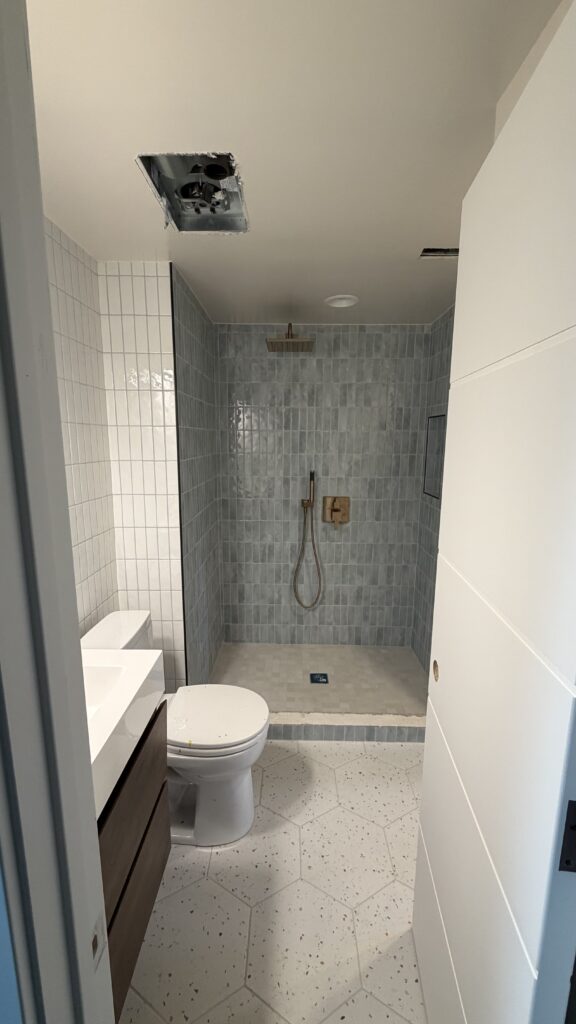
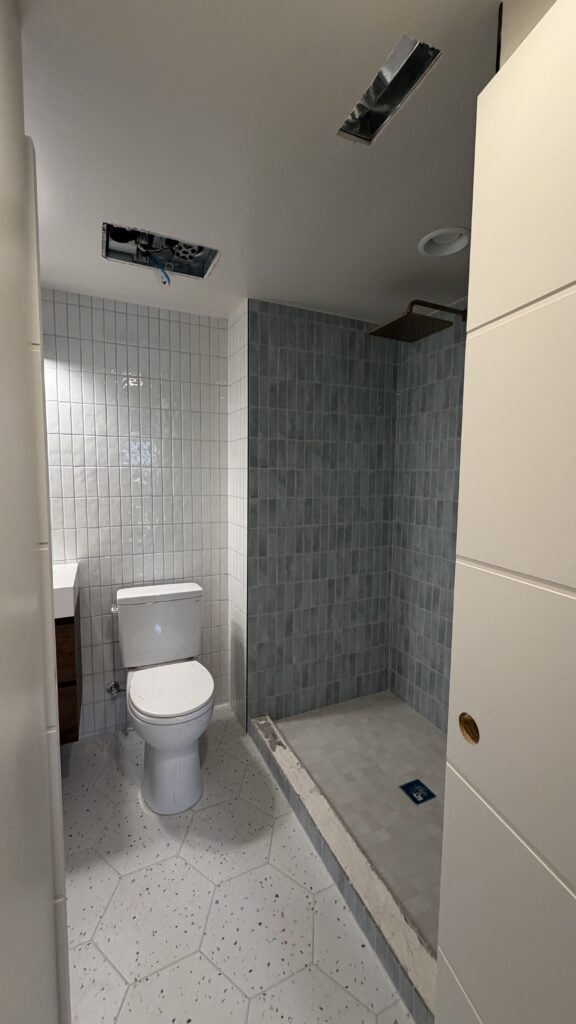
Perhaps the most surprising transformation happened where expectations were lowest—the first-floor bathroom. Originally a tight, barely functional space, it now carries double duty: a Jack-and-Jill for the guest bedroom and a proper powder room for the main floor. The shift wasn’t cosmetic; it was structural. Relocating the HVAC to the attic unlocked square footage, expanding the shower by more than 50% while still carving out space for a dedicated shoe closet. An accidental change—but one that fundamentally improves how the room works.
What’s interesting is how familiar materials behave differently here. The same terrazzo flooring used upstairs reads completely differently when paired with vertical-stacked, handcrafted tile. The Martini Tiffany Blue in the shower leans into its mid-century roots—confident, a little playful—while the textured white wall tile restores balance. It also ties deliberately to the upstairs guest bath, where tiles from the same family create continuity without repetition. It’s still a compact room, but it no longer feels constrained. If anything, it also feels like it was always meant to be here.
When we bought the house, each room—remodeled in different decades—had lost any sense of a cohesive design language. One of our core goals was to bring continuity across spaces without making them feel identical. That thinking shows up even in places most people would never notice. All shower thresholds, for example, use the same Caesarstone Cloudburst as the kitchen and primary bath countertops—a small detail that quietly connects the spaces.
There are still a few loose ends—electrical and HVAC finishes waiting their turn—but the intent is already clear. This is one of those moments where early planning—and more than a few mid-project pivots—are paying off.
Pantry Paneling and Hidden Passages
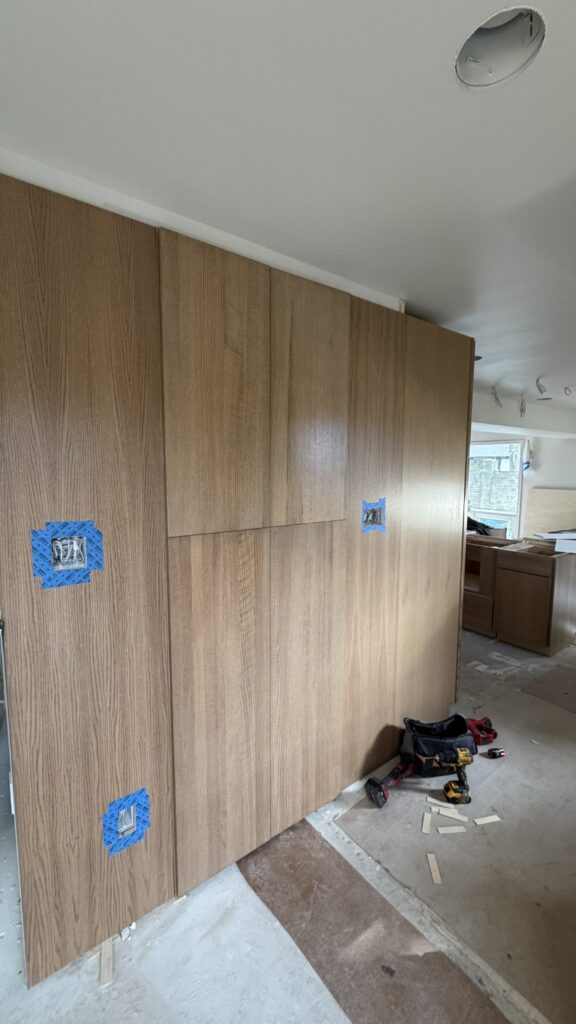 1 – Oak paneling continues the kitchen and conceals the walk-in pantry
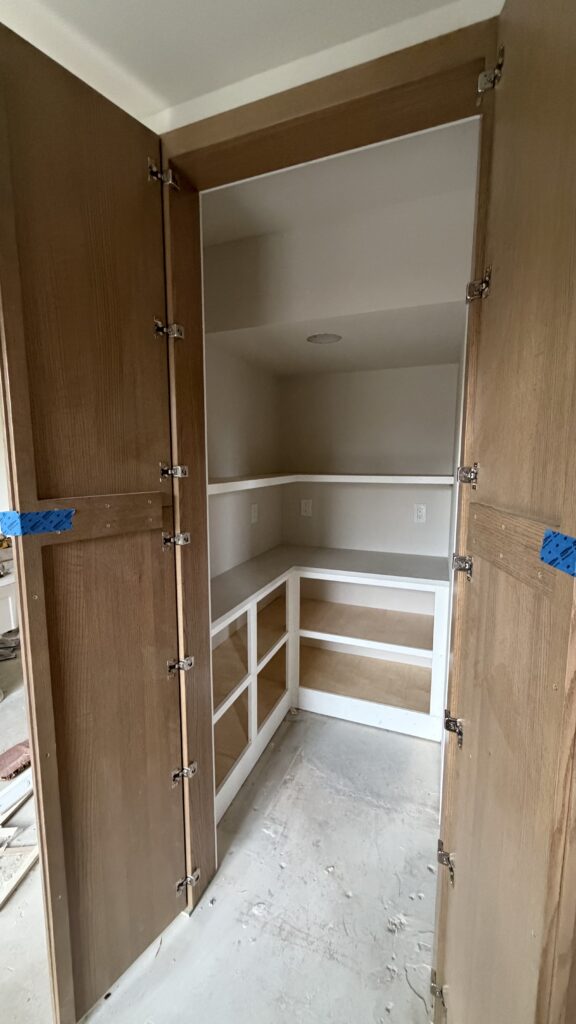 2 – Shelves installed will house modern appliances
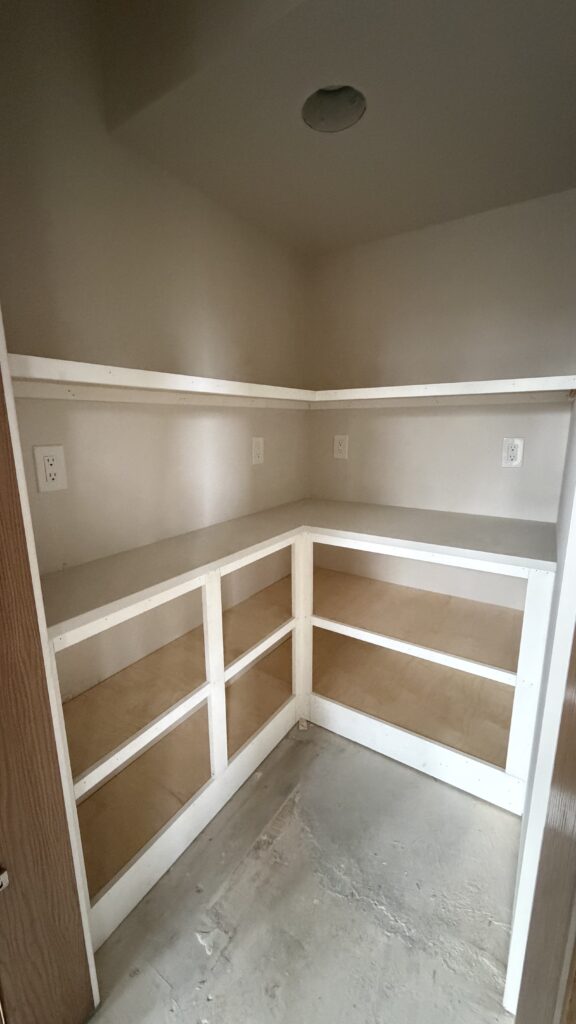 3 – Caesarstone Cloudburst counters and plenty of plugs
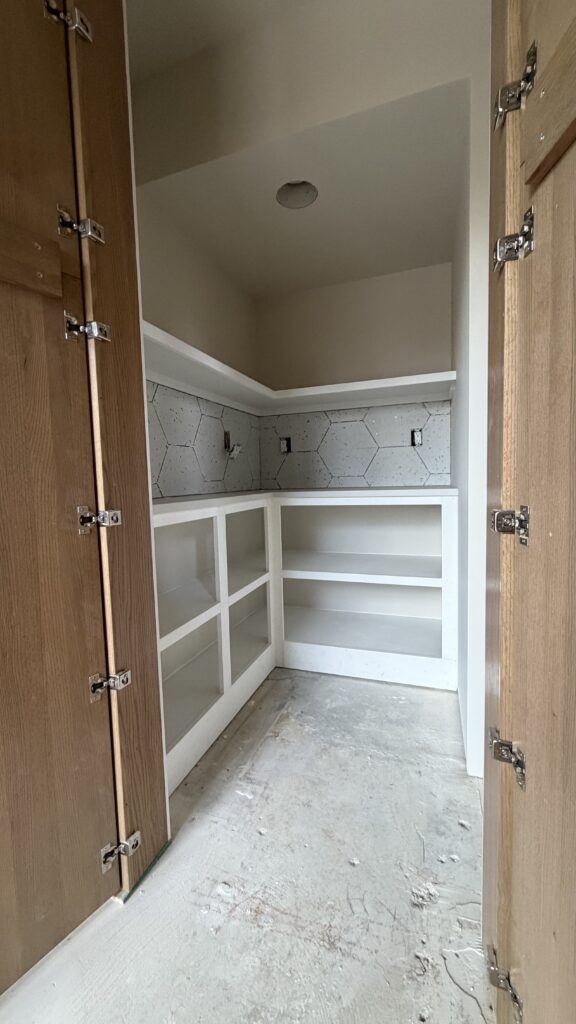 4 – Terrazzo as the backsplash connects the space to the house
Concealed Craftsmanship & Cohesive Continuity
The pantry may be my favorite part of the kitchen—not just because I’ve never had one, but because of how deliberately it was designed to disappear. The main run of cabinetry—anchored by the stove and sink—extends past the refrigerator wall towards the family room. A 14-foot run like that risks feeling awkward, like the kitchen simply kept going because no one figured out where to stop.
At the same time, it created a visual challenge in the part that ‘stuck out’. Turn around at the counter, and you would have faced drywall and a pantry door—an abrupt break in what was otherwise a continuous space. So we put our heads together and decided to extended the kitchen itself. We clad the wall in solid wood: quarter-sawn oak, fabricated by the cabinet maker, turning what could have been a visual stop into a seamless transition.
The space now continues cohesively towards the family room. Hidden French doors integrate into the paneling and open to reveal the walk-in pantry. No visual interruption, no change in material—just a thoughtful continuation of the main part of the kitchen, reinforcing a larger principle: adjacent spaces shouldn’t feel awkward.
Inside, the same logic carries through. Custom shelving is again topped with the same kitchen counters, and the backsplash tile we went with the same terrazzo from the bathroom floors. Brighter, more reflective, and better suited to a space without natural light than the darker green tile that is going up in the kitchen. Even here, in a room designed hide appliances and food the goal was the same: make it feel like it was always part of the original picture.
What’s Next: Chapter 16 – Finished Floors
Floors are next—and with them, the shift from construction to completion becomes impossible to ignore. Up until now, everything has been reversible, adjustable, still open to interpretation. Floors finalize that. The final piece that connects every room into a single, continuous experience.
At the same time, the last wave of detail begins to accelerate. Trim, touch-ups, hardware, lighting—everything that’s been waiting for surfaces to settle will land all at once. Get this part right, and the house feels effortless. Any missteps and every shortcut shows.
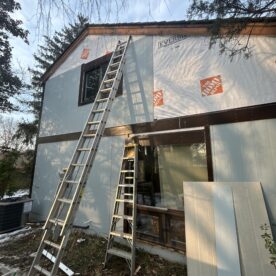
Outside, one final decision remains. We’ve chosen to replace the back wall with James Hardie fiber cement siding—a long-term fix for durability and weather resistance—but that work will wait until the interior is complete. A final reminder of the principle that’s guided the project all along: finish what you live with first, then protect it for everything that comes after.