Pint-Sized Primary
Before we even set foot in the house, we studied the second-floor plan on the listing—comparing it with neighboring homes and the original 1960s sales brochure still archived on the HOA website. Our research indicated the second floor likely would have been configured with four bedrooms and two full baths, a very typical plan for a two-story American home. Over time, a series of awkward modifications, each one solving, perhaps, a short-term problem while creating new ones—ultimately shaped the house we were touring.
After a pass through the first floor with the real estate agent, we did what all buyers do: headed up to find the primary suite. Pausing at the top of the stairs, we encountered two main hallways. One veered left toward the guest bedrooms—a cantilevered corridor that creates the architectural effect of floating in midair. The other turned in the opposite direction, leading toward the primary.
Stepping inside the primary, you’re greeted by an awkward, empty space—functioning more as a hallway than as part of the room itself. It’s a thoroughfare between bedroom and bath, absorbing a lot of square footage.
Then there was the light—or rather, the lack of it. Despite the room’s south-facing position at the back of the house, the primary felt surprisingly dark. A single window was tucked into the far back corner, precisely where it would capture the least amount of sunlight.
Second-Floor Shortcomings
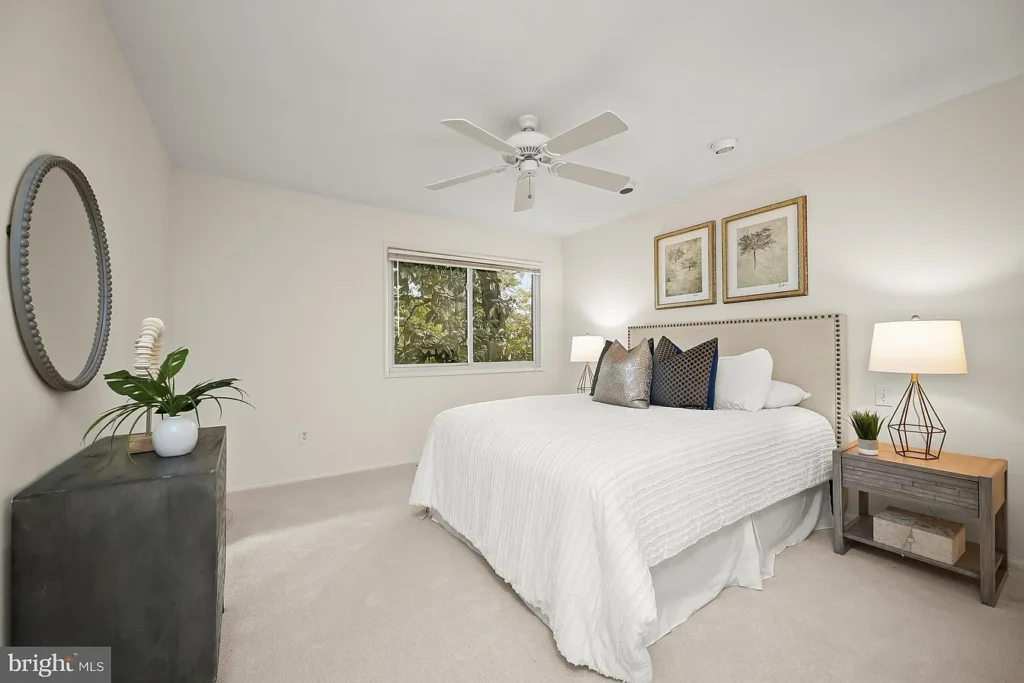 Small Primary, Only One Window Tucked into Corner
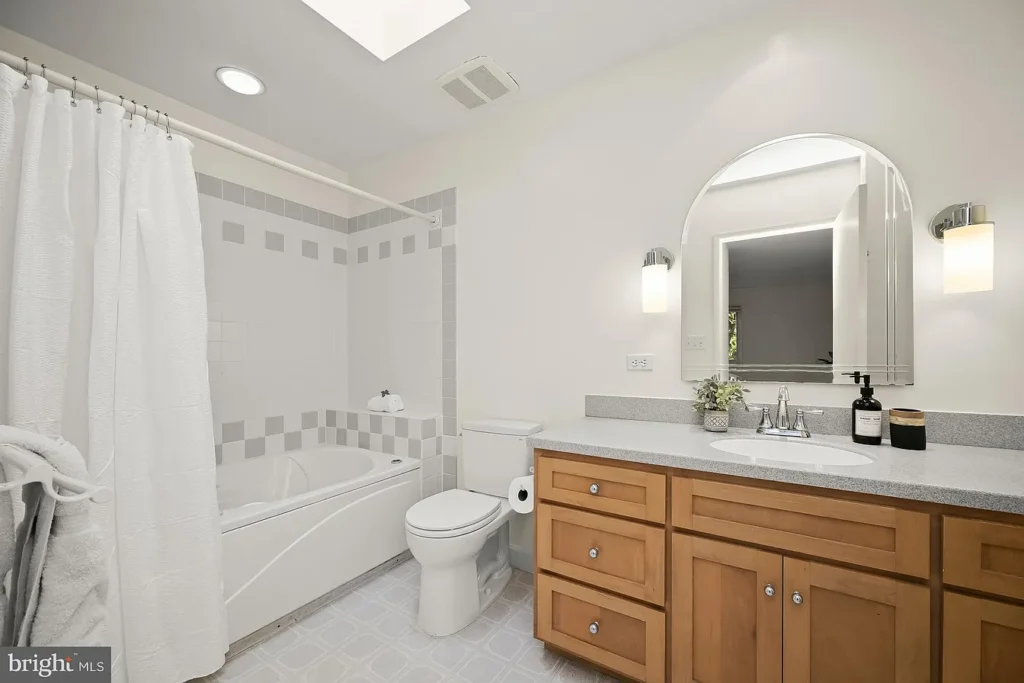 That 70’s Show Called … They Want their Jacuzzi Tub Back
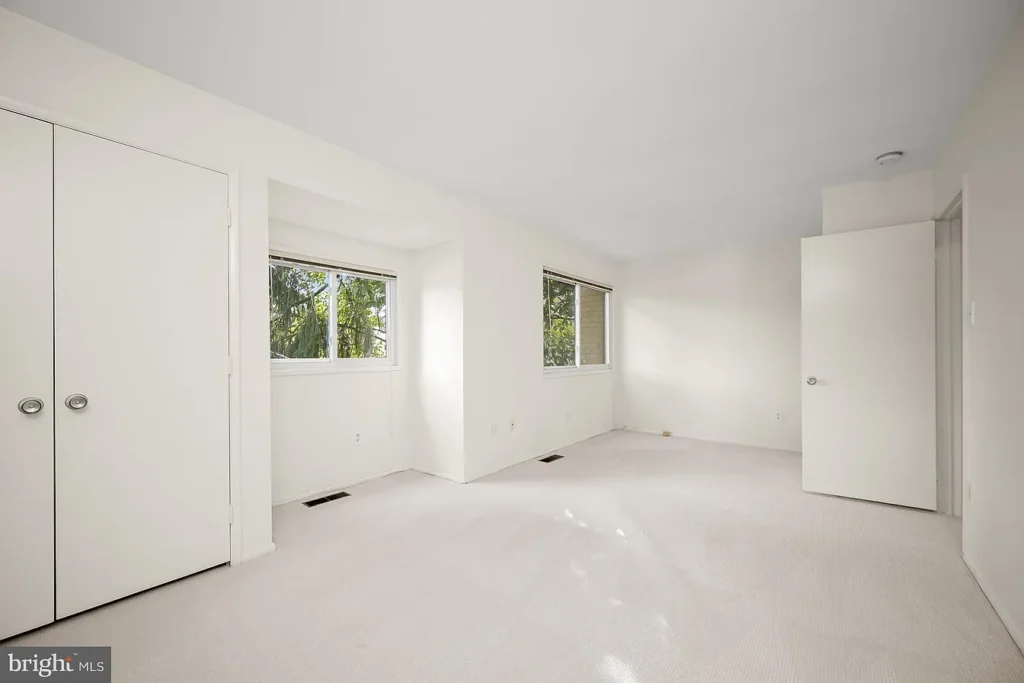 Guest Bedroom or Bowling Alley?
A renovation somewhere along the way added a generously sized walk-in closet. Unfortunately, its door opened directly into the bed rather than off the short hallway just inside the room—a seemingly small decision yet disruptive of access and flow. It also felt symbolic of the broader second-floor changes we were about to experience.
The primary bathroom was curiously large for a 1960s-designed home, though much of that square footage was consumed by an oversized jacuzzi tub at the expense of a dedicated, walk in shower. If my Capitol Hill house taught me anything, it’s that I take way more showers than baths. Good bones, pleasantly surprised at the space, but definitely a few changes needed.
Is That a Bedroom or Bowling Alley?
Leaving the primary and moving down the hall, the guest bedrooms revealed just how uneven the second floor had become. Bedroom one, located at the far end of the hallway, was perfectly reasonable. Original track lighting—worth restoring—brightly illuminated the space, and the room itself was well-proportioned. A refresh here would be straightforward: replace the trim, update electrical, install new doors and flooring.
The second guest room, however, stopped us in our tracks. It was unusually large—less a bedroom and more a center lane of the Capital Beltway. Later, after touring a neighbor’s house with the same model—where the primary had been thoughtfully expanded—and through conversations at the HOA holiday party, our suspicions were confirmed. Sometime in the 1990s, the two middle bedrooms were combined into a single, comedically long 26-foot room.
Current Floor Plan
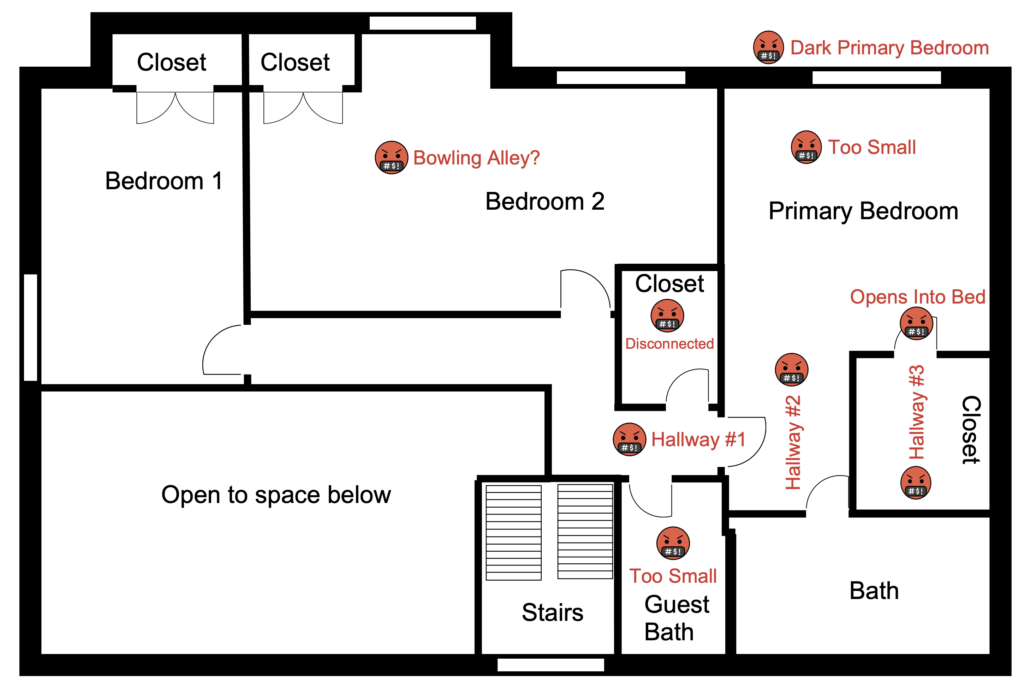
Taken together, the second floor told a story of space squandered and design logic tangled over time. While the guest bath had always been compact, Hallway #1 amplified its constraints, pushing an already small bathroom farther from the rooms it was meant to serve. A disconnected closet—once shared by a now-defunct third bedroom and household linens—sat awkwardly between spaces, serving neither well. In the primary, Hallways #2 and #3 consumed square footage that would have been far better spent on something more useful, like space for my shoes!
I imagine these decisions were made one at a time and, while none of them were fatal on their own, collectively they explained why the second floor felt unbalanced: too small where function mattered, too generous where it didn’t, and shaped less by intention than by an accumulation of past compromises.
With a clear understanding of what wasn’t working, we set our sights on solving the second floor. One obvious path would have been to restore the original four-bedroom layout by reintroducing a wall down the center of Bedroom 2 and reconnecting the orphaned closet to its original roles as bedroom storage and shared space for linens. But with a generous first-floor primary in place, the house already had four bedrooms. Adding a fifth felt unnecessary. What it truly needed was a primary suite that met modern expectations.
Option 1 – Jack and Jill Juxtaposition
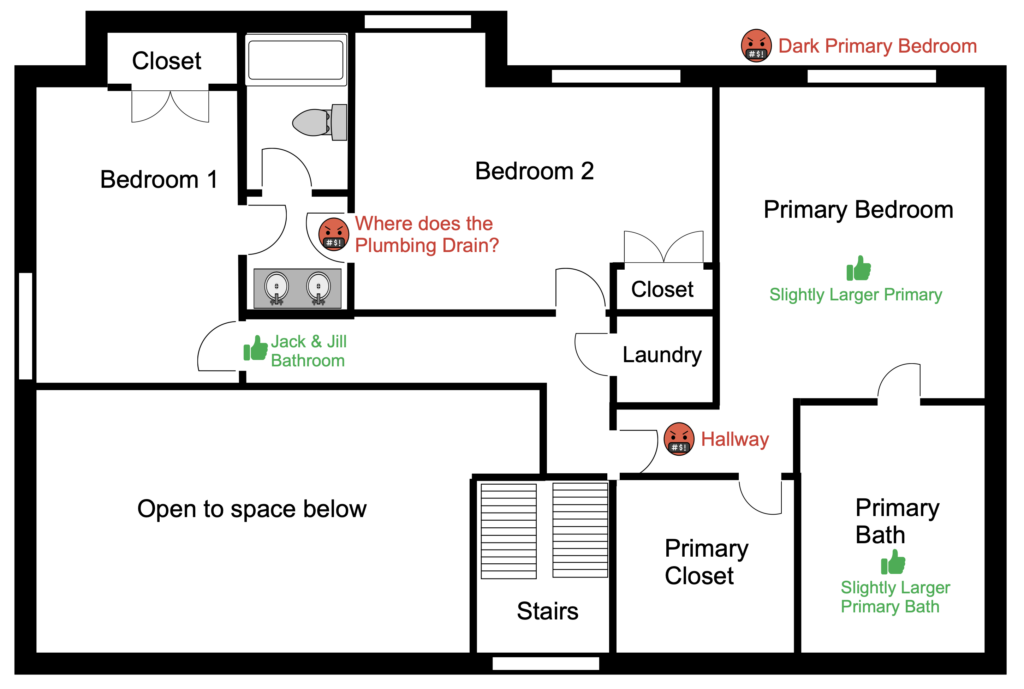
The first option we explored was repurposing a portion of Bedroom 2 into a Jack and Jill bathroom serving Bedrooms 1 and 2. In this scenario, the disconnected closet would be reclaimed and reimagined as an upstairs laundry. A shared bathroom nods to the home’s original era, adds a bit of Brady Bunch charm, and updates the layout for how families actually live and do laundry today—without Alice.
This configuration also unlocked a meaningful improvement to the primary suite. By relocating the walk-in closet into the footprint of the former guest bathroom, both the primary bedroom and bath could expand modestly. It was unquestionably a step in the right direction. Still, the gains came with caveats: the primary would remain limited to a single window, and a small hallway—an inefficient use of space on a compact floor plan—would stubbornly persist.
There were practical downsides as well. This option required substantial reworking of both bathrooms, driving up costs that would inevitably eat into the budget at the expense of higher-quality finishes—we’re not doing all of this work to end up with a builder-grade house! More critically, creating a Jack and Jill bathroom introduced a plumbing problem that couldn’t be ignored. Proper drainage would have required adding back walls in the first floor rooms below to house plumbing runs—an unwanted tradeoff that would have eroded the openness we were planning for the kitchen.
Option 1 proved the space could be redistributed more evenly—but it also made clear that solving the second floor would require more than a single idea. The right solution would need to address light, circulation, and plumbing logic all at once, not simply reshuffle rooms.
Option 2 – Design that Delivers
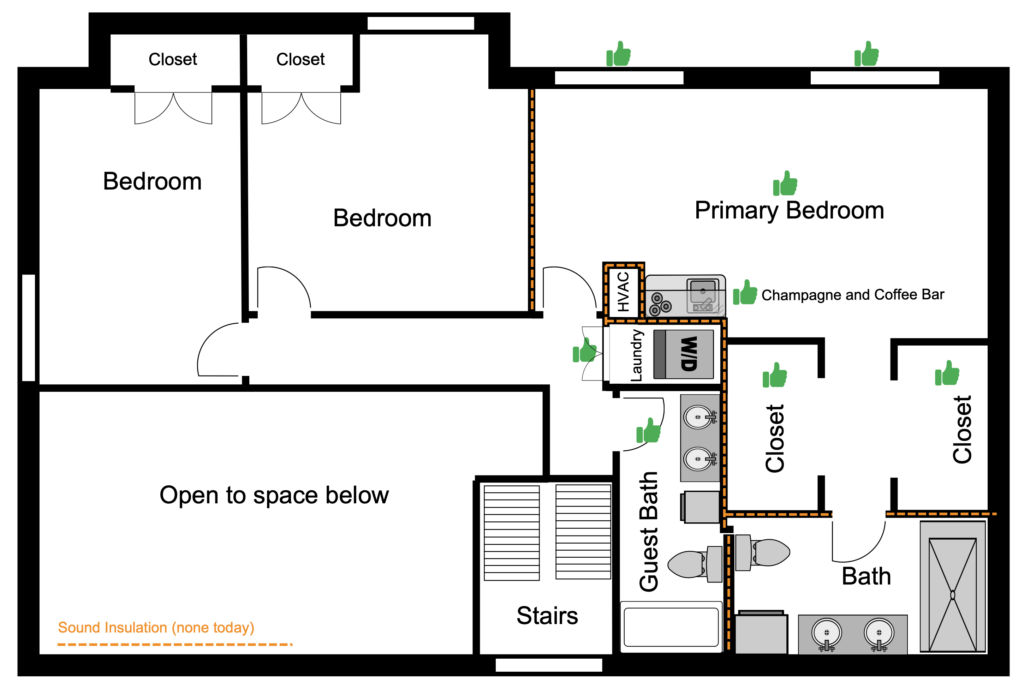
After meeting several neighbors and touring homes with the same original layout, we refined our approach to the primary. Instead of expanding into the guest bathroom—and reintroducing walls downstairs to hide plumbing—we realized the smarter move was to leave the guest bathroom mostly where it was.
The real opportunity lay elsewhere. By attacking the three hallways that had quietly consumed usable square footage, we could absorb space from them and give it back where it mattered most.
Moving the entrance to the primary to the top of the stairs enables the repurposing of all three hallways into useable space. Hallway #1 becomes an extension of the guest bath, more on that later.
Within the primary, the space previously lost to Hallways #2 and #3 is reconfigured into dual walk-in closets, creating a natural separation between the sleeping area and the bathroom. The result is a much larger primary suite with two 72-inch windows flooding the room with sunlight. There’s ample space for a king bed with dual nightstands and a small seating area. A second walk-in closet replaces what was a thoroughfare, and the primary bath is subtly reworked to accommodate a double vanity, dual ceiling-mounted rainhead showers, and a dedicated linen closet.
Relocating the HVAC into the attic did require space for air ducts near the laundry area, creating a small protrusion into the primary. Rather than fight it, we chose to integrate a built-in wet bar, turning a constraint into a luxurious feature that serves quiet nights of champagne and early mornings when coffee is needed before conversation.
A Tale of 3 Hallways
Symmetry, Storage, and Sense
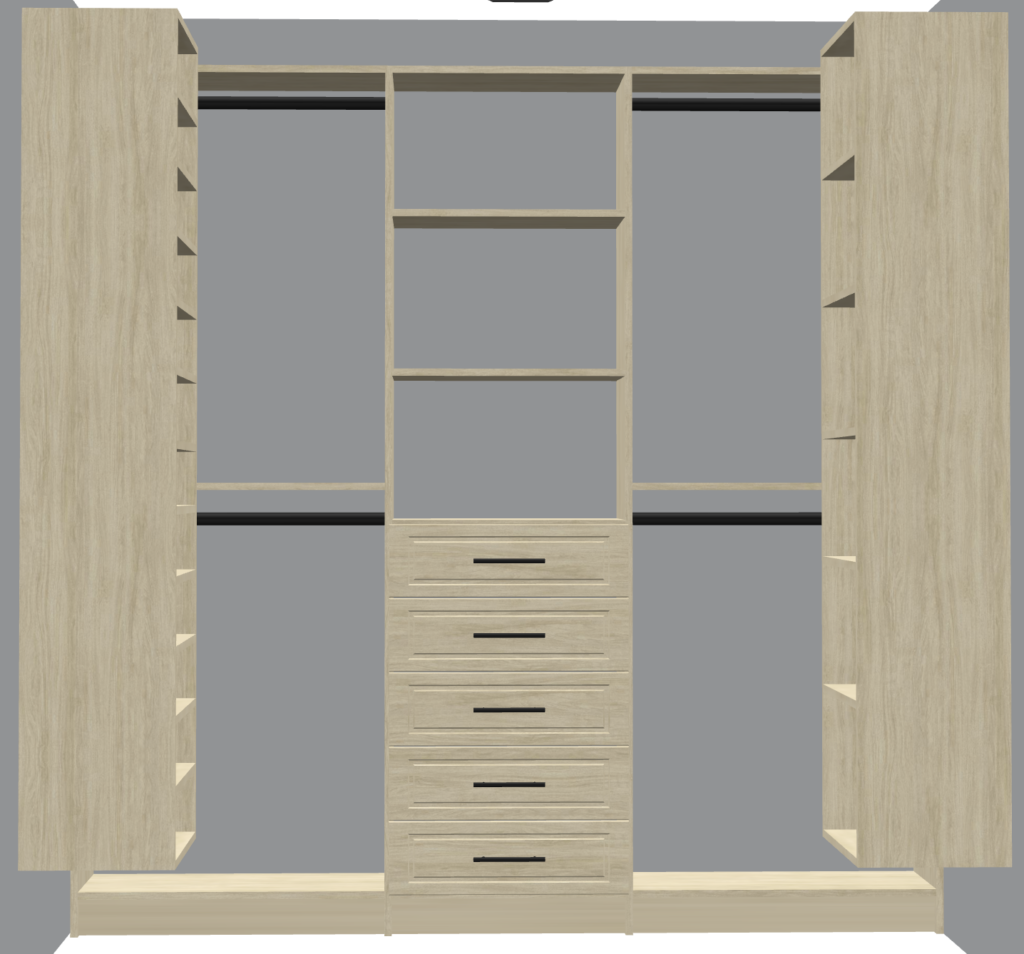
Ramiro and I will install dual walk-in closets—mirror images of one another—using Easy Closets, a system we’ve used in previous homes for its quality finishes and factory-direct pricing, helping to keep an ever-stretching budget in check. Because the closets will be open, design and function are equal priorities.
Outside the Primary
The guest bathroom—now expanded to 12 feet by reclaiming what was once Hallway #1—comfortably accommodates a double vanity and dedicated linen storage. Both guest bedrooms retain generous proportions suitable for king beds, and the bump-out window in Bedroom 2 creates the perfect opportunity for a custom built-in reading nook, ideally constructed in dark walnut.
Option 2 didn’t just improve the primary, it corrected the logic of the entire floor. By reclaiming square footage from the oversized bedroom and eliminating three unnecessary hallways, the redesign resolves an imbalance that crept in over time. The second floor becomes more efficient and far more livable, making room for a proper upstairs laundry, an expanded guest bath, and numerous features that upgrade the primary suite to modern expectations of tranquility and luxury.
Second Floor Coming into View
What’s Next – Chapter 7
Chapter 7 shifts from planning to progress. Upstairs framing is complete, and the design is now quite literally taking shape. Walls are up for the expanded primary suite, dual walk-in closets, a larger guest bathroom, and second-floor laundry—spaces that, until now, existed only in plans and conversation.
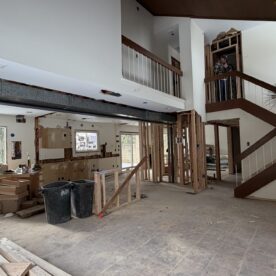
Downstairs the opposite is happening, walls are coming down. A 26-foot steel beam has fully opened the main entertaining spaces, while a wood beam in the first-floor primary eliminated two pony walls, improving light and usability. The design is no longer theoretical. It’s standing on its own, so to speak.