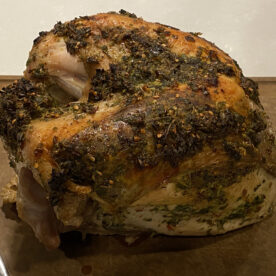
Several years ago, I made prime rib the centerpiece of Christmas Eve—and never looked back. After testing more recipes and “foolproof” methods than I care to admit, I landed on a process that delivers maximum flavor with minimal drama: an overnight dry brine, a low-and-slow cook, and a final reverse sear that produces a deeply browned crust without sacrificing the interior.
Dry brining may sound intimidating, but it’s simply seasoning the roast generously and letting time do the work. Resting the meat uncovered in the refrigerator for a day or two concentrates flavor, improves texture, and ensures the roast stays juicy all the way through.
Reverse searing completes the equation. By cooking gently first and saving high heat for the end, you get precise doneness, a better crust, and far more control over timing. Low oven temperatures also minimize carryover cooking—the rise in internal temperature after the roast comes out of the oven—so what you pull is much closer to what you serve. No stovetop splatter, no frantic juggling at the last minute—just a calm, repeatable way to cook a show-stopping roast.
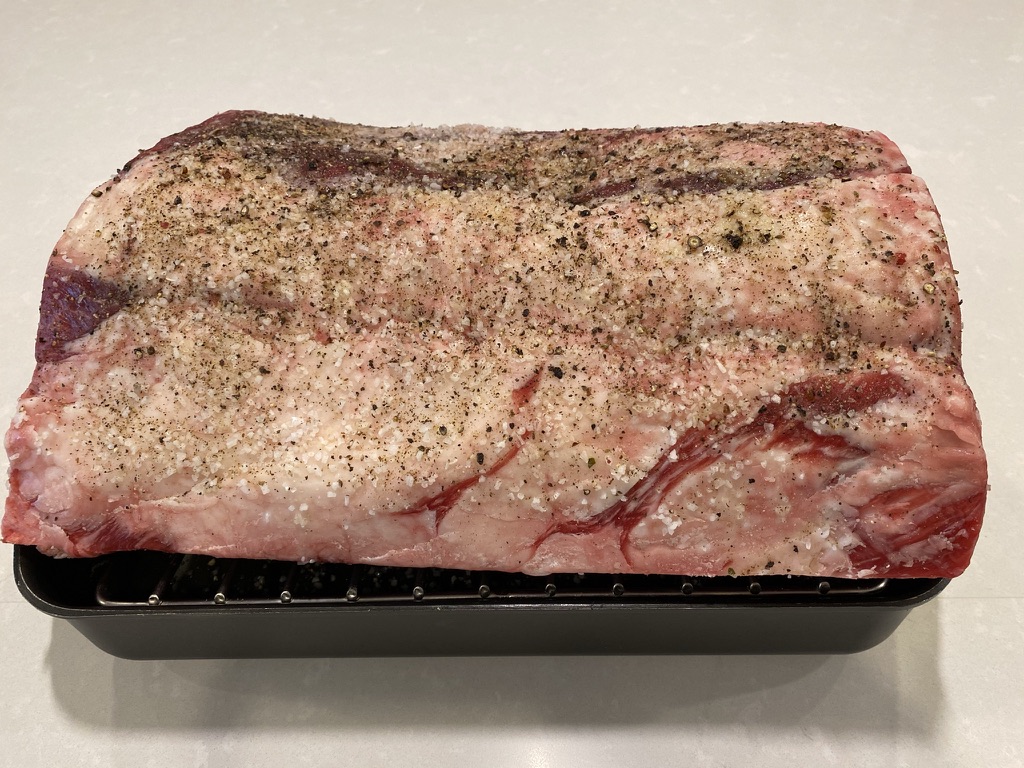
Dry brine uncovered in fridge overnight 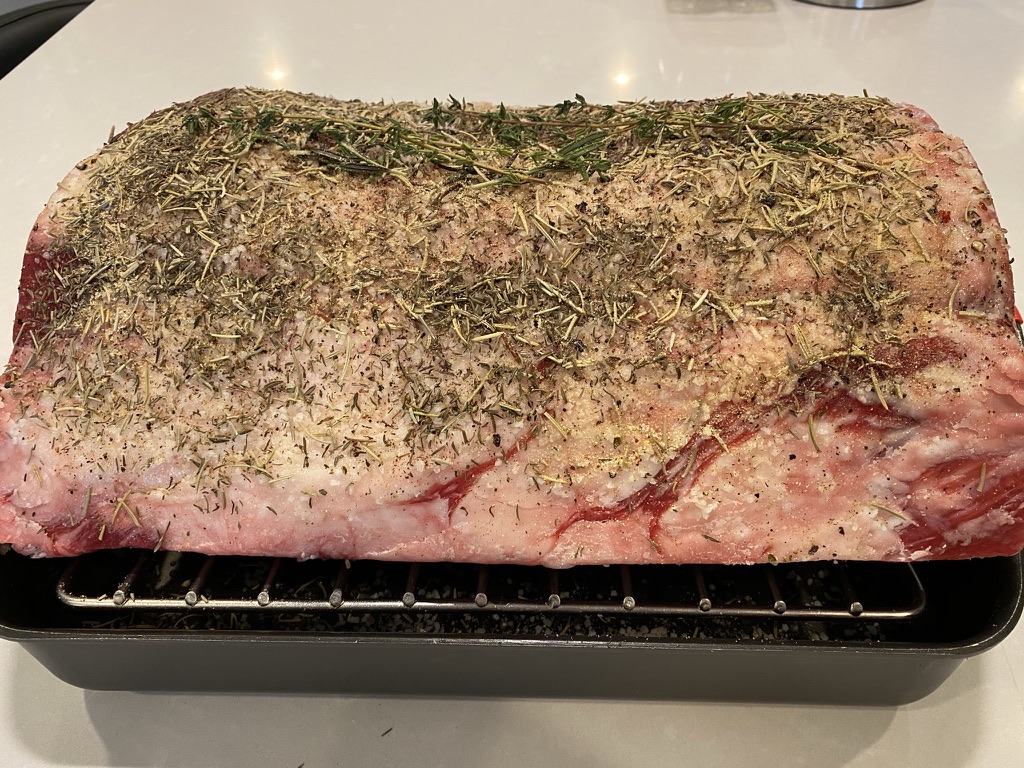
Pull out EARLY in the morning and allow to come to room temperature 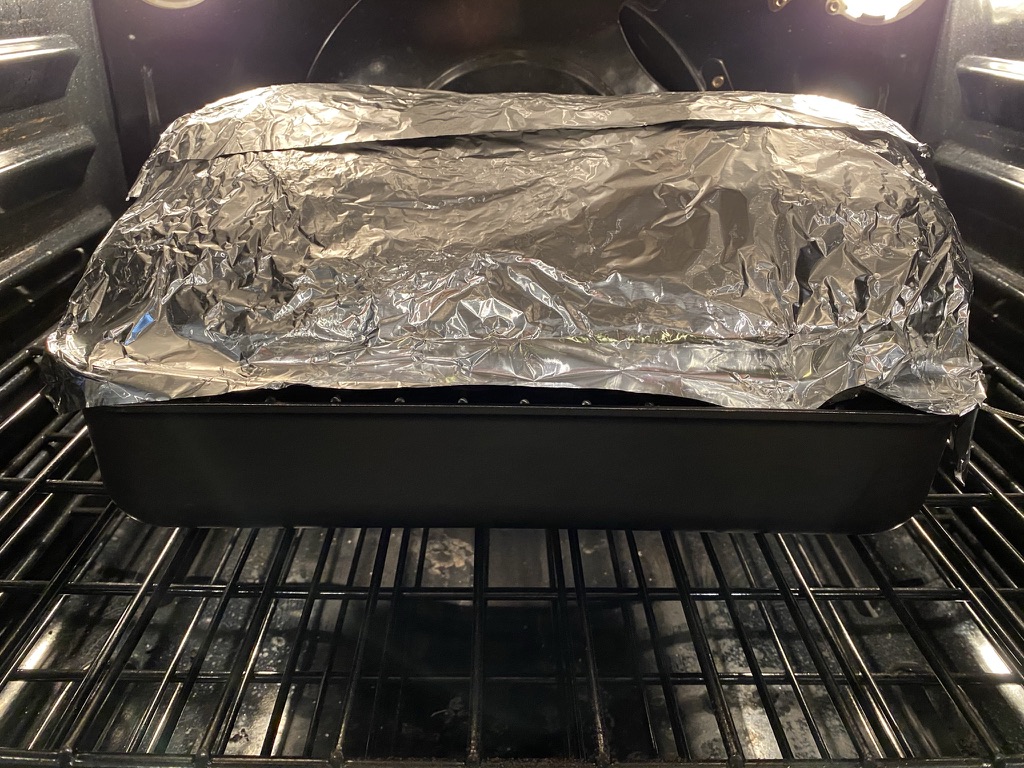
Cover and place in oven … 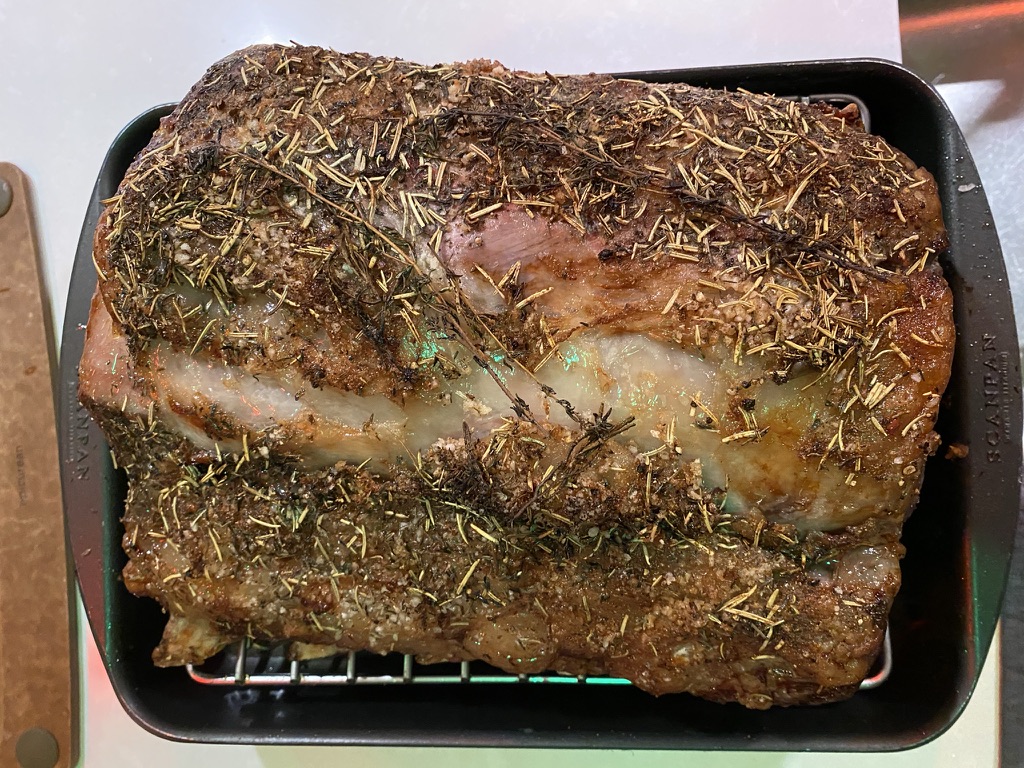
When internal temperature reaches 130° remove and rest for 45 to 60 minutes 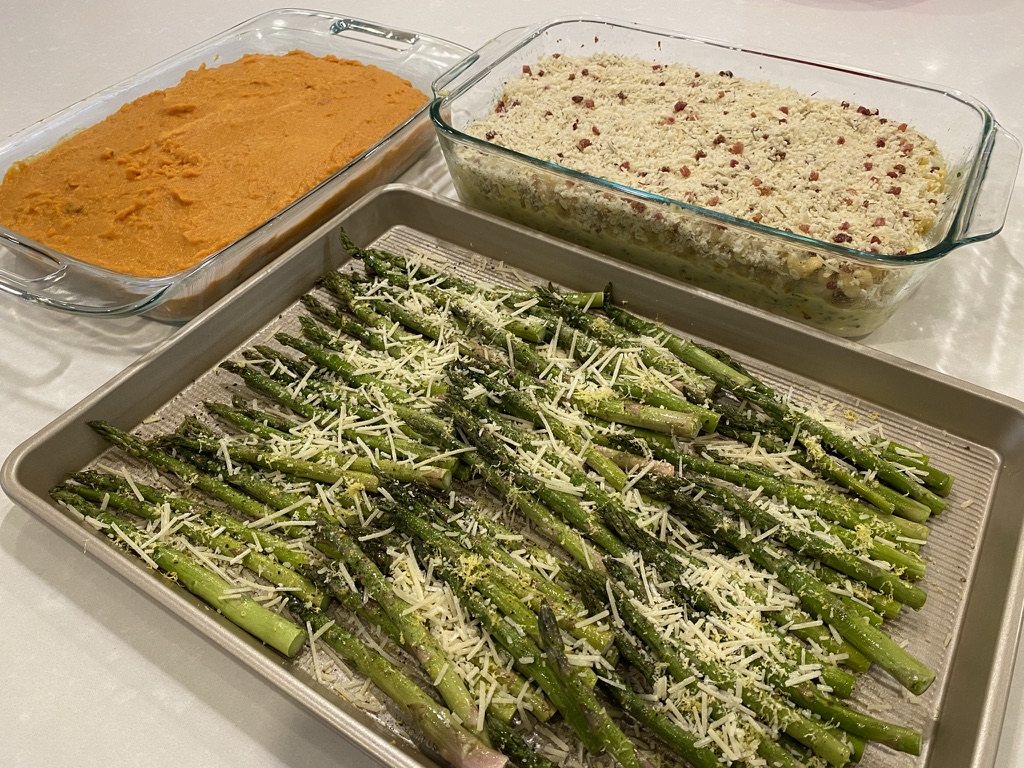
Cook your side dishes while the roast is resting 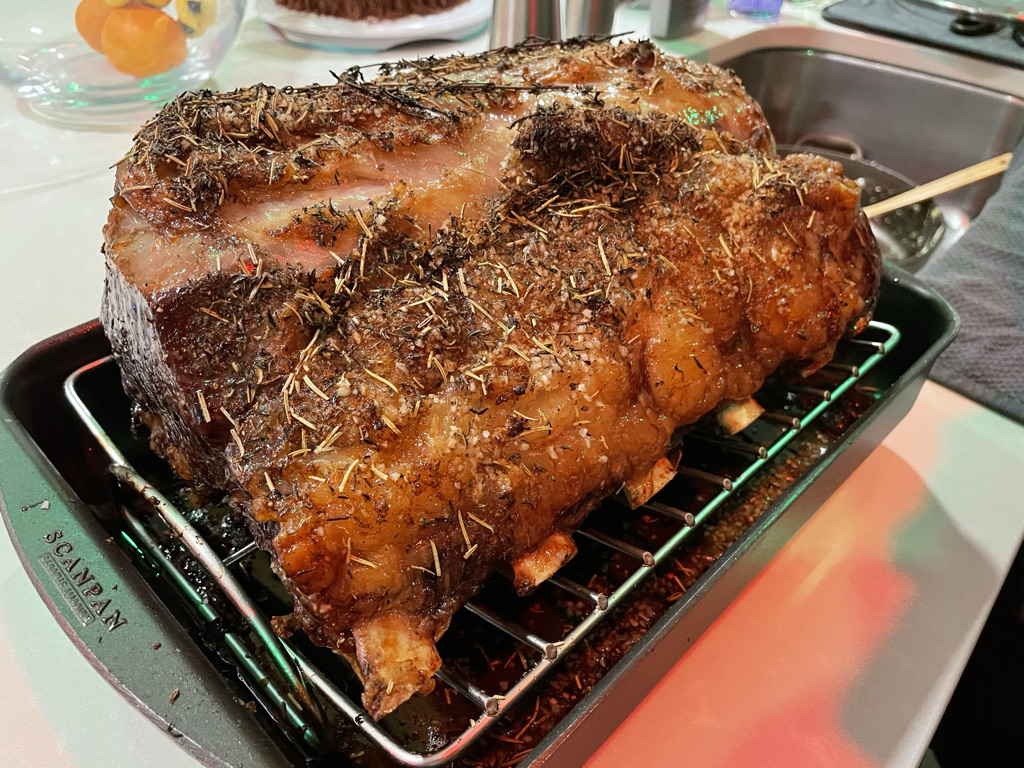
Crank up oven to 500° and return for 15 minutes 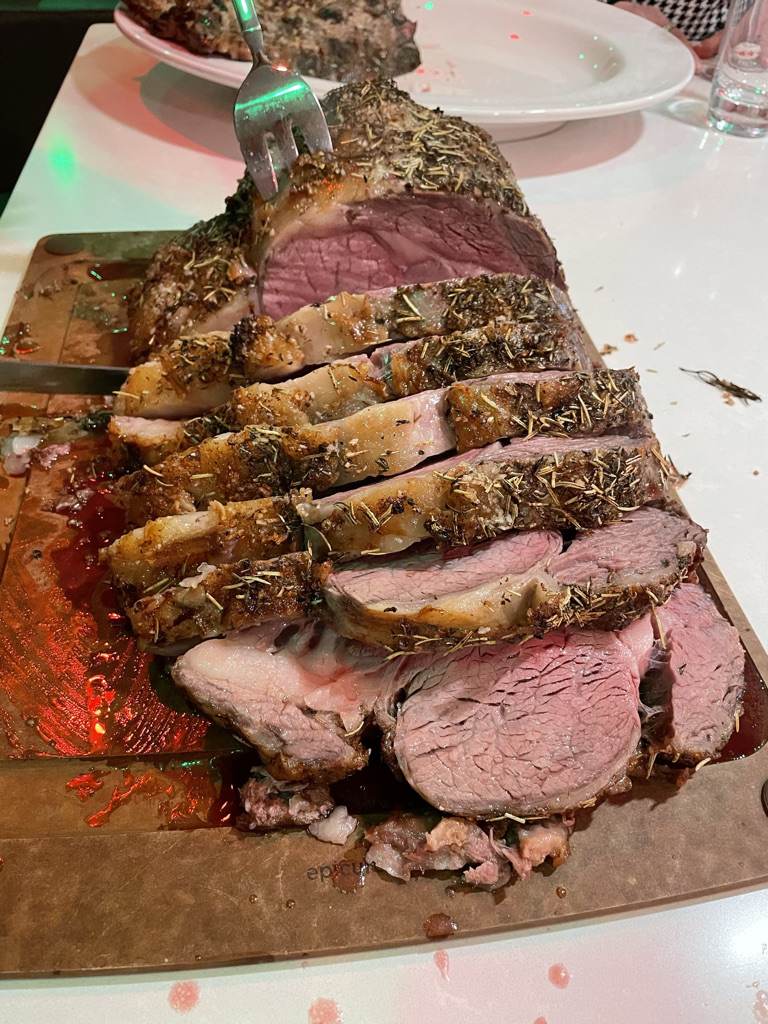
Let stand for 10 minutes then carve! 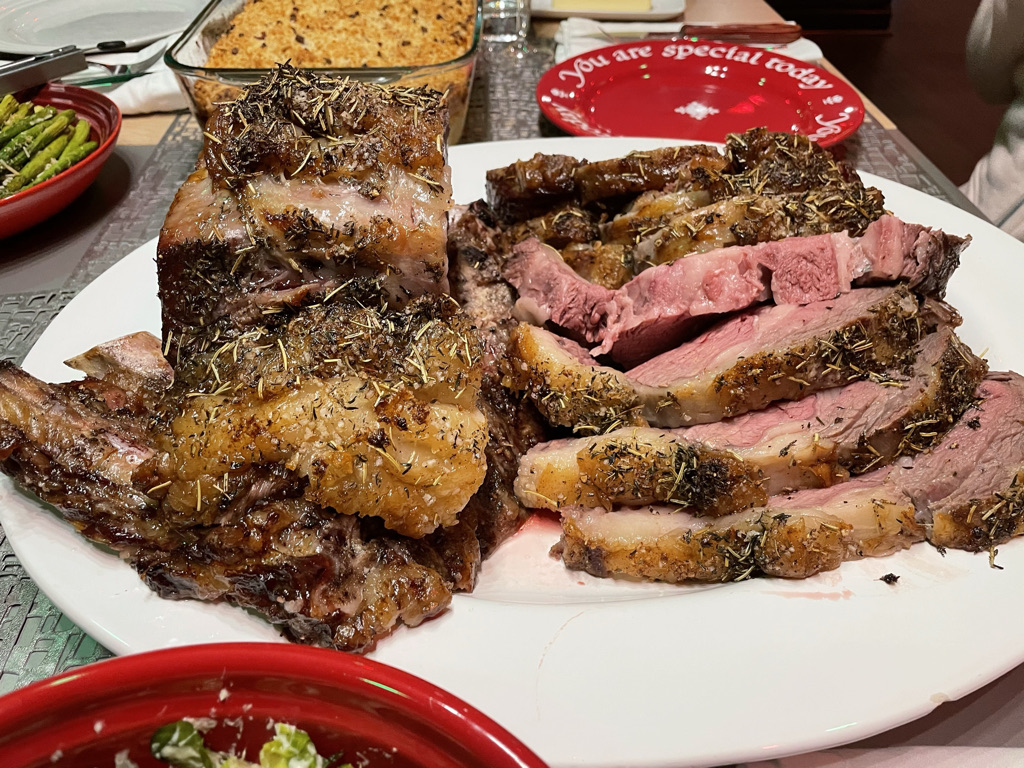
The perfect centerpiece for a Christmas Eve dinner!
Ingredients
1 bone-in prime rib roast, 4 to 6 bones
A lot of coarse Italian, Mediterranean Sea salt (about 1/2 cup)
An equal amount of fresh ground, coarse cracked pepper
Fresh garlic
1/4 cup of fresh rosemary
1/4 cup of fresh thyme
1/4 cup sage
Olive oil
Special Equipment
Trust me when I say you should buy a SCANPAN brand roasting pan for this recipe. It’s a roasting pan made in Denmark of pressure-cast aluminum with a ceramic-titanium nonstick finish. It is free of forever chemicals and requires almost zero washing, basically just spray with a kitchen faucet and a little soap on a sponge. No hard scrubbing, nothing in the world sticks to it. Worth every penny!
Steps
Step 1 – Dry Brine
The day before … remove the roast from all packaging, rub with course sea salt and pepper, pressing hard to grind the large, coarse salt crystals into the top layer of fat, then refrigerate completely uncovered overnight.
Step 2 – Prep the Roast
Remove the prime rib from the refrigerator 2–3 hours before cooking so it can come closer to room temperature. Just like endurance athletes, meat should never have a ‘cold start.’
Place the roast bone-side down (or on a rack) in a roasting pan. Insert a probe thermometer into the center of the thickest part of the roast, avoiding bone.
Make small incisions in the top fat and insert 1 garlic clove between each rib.
Drizzle with olive oil, sprinkle with salt and pepper then rub in sage. Place whole rosemary evenly across the top.
Step 3 – Long and Slow
Preheat oven to 225°F.
Cover with aluminum foil and roast until internal temperature reaches:
- 120–122°F for medium
- 115–118°F for medium-rare
This stage typically takes 30–40 minutes per pound, but temperature—not time—determines doneness.
Step 4 – Rest Before the Sear
Remove the roast from the oven and rest uncovered for 20–30 minutes.
Because the oven temperature is low, carryover cooking is minimal—usually only 2–4°F.
Use this time to:
- Finish side dishes
- Increase oven temperature for the sear
- Mentally prepare for compliments
Step 5 – High Heat Sear (The Finish)
Crank up the heat in the oven: 500° to 550°
Return the roast to the oven and sear for 8–10 minutes, until the exterior is deeply browned and crisp.
Final internal temperature should land at:
- 125–128°F (medium-rare)
- 130–133°F (medium)
Remove from oven.
Slice and Serve!
No additional resting is required.
Carve immediately and serve. The interior should be evenly pink from edge to edge, with a crisp, flavorful crust.