A Grand Entrance
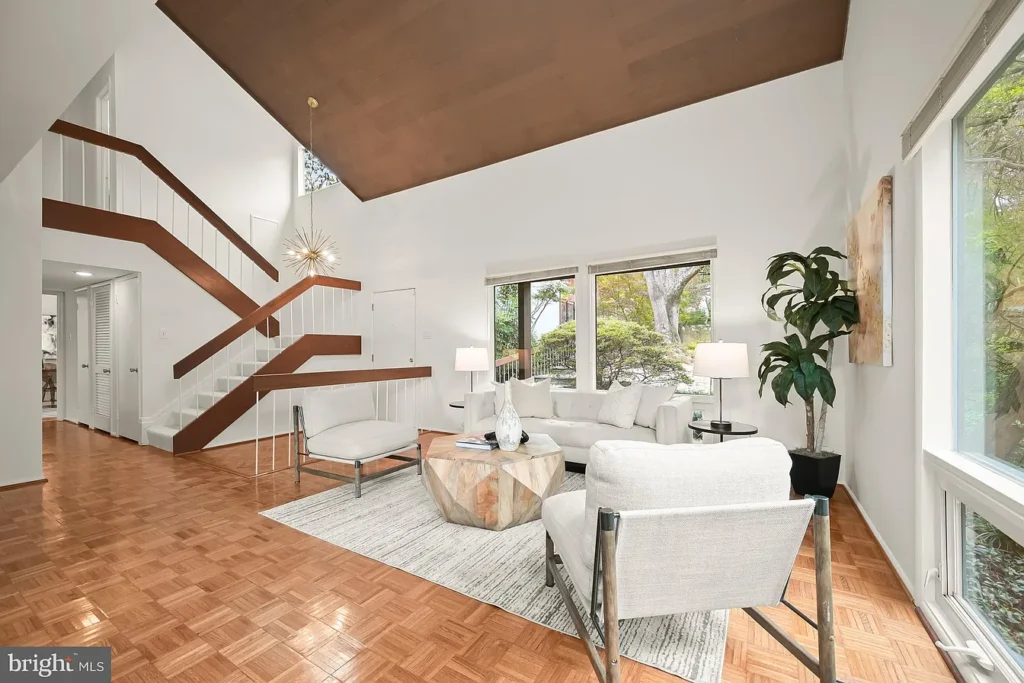
The first time we walked into the house with our agent, we knew this was a special opportunity. What registered immediately was the 17-foot vaulted ceiling, clad in dark mahogany, rising overhead like a quiet declaration of intent. Leading up to it was a perfectly preserved mid-century staircase: clean vertical metal balusters capped with a substantial mahogany handrail, angled and stained to match the ceiling above. It felt original. It felt deliberate. It already felt like home.
A full lap around the first floor only confirmed the first impression. The house, the lot, the light—nearly everything was exactly what we’d been looking for. The property sits at the top of a hill with a south-facing backyard drenched in sunlight. Floor-to-ceiling windows in every room are positioned to frame views of the private, brick-walled Japanese gardens, flooding the first floor with natural light.
The floor plan itself is familiar and very American: formal entertainment spaces, a centrally located kitchen, a large family room anchored by a fireplace, and a flexible first-floor suite. We’re not exactly the formal living room types, and we briefly debated whether that space even made sense for how we live—until an idea emerged that shifted our thinking entirely. More on that later.
First Impressions: Spectacular Stairs! Where’s The Kitchen?
 Beautiful architecture
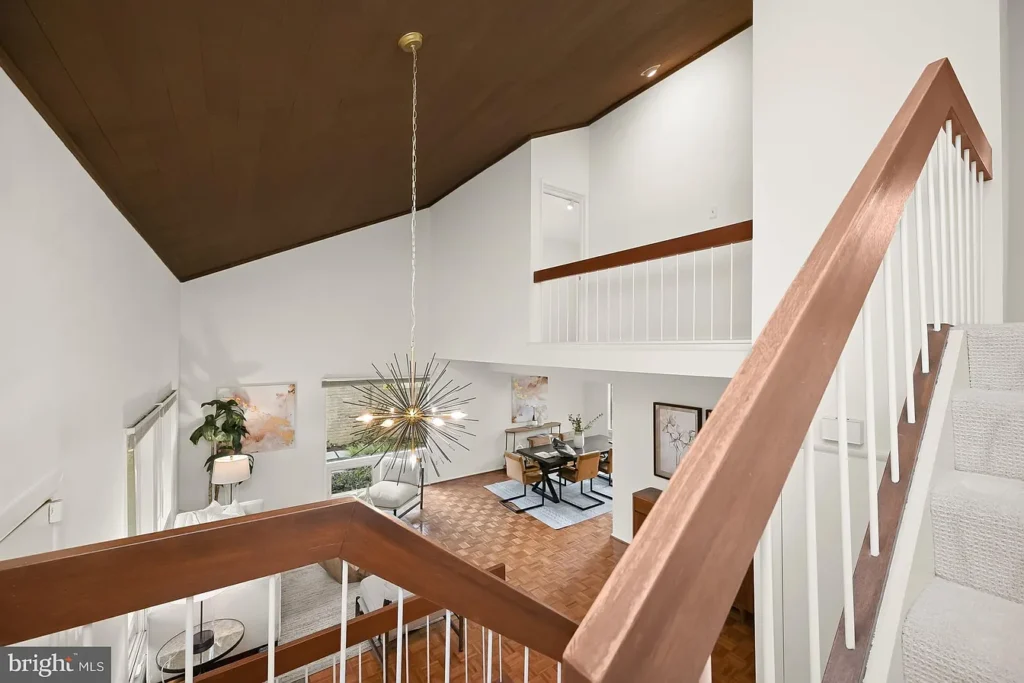 Beautiful architecture
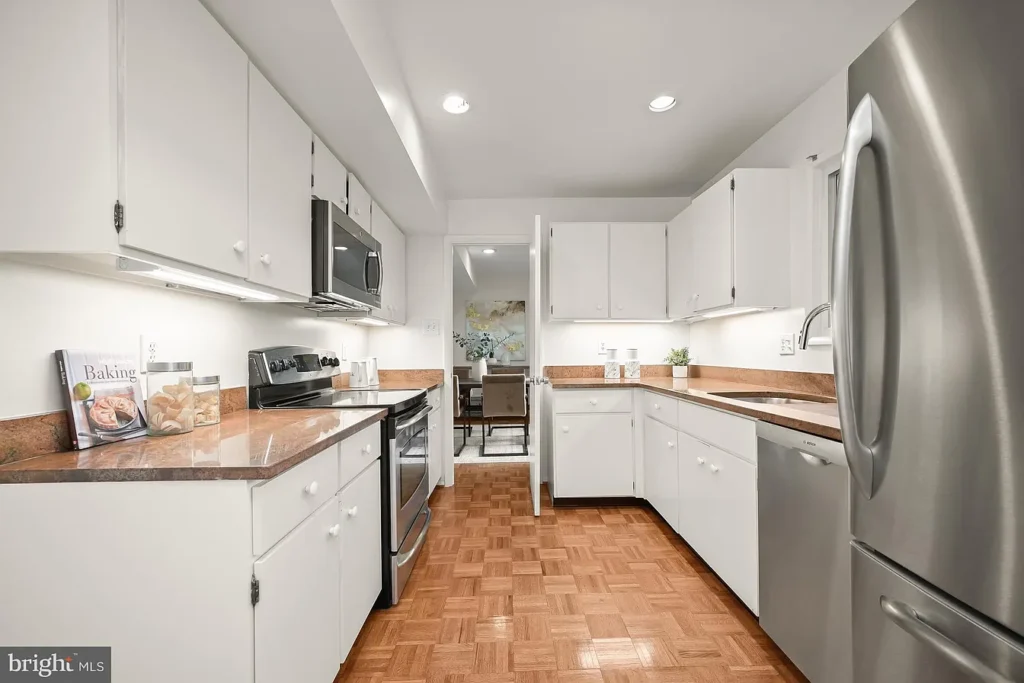 Closed off galley style kitchen
The Hidden Kitchen
I pulled Ramiro into the kitchen and closed both doors behind us. Instantly, the light that flooded the rear of the house disappeared. The other first-floor spaces were generous, open, and filled with light. The kitchen was the opposite of that. What daylight remained from the large 72-inch window was partially blocked by a poorly placed refrigerator.
A full five feet separated the two runs of galley-style cabinets, yet the kitchen still felt claustrophobic—completely walled off, quite literally, from the rest of the house. Narrow doorways made connection and conversation with anyone outside the kitchen nearly impossible. For a space that should function as the social heart of a home, it felt like an afterthought. Definitely designed for a different decade.
The question wasn’t whether the house worked for us—it clearly did. The question was how to fix the one space that mattered most. Cooking for family and friends is one of the ways Ramiro and I decompress after long work weeks. At this stage of life, anything less than a chef’s kitchen simply wouldn’t work.
We walked the kitchen’s perimeter again, looking for opportunity. That’s when it became obvious: between the kitchen and the front door sat a five-by-nine-foot dead zone. It wasn’t part of the living room, dining room, or entry. It served no purpose for how we’d actually use the house, wasting square footage in a place where every inch matters. That same solid wall also blocks direct access from the front door to the kitchen—the architects, it seems, never had to unpack groceries.
Current First Floor Plan
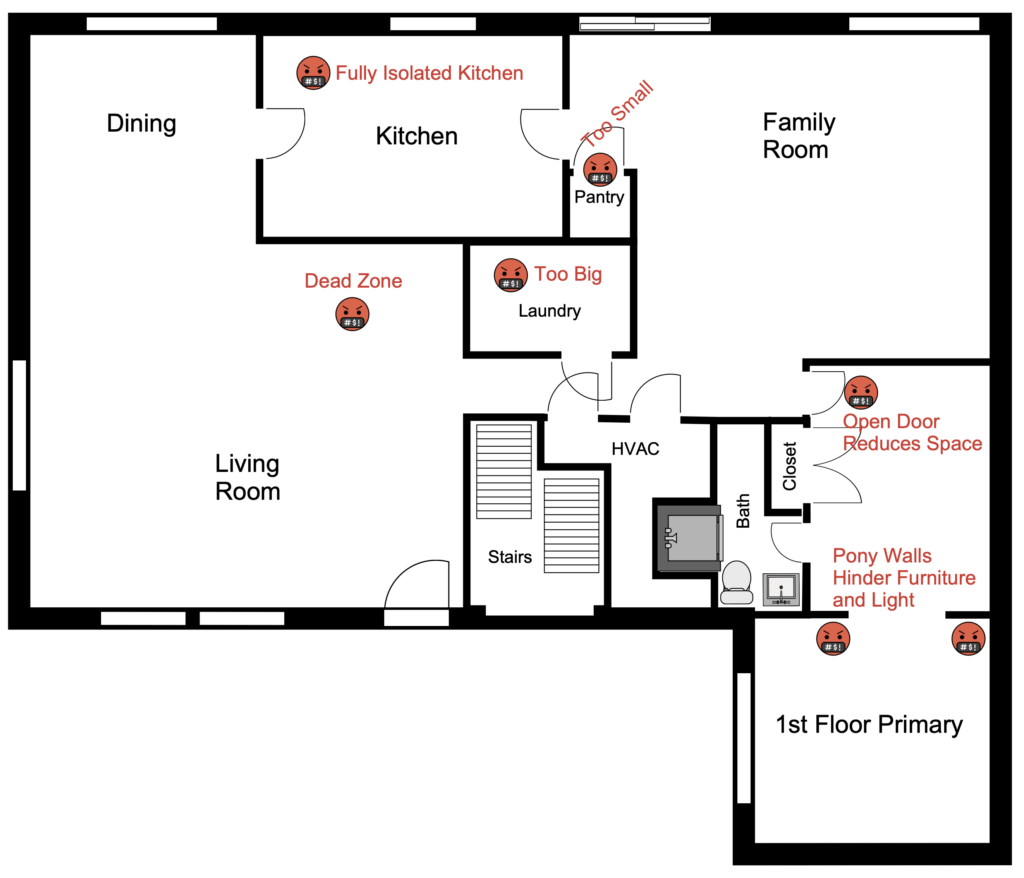
The Dead Zone
First Floor Flow fixed
The goal is simple: open the kitchen to the living and dining rooms so the house works the way we actually live and entertain. No more cooking in isolation. No turning our backs on guests to finish meals.
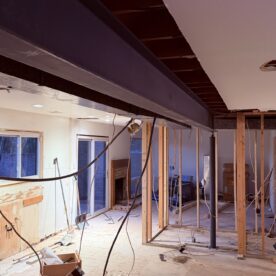
Big structural changes will do much of the heavy lifting, so to speak, for this remodel. A new 26-foot steel beam will span the dining room and kitchen, allowing walls to come down, repositioning the kitchen as the true heart of the home. The ”dead zone” between the kitchen and living room becomes a generous island, anchoring the space. With the walls gone, guests entering the house will have clear sightlines through the kitchen to the rear Japanese garden. And, just as important, Ramiro and I will have a direct path to unload groceries—good design should work for everyday life, not just dinner parties.
Target First Floor Plan

The Kitchen, Exposed
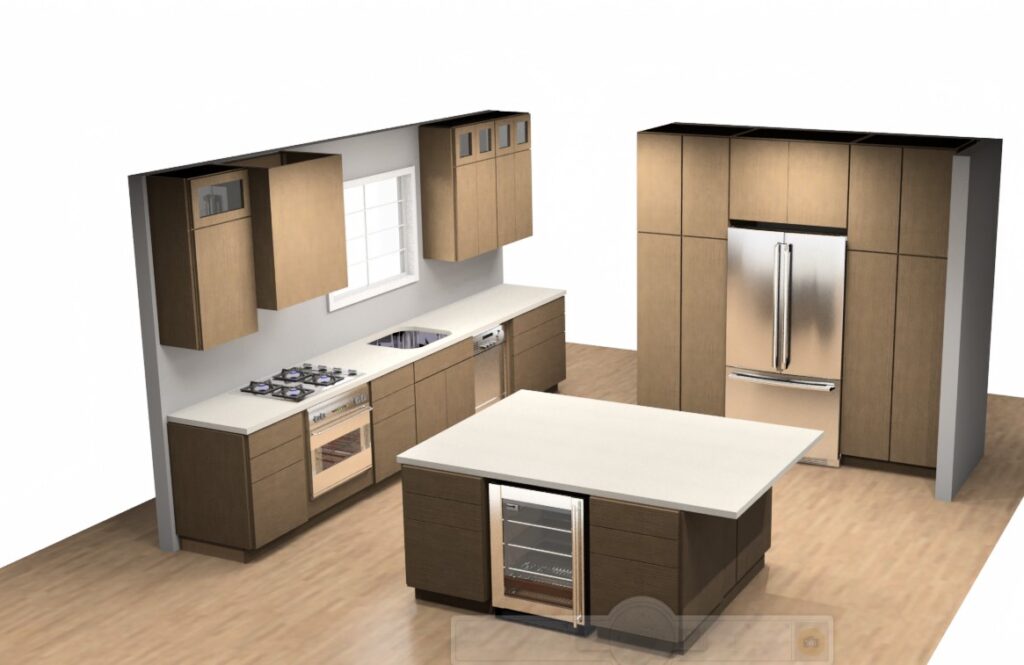
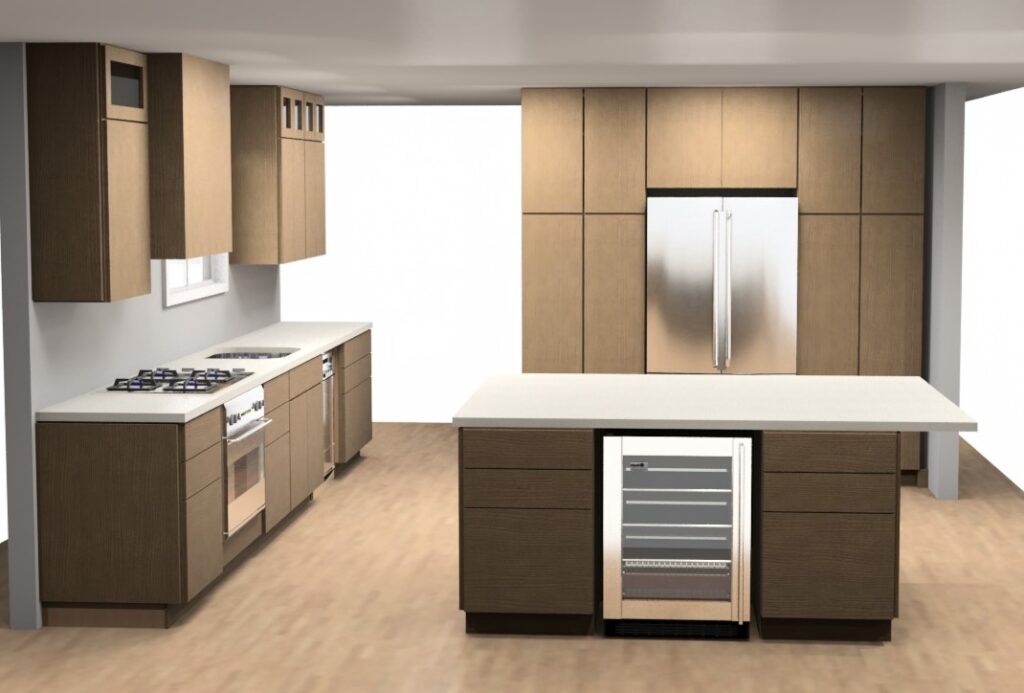
That single move transforms a closed-off 9×11 galley into an open-plan 14×15 “Detached L-shaped Kitchen” anchored by a generous central island. By keeping the cabinet runs physically separate, the layout eliminates corner cabinetry entirely—no blind corners, no crawling on hands and knees to retrieve a long-lost frying pan. If the concept sounds unconventional, this video—“Best Kitchen Nobody’s Heard Of”—does a great job explaining why it works so well.
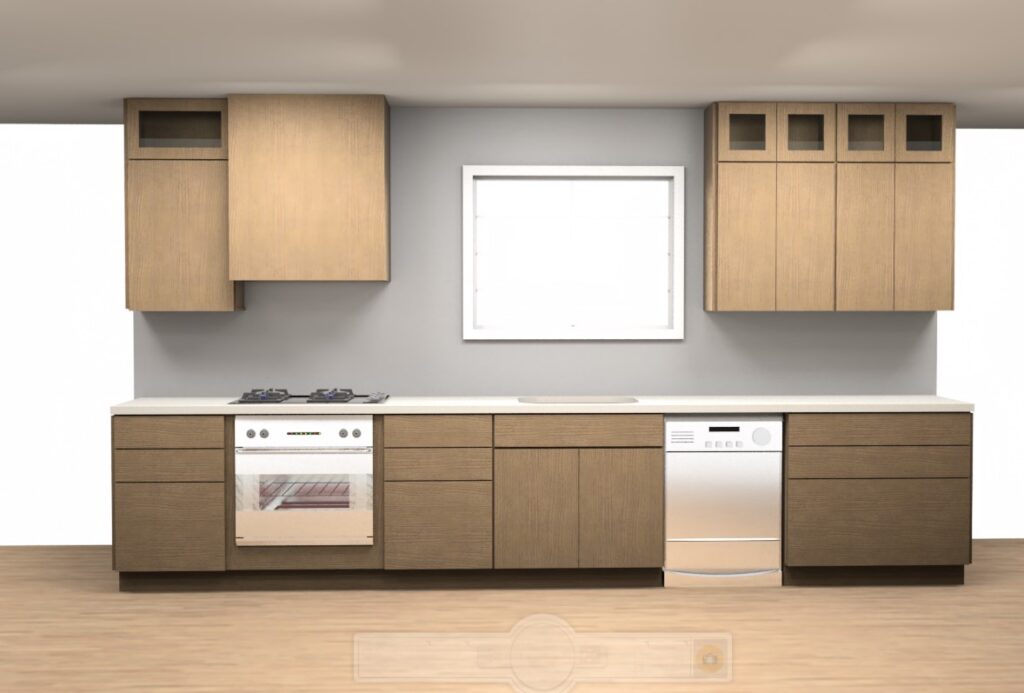
Mid-century styled flat-panel cabinetry in quartersawn oak keeps the space warm without feeling heavy. Along the rear wall, the primary working run houses the cooktop, built-in oven, and a sink centered beneath the window. We’re still debating the right balance of upper cabinets versus floating shelves—storage versus light—but either way, that wall establishes the functional backbone of the kitchen.
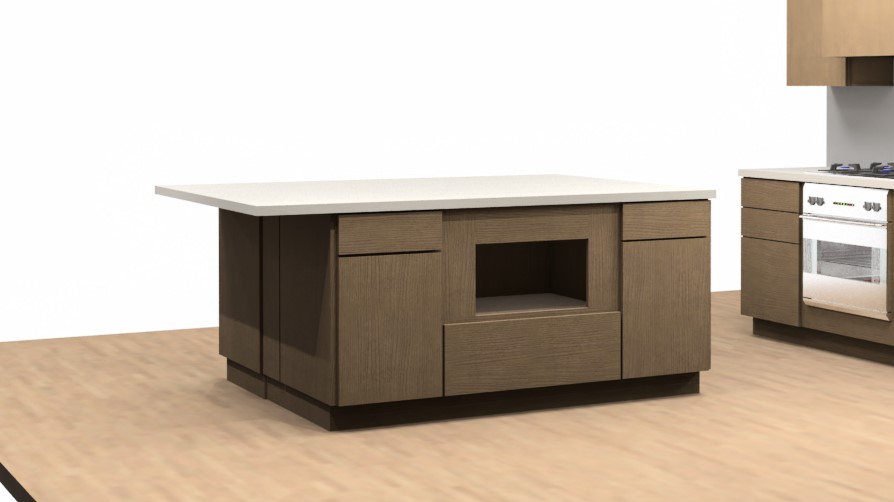
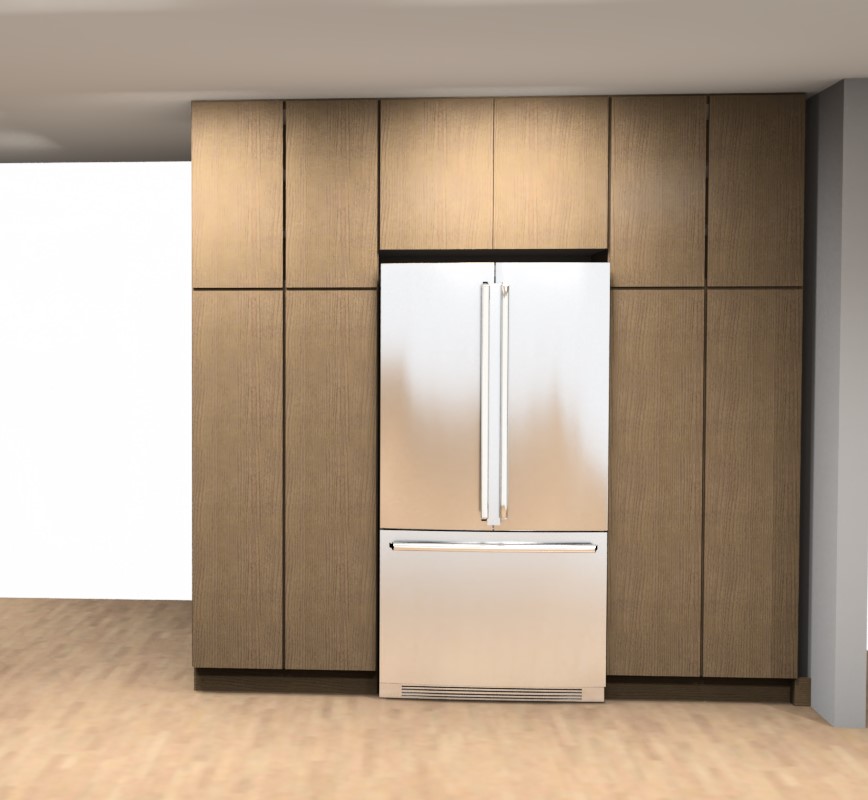
On the adjacent wall, two floor-to-ceiling storage cabinets frame a full-depth refrigerator, providing generous, flexible storage while visually grounding the space. The island—now occupying what was once a dead zone—houses the microwave and a wine fridge. Every feature is about function: fewer obstacles, better flow, and a kitchen that functions as beautifully as it looks.
First Design Iteration
While the Walls Are Open
With the kitchen opened up, it became clear there were a few other issues worth addressing while the house was already under construction. The pantry, predictably undersized, was fine for 1972 but doesn’t support how we cook today. Modern kitchens come with modern tools, and there’s no version of our lives that doesn’t require space to tuck away appliances we use weekly but don’t want on permanent display.
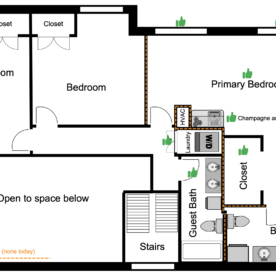
The first-floor primary suite presented similar challenges: a pony wall bisected the room, interrupting circulation, blocking light, and complicating furniture placement. During demolition, we also discovered the room had virtually no insulation—explaining why it felt colder than the rest of the house. Adding spray foam insulation will improve comfort and energy performance.
Elsewhere, the mechanical systems reflect their age. First floor HVAC runs in the living room contain asbestos—common for slab construction in the 1970s, but not something we were willing to live with. Those runs will be remediated, and the original 1972 furnace replaced with a modern, high-efficiency system. We’re also installing a tankless water heater. Today’s equipment is far more compact, creating space for a proper storage closet under the stairs—adding storage is always an upgrade worth investing in.
Widening the First Floor Flex Space
Intentional Design
Taken together, these moves align the first floor with how we live day to day—and how we entertain family and friends. The kitchen anchors the space as the clear heart of the home. The living room is shaped around conversation—picture vinyl records and a martini cart—rather than a television. The dining room and counter stools are positioned to maximize views of the garden.
Throughout the first floor, lighting is treated as architecture. Every room incorporates layered lighting in the mid-century modern tradition—wall sconces, recessed spotlights, track lighting, pendants, task lighting, and ambient illumination—allowing the entire first floor space to shift easily from day to night.
The family room remains intentionally separate, offering a quieter place to retreat, and the central hallway benefits from custom millwork that turns a hallway of doors into something more deliberate.
What’s Next – Chapter 5
Before diving into the massive changes underway on the second floor, Chapter 5 takes a step back to Sydney.
There, I bought a bungalow that already pushed my budget to its absolute limit—so renovation funds were… aspirational. That constraint forced real creativity. I learned how to fix bad cosmetics in tight spaces, make small rooms feel intentional rather than improvised, and stretch every dollar without sacrificing design.
Some structural issues couldn’t be fixed. At one point, I had to cap spending—hard stop. Every renovation needs a ceiling, or you risk renovating yourself into a financial black hole. When I finally sold the house, the profit was modest, but the relief was enormous.
And that might be the most important lesson of all: beautiful transformations only count if they’re also smart.