You Can Go Home Again
After selling my Capital Hill house to move to Sydney, then lingering way longer than I expected—mostly to complete a master’s degree but also … beaches—my father became convinced I had permanently vanished into the Southern Hemisphere. He was on the verge of dispatching a bounty hunter to collect me.
With my degree in hand and after saying temporary goodbyes to the many friends I’d made during my time down under, I returned to the U.S. with a simple goal: rapidly resettle in the DC area then sneak out undetected. What I didn’t have the heart to tell my dad was that I’d quietly put my Deloitte return offer on hold and signed on for yet another international assignment—this time in Johannesburg.
My sister and I staged a kind of resettlement mission.
We had roughly two weeks to pull it off: land in Washington, buy a house, quickly close, give my dad a legitimate U.S. address, and then jump back on a plane—ideally without him realizing I was leaving again. Eventually, when he figured it out, I softened the news by hosting him on a safari in the Madikwe Game Reserve. All was forgiven.
Dad and Susan’s Apology Safari




Bullseye: Bethesda
My target was Bethesda—close to my sister, who would keep an eye on the house, and practical for the way my life works. As a former college swimmer, I was drawn to the area’s ambitious aquatic culture—home to world-class facilities that have trained athletes like Katie Ledecky. Its northern location makes long weekends in Pittsburgh visiting family manageable and puts New York close enough for impulsive Acela-powered shopping sprees and Broadway escapes.
More than anything, though, it was the area’s dynamic culture that grabbed my attention. Post World War II as Washington’s diplomatic footprint expanded , embassies grew, missions multiplied, and countries needed space—not just for housing, but for schools and communities. Surrounding Washington’s Embassy Row, Bethesda became the logical overflow. Neighborhoods filled with people from everywhere, and the inevitable followed: they brought their cultures—and, thankfully, their food. Today, more than 200 restaurants serve cuisines from every corner of the globe. Almost zero chains. Yummy.
That international mix, combined with anchors like the National Institutes of Health, the National Naval Medical Center, and the National Institute of Standards and Technology, gave Bethesda a global pull that never really let up.
And I wasn’t alone in that assessment. The press eventually caught on as well. In addition to numerous awards for liveability, in 2009, Bethesda was named #1 City with the Hottest Men by TotalBeauty.com. Officially, the ranking was based on economic potential and lifestyle factors—not just physical appearance. But I like to think my return was the cherry on top that sealed the spotlight.
Starting with Surface
After two starter homes, I was ready for something more sophisticated—something I could grow into and truly make my own. I returned to the DC area during the height of the financial crisis, which gave me the flexibility to be selective; the market was no longer in hyperactive mode.
Once I settled on a house that was “perfect,” I naturally did what all the gays do: changed everything.
During trips back to Bethesda from Africa, I tackled smaller projects—still, at this point, mostly cosmetic. Once again, the first tool I reached for was paint.
Like the African savannah, every turn revealed a different landscape. The dining room was school-bus yellow. The kitchen, aggressively orange. The living room, blue. Upstairs, the bedrooms had never been painted at all. The flat, builder-grade white was so worn you could make out the pencil notes marking electrical placement, like an archaeological record. And the game room? Barbie Pink, but more on that later.
This was pre-Pinterest. Back then, inspiration came from magazines, not algorithms. I picked up a copy of Metropolitan Home with a bold red staircase on the cover—Drum Beat Red—paired with two warm neutrals: Toasty Tan, with earthy undertones, and Universal Gray, a deeper, warmer gray than its name suggests. Unlike the Sydney house I had just left behind, this one started with smooth walls and ceilings—no texture to tame.
A paint party to reunite longtime friends knocked out the first two floors of the house in a single weekend. Ceilings. Walls. Even the two-story staircase. It was fast and messy but deeply satisfying. Cosmos, of course, instead of beer.
Next came the flooring. Solid oak hardwood replaced wall-to-wall carpet across the first floor, staircase, and upstairs hallway. While the staircase banisters were pulled out to install the hardwood, I made a last-minute decision to replace them entirely with a modern cable railing system, hand-crafted by a local metal artist in Frederick. It was one of those rare impulse decisions that turned out exactly right.
Initial Remodel – Paint, Hardwood, Modern Touches
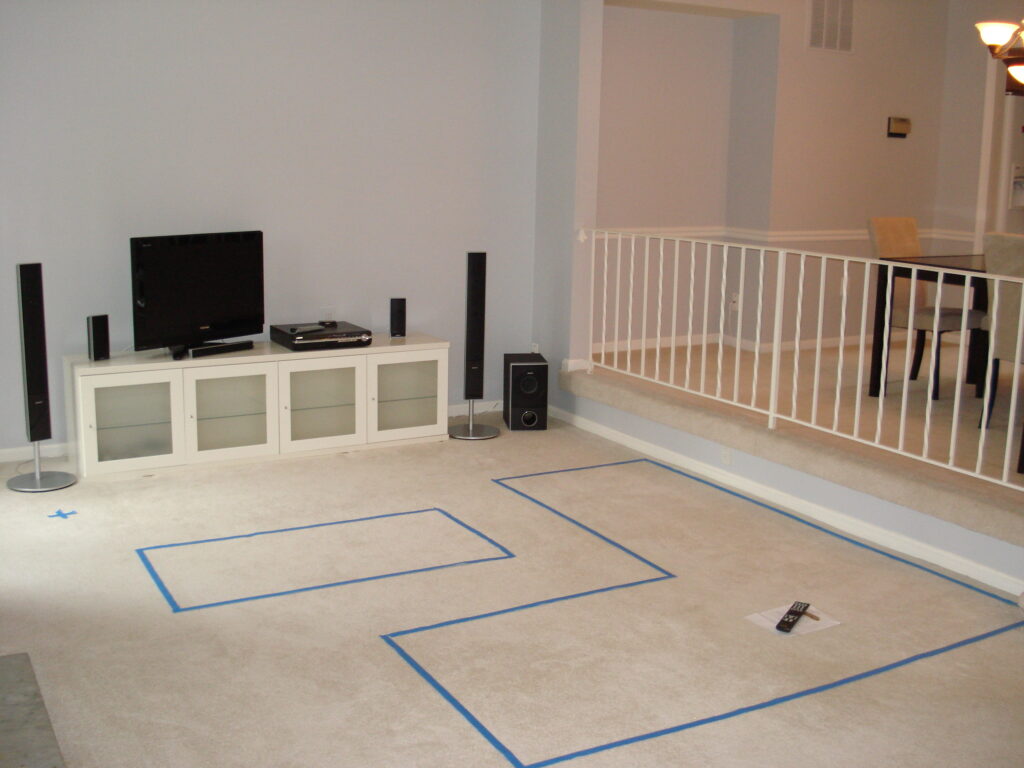 Without time to spare, I “CSI outlined” placement for furniture arriving from Australia
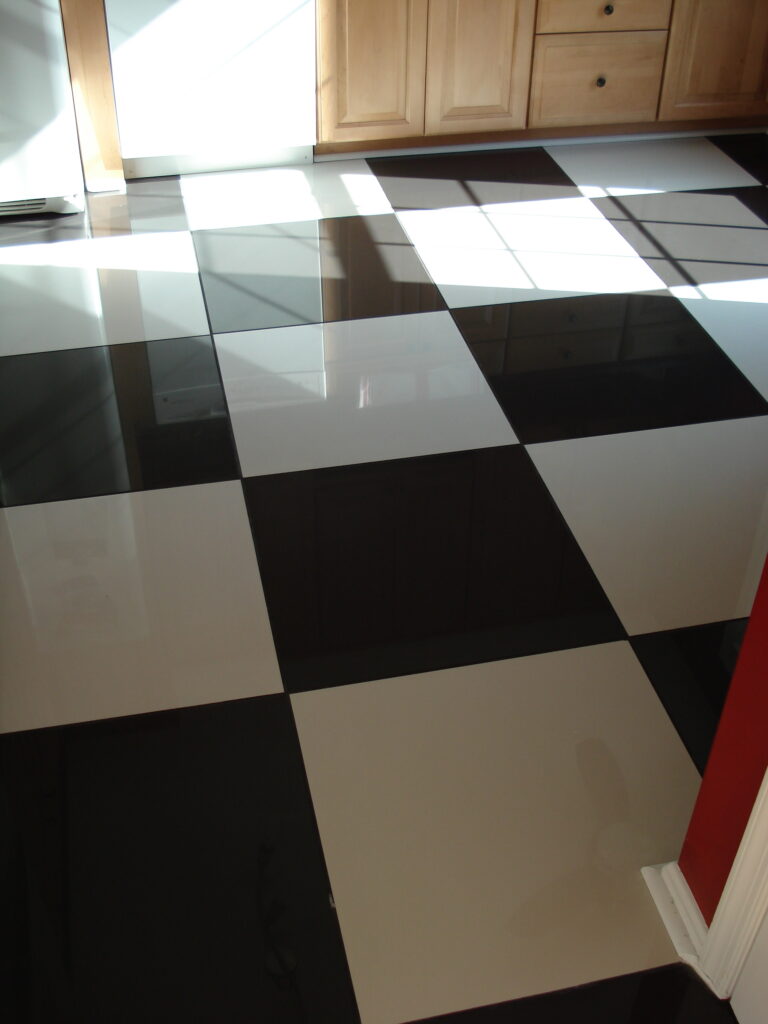 Modern take on a classic
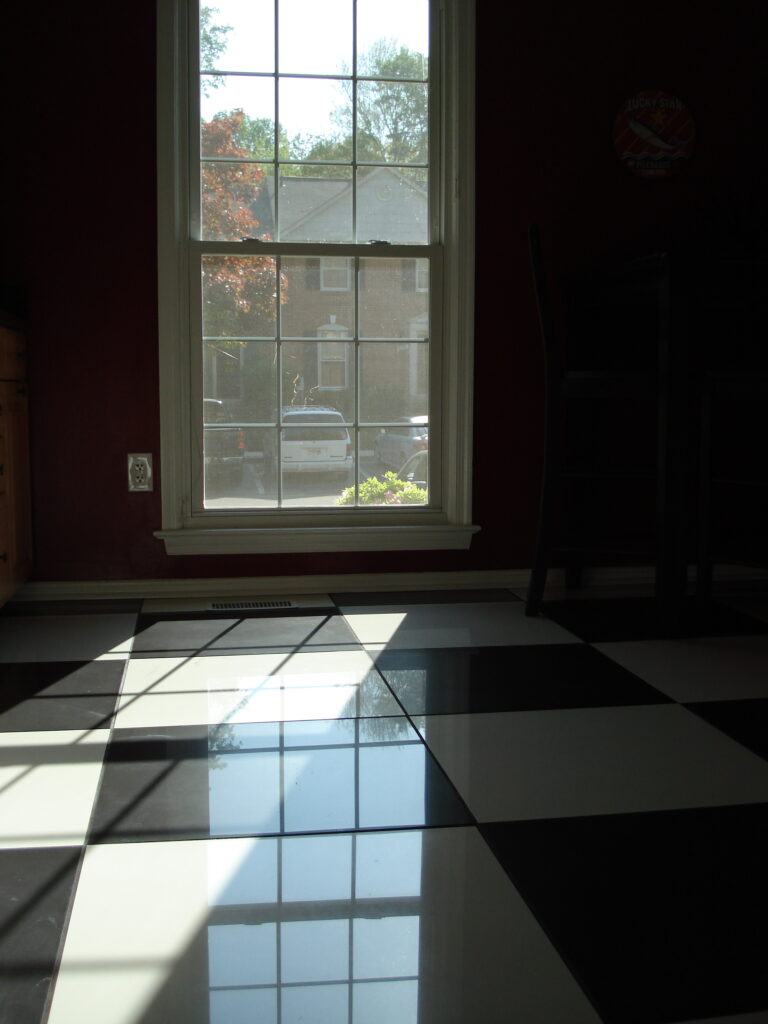 Modern take on a classic
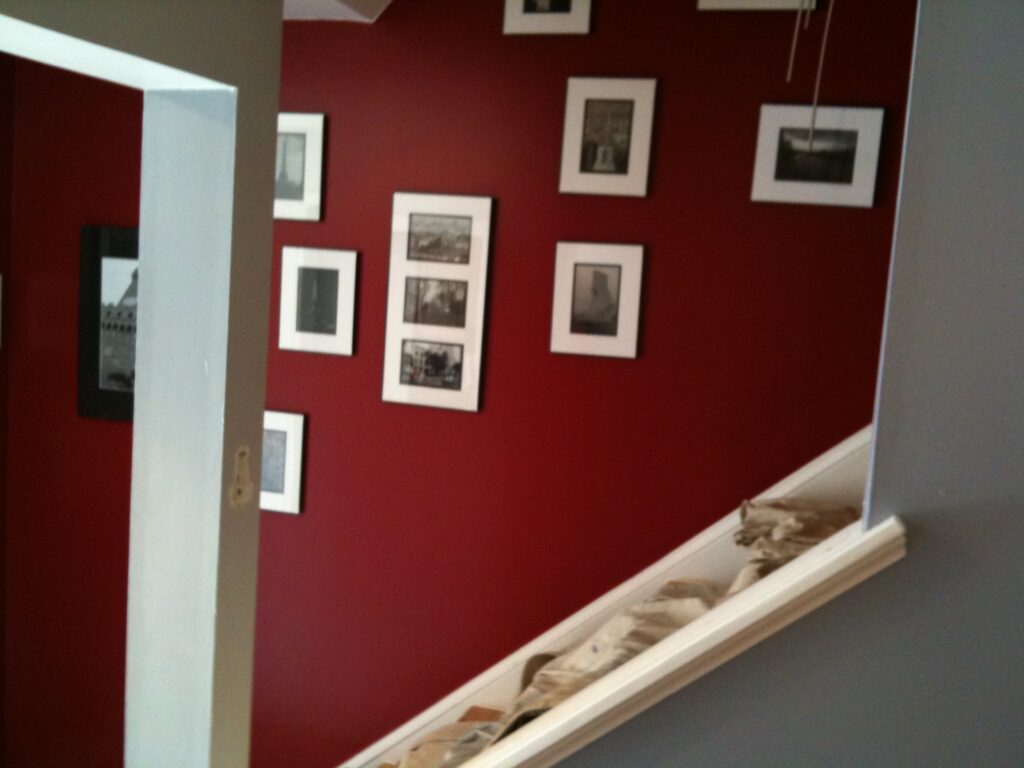 Paint, hardwood, cable railings
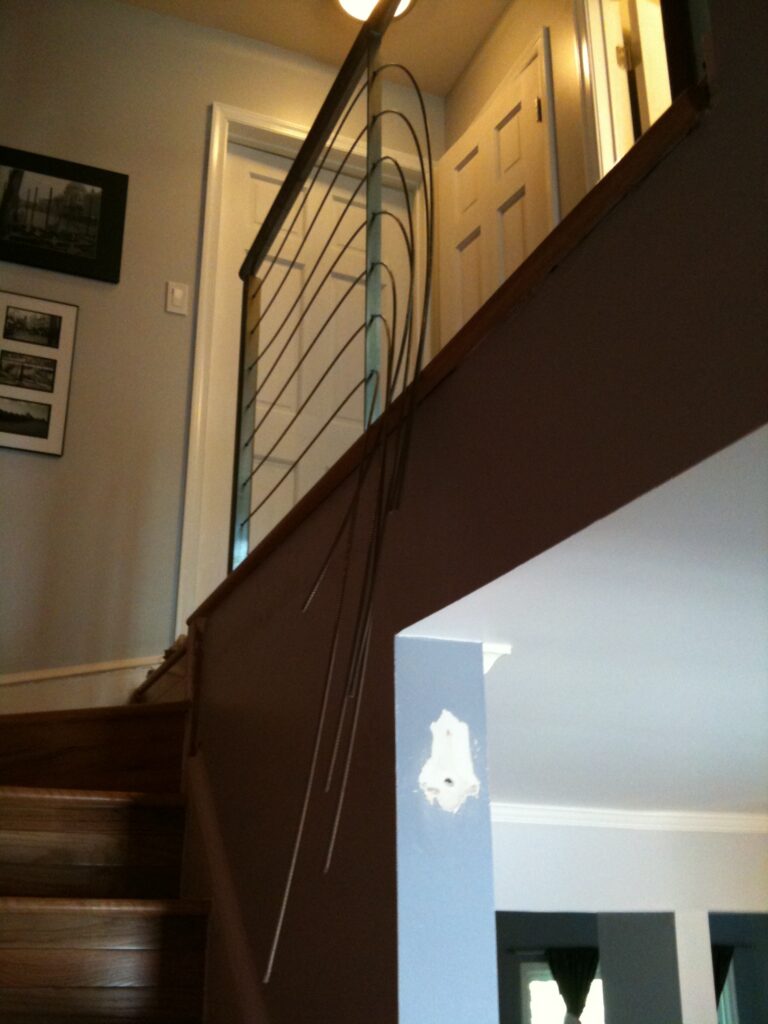 Paint, hardwood, cable railings
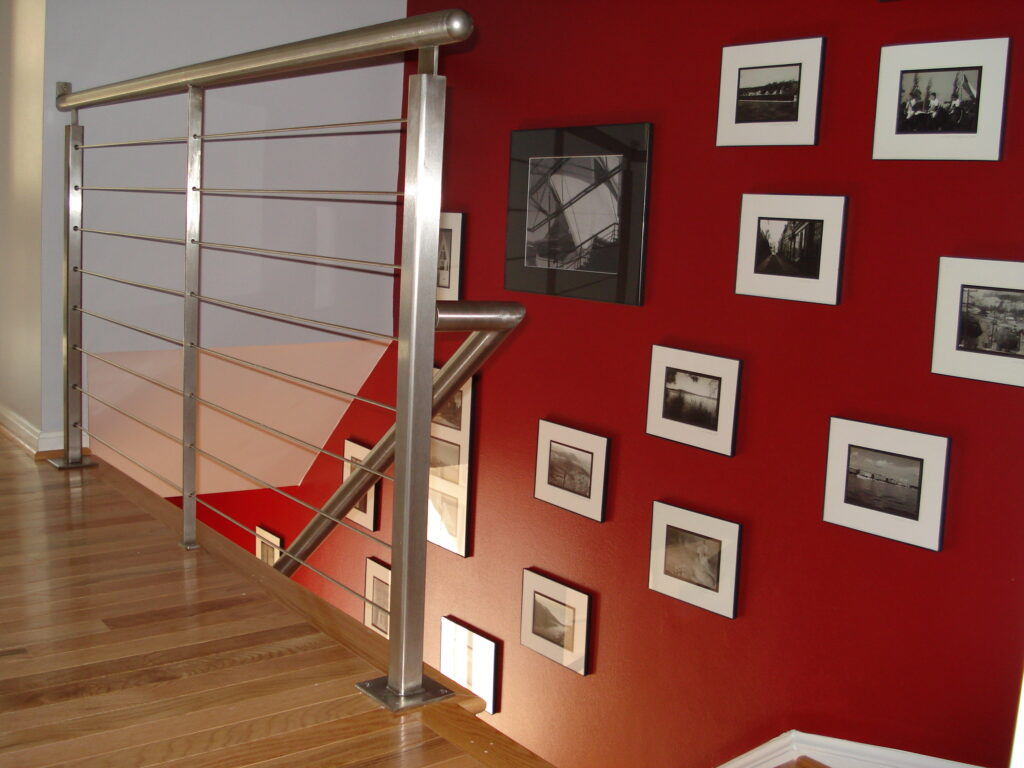 Paint, hardwood, cable railings
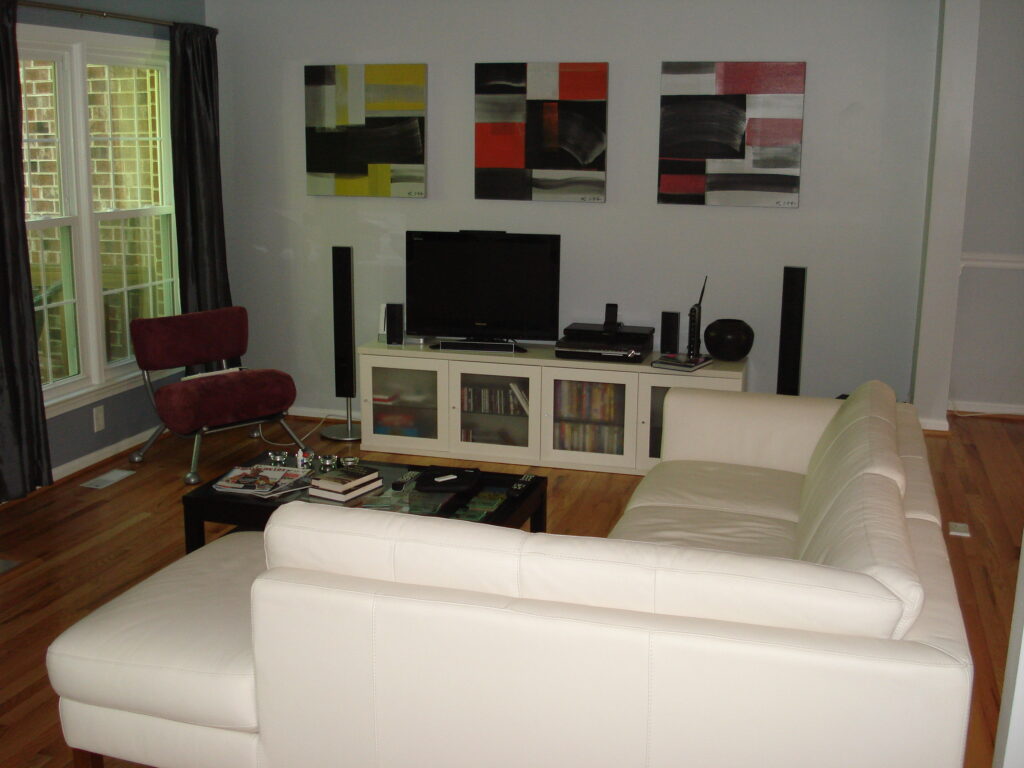 Hardwood, warm tones
Modern Take on a Classic
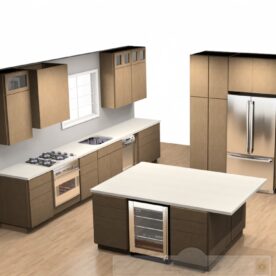
Before the house hit the market, the previous owners had installed a brand-new kitchen. Unfortunately, the refresh never addressed the original 1970s layout. Two short cabinet runs on perpendicular walls left an awkward flow that was disconnected from the rest of the house. Space was reserved for an eat-in table—unnecessary given the dining room just steps away—while usable counter space was minimal. The cabinets were new, so I left them and their placement intact. The flooring, however, was another story.
To finish the job, a “wood-look” plastic floor had been installed. In the late 2000s, that product still looked like it came off a dot-matrix printer. New or not, it had to go.
This time inspiration came to me, in Bloomingdale’s. A new luxury flagship store had just opened down the street, so I went in looking for a summer wardrobe. I left with something far better: a connection to purchase large-format, 48-inch black-and-white porcelain tile—hand-crafted in Spain—that filled the main floor of the luxury retailer.
It was a modern reinterpretation of a timeless classic—the checkerboard floor—executed in porcelain rather than marble. Timeless, and far more practical for a kitchen. To this day, it’s the most complimented feature I’ve ever installed in a home. They say smart people borrow and geniuses steal—let’s just say flooring brings out my inner genius.
Bricks, Brazil, and the Barbie Basement
From Africa, I emailed my gardener with what I thought was a simple request. Beneath the second-floor deck was a shaded dead zone—no sun, no plants, just a mosquito-friendly mud pit. With my annual Fourth of July party approaching, I asked him to brick the area.
That small ask triggered something much larger.
When I handed him a check for final payment just inside the back door, he paused, looked around wide-eyed, and commented that it was… an unusual color. We were standing in what family and friends had long dubbed the Barbie Basement—bold pink plastic paneling, a matching Formica wet bar, and a textured ceiling. Believe it or not, both were optional builder upgrades at the time.
I told him it was on my list. He mentioned that he knew a crew with a gap in their schedule during the World Cup—if I didn’t mind a few pauses here and there. I was still mostly abroad. Why not.
Work began over the holiday break. Progress was steady—except when Brazil was playing. At kickoff, the crew vanished with pro-athlete levels of efficiency. Thankfully, soccer matches are predictably short, work always resumed just in time for me to forget I’d been abandoned.
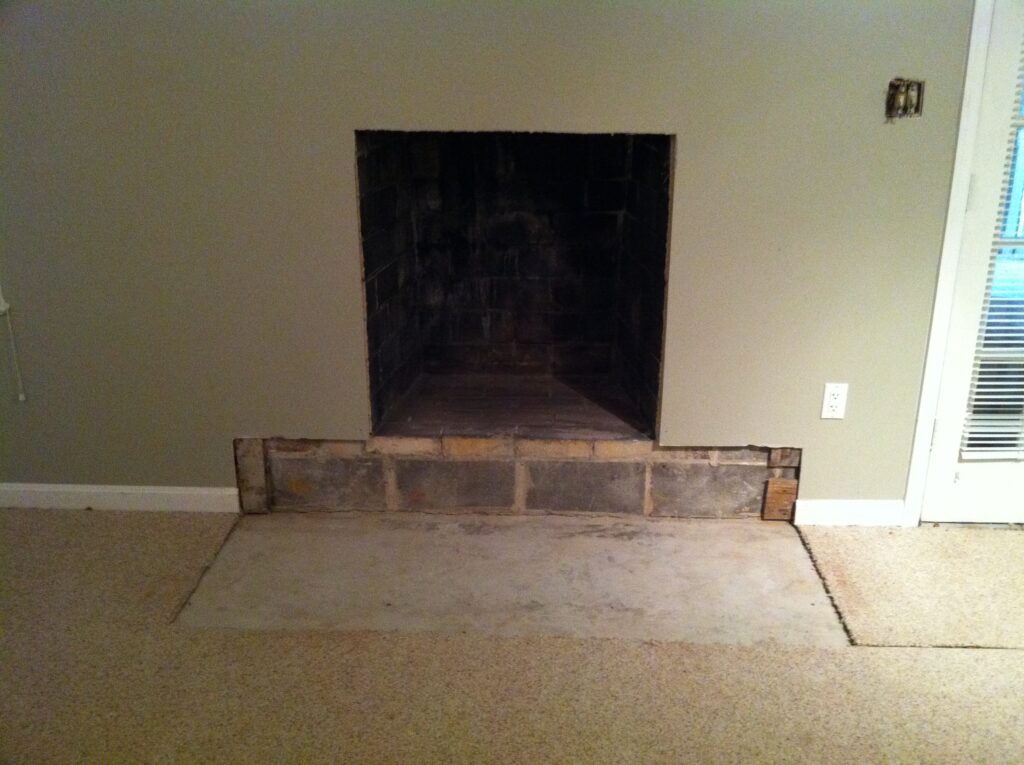
With fresh insulation, smooth plaster, and walls painted in warm Toasty Tan, the old brick fireplace no longer fit. After two rounds of demolition—I started with just the wall, then returned for the hearth—I installed porcelain wood-grain tile, carrying it through the fireplace surround, the rebuilt wet bar, and the adjacent powder room to unify the entire level.
My dad came down to help finish the space. Together we installed cabinetry, fit a countertop to match the kitchen upstairs, relocated electrical, and wired my first wine fridge.
What began as a plan to lay a few bricks outside became a full-floor renovation—and the moment the house stopped being a collection of projects and started becoming intentional.
Barbie Basement Breakdown
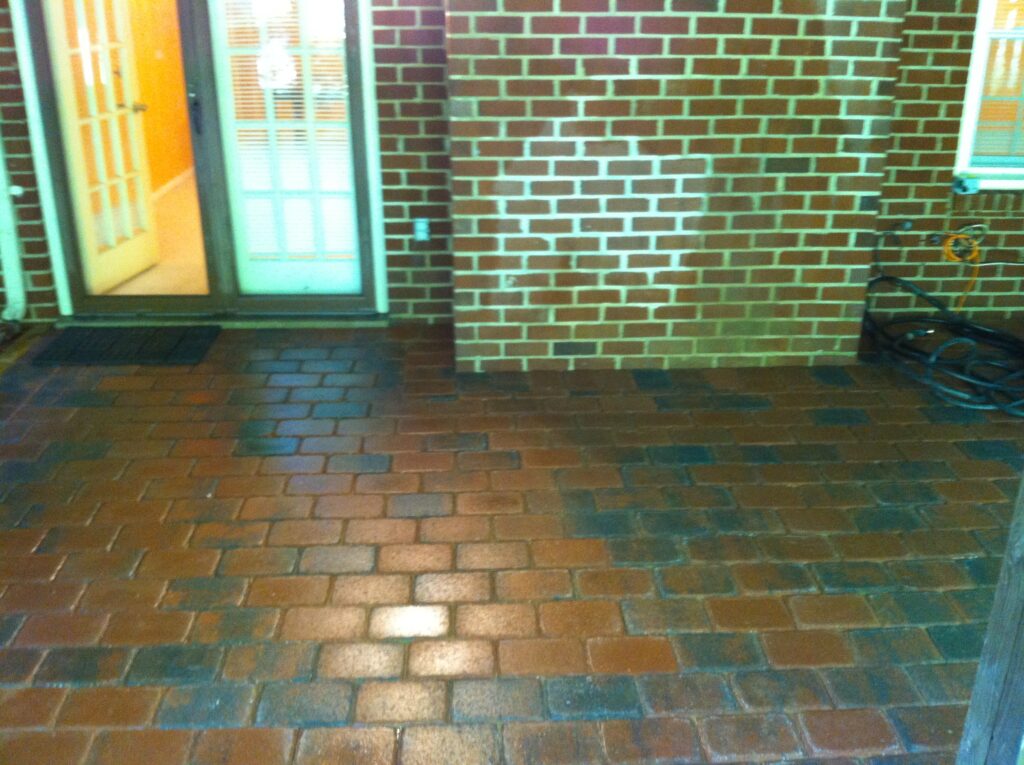 All started with a brick patio
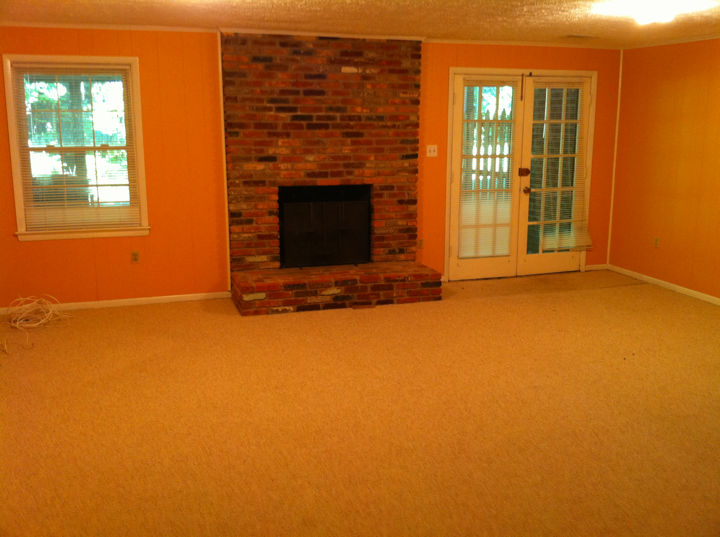 The Barbie Basement
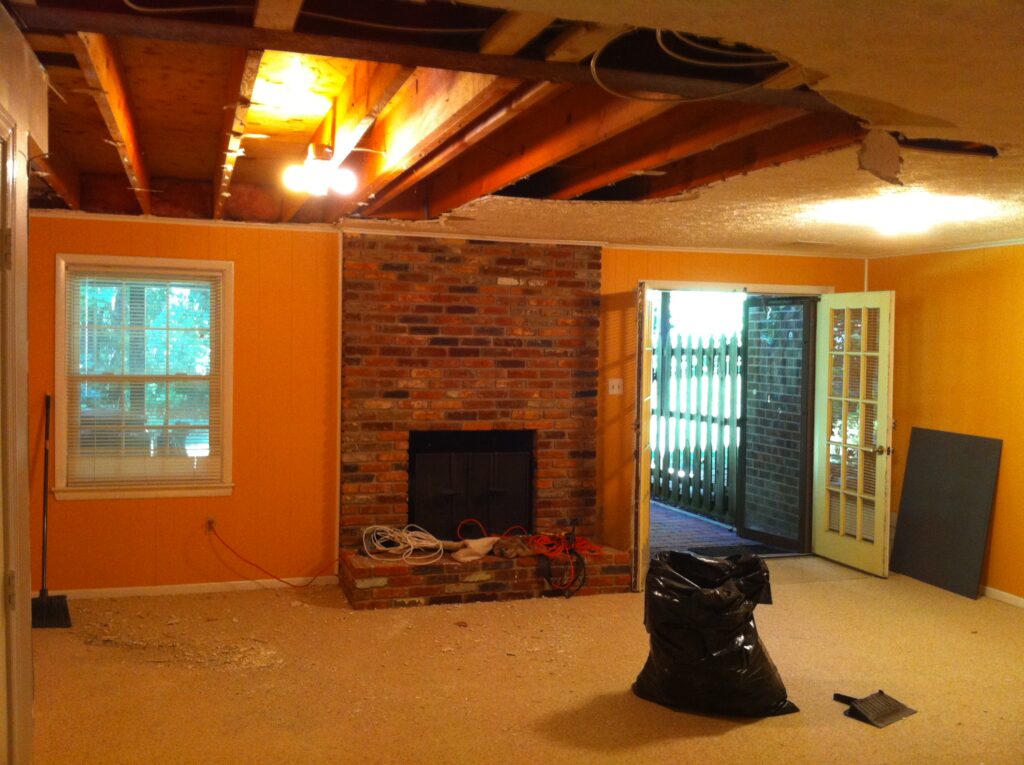 Ceiling down
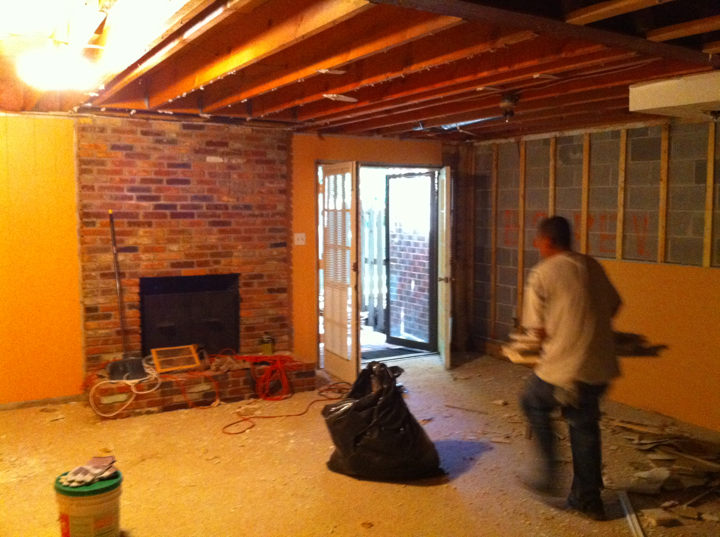 Walls down
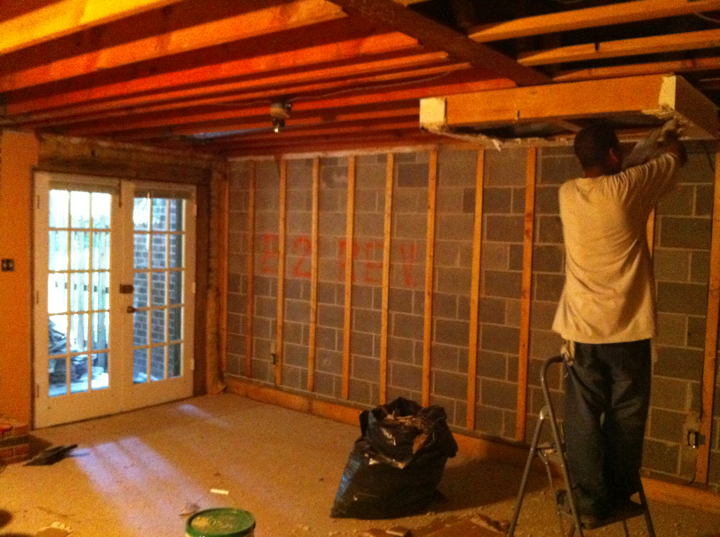 Walls down
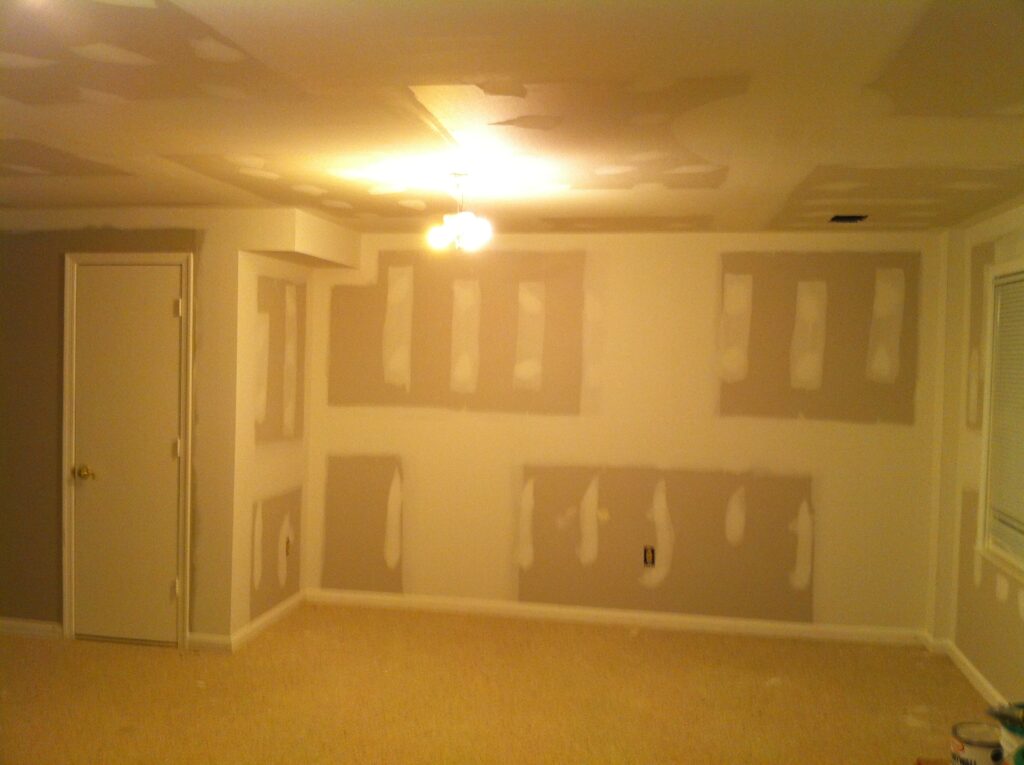 Smooth walls
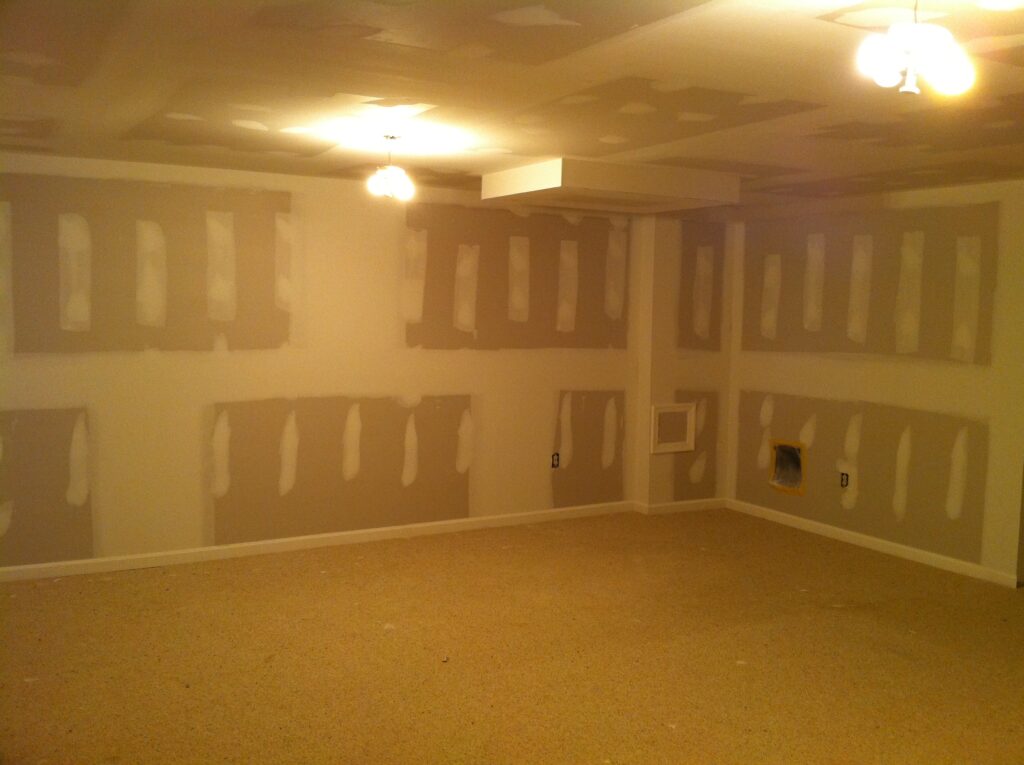 Smooth ceilings
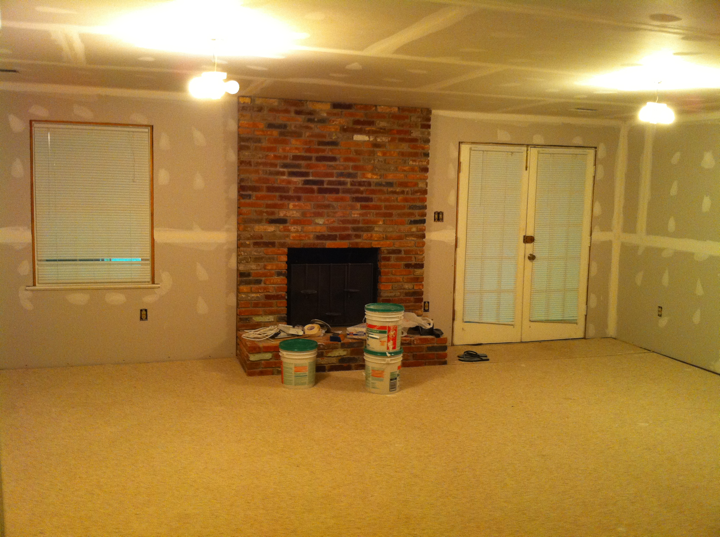 Fireplace didn’t look right
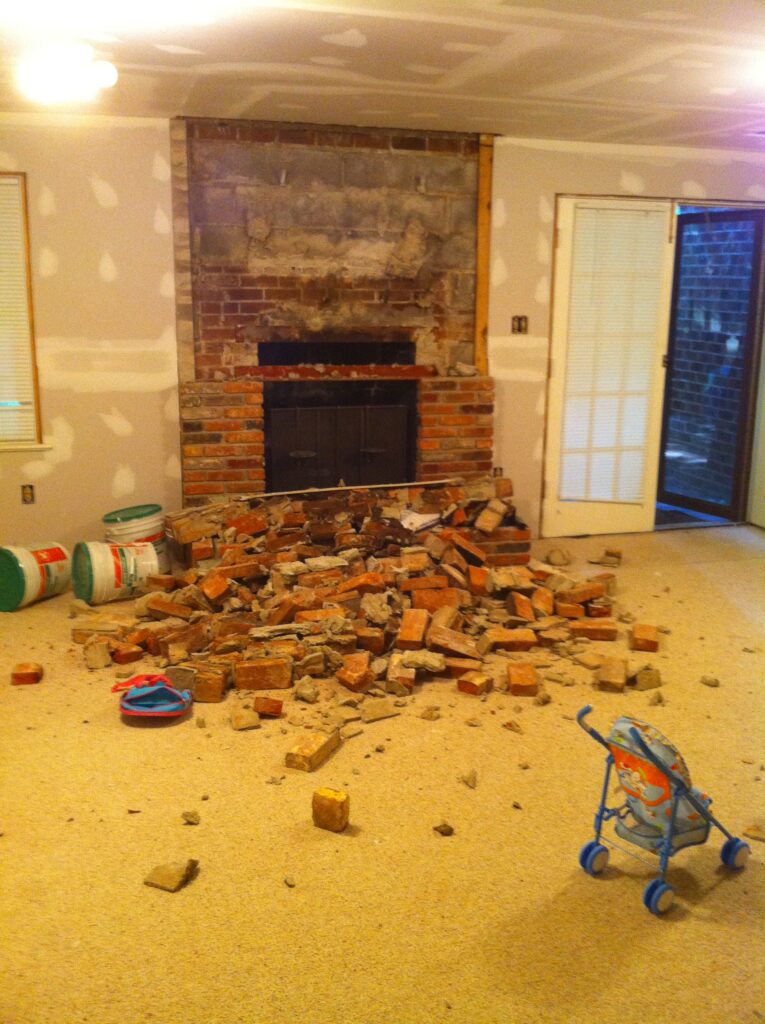 Turns out the bricks weren’t tied to the wall
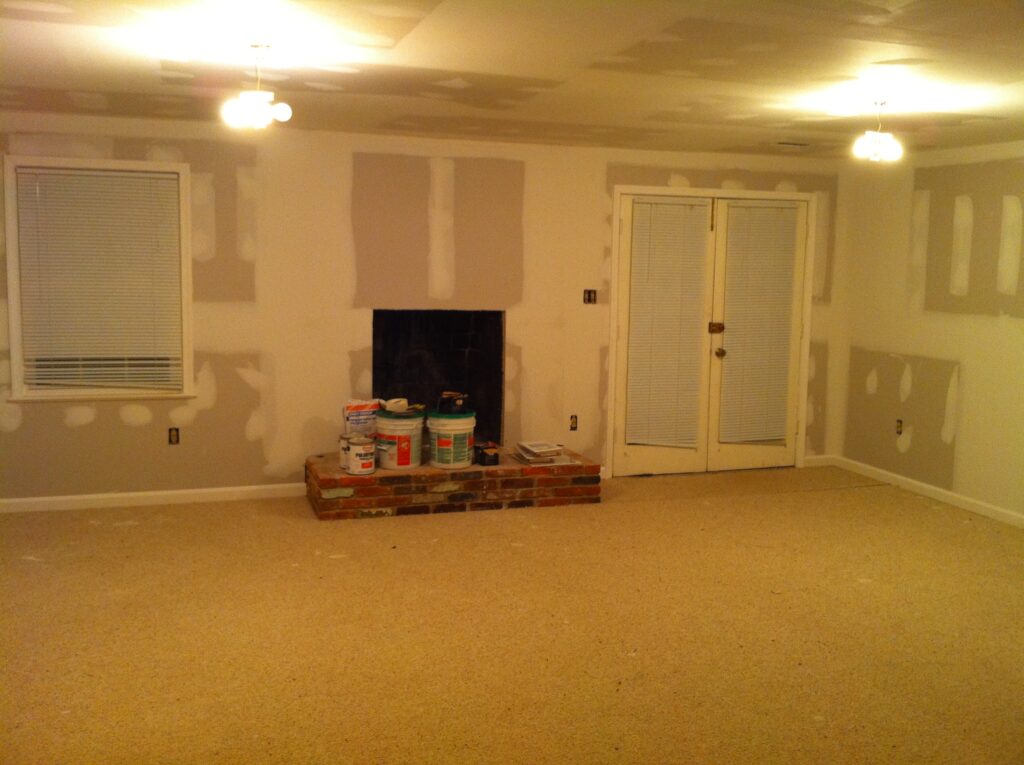 No brick wall
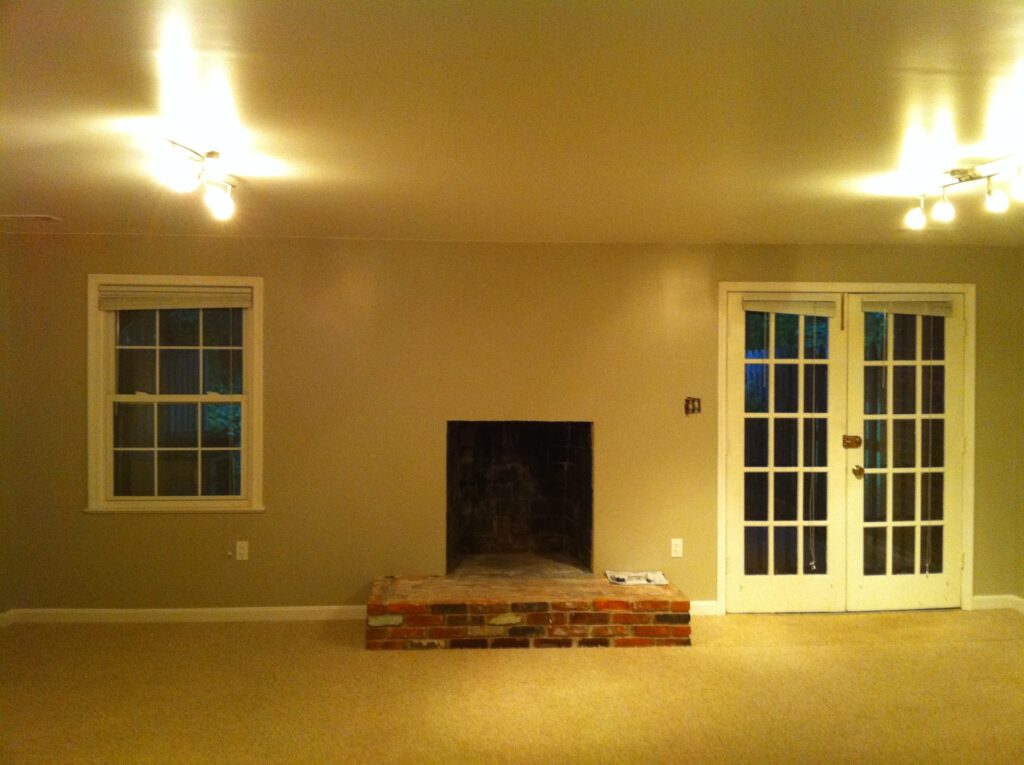 Still didn’t look right
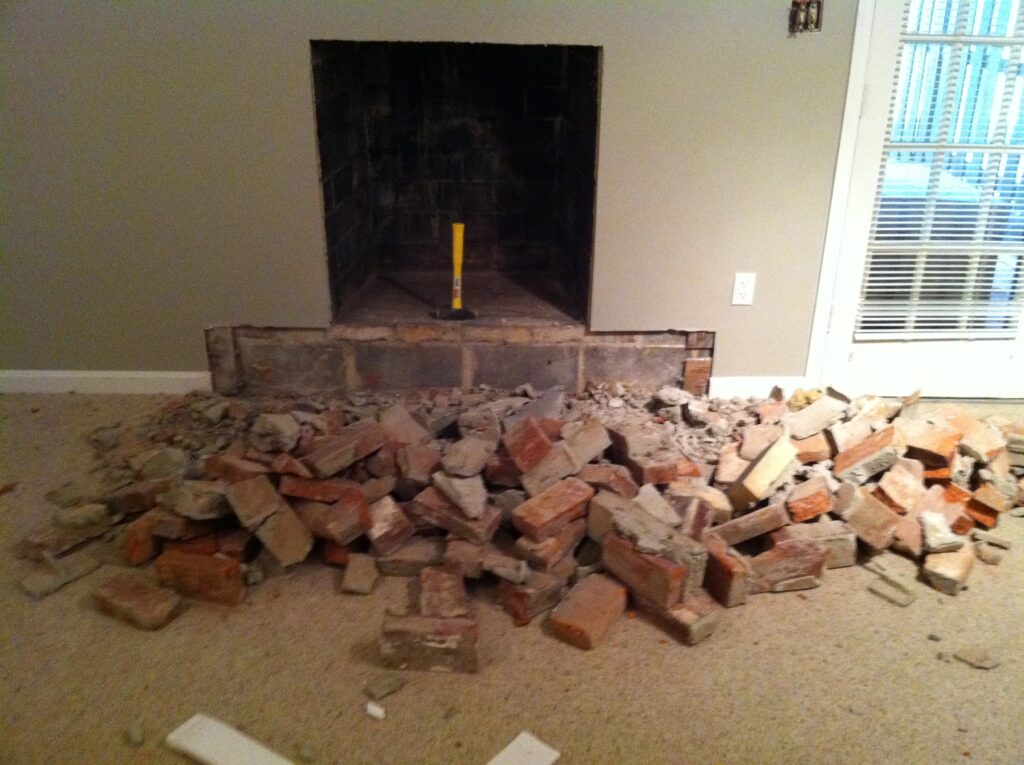 Getting there …
 Much better!
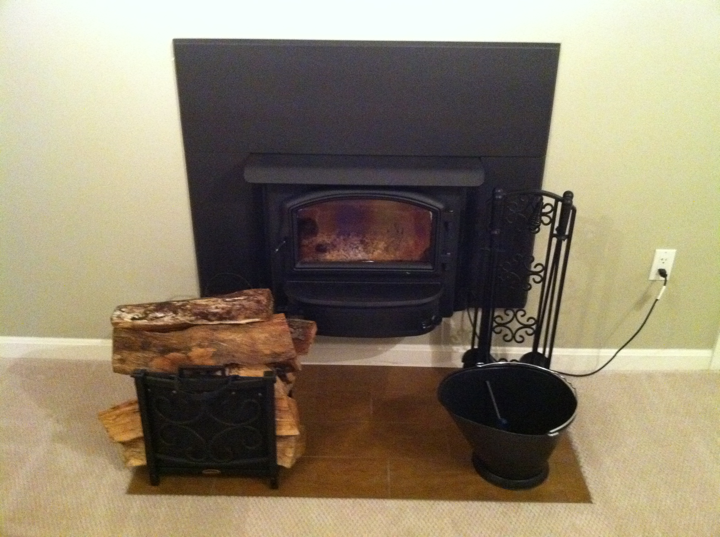 Porcelain wood look tile
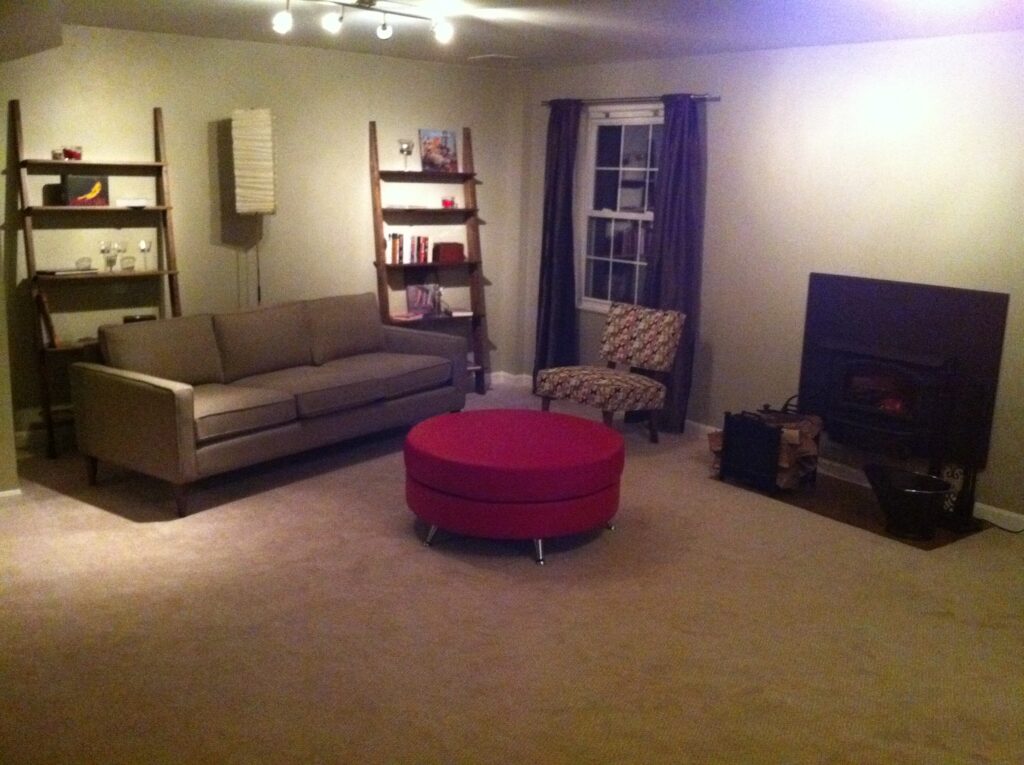 No more Barbie Basement
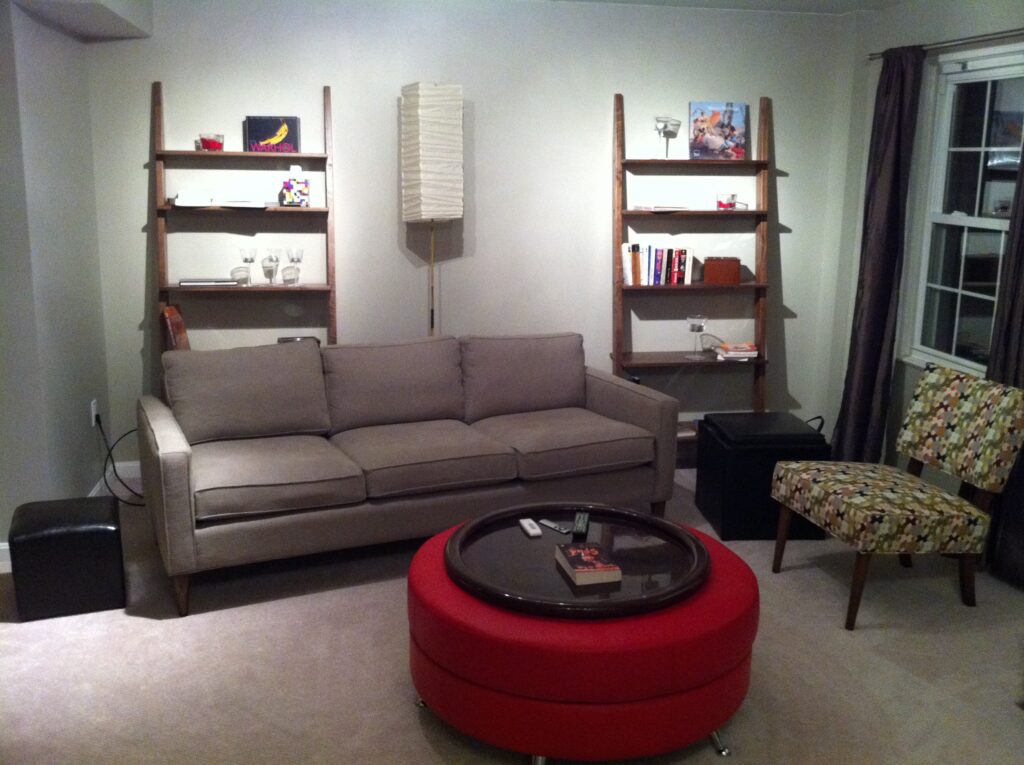 A 200” movie theatre screen and projector for movie nights
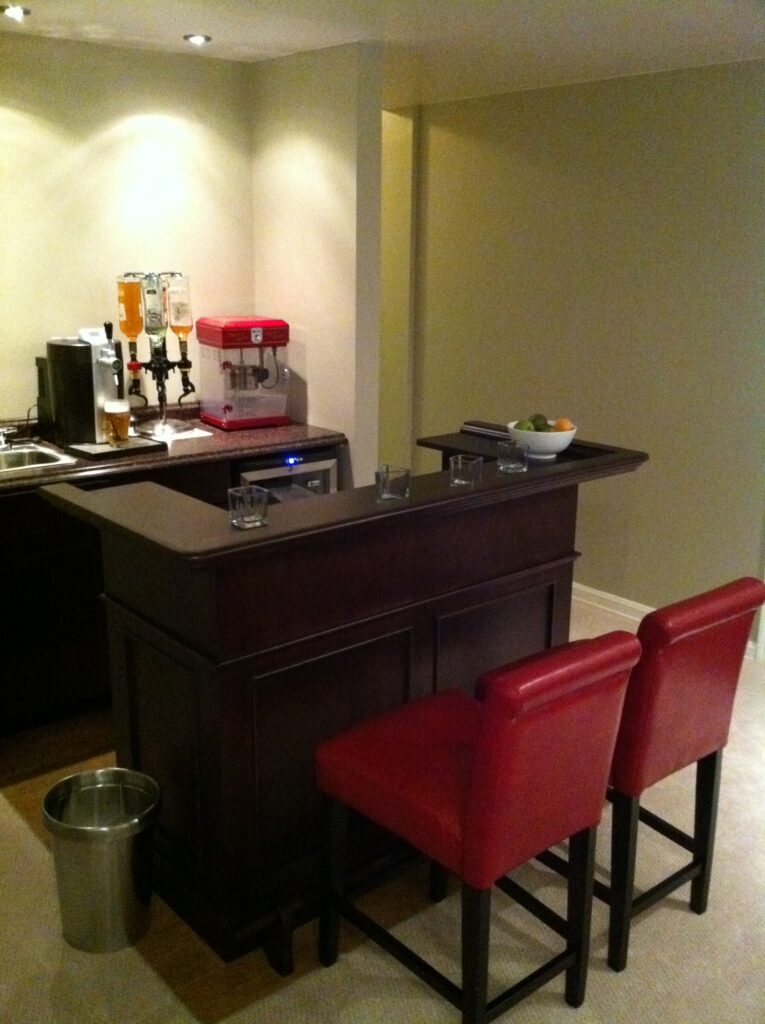 Dad and I installed the cabinetry, countertop, and wine fridge
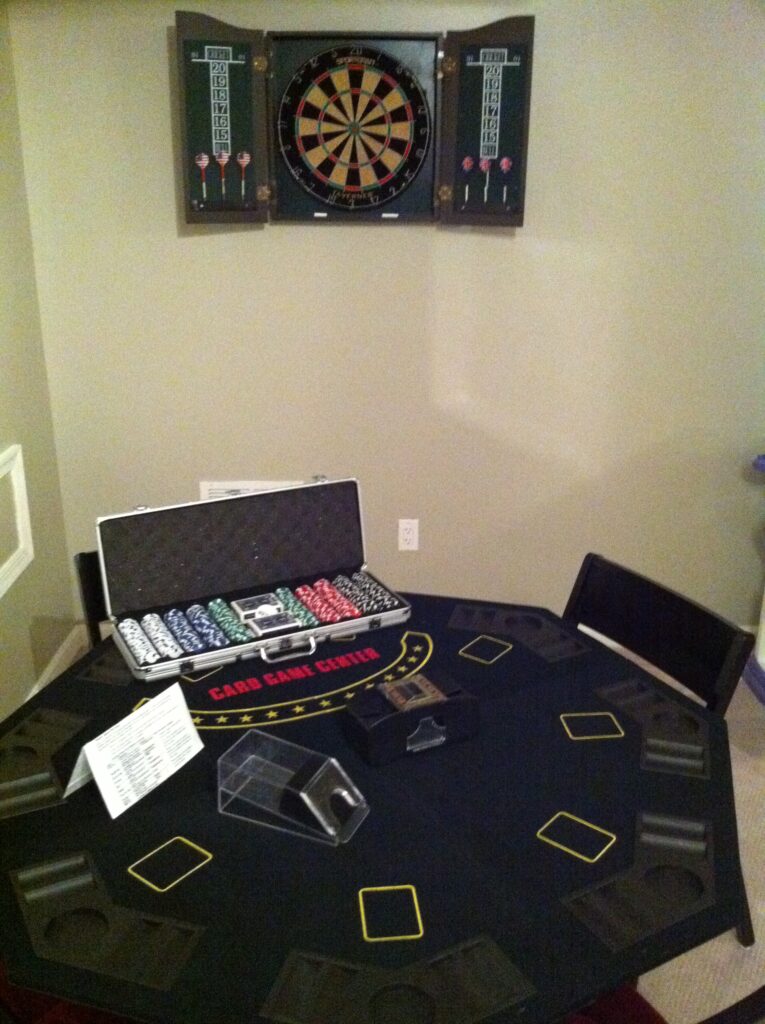 Perfect place to play poker
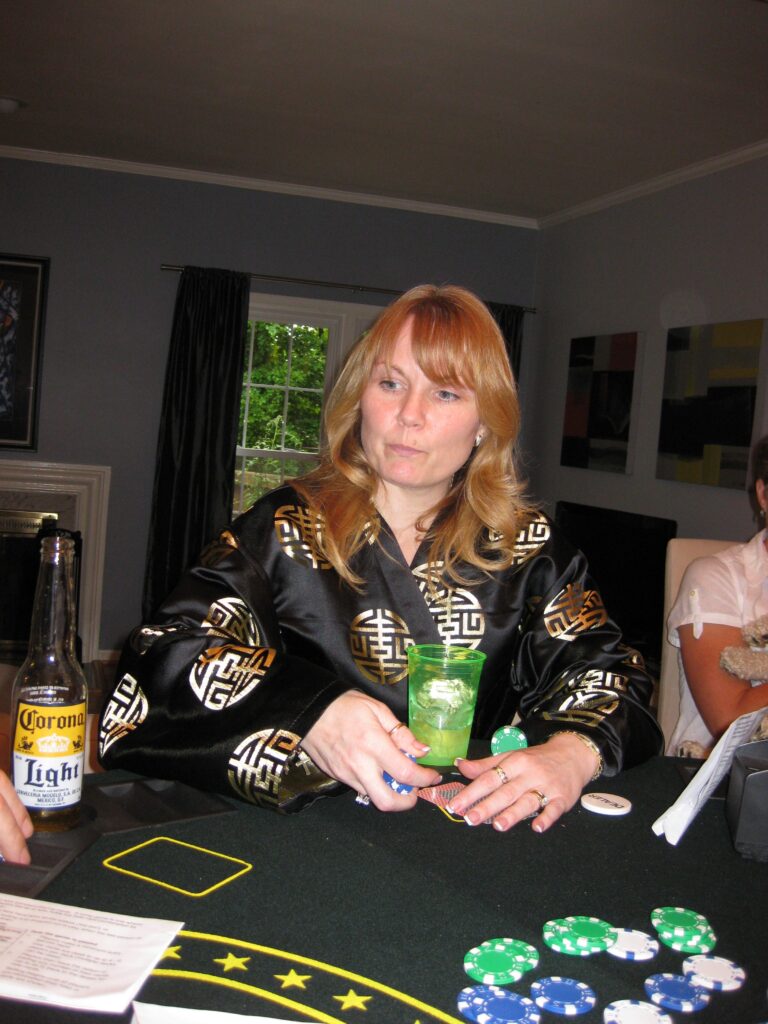 Michelle the card shark …
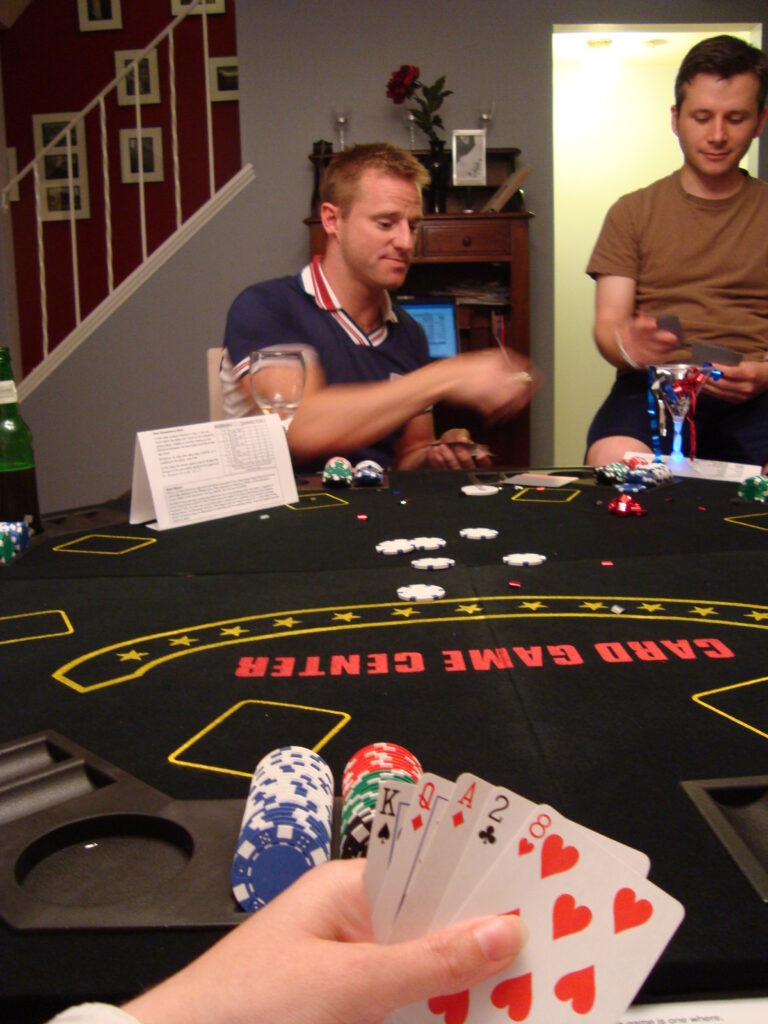 … she was always bluffing
Shared Design, No Shared Sinks
Fully back from Africa—and after a brief detour into what could generously be called a side career in South America—that’s another post—I was home for good. Re-immersed in my technology career and deep into triathlon training, I met my husband-to-be, Ramiro.
When the conversation turned to him moving in, we quickly realized some changes were needed. If this was going to be our space, it needed to work for us both—starting with the primary bedroom. The bathroom was long past its prime and designed for only one person at a time, the bedroom needed a full refresh, and the closets were already bursting with my clothes. Two men. One room. A lot of designer clothing. Something had to give.
This became the first renovation Ramiro and I tackled together—and the moment our relationship officially entered construction stress testing.
The primary bathroom, in particular, was overdue for a rethink. The layout made no sense: the door swung open and immediately smacked the toilet, while a long, empty wall stretched beside it. At the far end sat a narrow vanity with a single sink, sunken into an alcove just to make sure two people could never share it.
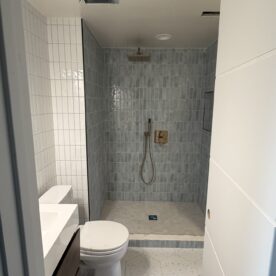
The solution was always obvious: the toilet and vanity needed to swap places. That single move made room for double sinks and tucked the toilet into an alcove where it belonged—no need for simultaneous use. Out went the bathtub. In came dual, Italian rain-head fixtures, which proved ideal for post-training Heated Rivalry showering. A modern barn door eliminated the risk of anyone using the bathroom getting smacked on entry.
Of course, the renovation seemed deceptively easy to me. I was traveling and staying in luxury hotels for roughly 90 percent of the construction. My involvement mostly consisted of approving tile samples from the comfort of crisp white bathrooms with turn-down service. Ramiro, meanwhile, was at home navigating dust, noise, and the daily reality of living without a primary bath. Realizing this imbalance at one point, I booked us a weekend at a downtown Bethesda hotel—for a brief, dust-free escape.
When it came together, it was worth all the dust and disruption. The room finally functioned the way it should have all along—balanced, efficient, and designed for a modern couple. More importantly, it set the tone for future project we would tackle. This wasn’t just about fixing bad layouts anymore. It was about making the house work for us.
Battle-Tested, Spa-Approved
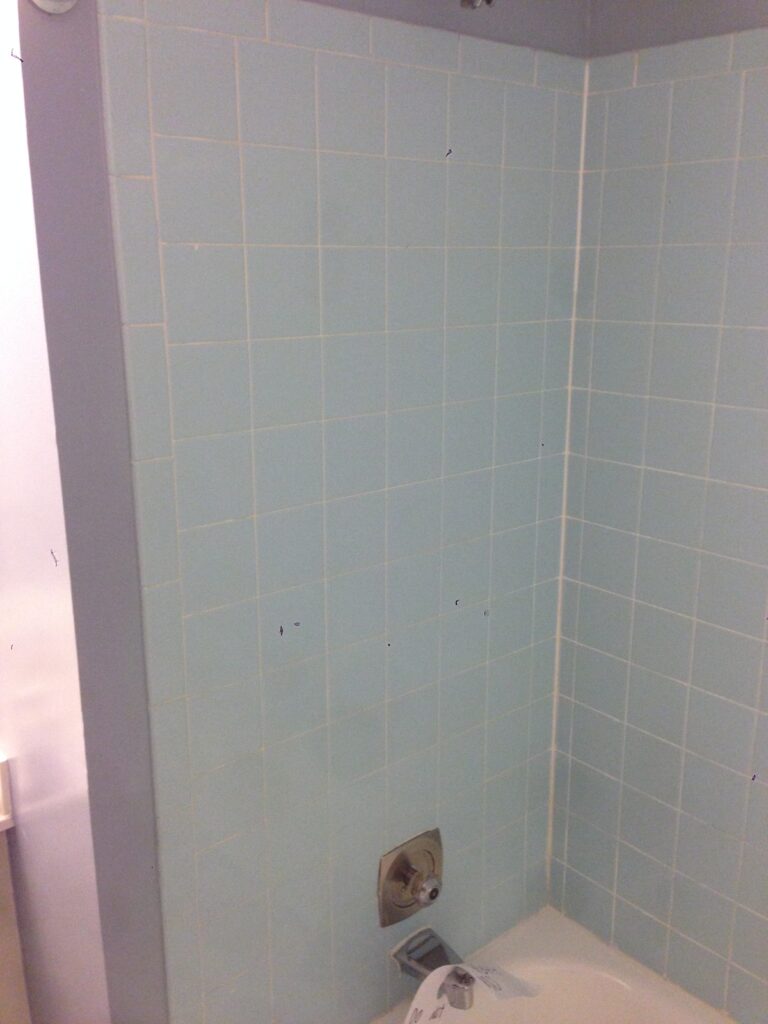 Before: shallow bathtub, robin egg blue tile
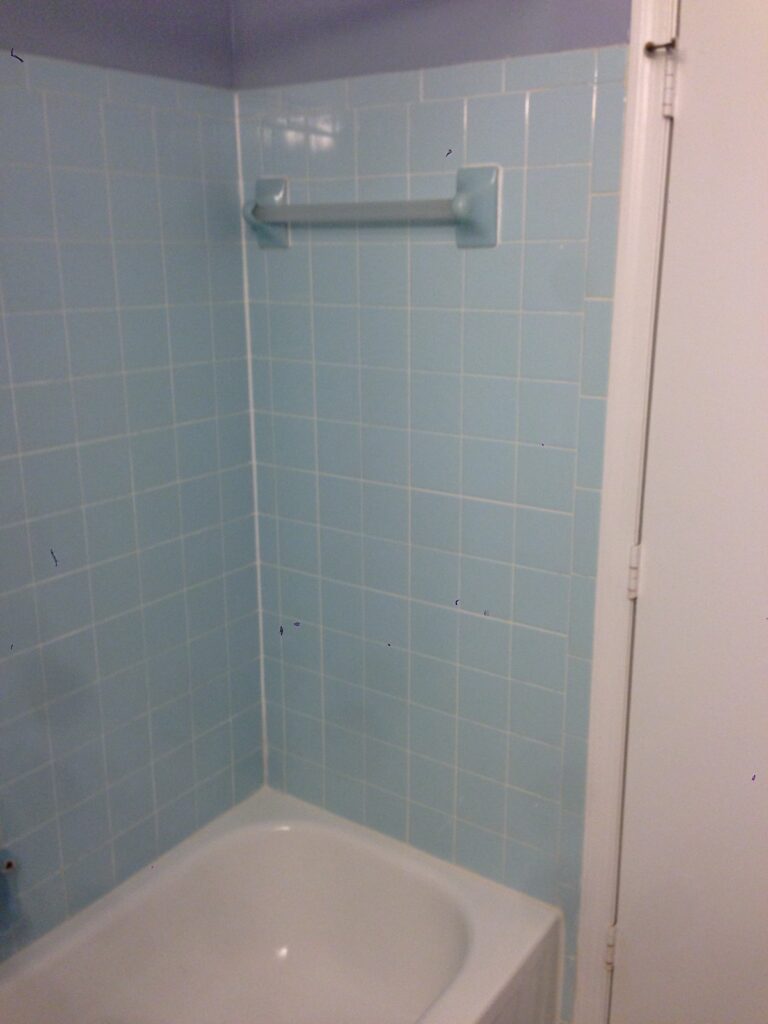 Before: shallow bathtub, robin egg blue tile
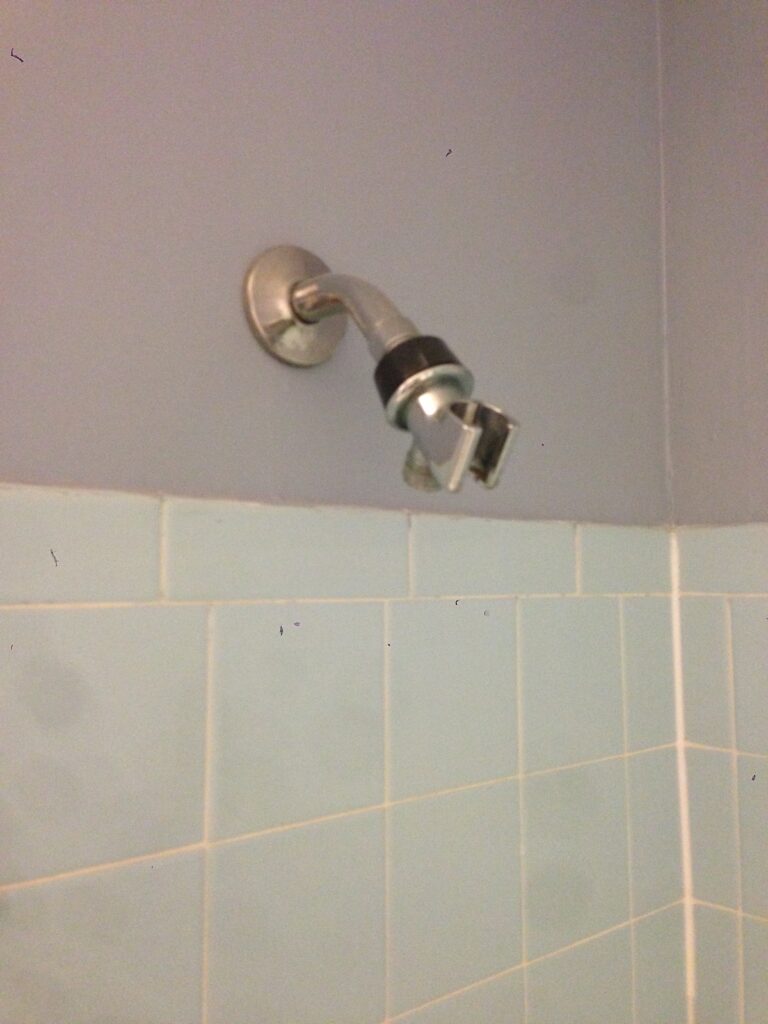 Before: Low shower head
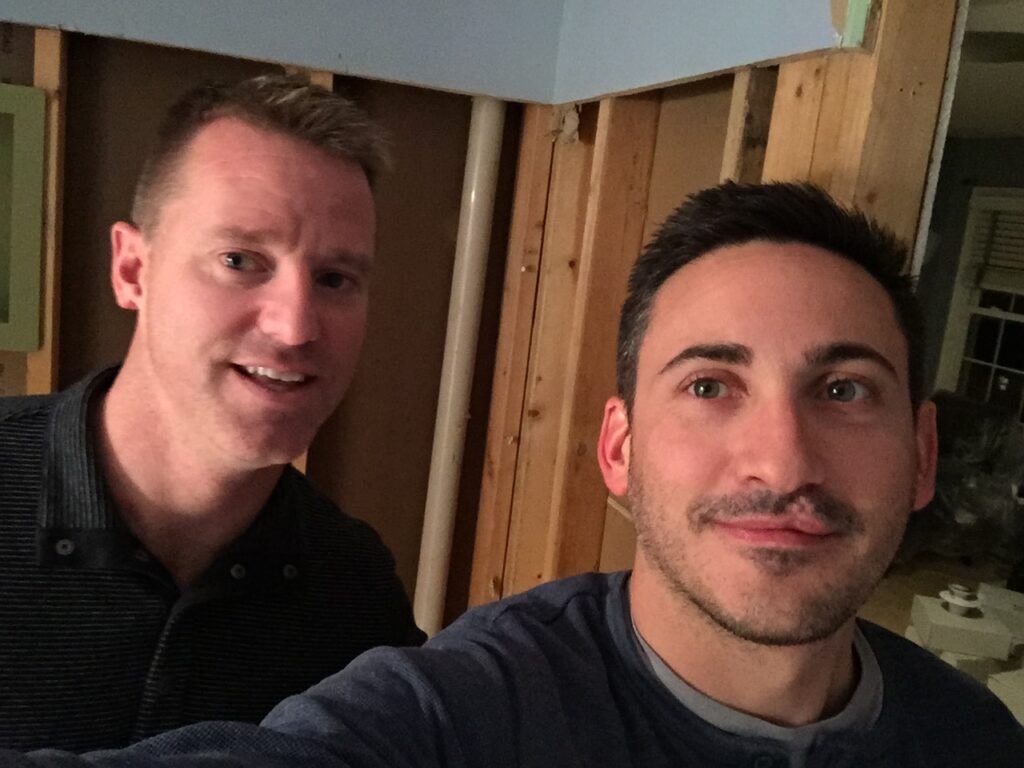 Demo done! What’s next?
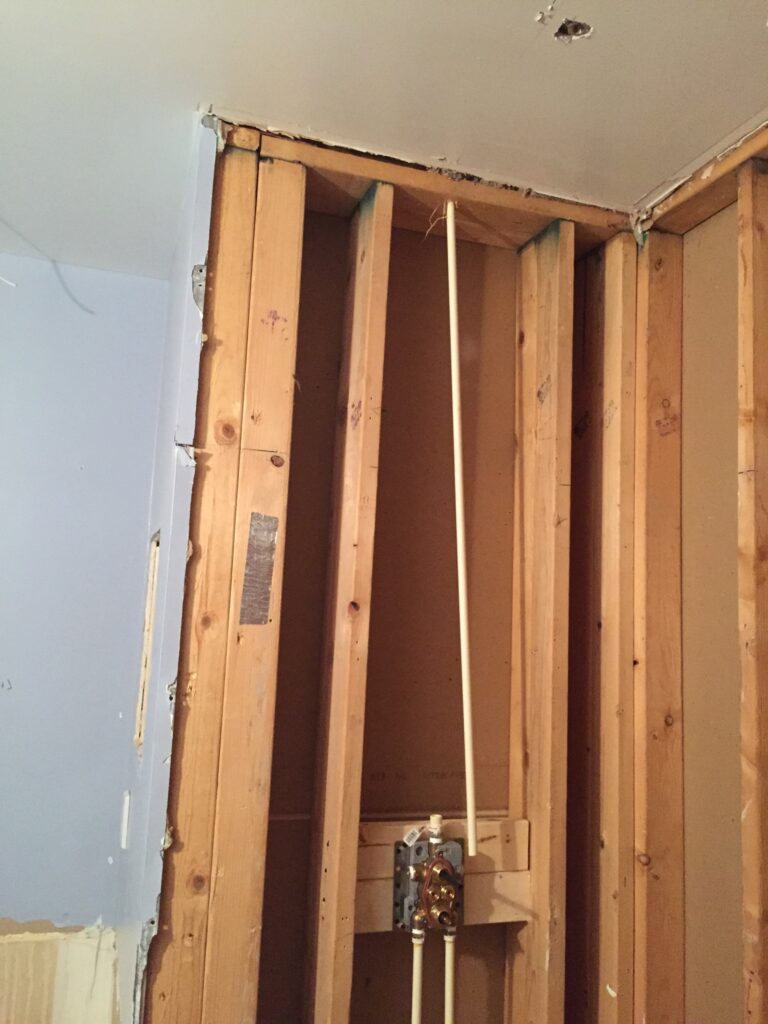 During: looked better as studs
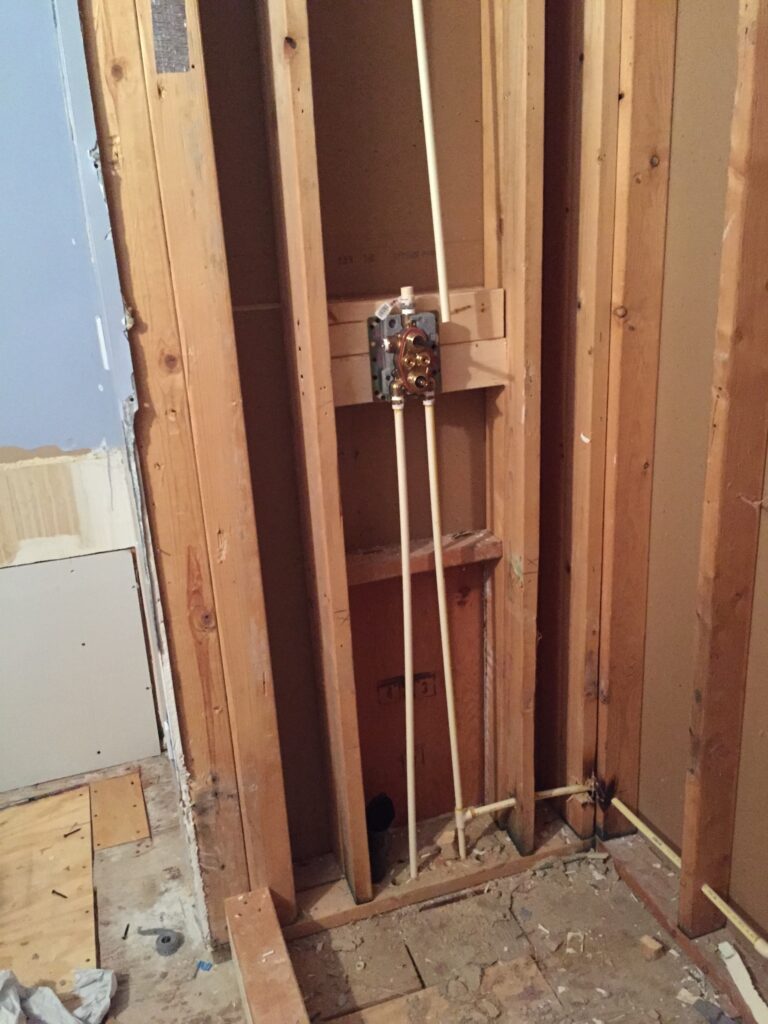 During: down to the studs
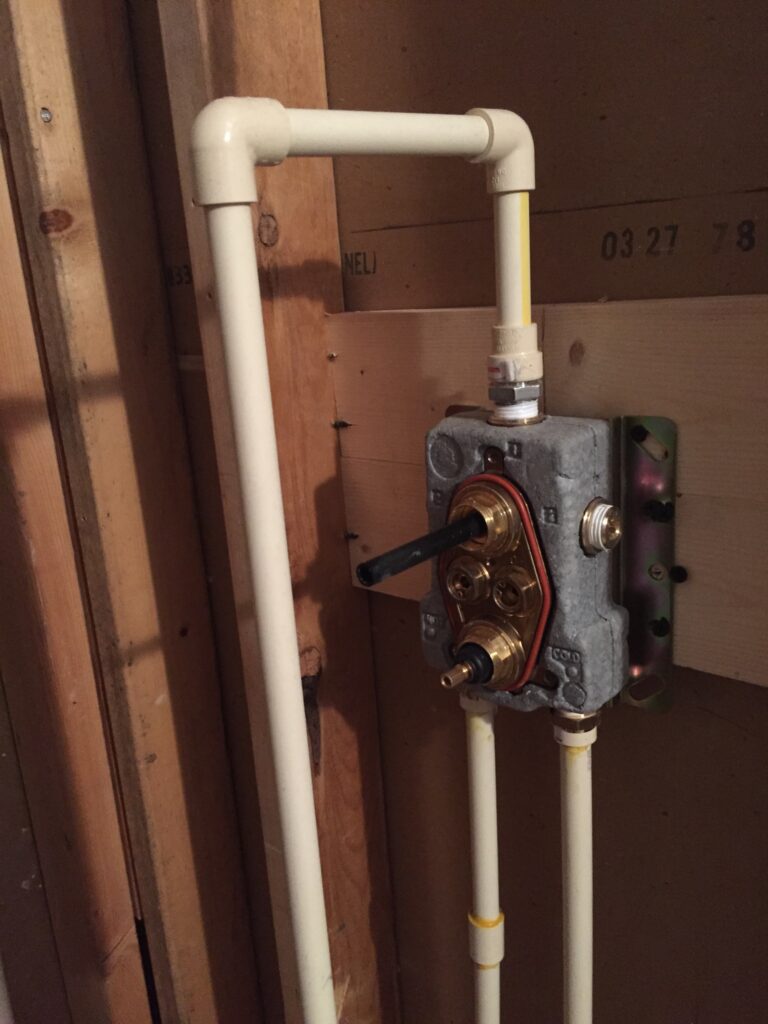 During: Italian thermostatic controls
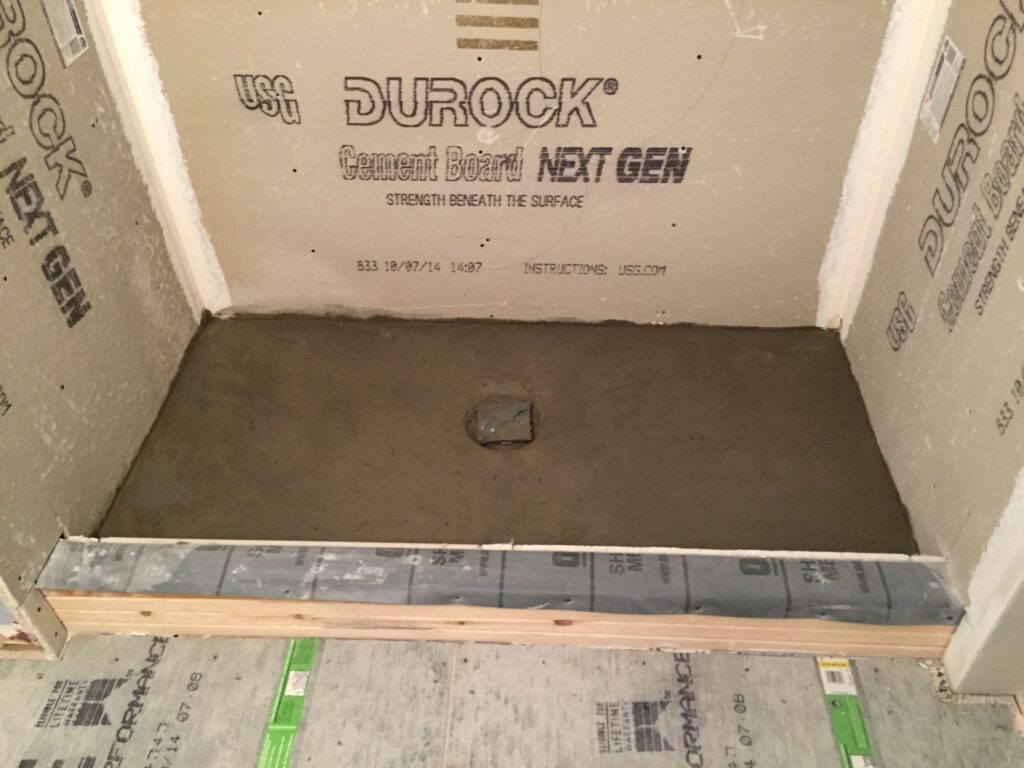 During: bathtub becomes walk-in shower
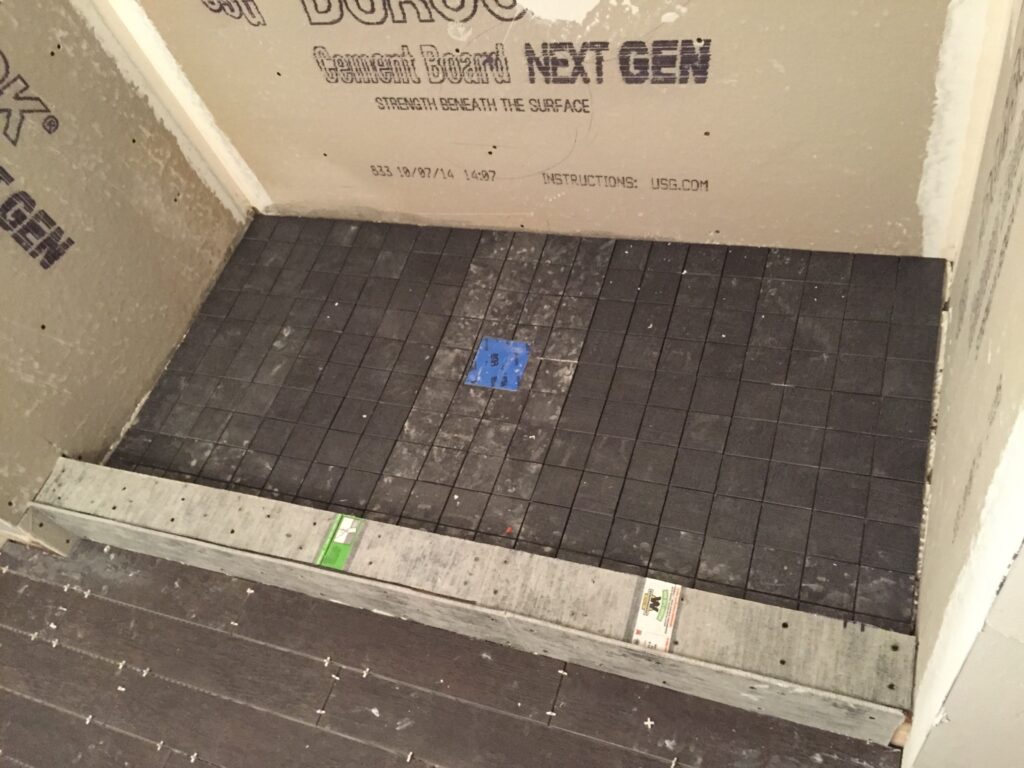 During: walk in shower tile floor
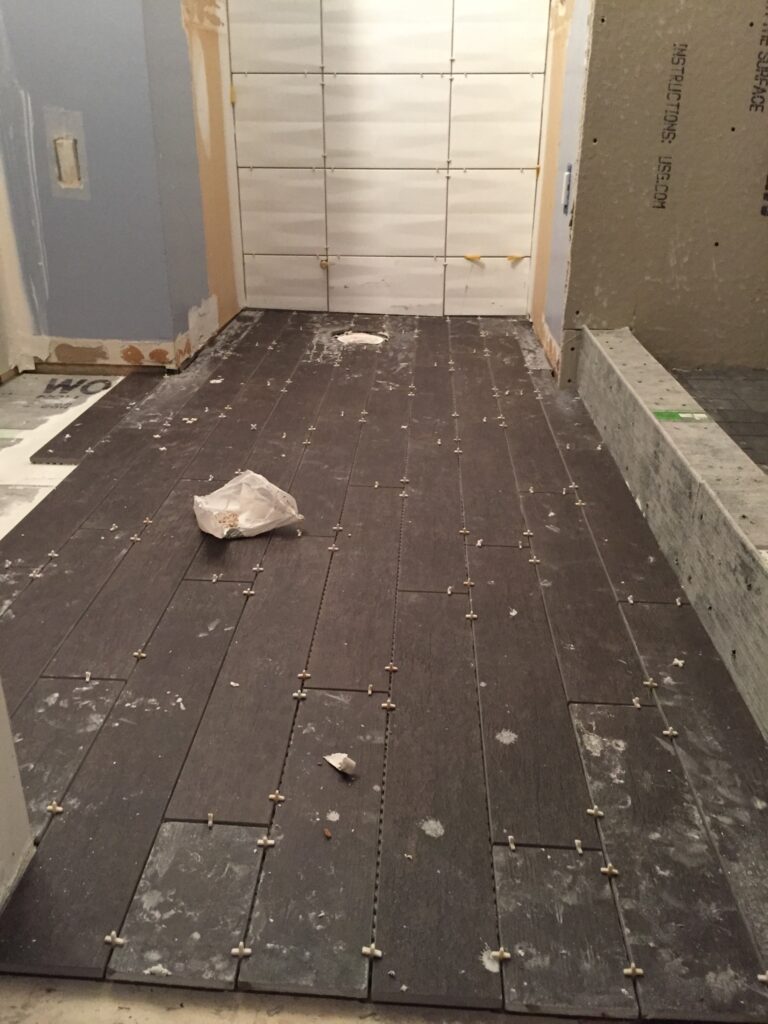 During: wood grain porcelain tile
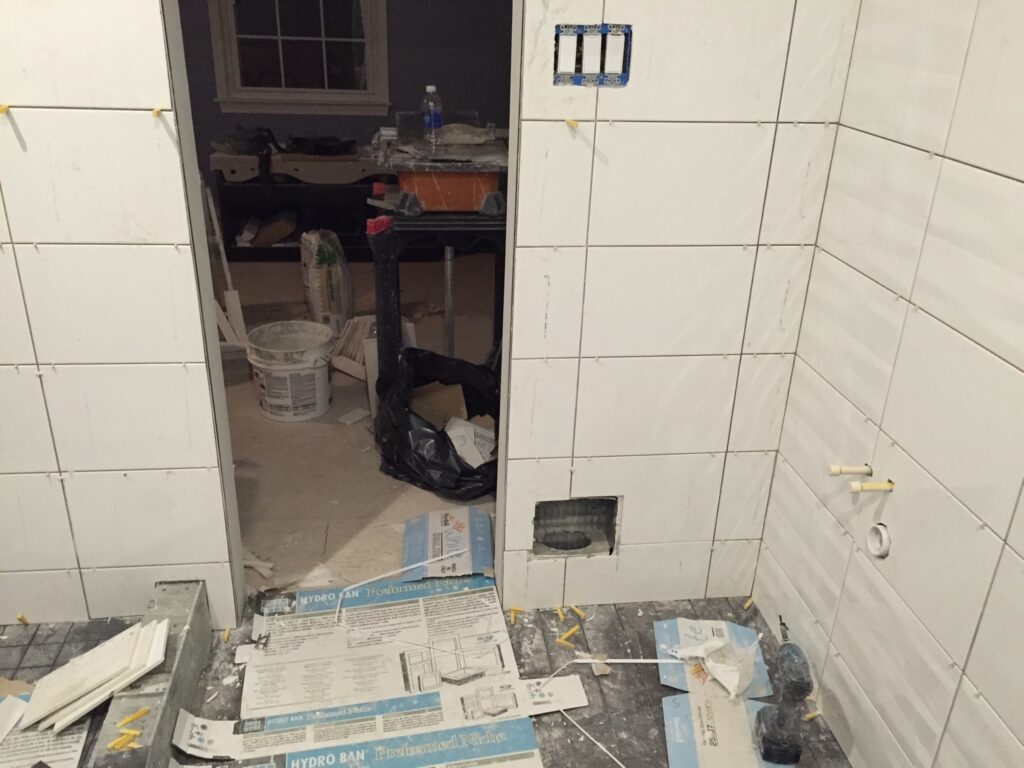 During: 360° tile on all walls
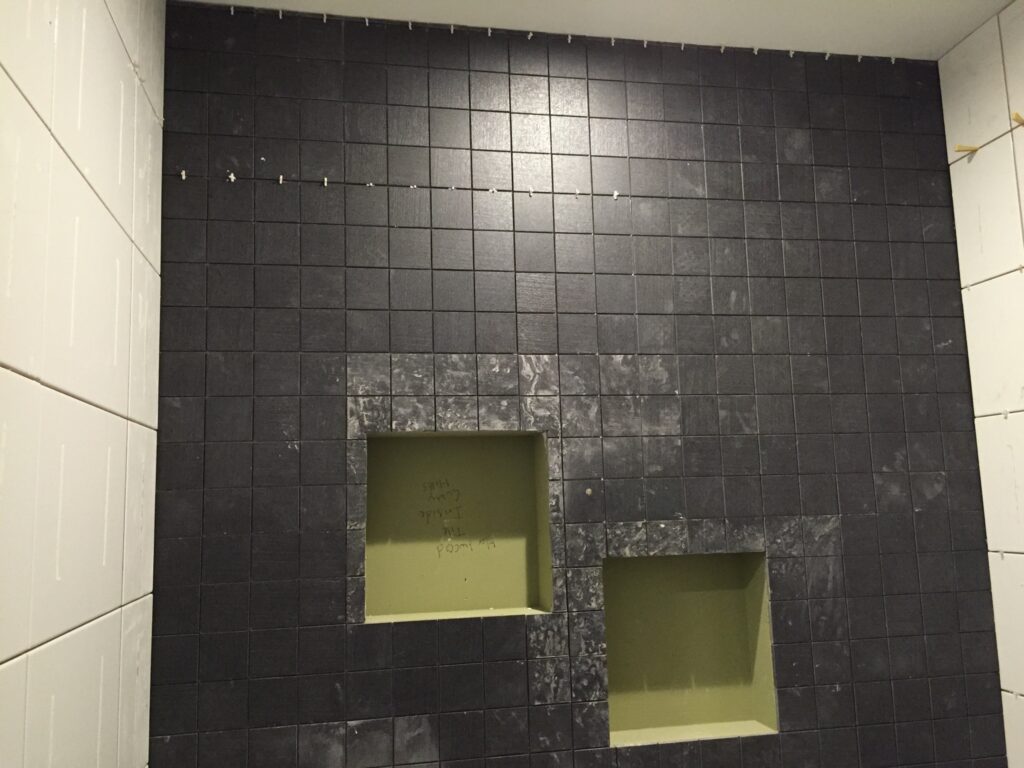 During: custom niches, Ceaserstone tile
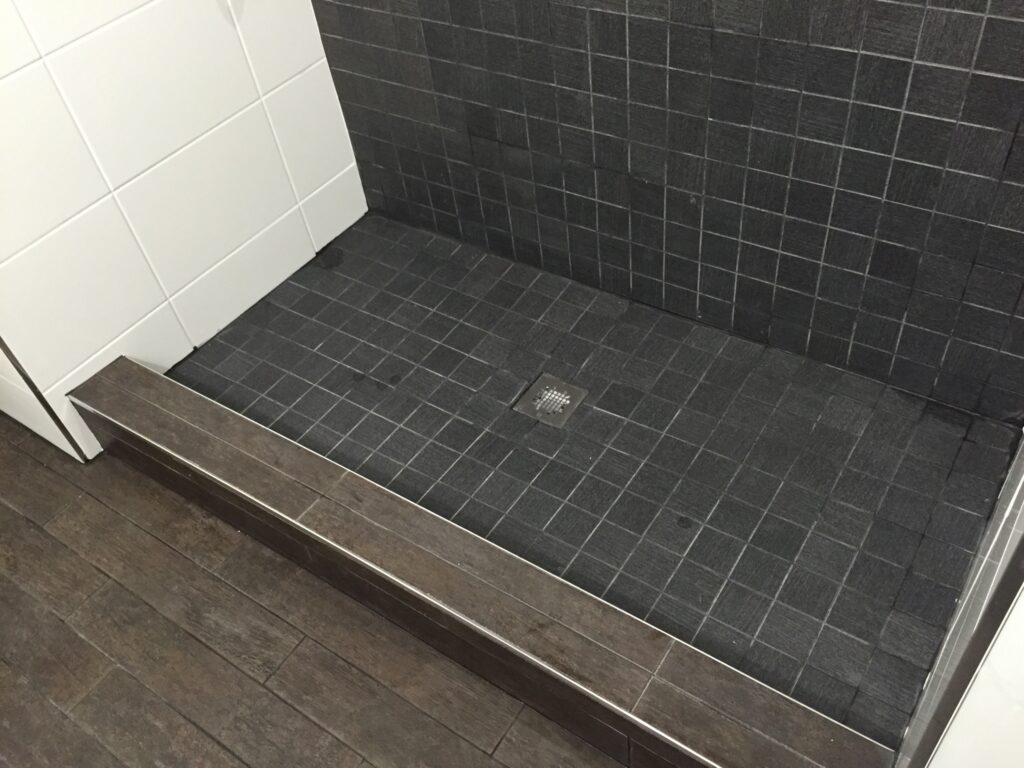 Ceaserstone and wood look porcelain
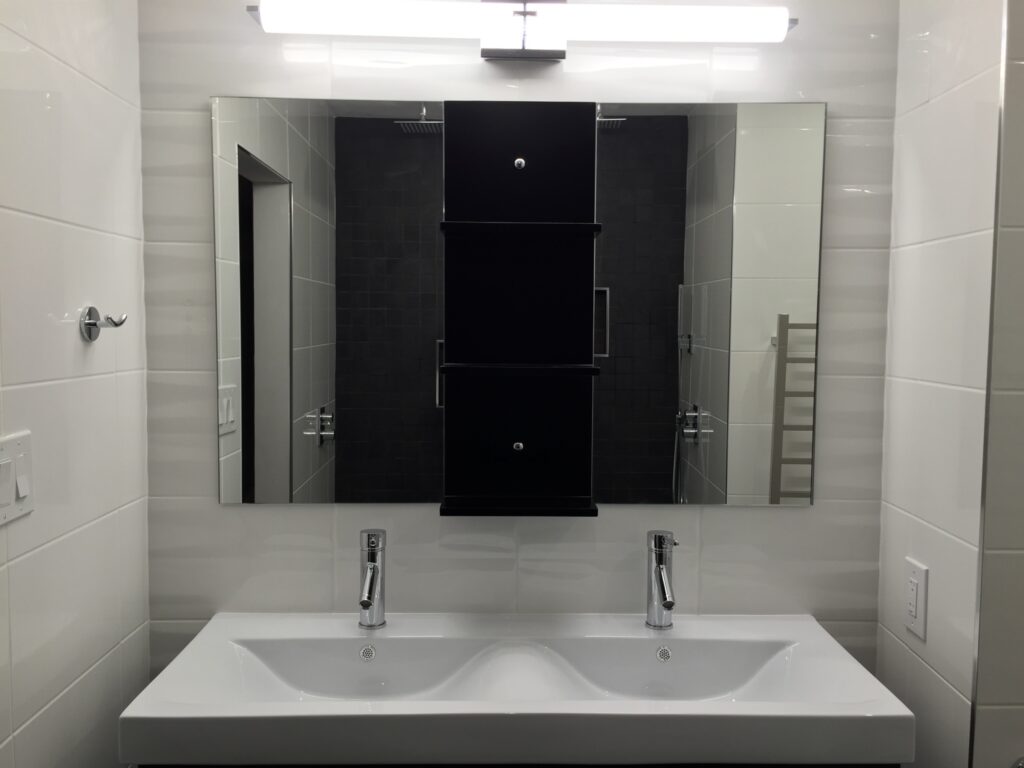 Double vanity where toilet used to be
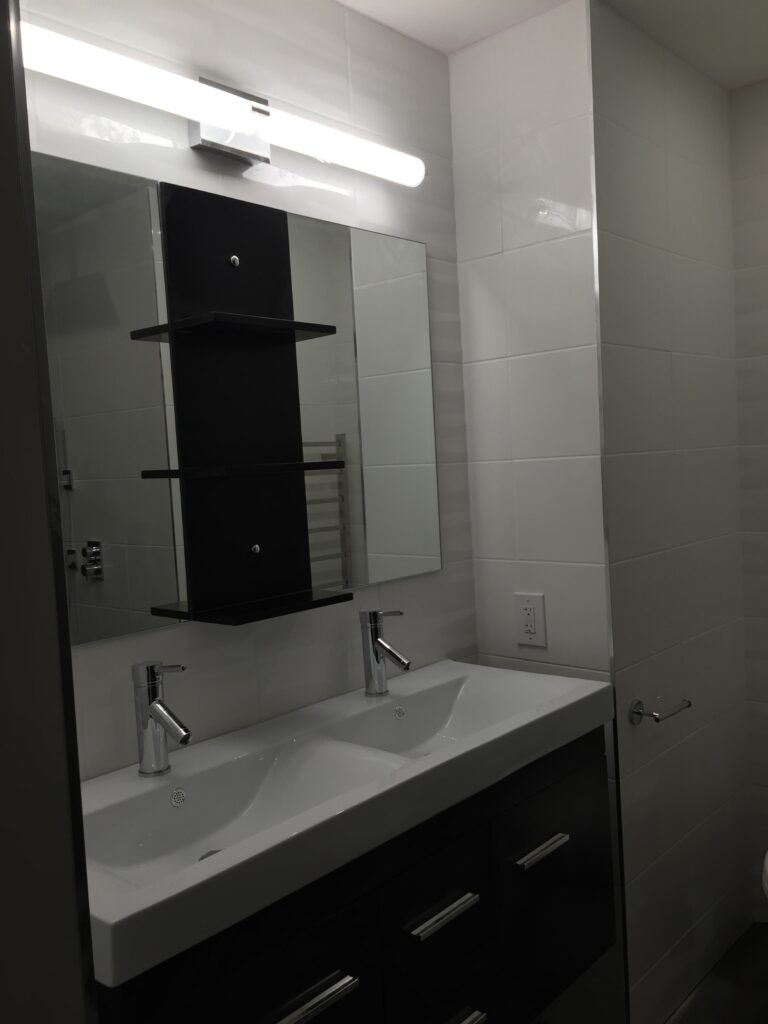 Double vanity
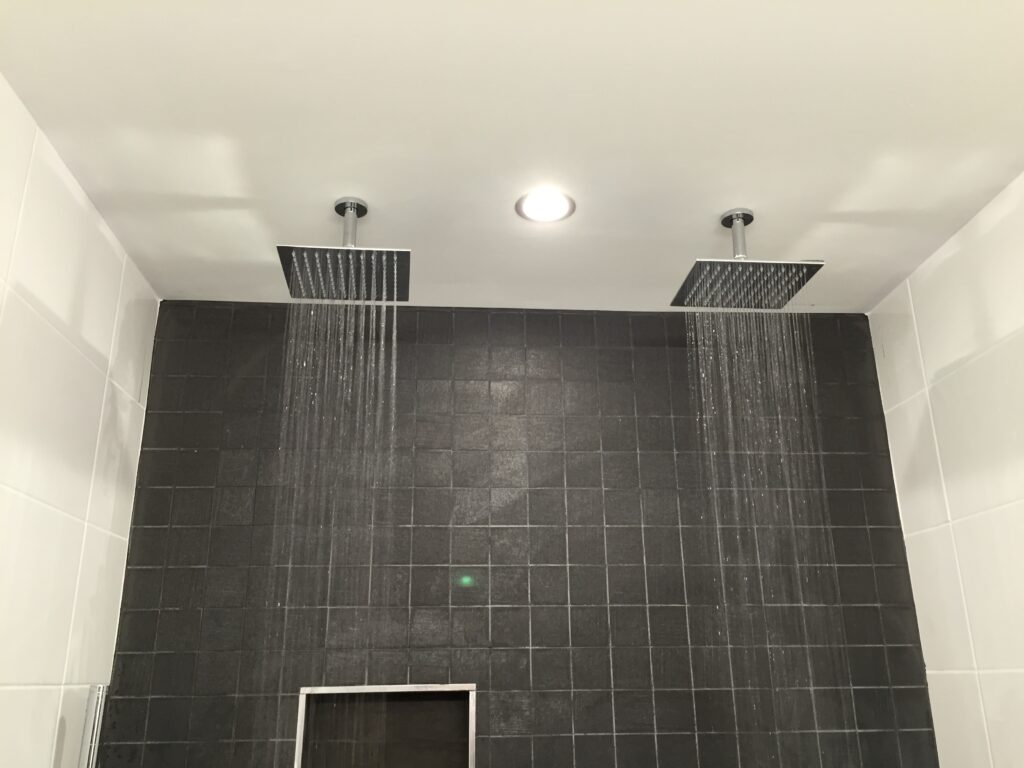 Ceiling mounted rain head showers
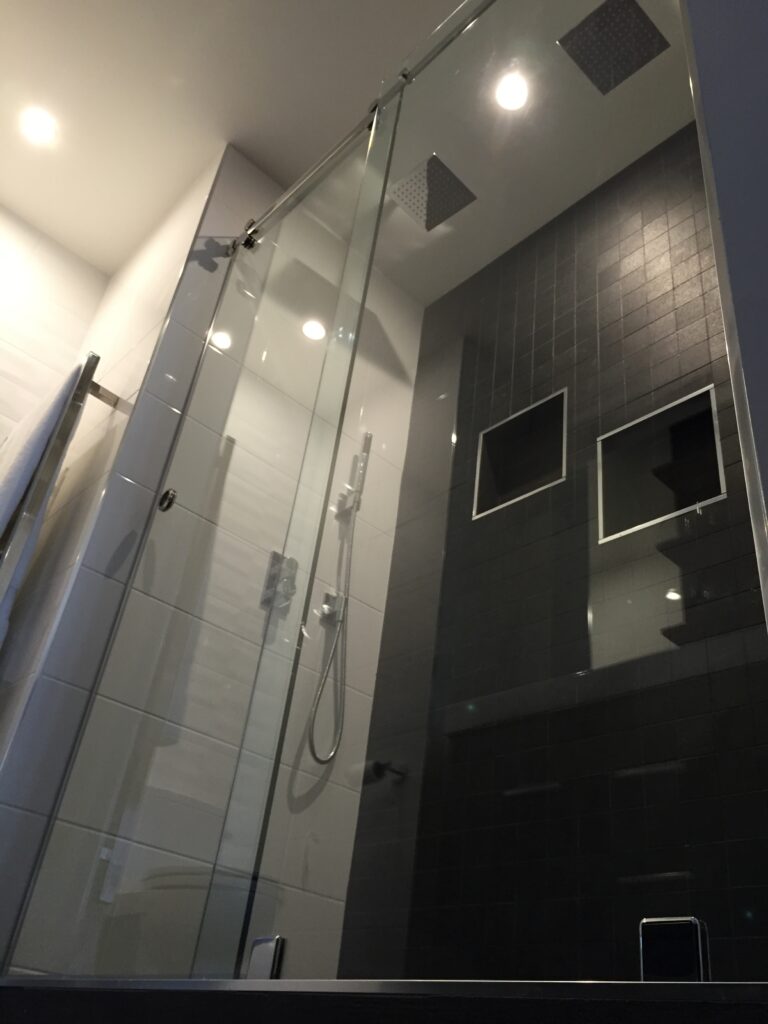 Modern glass door
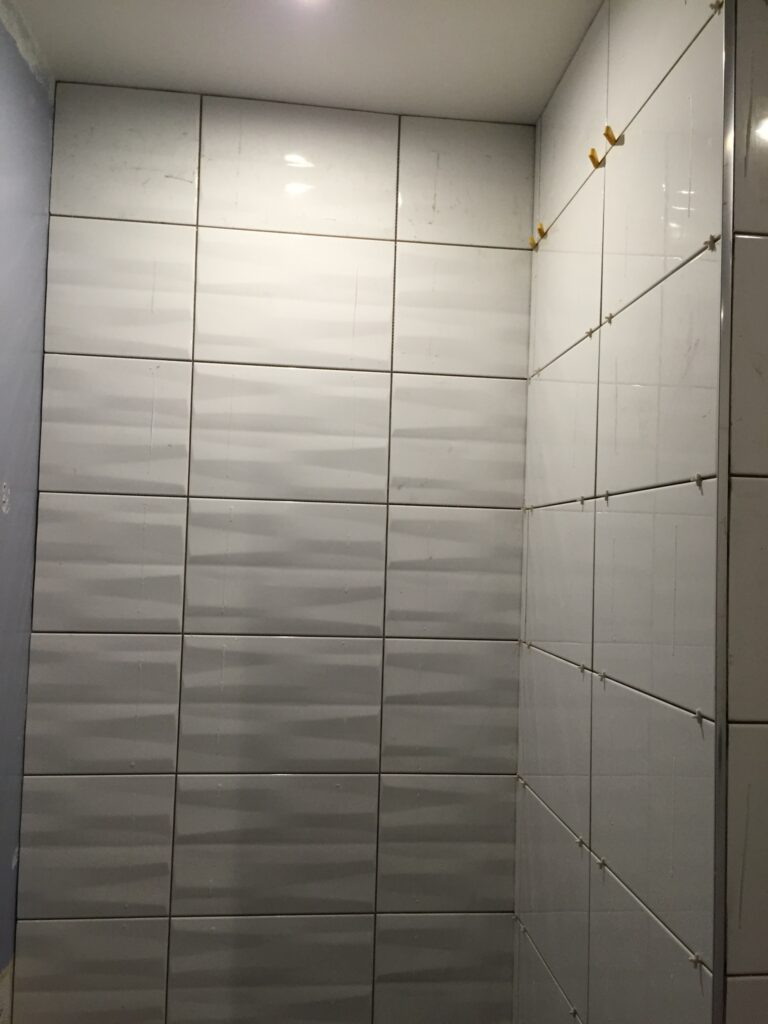 360° tile on all walls
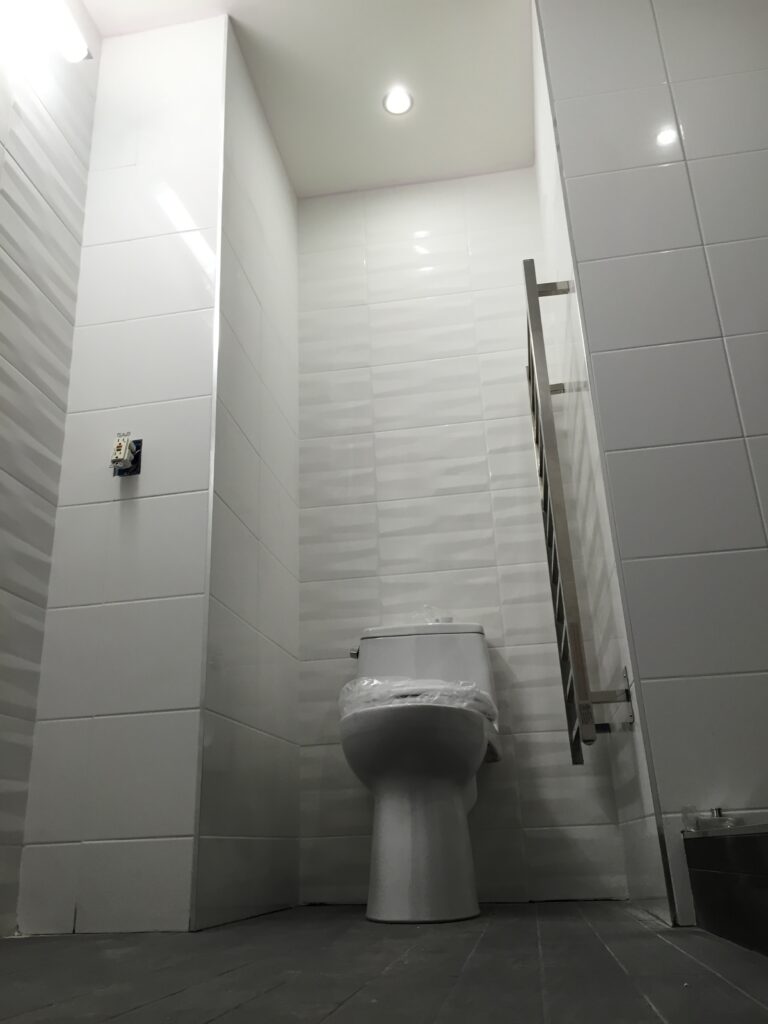 Much better location for toilet, space for towel warmer
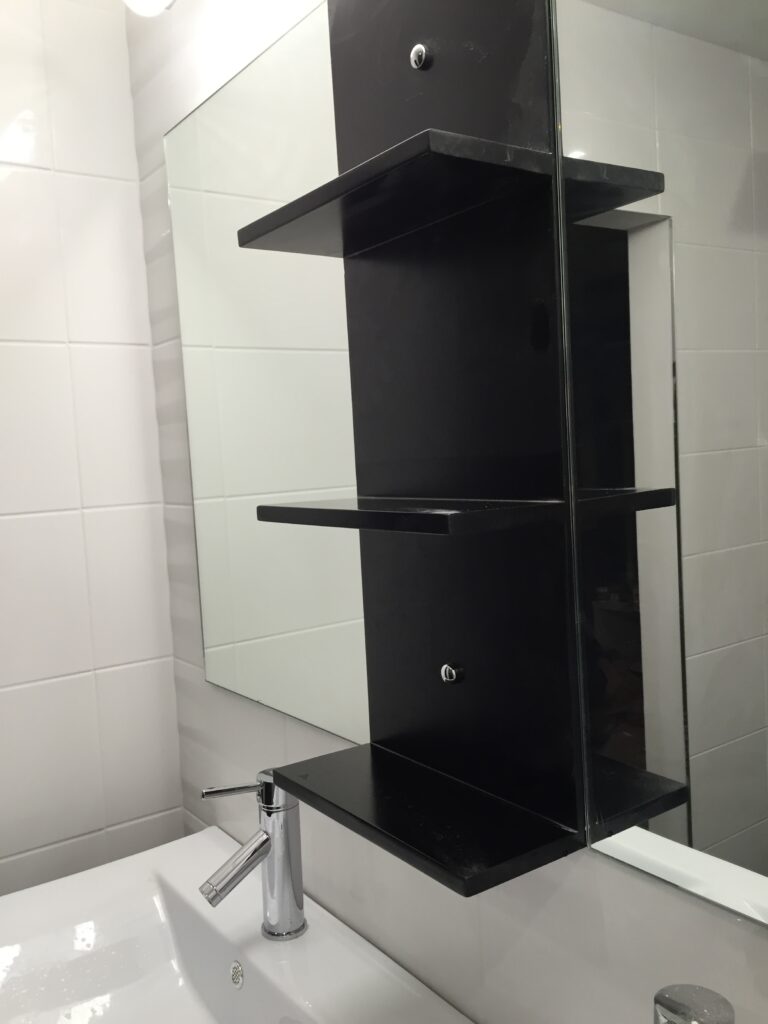 Useful storage for a tight space
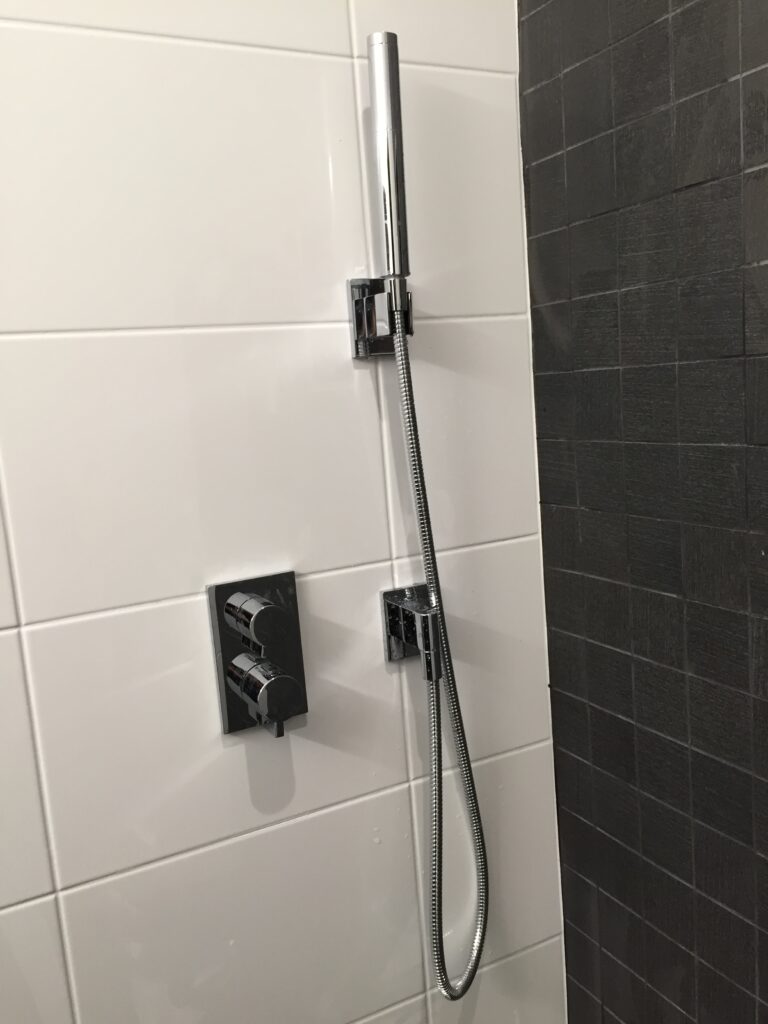 Hand shower
Two Closets, Zero Compromises
The starting point was very 1978: two small, dark closets flanking a built-in dresser in the middle. At the time, it was considered an upgrade. Decades later, it was mostly just in the way.
What we actually needed were two wider, slightly deeper, well-lit walk-in closets that functioned like adults lived here. So Ramiro sketched out the vision—literally, on a sheet of paper—and handed it off to our contractor.
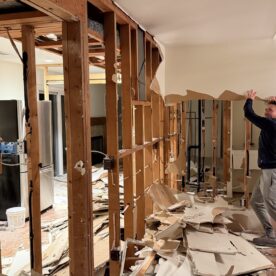
Walls came down. The built-in dresser was removed. The front of the closet wall was reframed and pushed forward nearly a foot to gain usable depth. Bright, properly planned lighting went in. What had once been a cramped compromise became two generous, intentional spaces.
For the build-out, we went with EasyClosets—factory-direct pricing with none of the compromises. Soft-close drawers. Belt and tie racks. And a deep, rich wood tone that felt more like fine furniture than storage.
The result wasn’t just better closets—it was a daily upgrade. Everything visible. Everything accessible. No more negotiating for space or living out of a dresser that never quite worked.
By the time the room came together, it felt less like a renovation milestone and more like a quiet exhale. A deep accent wall grounded the space, the soft neutrals layered in warmth. It was inviting without trying too hard—equal parts customized and comfortable. A place to land at the end of the day, close the door and for both to feel at home. For a relationship still finding its rhythm, the room became something more than finished—it became ours.
Flat-Pack to Fabulous
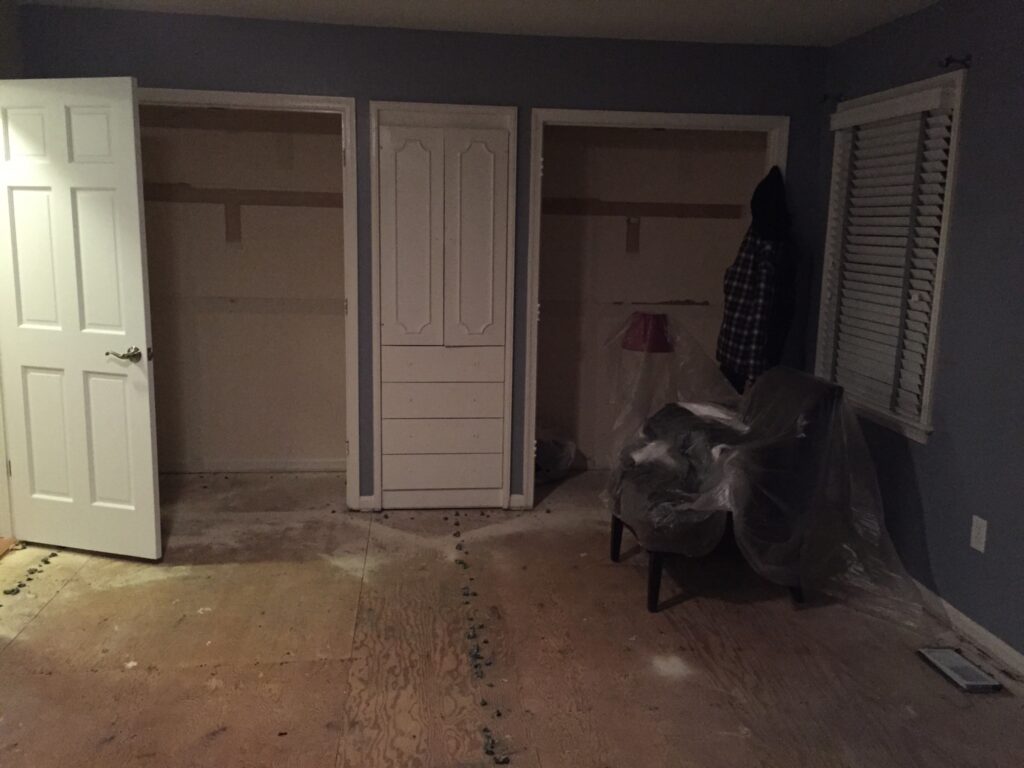 Starting point: to small hanging closets and a built in dresser
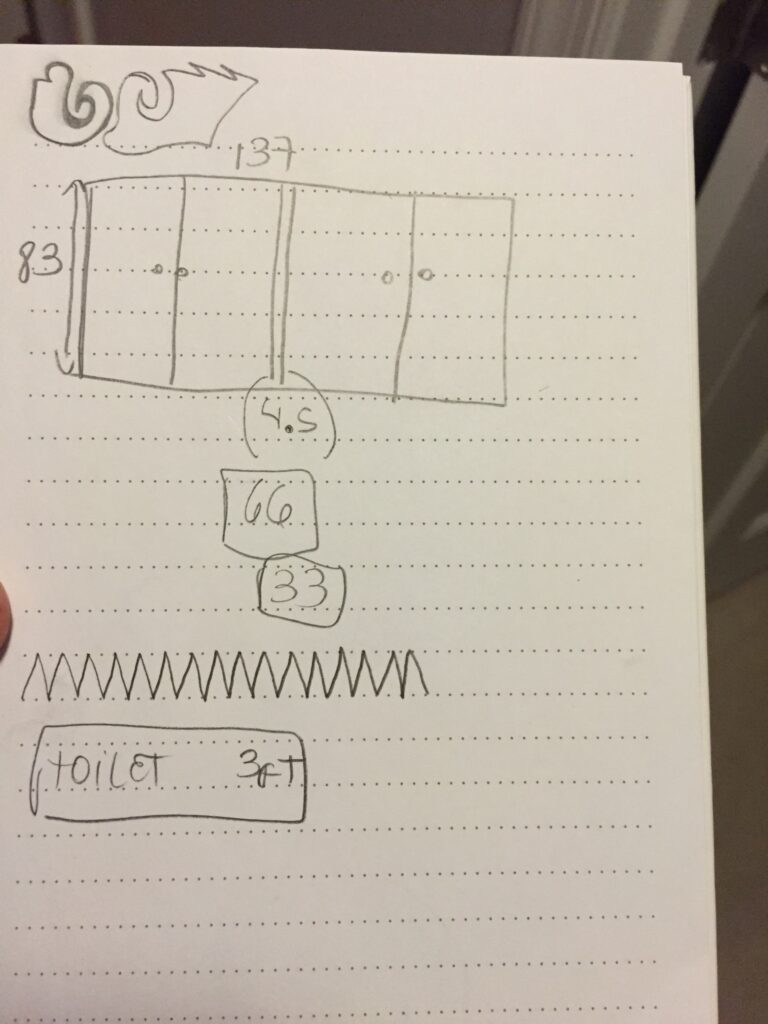 Ramiro drew up our vision for the contractor
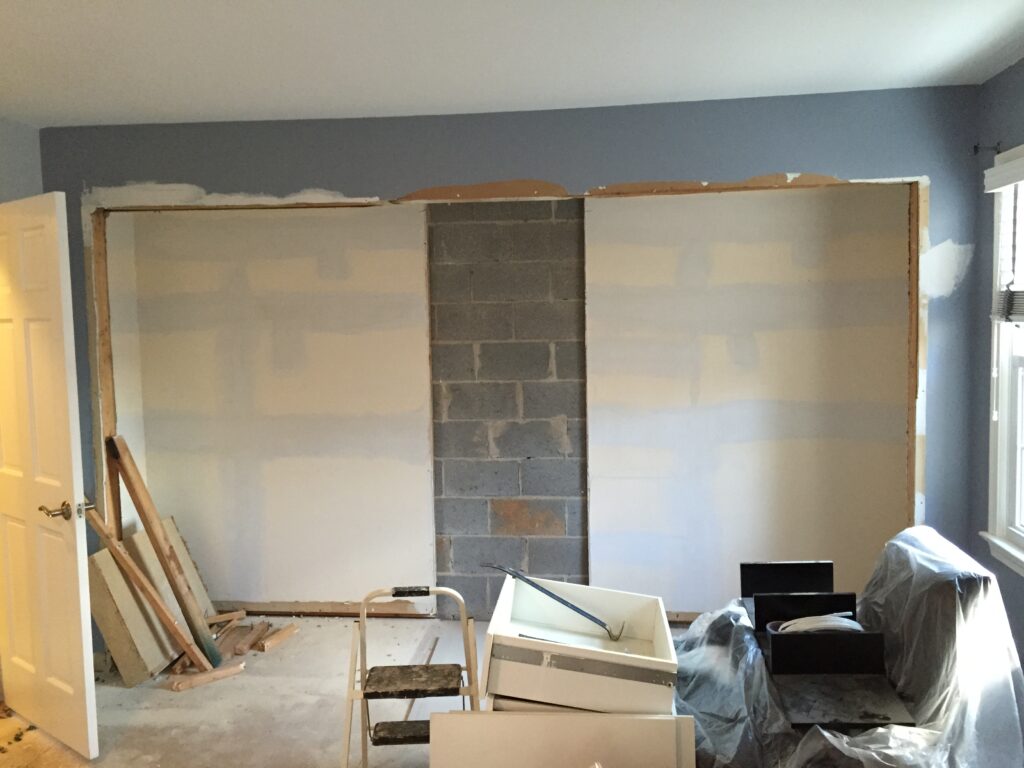 Built in and walls came down
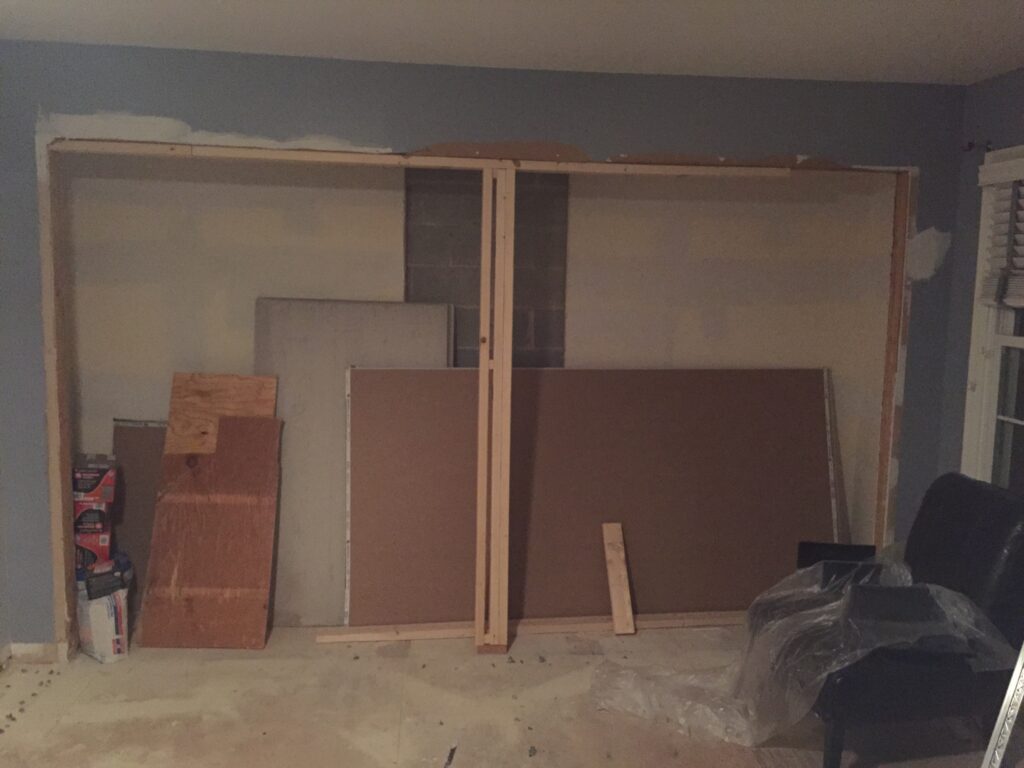 Reframed 2 large closets, added 1 foot of depth
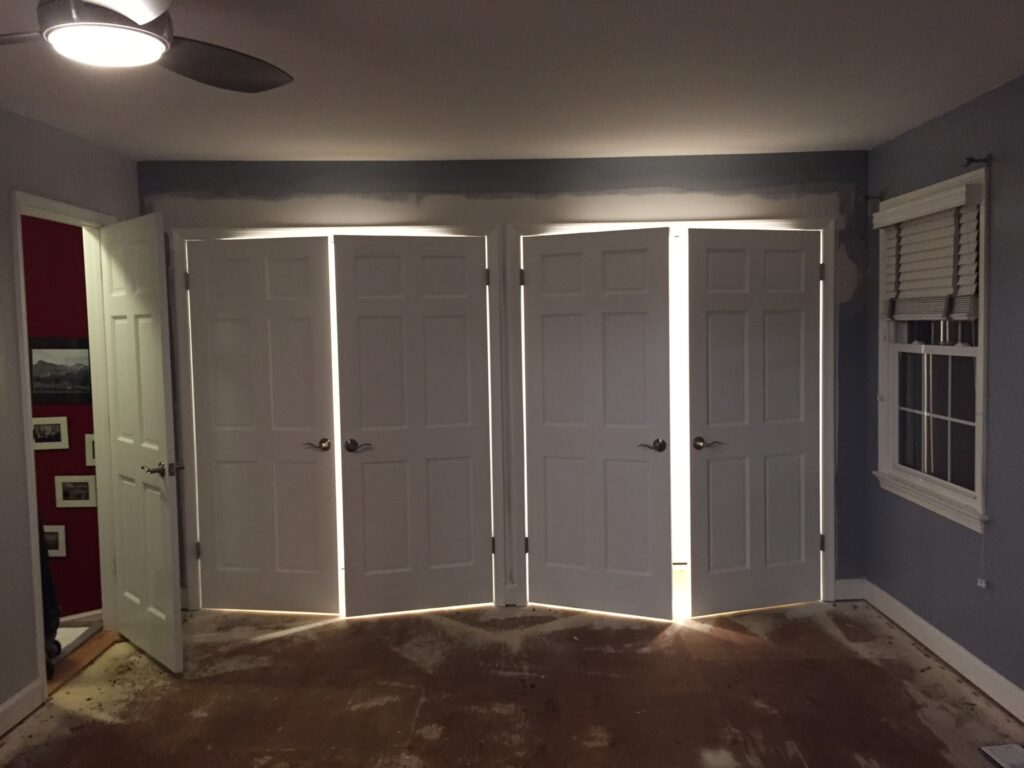 Bright, switched recessed lights
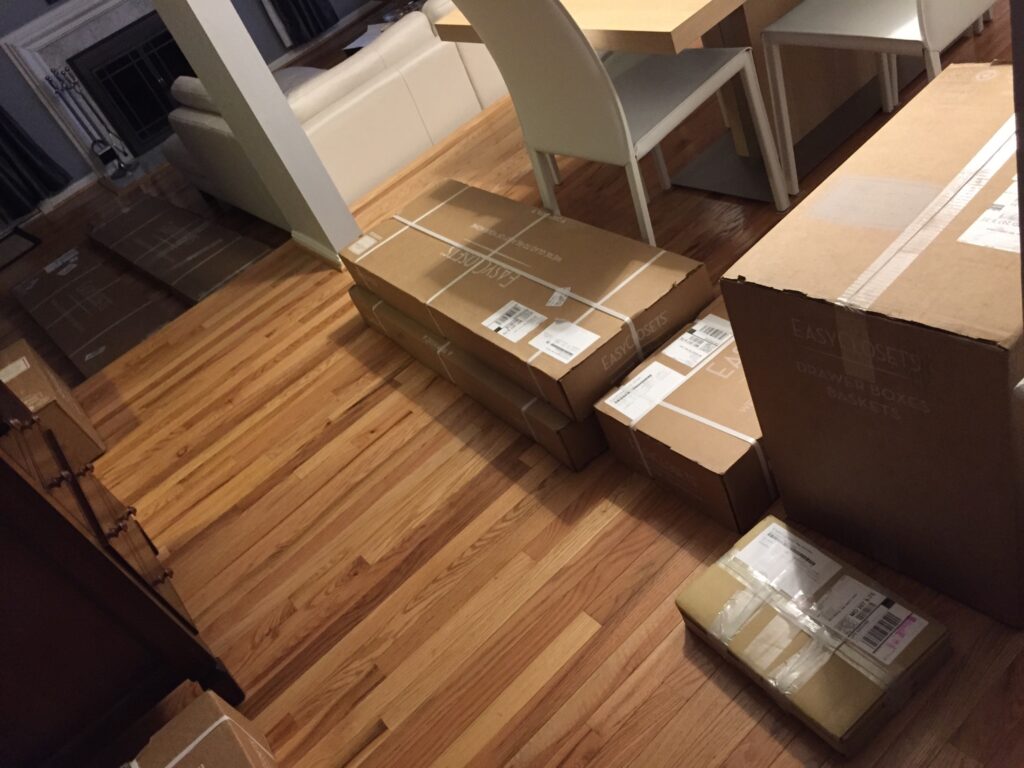 Closet system arrived in flat pack
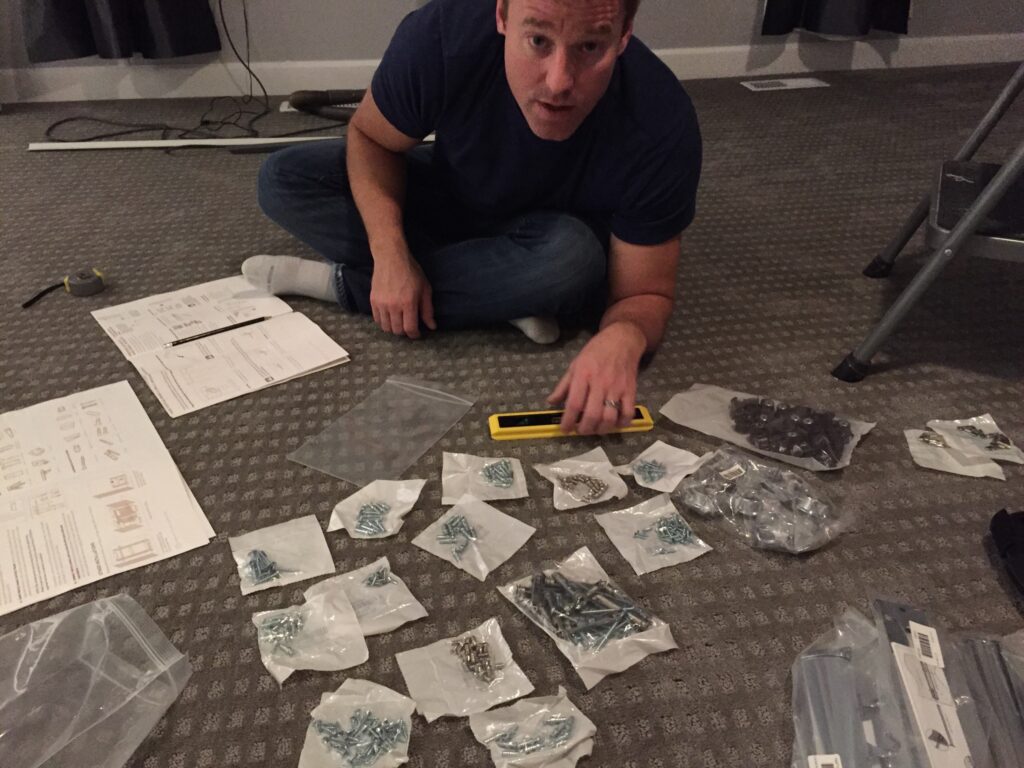 Took a bit of reading to get started
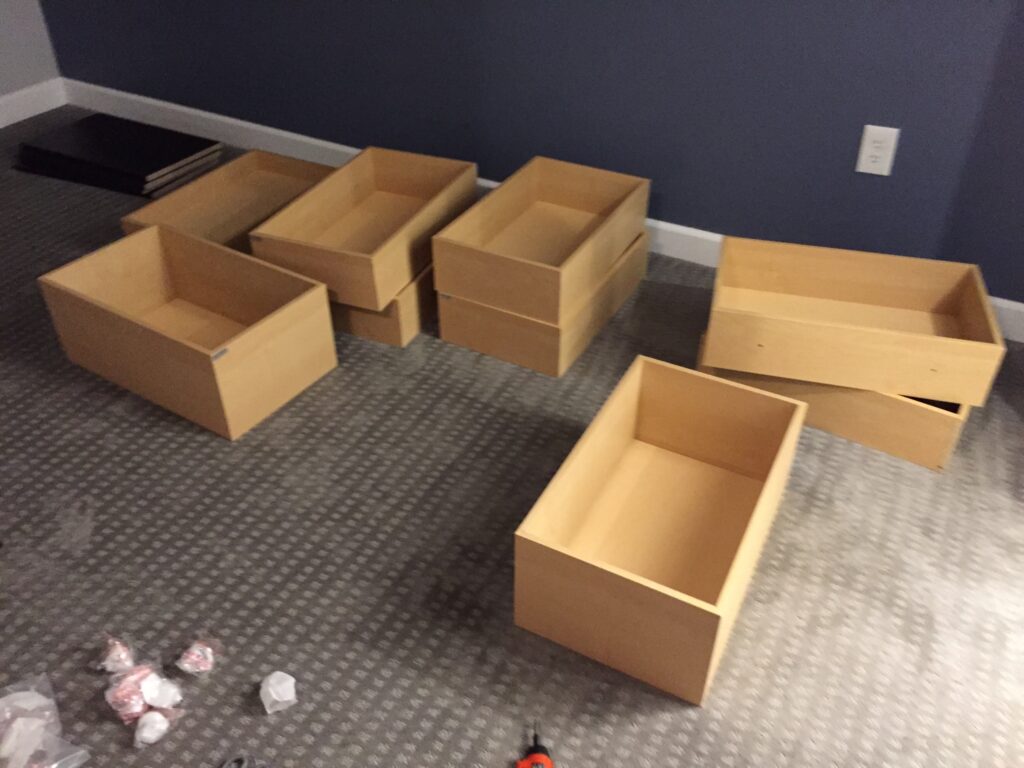 Many parts were fully assembled, which was nice
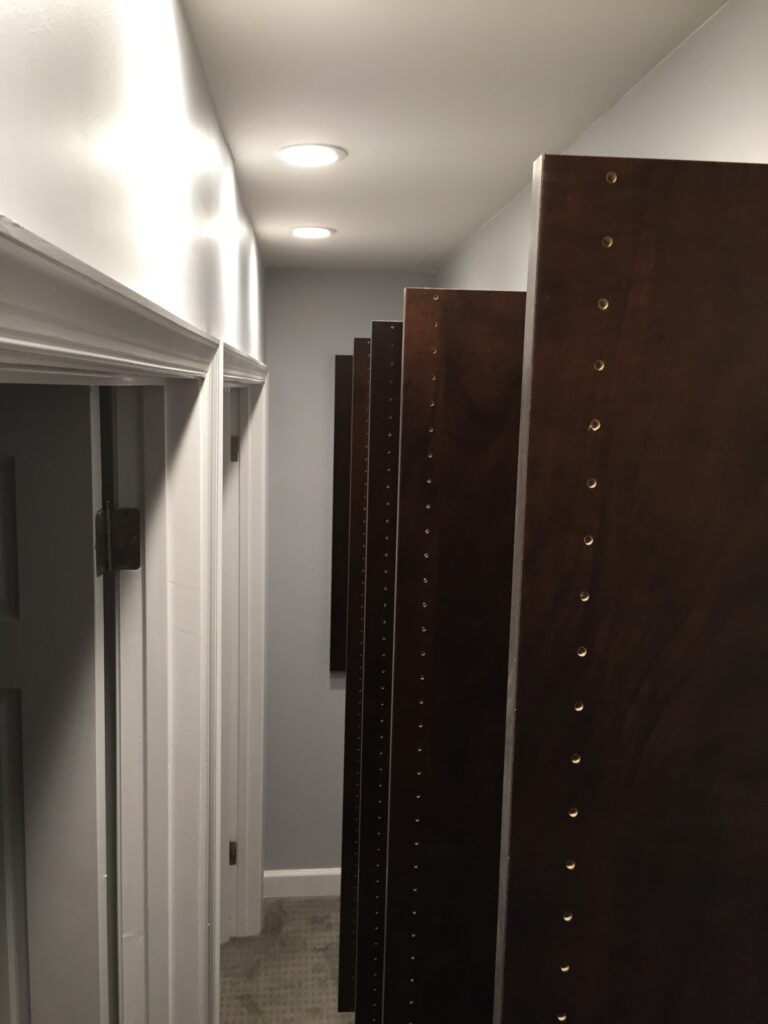 Once we got the hang of it things moved fast
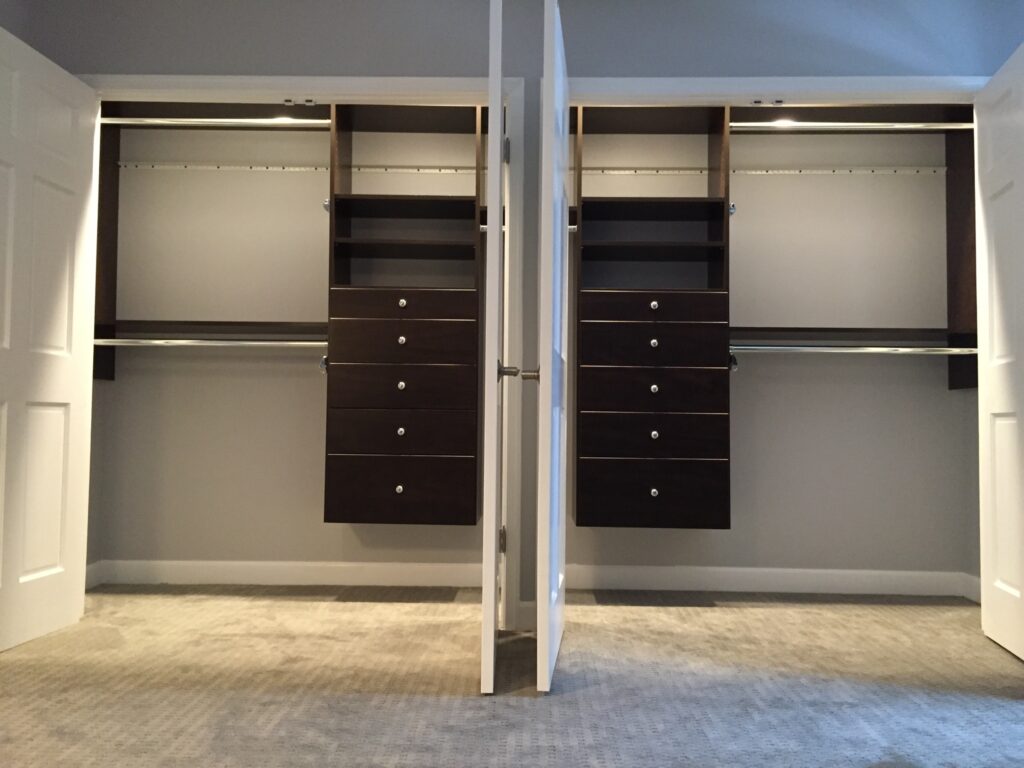 Install done
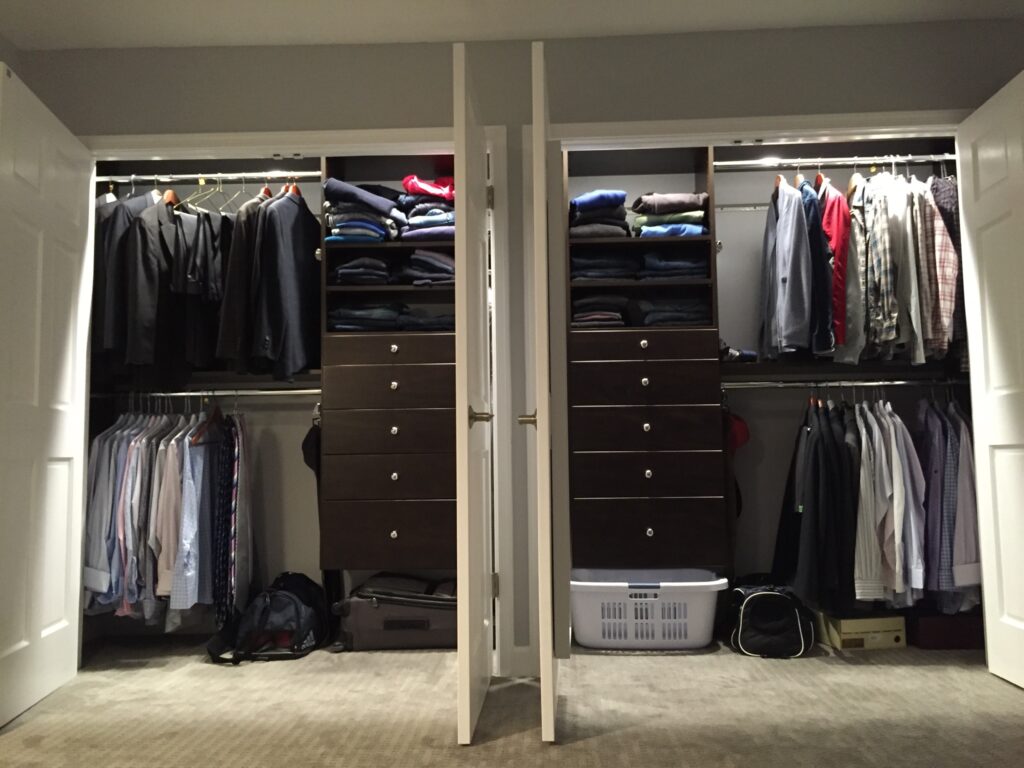 All moved in
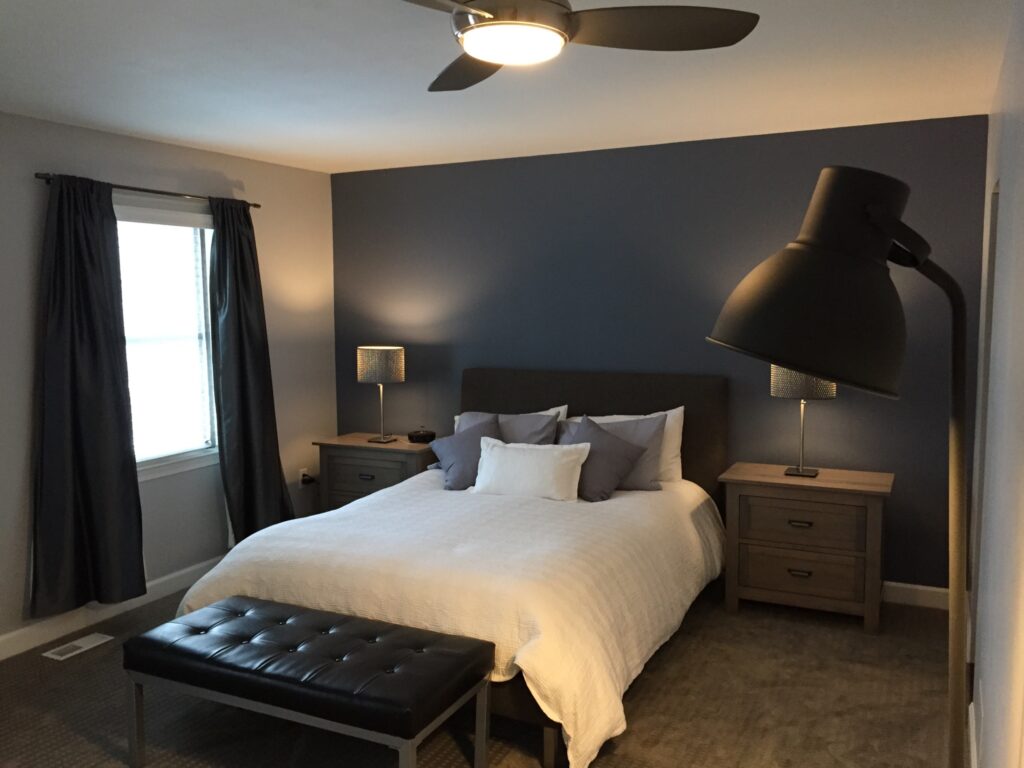 Upgraded to a king bed, room painted warm colors
What’s Next – Chapter 9
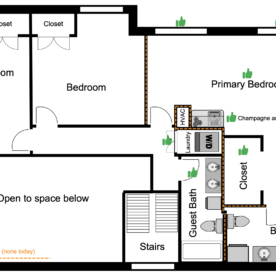
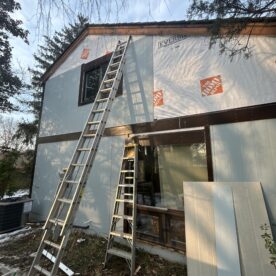
Unstopped by the Blizzard of 2026, construction presses on.
While the city slowed to a crawl, the house did the opposite—after Ramiro and I dug it out. Framing wrapped. Drywall followed. Walls that once lived only on plans are now standing, defining rooms, sightlines, and proportions in ways drawings never quite capture. This is the moment when the house stops feeling theoretical and starts asserting itself.
In Chapter 9, I’ll share how everything begins to click—how structure turns into space, how ideas gain weight and permanence, and how the house finally starts to reveal what it’s going to be. Snow outside. Momentum inside.