Bird vs. Building
So our last hole ended up being our largest. The whole side of the house.
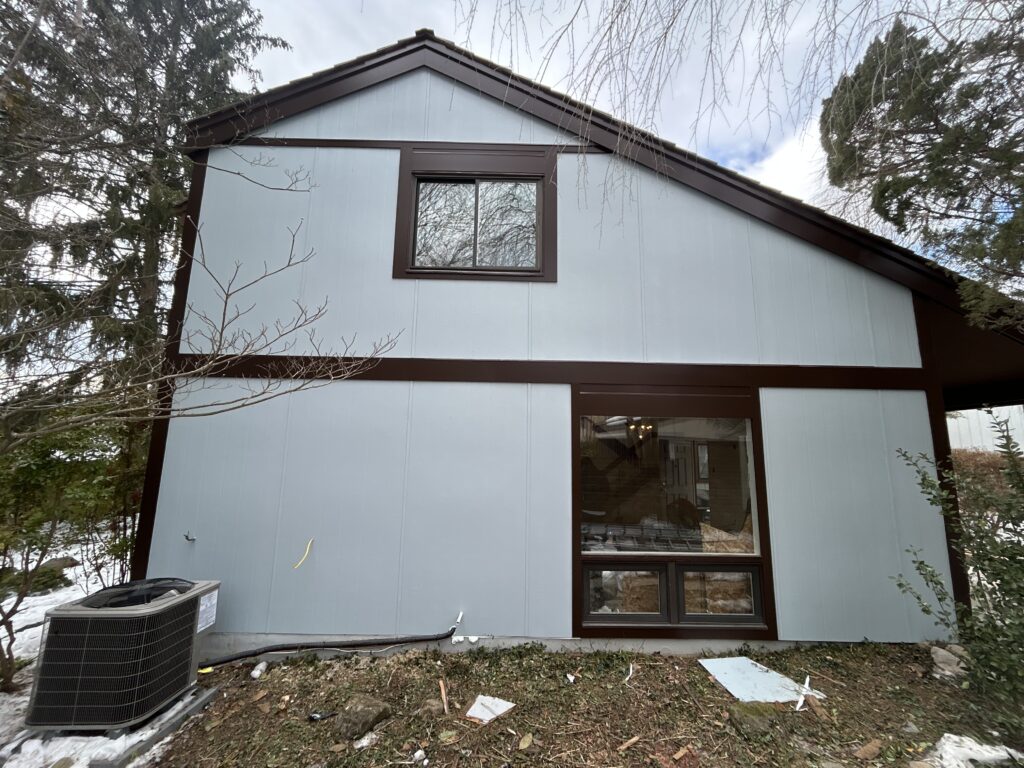
This one started long before we owned it. During inspection, before contract and closing, and long before demo, drywall dust, and steel beams, our inspector flagged an issue on the southeast façade. A woodpecker had apparently decided it was lunch, prime nesting, or both. Either way, the damage wasn’t cosmetic. It was an active leak. And judging by the softness in the material and the subtle signs of moisture intrusion, it had likely been one for years.
We knew immediately this wasn’t something we could ignore or casually “monitor.” On the East Coast, house walls that face south and east take a beating—Atlantic-driven storms, late-summer hurricanes, early-winter nor’easters, wind pushing rain sideways. That façade lives on the front lines. Soundness and stormproofing are sacrosanct.
The initial hope was modest: replace a few trim boards, remove the relic-of-early-2000s satellite dish still clinging to the peak, and clean up the loose exterior wires someone had stapled on without much thought. Quick exterior refresh. Move on.
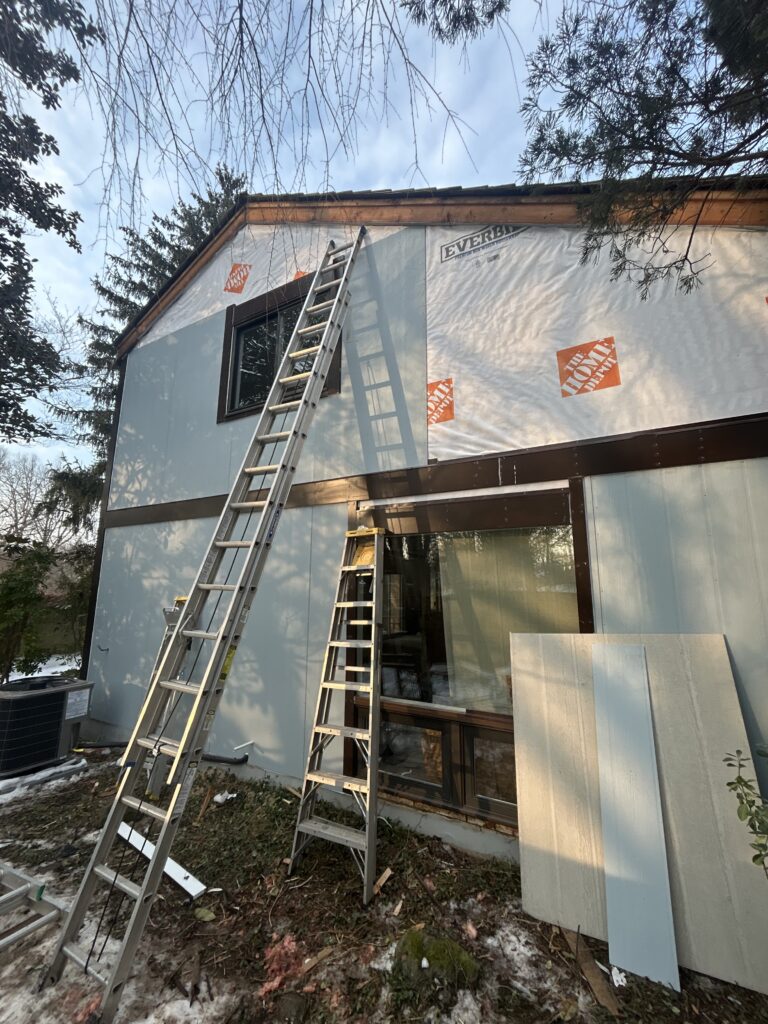
But when our contractor pulled down the trim, the real story revealed itself. The redwood paneling—likely original to the house—was in rough shape. Not charmingly aged. Structurally compromised. Once exposed, it was clear we weren’t dealing with a trim issue; we’d uncovered a pecking-order problem, so to speak, and the bird was winning.
Woodpecker Wreckage


The Price of Postponing
This is why regular home maintenance is so important. Caught early, this would have been a minor $500 repair. Instead, it became a $15,000 expense. Not a small increase to go from trivial trim to full-scale fix.
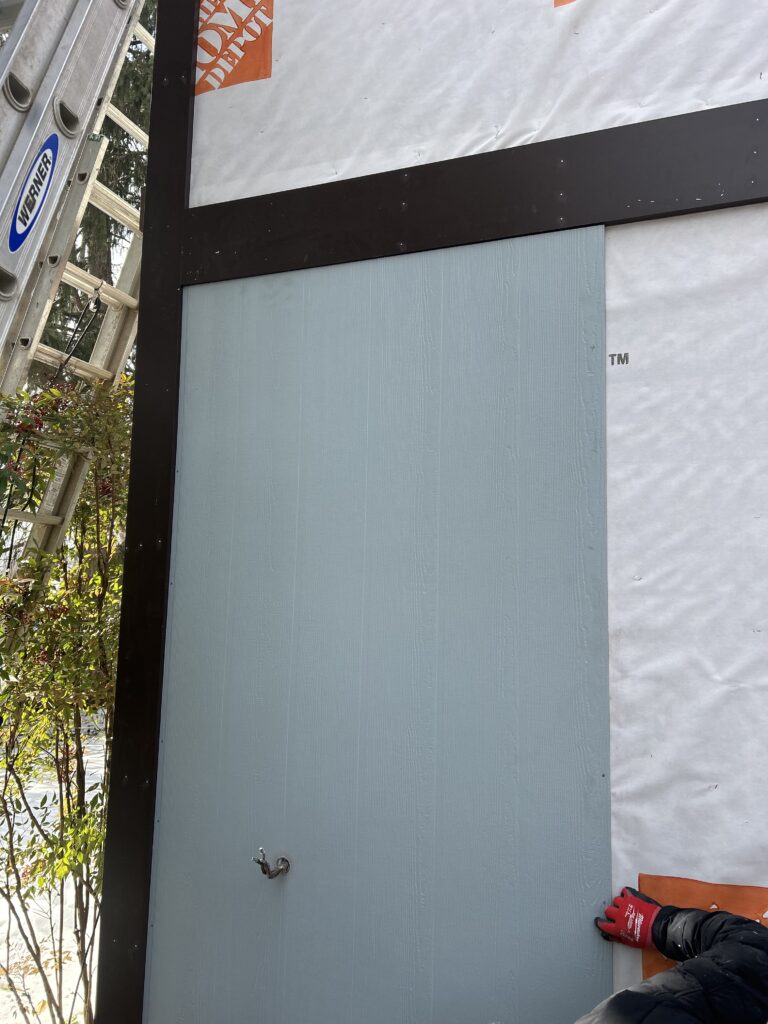
Once the siding came off, the underlying structure needed attention as well—another reminder of why regular maintenance matters. Insulation damaged by water required replacement. New sheathing was installed. Home wrap, which hadn’t been invented when the house was originally constructed, was applied properly. New siding panels—James Hardie fiber cement board, which officially ends the Woodpecker Buffet—were installed clean and tight. Flashing was corrected so water moves where it’s supposed to: outside the wall. The result is a new exterior built the way it should have been all along.
The Last Cut Was the Deepest
Sealed for Season and Sound
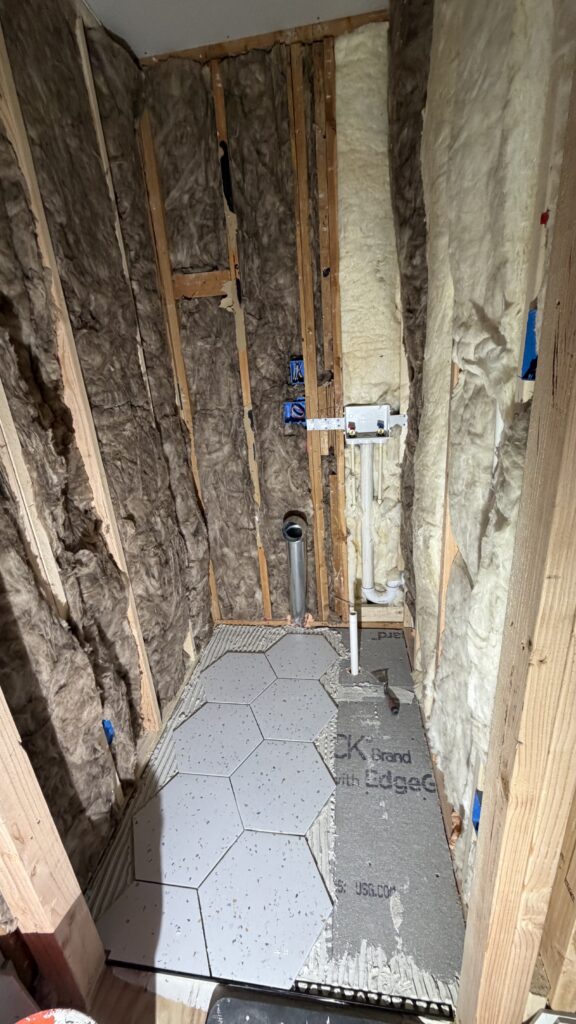
Insulation is one of those things most people only think about in terms of temperature—keep the house warm in winter, cool in summer, lower the utility bill, move on. And yes, we absolutely upgraded all of that. But thermal performance was only half the story.
The other half? Silence.
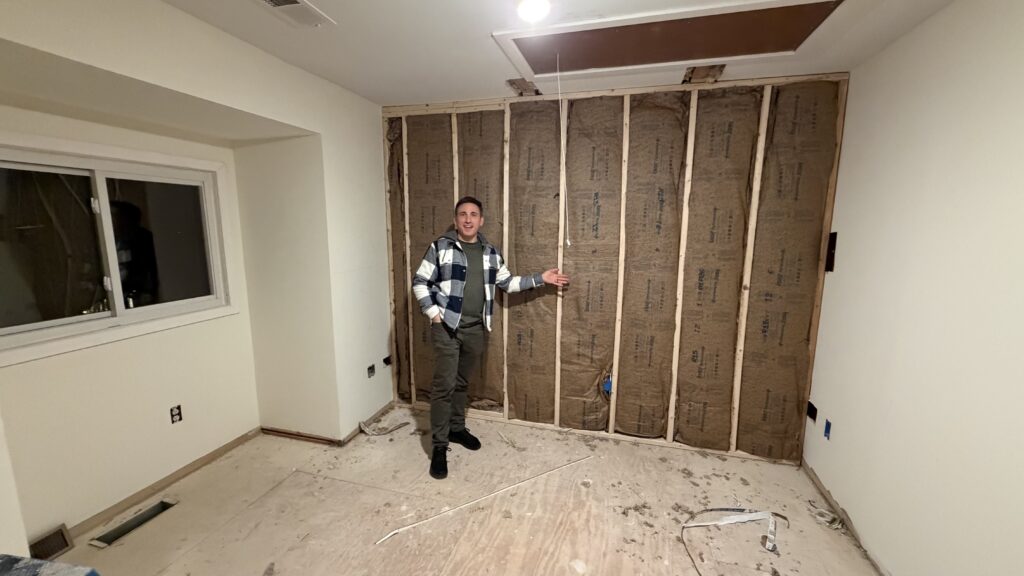
When you’re reworking walls, it’s the perfect time to decide how you want the house to sound. For us, that meant turning the primary suite into a true retreat. Not “quiet enough.” But genuinely soundproofed from the rest of the house—plumbing noise, laundry cycles, hallway footsteps, late-night dishwasher hum.
So we completely surrounded the primary bedroom, bathroom, and even the upstairs laundry room with sound insulation. Strategic separation where it mattered most. The goal wasn’t a recording studio, it was peaceful nights for Ramiro and I in a house dead center in the Washington D.C. area that constantly hums with activity.
On the thermal side, we treated this like a systems upgrade, not a patch job. The attic received all new insulation to modern standards. We added spray foam in the front office and around the structural steel beam—areas notorious for small gaps and thermal bridging. Walls opened to reconfigure bathrooms and bedrooms were corrected. No more mystery drafts. No more “why is this corner cold?”
Insulation isn’t glamorous. No one posts it on Instagram, except me maybe. But it’s the kind of sound investment, so to speak, that changes how a house performs every single day.
The Sound of Silence


White Noise
Do you know how hard it is to pick a neutral paint color? There’s a reason builders choose agreeable gray. Agreeable gray is the Switzerland of paint colors. But we weren’t after diplomatic. We were after Mid-century deliberate.
To stay true to the period’s principles—and because we refuse to let the interior compete with the landscape framed by those floor-to-ceiling windows—we decided on what felt like an obvious choice: a single white, carried consistently throughout the house.
Turns out, white is anything but simple.
There aren’t a few whites. There are hundreds. And each one carries a quiet agenda. In the wrong light, some read pink. Others lean yellow in a way that reminded me of how my childhood home looked after years of my parents’ smoking. Some pulled green. Others shifted icy blue or gray by late afternoon. A “neutral” can become moody fast once it hits 2,800 square feet of drywall.
We needed a sophisticated white—clean but not clinical, warm but not creamy, modern without shifting into sterile. And we needed one we could apply everywhere: ceilings, walls, and trim. One color, different finishes. Matte for the walls and ceilings. Semigloss for the trim. Consistency without monotony.
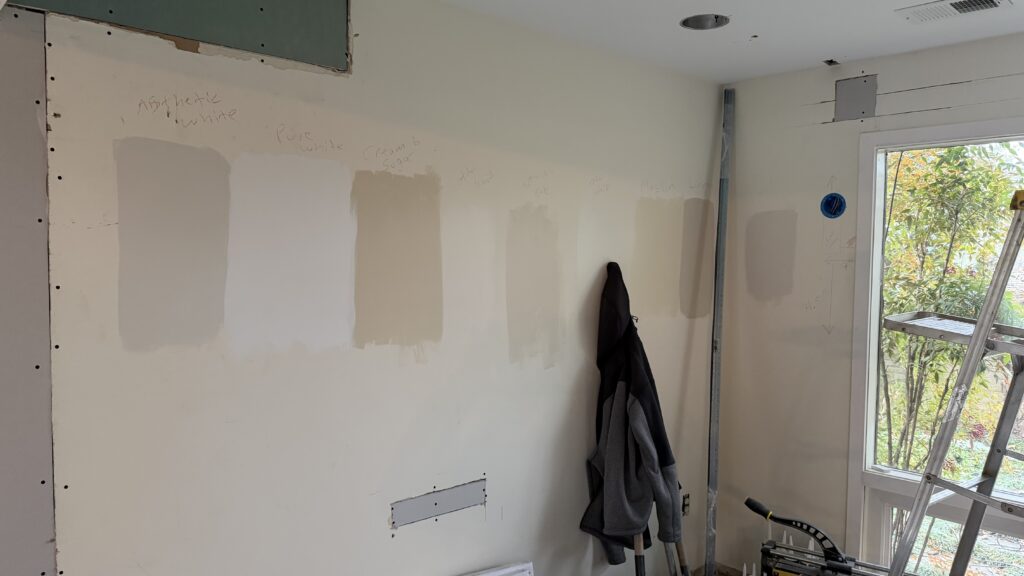
In total, we tested nine whites.
Nine.
Samples slapped on different walls to test different exposures. Direct light. Indirect light. It became a science experiment in undertones. And none of them were working, until we decided to shortcut the madness.
Starting with the whites we painted samples on the walls, we fed their color codes into AI and documented exactly why each one failed in our space: too pink, too yellow, too cold, too dark. Taking in all the color data along with our feedback, ChatGPT narrowed the field to three finalists. We bought fresh samples, rolled them on, and—much to our surprise—all three worked beautifully in the space.
Ultimately, Sherwin-Williams Aesthetic White won the day. It has depth without drama. Warmth without weight. It feels intentional and lets nature and the house’s architecture to do the talking.
Fifty Shades of White

Behr Whites Collection 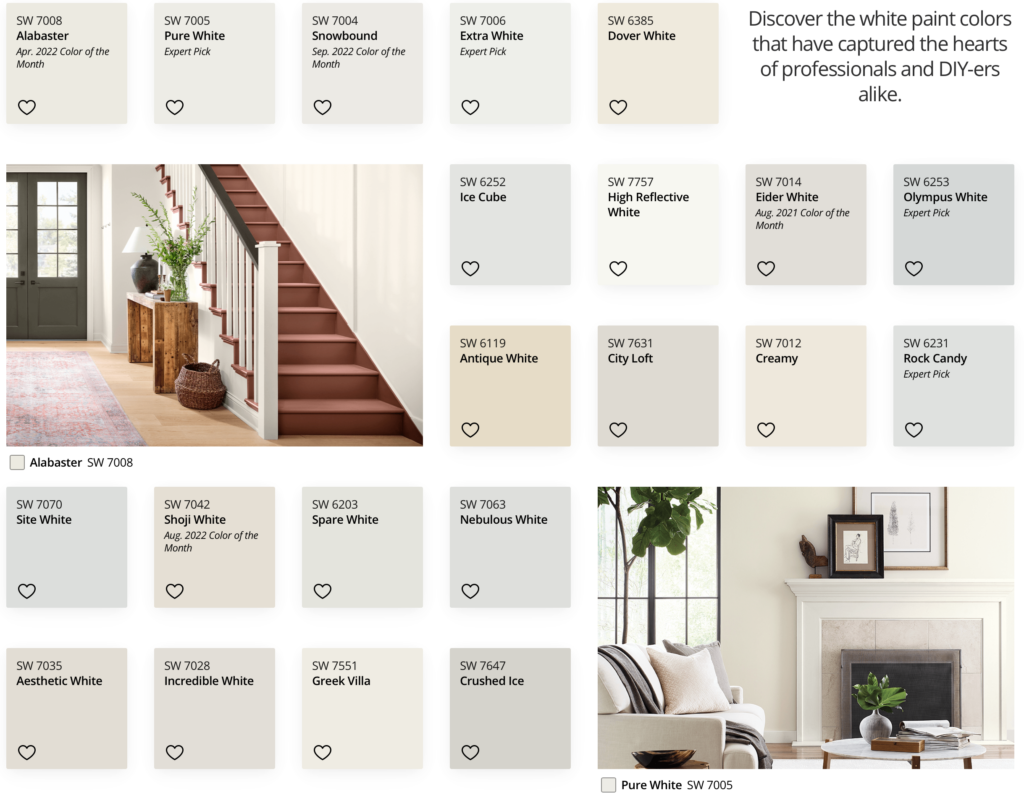
Sherwin-Williams Popular Whites
Six Samples, Zero Winners
The Whole Nine Yards (of White)
Going Green (Intentionally)
The office, however, is where we plan to break the rules.
There, we’re going bold—full color drench: walls, ceiling, and trim all bathed in the same dark and moody tone. It’s a move that feels both mid-century and modern at once—providing an unexpected twist as you turn from the open plan living spaces into the secluded office. Design magazines are calling color drenching one of the defining trends of 2026, with features in Architectural Digest, Elle Decor, and Dwell, highlighting saturated, single-tone rooms as the new expression of modern luxury.
And the winners? The leading contenders right now are Ecological, for seamless continuity with the rest of the house, or Hidden Gem, for a bold counterpoint that deliberately sets the office apart. As of this post going live, the jury is still out.
The Green Room
What a Difference a Week Makes
What a difference a week makes. We started with nothing but framing—studs and steel—and now the drywall is complete. By Sunday night, the bathroom tile will be finished as well, but that reveal deserves its own post. Below, you can see the transformation of the galley kitchen into a space that is now fully open to the dining room and front living room—no longer tucked away, but connected to the heart of the house.
The Process Unfolding: Open Kitchen
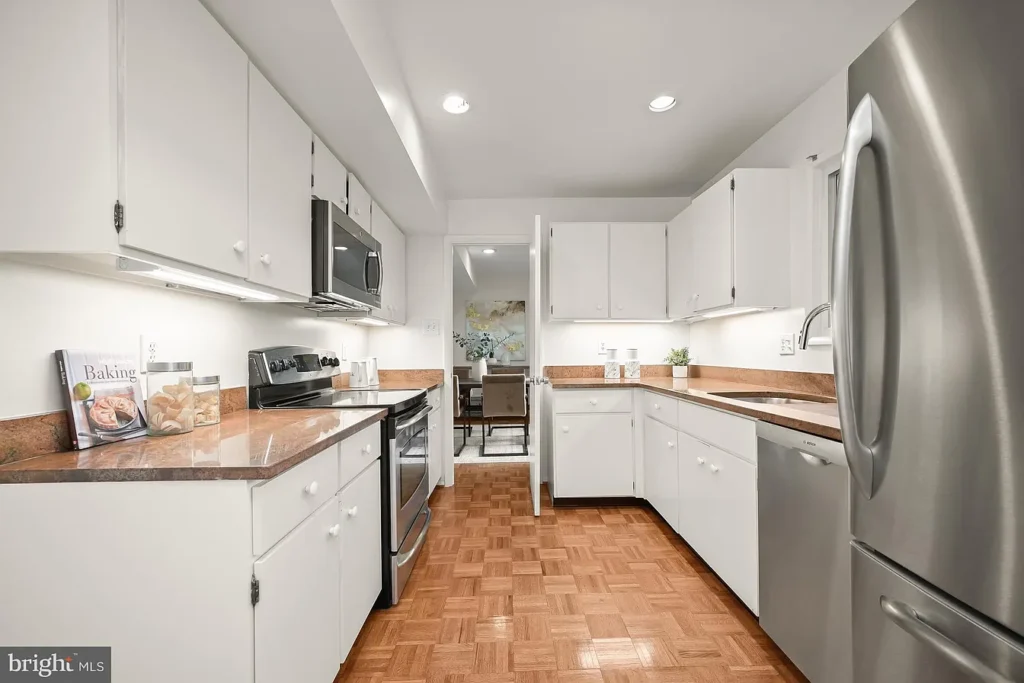 Closed off galley style kitchen
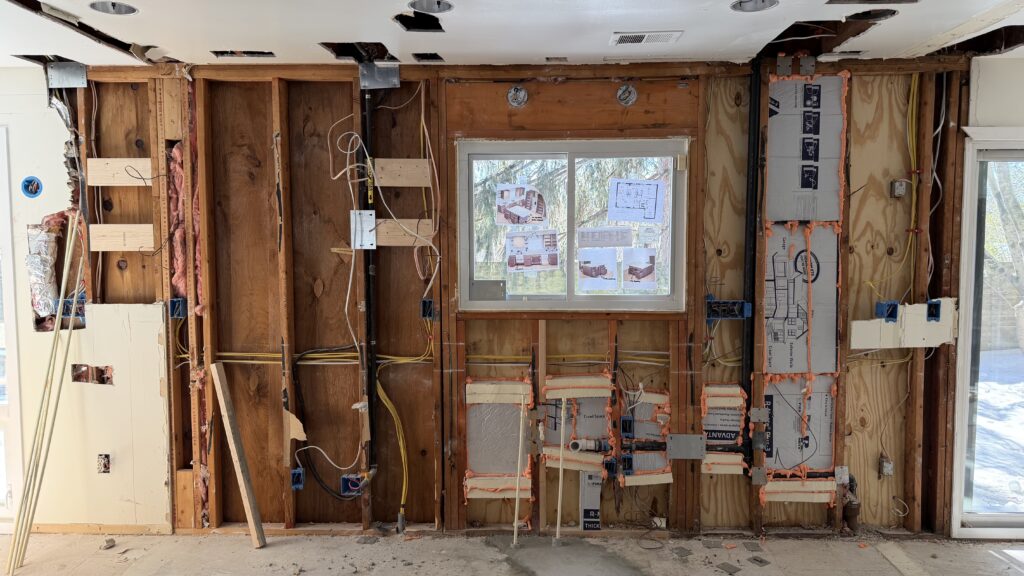 All walls down
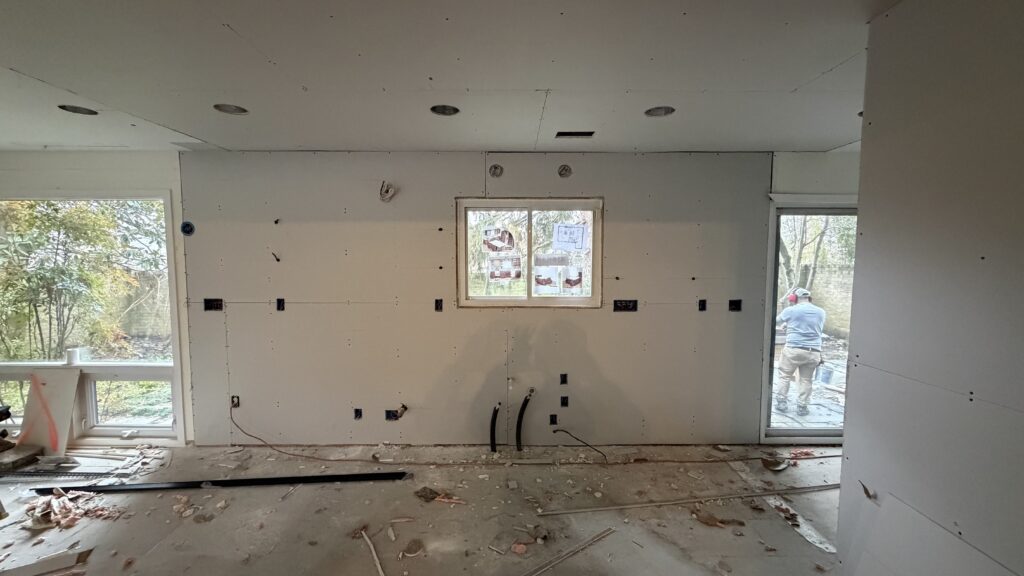 Now, just wide open space
The Process Unfolding: Open Kitchen
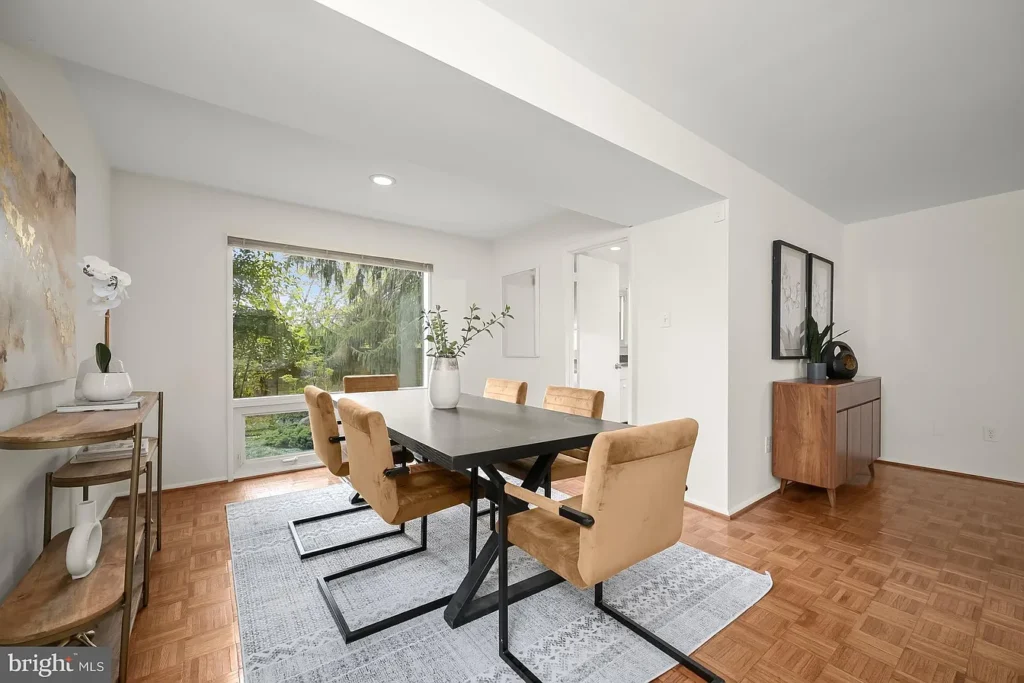 Kitchen separated from dining, weird wasted space
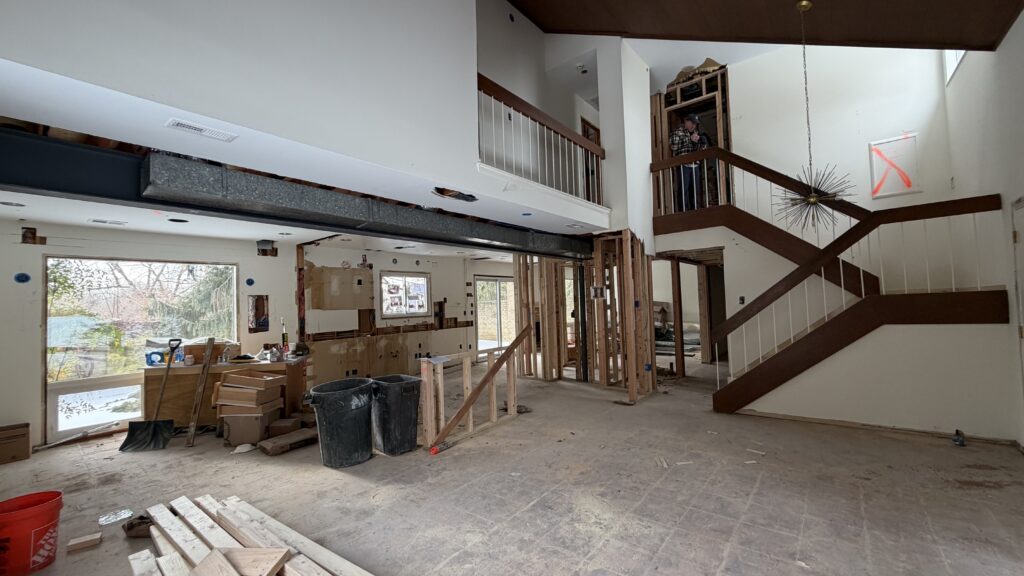 Steel beam opens kitchen up
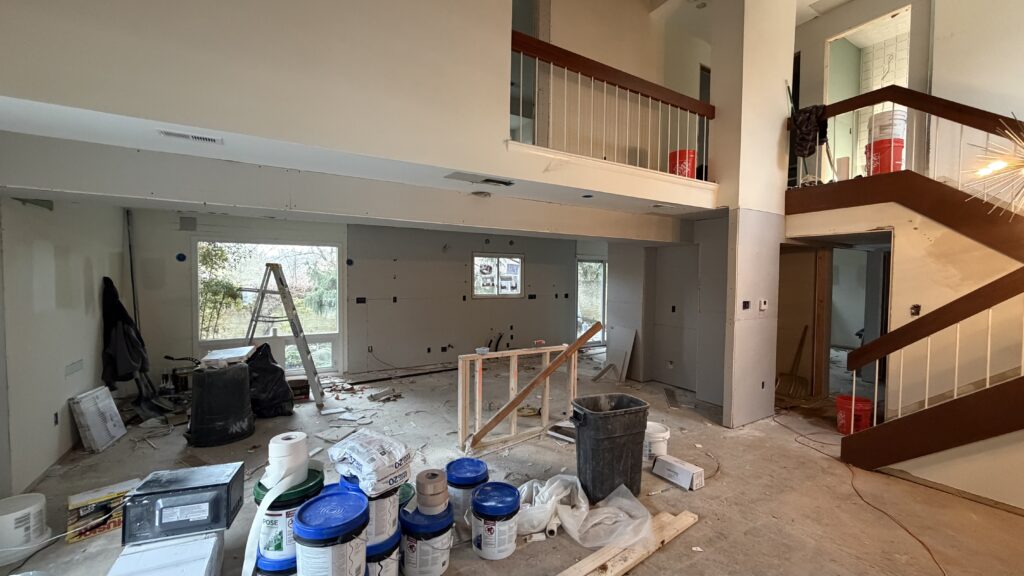 Kitchen now integrated with entertaining spaces
What’s Next: Chapter 12 – New Construction in Crown
Drywall, insulation, exterior leaks, whites—Chapter 11 was about the invisible decisions that determine how a house actually lives. We learned that, left unchecked, small holes can become large expenses. Six trips to the Home Depot and a twelve pack of paint brushes taught us that white is complicated. But it is all coming together quickly now.
Chapter 12 takes a look back at our previous house in Downtown Crown—a new build that we thought came without a to-do list. Turnkey. Finished. Done. Except “done” still meant builder grade. High-end builder grade, yes—but homogenous fixtures that mirrored every other house in the neighborhood, and nowhere near as bold as we wanted.
New construction comes at a price premium, so economically shifting from standard to standout means choosing upgrades strategically. The goal was to invite the industrial-modern exterior style inside, transforming an interior that was indistinguishable into something intentional.