The Point where Rooms Return
I’m convinced that if a crisis were to unfold—and no other options existed—I could successfully YouTube my way through brain surgery.
But plaster?
I once had to move a painting a few inches, leaving behind a nail hole roughly the size of a pinhead. I patched it with filler. I painted over it. Technically speaking, the hole was gone.
But every time I walked into the room, its ghost was the first thing I saw. Guests noticed it too.
“I think there’s a fly on the wall,” many would say.
There wasn’t. Just my “repair.”
To me, people who can plaster an entire house possess a skill handed down from ancient gods. Which brings us to our renovation.
There’s a point at the top of the stairs where—despite measuring every wall and room roughly fifty times—two walls meet and are two inches out of alignment. Two inches! Left to the devices of a determined DIY-er, it would have been a disaster. But in the skilled hands of our builder, what could have been a glaring mistake now reads somewhere between intentional staircase definition and architectural accent.
Nice save.
And now, the bigger milestone: the paint and plaster are finally complete. It changes everything.
Until now, the house has felt like a construction site—raw drywall, sanding dust floating through the air, seams and patches everywhere. Once plaster is smoothed and paint goes on, the architecture reappears. Lines sharpen. Light reflects differently. Rooms regain their proportions. For the first time in months, the house stops looking like a project and starts looking like a home.
Shape, Structure, and Signs of Progress
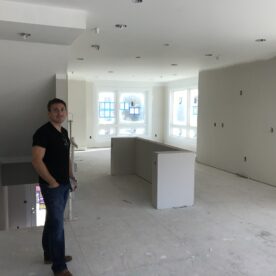
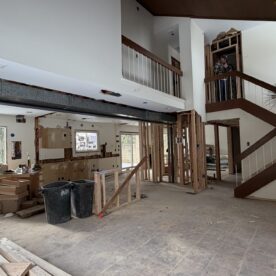
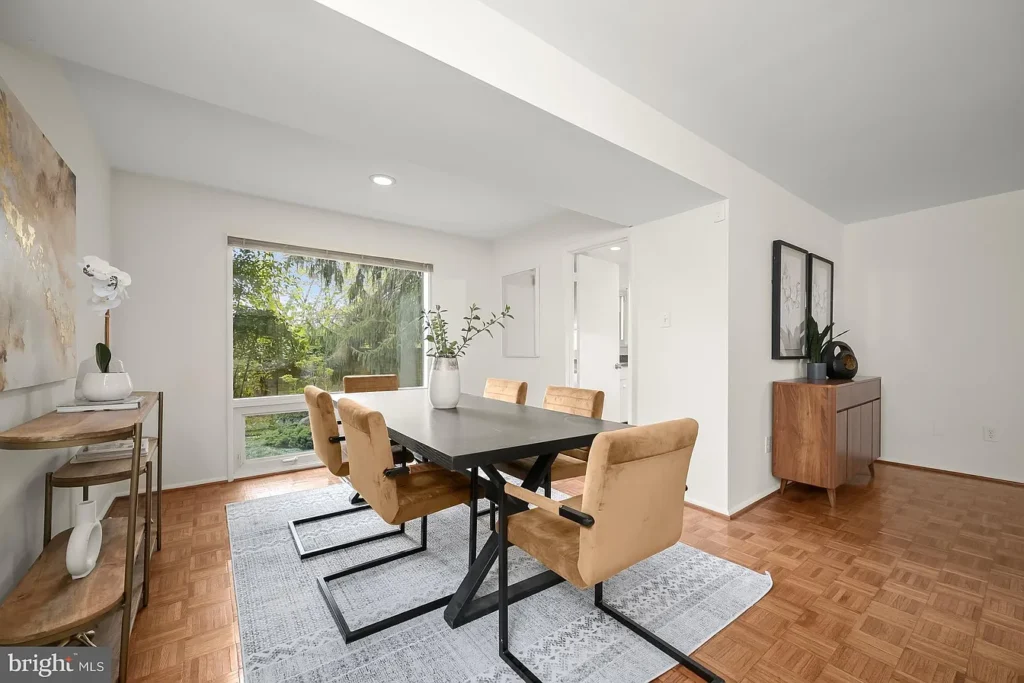 1 – Kitchen hidden from dining behind wall, weird wasted space to the right
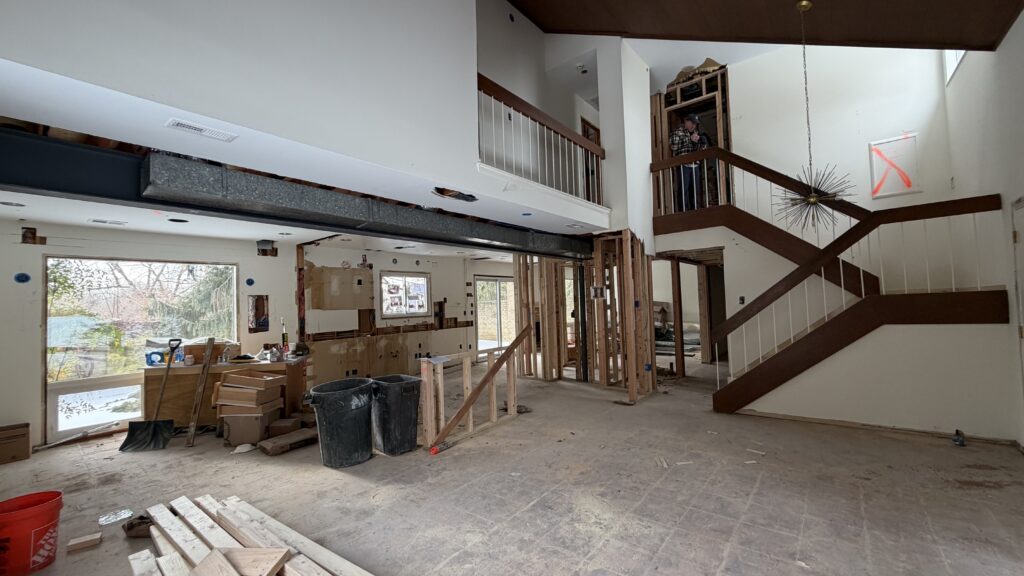 2 – Steel beam opens kitchen up
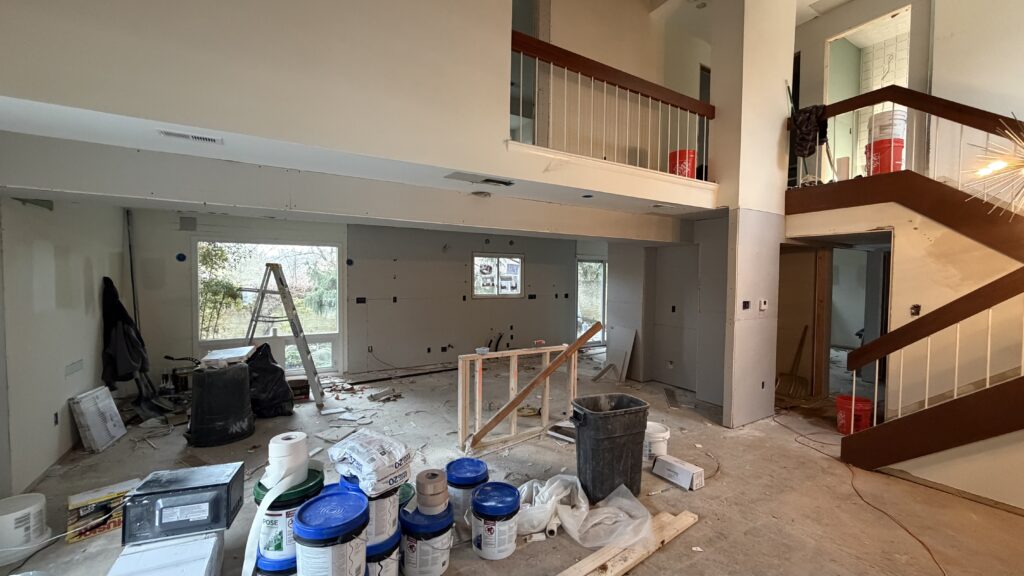 3 – Kitchen now integrated with entertaining spaces
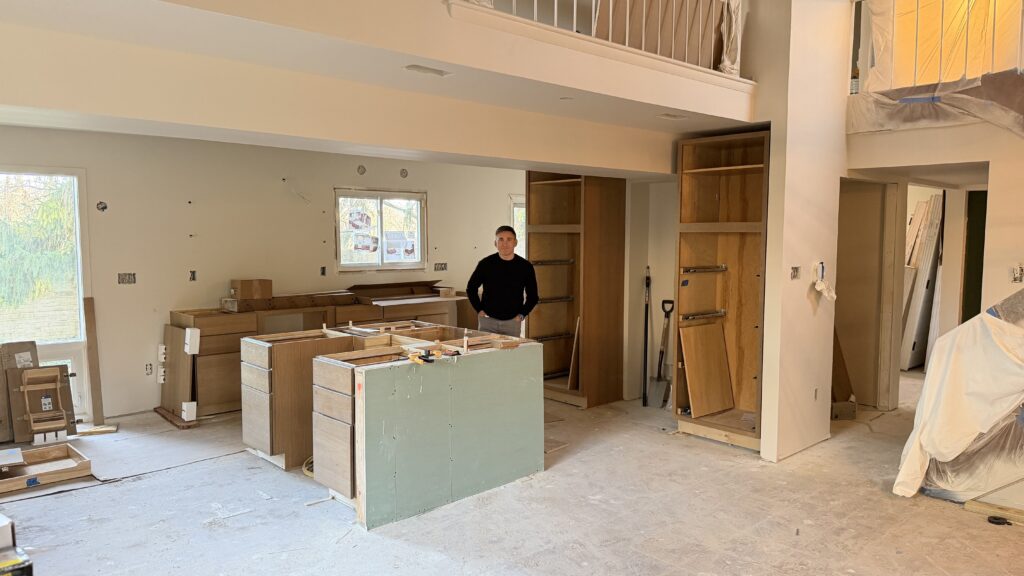
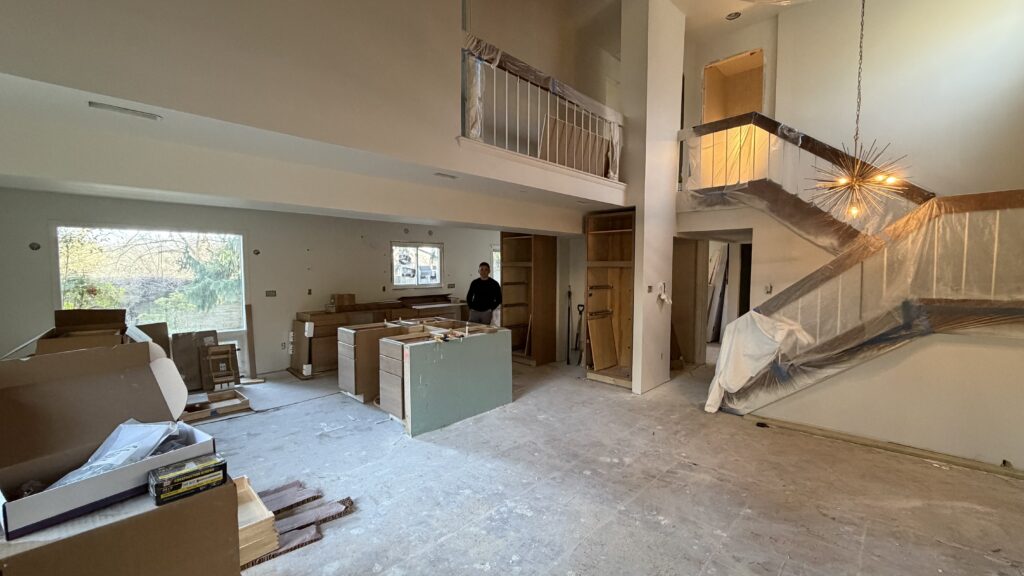
 4 – Plaster and paint complete, kitchen cabinets taking shape
Cabinets, Counters, and Coffee to Come
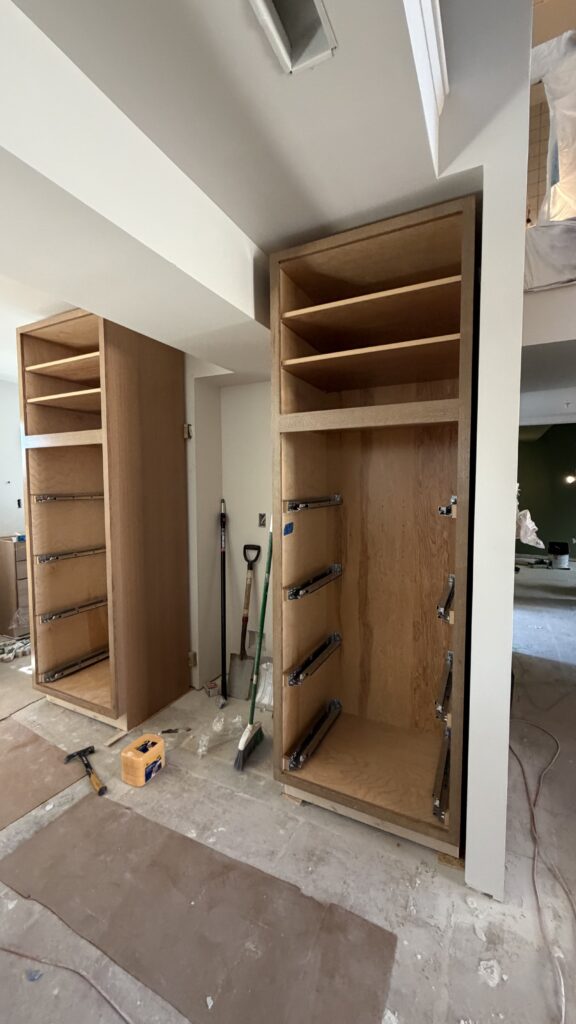
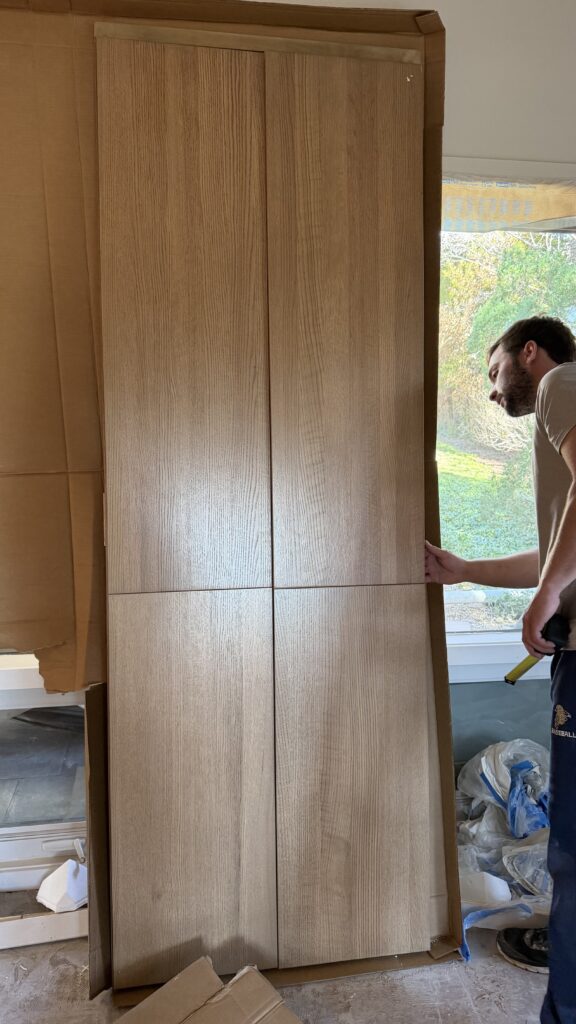
The quartersawn oak cabinets are finally in place, if not fully installed. Even in this halfway state—leveled, measured, and waiting for final adjustments—they already set the tone for the entire kitchen. The wicker finish has the quiet confidence we were hoping for: warm without leaning orange, textured without shouting for attention. And the grain from the quartersawn cut brings a calm rhythm across the cabinet fronts that feels perfectly aligned with the design ideas we laid out back in Chapter 2 – Design With Intention. Nothing ornate. Nothing fussy. Just honest material doing exactly what it should—aging gracefully while letting the architecture carry the conversation.
The Caesarstone Cloudburst countertops have been templated and measured, though they’re not installed yet. Even without the stone in place, the island firmly anchors the room, future personality is starting to reveal itself.
For the first time we can picture a new routine: weekday coffees before work and slow weekend brunches perched on stools at the island, looking through the floor-to-ceiling windows toward the Japanese garden. It’s the exact feel we hoped the design would create—where the kitchen becomes not just the center of the house, but a quiet bridge between indoors and the nature just outside.
Cabinet Choreography
Doors, Depth, and the Sound of Silence
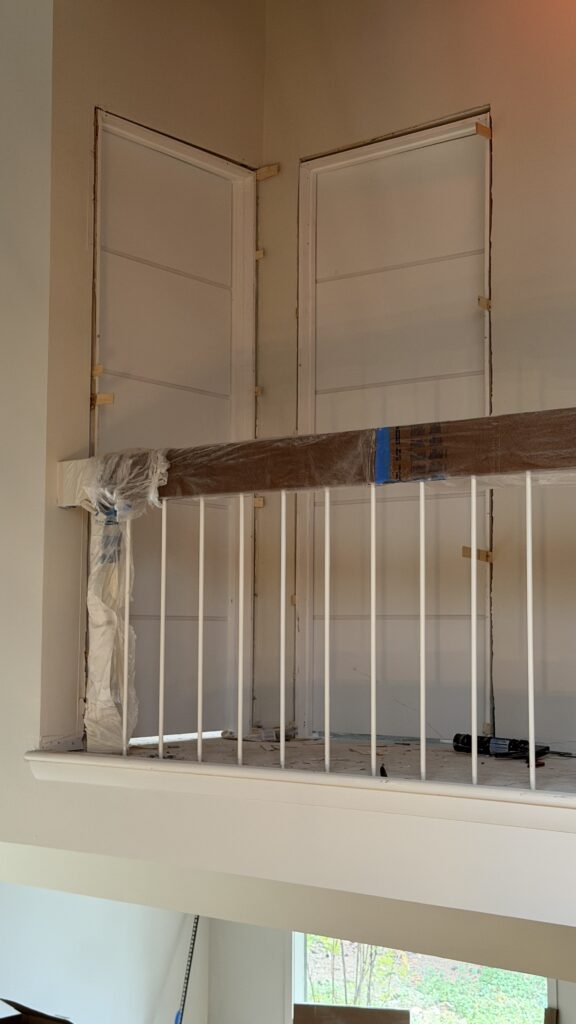
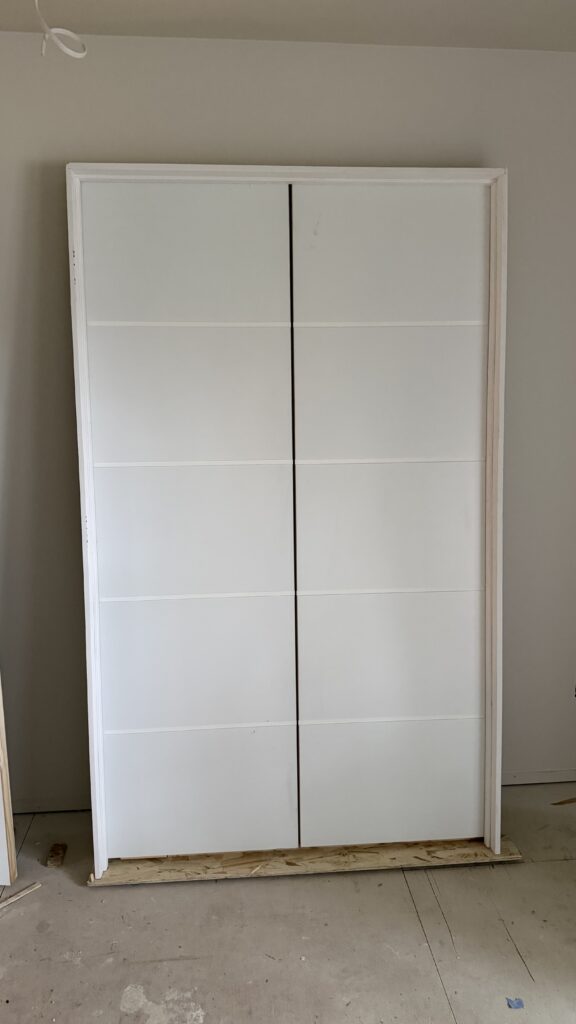
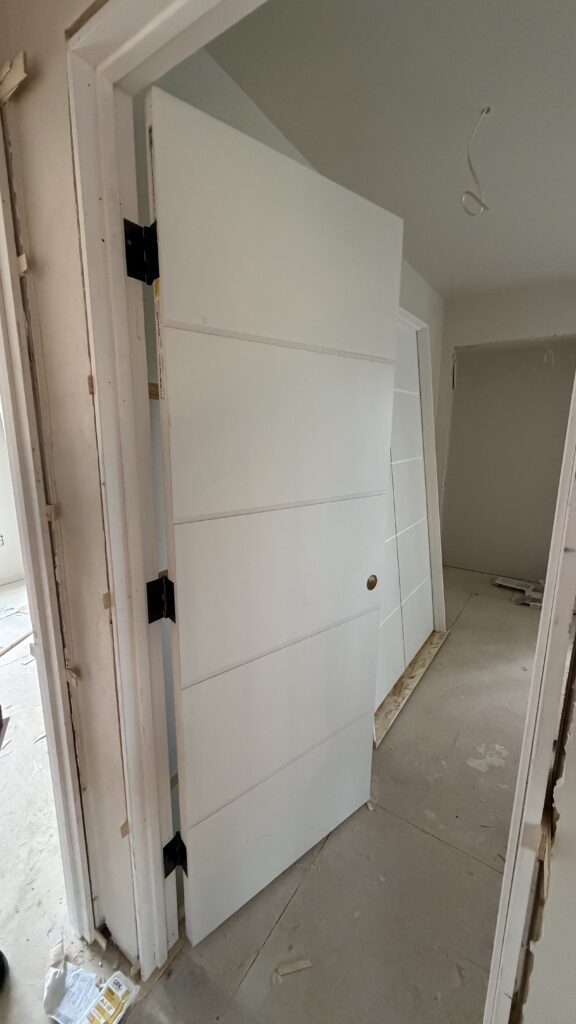
We got unexpectedly lucky with the interior doors. From the beginning, we knew we wanted five-panel solid wood doors, something that felt appropriate to the house’s mid-century roots—simple, honest, and substantial. But when it came time to order them, the standard-depth doors were backordered. The supplier offered an alternative: solid timber doors made from pure cut lumber—no manufactured wood—and nearly fifty percent thicker, just over three inches deep. Normally that kind of upgrade comes with a price tag that requires a moment of reflection. In this case, they offered them for the exact same price. We reflected for roughly two seconds and said yes.
The result is a set of doors that feel less like interior trim and more like structural components. Their sound rating is about as high as you can reasonably achieve in a house, and paired with the soundproofing we installed in the second-floor walls, the bedrooms should be so quiet you could hear a pin drop—assuming anyone still sews. They’re finished with square matte black hardware that keeps the lines crisp and modern, and the doors themselves will be painted Sherwin-Williams Revere Pewter, tying them into the calm, natural palette we set out to achieve in early design decisions.
Dense Doors
Sky, Squares, and a Mid-Century Mood
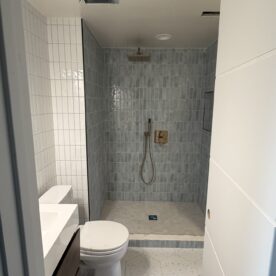
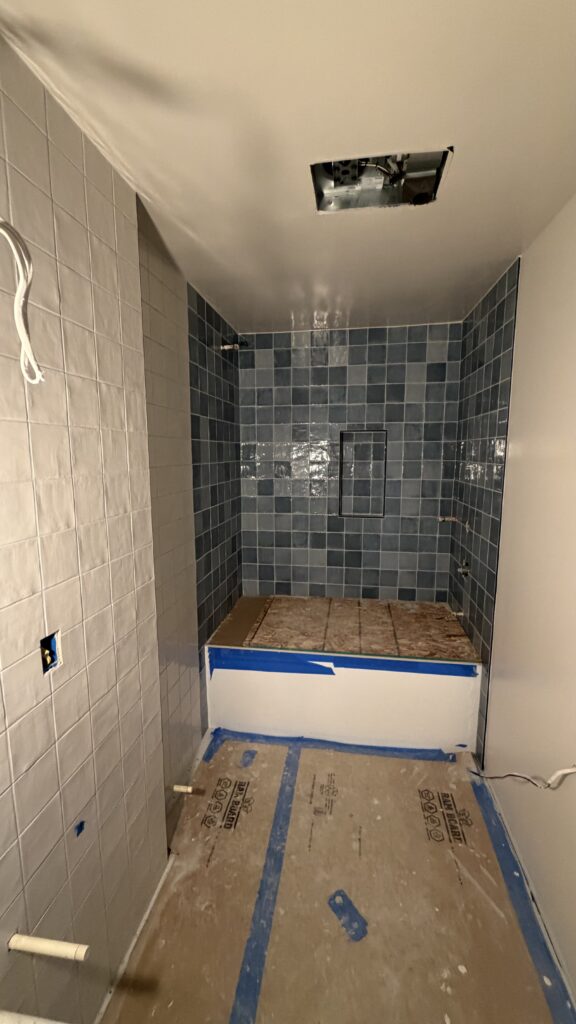
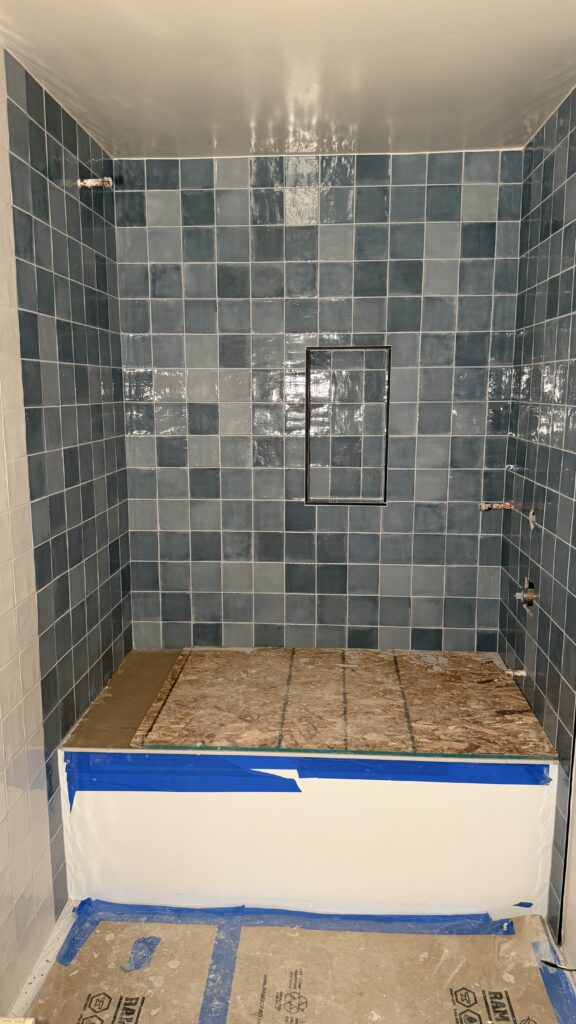
The upstairs guest bathroom has steadily earned a name: The Sky Bath. The idea came together while we were still standing in the tile store. Handcrafted blue tiles anchor the far walls, adding depth to the tub and shower area. Their high degree of color variation shifts from soft slate blues to deeper tones that feel almost like a clear afternoon sky just before sunset. The vanity wall is finished in handcrafted white tiles with a richly textured surface, their subtle irregularities catching the light in a way that feels like clouds drifting towards that blue-sky backdrop. A light blue-gray grout—almost the color of morning fog—ties the tiles together, flowing seamlessly from blue to white so the surfaces feel unified rather than segmented.
We also intentionally selected a 4×4 tile format, the classic size used in many mid-century bathrooms. It’s a small detail, but one we felt strongly about restoring. The square shape carries a quiet authenticity, which would have been lost with a rectangular subway tile. Paired with the handcrafted finish and the shifting blues, the result is a bathroom that feels both period-appropriate and quietly contemporary—a small room that manages to evoke the feeling of a sky without trying too hard to paint one.
The Sky Bathroom
Crafted Color Charm
Windows, Wood, and a Worthy Wake-Up
Entering the primary bedroom, two giant windows immediately steal the show, pulling the garden outside deep into the room. Natural light, filtered through a towering pine and two magnolia trees, begins to set the stage for the forest-like calm that continues into the primary bath. Turning around, another detail reveals itself: a small coffee and champagne bar. This one came from a happy accident. The plumbing was originally destined for the second-floor laundry room sink, but an HVAC run cut off access. Instead of abandoning the line, we popped it through the opposite wall and repurposed it into a wet bar—arguably a far better use of plumbing. Built in the same quartersawn oak used in the kitchen cabinetry, it quietly extends the home’s material palette into the private spaces and ties the bedroom back to the heart of the house.
The room itself is layered with lighting designed for flexibility rather than drama: true 1970s-style reading spotlights above the bed, lamps for softer evening light, and recessed lighting throughout to keep the space balanced and calm. Beyond the sleeping area and champagne bar, dual walk-in closets line the hallway leading toward the primary bath, creating a gradual transition from bedroom to sanctuary.
Oak, Oasis, and Spa Sanctuary
The primary’s Zen Forest Bath continues the language introduced in the guest Sky Bath—both spaces designed to bring the outside in, borrowing their mood from the landscape just beyond the windows.
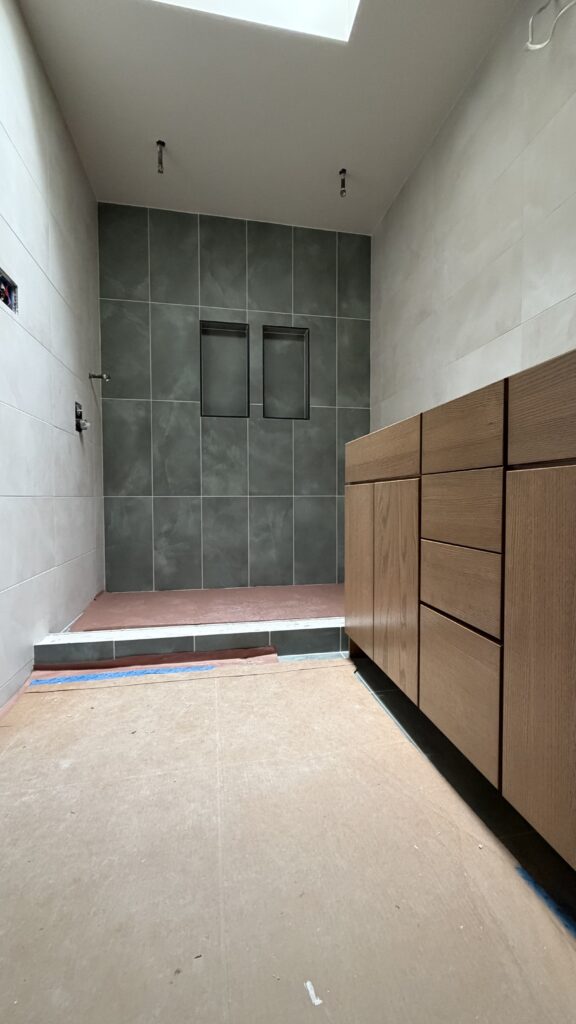
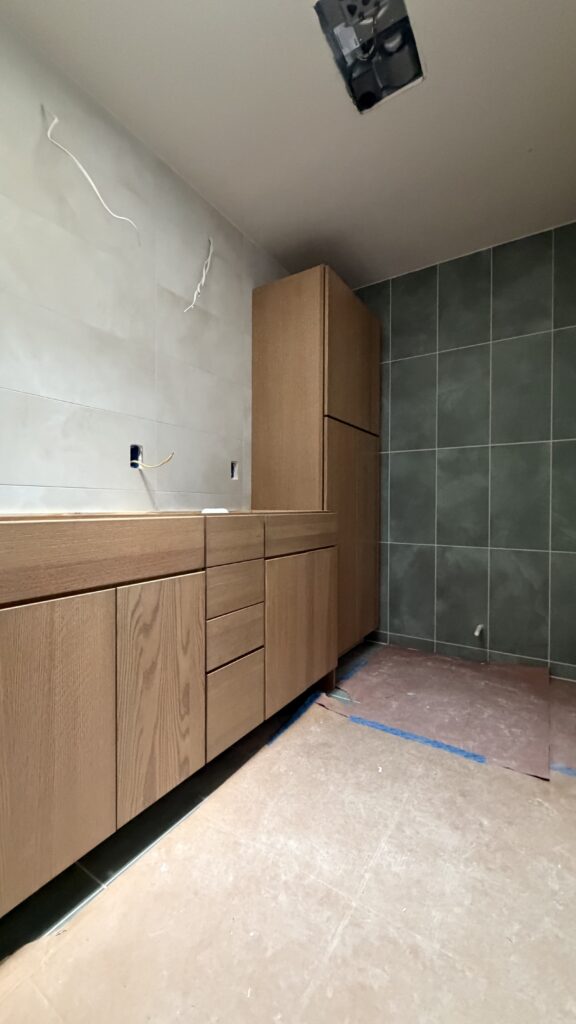
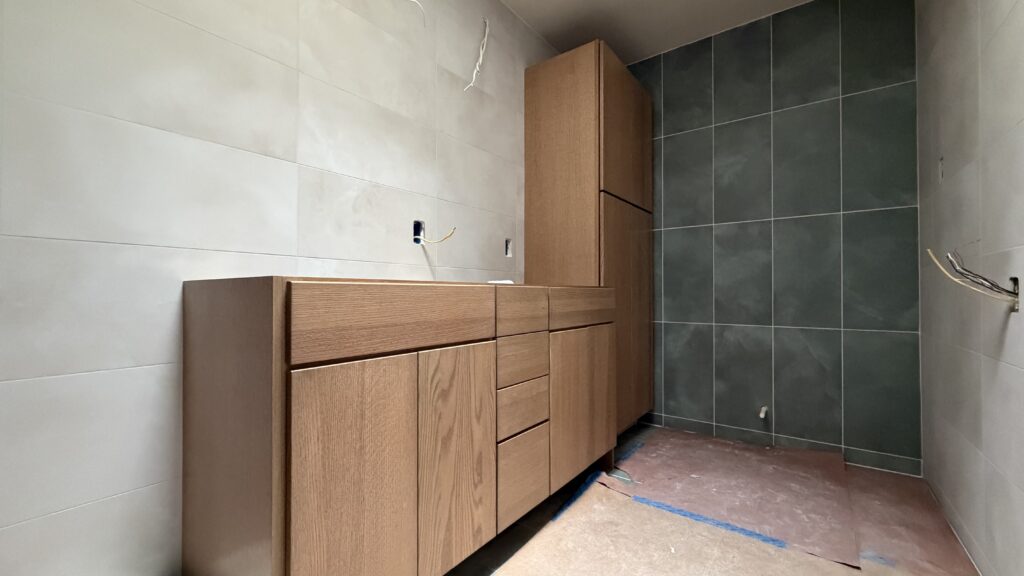
Rather than a typical ensuite, the bathroom was imagined as a small spa tucked quietly into the back of the house. The finishes lean heavily on natural texture and subtle tonal shifts. Cosmix Jupiter matte tile begins at the back wall of the shower, flows down across the floor, and rises again up the opposite wall, creating a continuous sweep of sage-green tile with rich color variation. It’s paired with Cosmix Venus matte tile on the front and rear walls, adding contrast while still keeping the palette calm and grounded. A single mink-colored grout unifies both tiles, softening the transitions between surfaces and allowing the materials to read as one cohesive composition.
Quartersawn oak cabinetry and a matching linen closet continue the warm wood language established in the kitchen, balancing the cool stone tones with something organic. The result is a space that feels calm, grounded, and quietly luxurious—exactly the kind of place where the day can begin slowly or fade out just as peacefully.
Zen Forest Primary Bathroom
Continuity and Cohesion with the Kitchen
My Signature Statement
In nearly every home I renovate, there’s a moment where I sneak in a signature move—a modern take on the classic black-and-white palette. It’s timeless, graphic, and somehow manages to feel both historic and contemporary at once. As I dug deeper into the role of geometric forms in mid-century architecture, it became obvious that this fireplace was the perfect place to bring those ideas together.
The tile we found does exactly that.
Its bold black-and-white geometric pattern echoes the strong graphic motifs found throughout Washington’s monuments and civic spaces, while the angular geometry adds a distinctly mid-century—and surprisingly modern—twist. Installed floor to ceiling around the fireplace, the pattern transforms what might have been a quiet wall into a dramatic focal point—almost like a piece of architectural art rising between the two tall windows.
Even without the gas insert installed yet, the effect is already unmistakable. The geometric tiles create a sense of movement, their shifting light and dark faces catching natural light from the windows on either side. The fireplace now anchors the room visually, drawing your eye upward while still feeling balanced within the architecture. When winter eventually rolls around, it’s easy to picture the scene: a cold evening, a fire lit, glasses of red wine in hand, and this centerpiece bookended by falling snow.
To keep the space cohesive with the rest of the first floor, the tile is finished with the same light gray grout used in the nearby bathroom, subtly connecting the rooms even though the tile styles themselves couldn’t be more different. It’s a small detail, but one that helps the house feel thoughtfully composed not just assembled room by room.
Fiery Focal Point

Garage Glow-up
Even the garage got a tiny makeover. The back wall had only ever been about two-thirds finished, leaving a short section of exposed studs, wires, and what looked like decades of incremental electrical improvisation. At the center of it all sat an original 1970s mechanical timer box that controlled the outdoor lighting—a yellow dial contraption that felt less like a lighting control and more like something you’d read with braille and guesswork. While we were already improving other parts of the house, it seemed only fair to give the garage a small upgrade too. The wall was insulated and properly drywalled, hiding the tangle of wires and finally finishing what had been left incomplete for decades. The old timer was retired and replaced with modern WiFi-enabled switches, bringing the outdoor lighting into the present century. It’s a small change in the grand scheme of the renovation, but like many of the quiet fixes in this house, it removes a little bit of chaos and replaces it with something simple, clean, and functional.
Wires, Walls, and WiFi Win
 1 – Wire Wall
 2 – Ancient nraille light timer?
 3 – Modern WiFi timer
 4 – No more wires
What’s Next – Chapter 14
For months, most of the work in this house lived behind the walls—structural fixes, rerouted HVAC, electrical updates, soundproofing, and countless decisions that no visitor will ever notice but will quietly shape how the house lives for decades. Chapter 13 marks the point where those hidden efforts finally start revealing themselves. Tile now defines the bathrooms, cabinets anchor the kitchen and primary suite, doors are waiting to restore privacy and quiet, and even the fireplace and garage have begun to show their new identities. The house is no longer just a construction site filled with tools and dust—it’s starting to look unmistakably like a home again.
There’s still work to be done, of course. Countertops will land, fixtures will be installed, lighting will come to life, and the final details will begin transforming construction into comfort. But the heavy lifting is behind us now. Rooms are taking shape, materials are settling into place, and the vision first outlined back in Design With Intention is finally becoming visible. For the first time in months, it’s easy to walk through the house and imagine what everyday life here will actually feel like.
Chapter 14 will leave Bethesda behind for a moment and head south to Fort Lauderdale, where a business trip, a newly discovered Zillow, and the lingering aftermath of the housing crash combined to spark an idea that would change our plans. What started as casual curiosity quickly turned into a search for a beach house—and eventually a second renovation project that proved just as full of surprises as the one back home. From unexpected neighbors and mountains of bricks to hurricane upgrades and a very unconventional bachelor party, the Florida house would become its own chapter in our ongoing experiment of restoring, reimagining, and occasionally surviving the consequences of our own enthusiasm.