Before Airbnb, There Was a Pineapple
I was living in London when my friend Rhett came over for a visit, which naturally meant we should leave London.
Rather than spend the weekend at a perfectly nice hotel in Edinburgh, I decided we needed something more memorable: a historic building in the Scottish countryside called The Pineapple. It was listed through the Landmark Trust, which restores unusual historic properties and helps offset the considerable cost of preserving them by letting people stay overnight.
A giant stone building topped by a nearly perfect pineapple in rural Scotland seemed like exactly the sort of sensible lodging decision to make.
Now I just had to book it.
In 2001, websites were still closer to digital brochures than storefronts. You could browse properties online, but checking availability and actually reserving one generally required a landline telephone and a conversation with another human being. It felt advanced at the time—particularly considering the Airbnb era was still years away.
Transportation wasn’t much more automated. Train tickets could be arranged through my corporate travel agency, but rental cars involved a more elaborate negotiation. The type of car you wanted, where you planned to drive it, your credit card and apparently your personality all seemed to influence the level of service you received. And because rental offices kept very civilized British business hours, arriving late could simply mean everyone had gone home and you were stuck without a car.
Eventually, though, we had one Pineapple reserved, train tickets purchased, and a rather expensive rental car promised to be waiting, assuming, apparently, that we looked like people who could be trusted with it.
The perfect Scottish weekend awaited.
Or so it seemed.
Travel Before Mobile Phones
The thing about Rhett was that I could leave a message on his landline answering machine and, without much in the way of directions or instructions, he could make his way across the Atlantic, find my flat in London, let himself in, change clothes and then navigate central London to meet me at a train station. I would simply leave work and meet him there.
It is hard to remember how much trust that required.
There was no texting, no Find My Friends and, for us at least, no practical way to stay in contact while one person was crossing an ocean and the other was moving around London. If a flight was delayed, a train changed or someone misunderstood the plan, you generally discovered it when you arrived at the appointed place and the other person wasn’t standing there.
This time I was particularly nervous. Our departure for Edinburgh had changed several times because the rental-car “negotiations” were beginning to resemble the brokering of a small peace accord. Most importantly, the Edinburgh rental office closed at 6:00 p.m., and apparently no amount of persuasion was going to keep anyone there a minute longer.
I came up from the Tube and hurried toward our train, still wondering whether the entire plan was about to unravel.
And there stood Rhett.
All of the concern disappeared. We were both there, the train was waiting and the excitement of another European excursion took over.
Scotland was next.
First-Class Plans, Second-Class Logistics
Our train headed north from London along the east coast, eventually running remarkably close to the North Sea. The scenery alone made the four-and-a-half-hour journey worthwhile: villages, fields and long stretches of cold gray-blue water sliding past the window.
We arrived in Edinburgh with only minutes to spare before the rental-car office closed. There were also only two cars left.
One was the Jaguar in the class we had reserved. The other was a Vauxhall Corsa. This was not, in my mind, a difficult decision.
The rental manager, however, took one look at my relatively young age and apparently decided he had one final opportunity to reconsider whether he really wanted to entrust me with his very expensive Jaguar.
He repeatedly reminded me how much it cost.
He explained how powerful it was.
He emphasized the no-after-hours return policy—which we were already planning to ignore—and carefully reviewed the rules for bringing it back.
I employed one of my favorite negotiating techniques: saying absolutely nothing.
People are uncomfortable with silence. They tend to interpret it as dissatisfaction and start looking for ways to improve their offer. Speak too soon and you risk negotiating against yourself. In this case, speaking too soon also risked leaving the rental agency in a Vauxhall Corsa.
Rhett, much more inclined toward compromise than I was, occasionally offered helpful alternatives.
I pretended not to hear them.
Eventually the manager realized that I wasn’t changing my mind, and his desire to go home finally exceeded his desire to protect the Jaguar.
The keys were ours.
In hindsight, he had excellent instincts.
Rhett and I pulled away and headed to dinner at The Atrium in Edinburgh while we waited for the final member of our party to arrive on a later train. Sometime after 11 p.m., the three of us climbed into the Jaguar and pointed it toward Dunmore.
One wrong turn and only six unnecessary miles later—a personal navigational triumph in the era before GPS—we were deep in the Scottish countryside.
Along the way we passed Airth Castle, dramatically illuminated against the night. As soon as it came into view, Rhett started filling in the centuries between us and those floodlit stone walls.
Airth had been fortified since the Middle Ages and was connected, at least in legend, to one of the defining figures of Scottish history. The medieval poet Blind Harry claimed that William Wallace attacked an earlier stronghold here in 1298 to rescue his imprisoned uncle. There is no firm evidence that it actually happened, but the story stuck: the oldest surviving part of the later castle became known as Wallace’s Tower, and even its staircase eventually acquired the name Wallace’s Stair.
The castle itself had already been destroyed and reborn by then. An earlier fortress was burned in 1488, during a Scottish civil conflict that ended with Scottish King James III dead and his 15-year-old son taking the throne as James IV. The castle was rebuilt soon afterward. Over the following centuries, successive owners simply kept adding to it, expanding it to today’s enormous scale.
That teenage king turned out to matter far beyond Airth. James IV became one of Scotland’s great Renaissance monarchs and, in 1503, married Margaret Tudor, daughter of England’s Henry VII. Their descendants eventually inherited both thrones: a century later their great-grandson James VI of Scotland became James I of England, placing the crowns of Scotland and England on the same head for the first time.
in the time it took us to pass the historic landmark, Rhett had managed to connect William Wallace, a murdered king and the beginnings of the royal family that would eventually rule both Scotland and England.
Not bad for a house we happened to pass on the way to a giant pineapple.
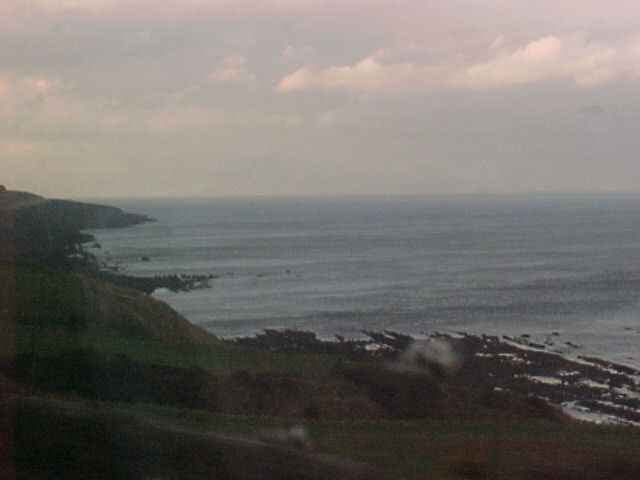 Views of the North Sea from the train
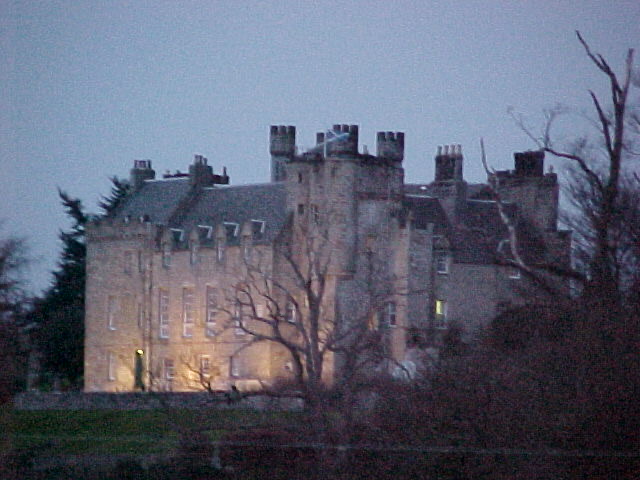 Airth Castle
Blair Witch Meets Georgian Excess
Not long afterward, we found the entrance to our own accommodation.
And immediately wondered what I had booked.
“Where the hell are we?” Rhett blurted as he woke from dozing in the seat beside me and focused on the rather frightening entrance ahead.
The arrival at The Pineapple was not quite the elegant Scottish-country-house experience I had imagined.
At night, in wind and rain, the old gates and long unlit drive looked less Masterpiece Theatre and considerably more Blair Witch Project.
I pressed the accelerator, switched on the fog lamps and guided the large Jaguar through the narrow gates. The road became a muddy track lined tightly with trees, with almost nothing visible beyond the headlights.
Then, through the darkness, the building finally appeared.
A monumental stone pineapple rising out of the Scottish night.
Rhett had already filled us in on its history, the story behind it equally as strange as the architecture.
John Murray, the 4th Earl of Dunmore, created a walled garden and original pavilion here around 1761. He later crossed the Atlantic and eventually became the last royal governor of Virginia, arriving just as relations between Britain and its American colonies were beginning to collapse.
Dunmore did not exactly leave America under ideal circumstances. In 1775, as revolution spread through Virginia, he ordered gunpowder removed from the public magazine in Williamsburg, fled the Governor’s Palace for the safety of a British warship and eventually declared martial law. Most controversially, he offered freedom to enslaved people owned by rebels if they escaped and joined British forces. Hundreds did. By 1776, Dunmore had effectively lost Virginia and returned across the Atlantic.
Somewhere around this period, his relatively conventional Scottish garden pavilion acquired something decidedly unconventional: an intricately carved 37-foot-high stone pineapple.
The exact timing is still debated. The Landmark Trust believes the enormous fruit was probably added after Dunmore returned from Virginia, where pineapples had become fashionable symbols of hospitality and prosperity. Local historical research, however, has uncovered a 1774 advertisement already describing a “Pine-apple Summer house,” suggesting at least some version may have existed before he came home.
Either way, subtlety was clearly not the objective.
In 18th-century Britain, pineapples were extraordinarily difficult and expensive to obtain. They became such potent symbols of wealth that a single fruit could be displayed rather than eaten—and even rented for the evening simply to impress dinner guests. Dunmore apparently decided that putting one on the table wasn’t sufficient.
He put one on the roof.
And the extravagance wasn’t merely decorative. The enormous walled garden surrounding the building was essentially an 18th-century piece of horticultural engineering. Furnaces heated air that circulated through cavities inside the garden walls, helping exotic fruit ripen in the Scottish climate. The smoke escaped through chimneys cleverly disguised as ornamental stone urns.
Even the pineapple itself was engineered for Scottish weather: its carved stone leaves were shaped so rainwater would drain away rather than collect and damage the masonry.
This was not merely ridiculous architecture.
It was technologically advanced ridiculous architecture.
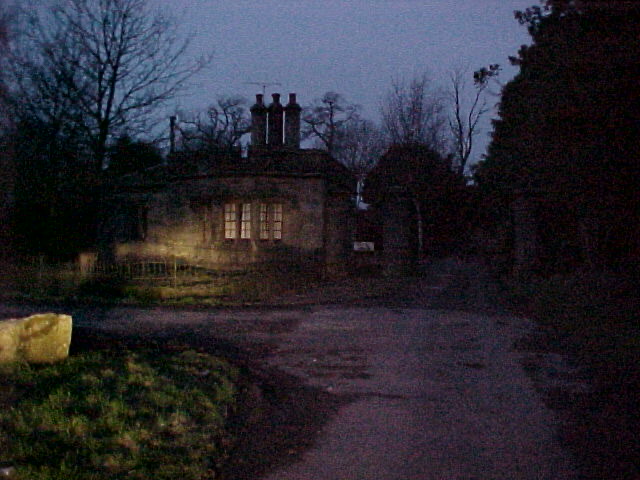 Less than reassuring Blair Witch entrance
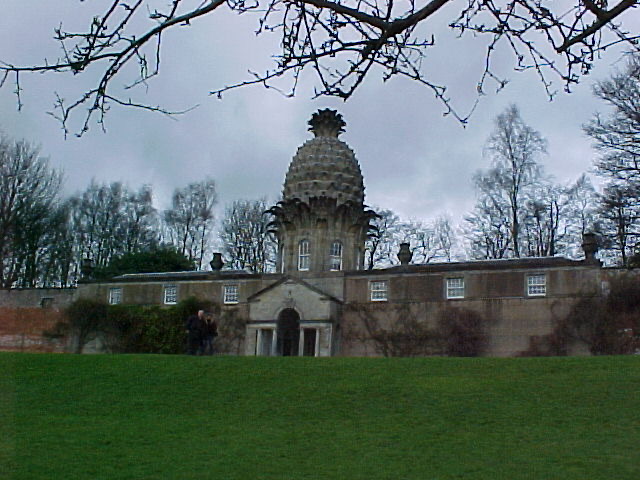 The Pineapple, Considerably friendlier in the daylight
Life Inside the Fruit
Once inside, The Pineapple was less intimidating—and considerably less luxurious—than its exterior.
The Landmark Trust had restored it as a historic residence rather than a hotel, so we essentially had the entire place to ourselves. Thick stone walls, old fireplaces and simply furnished rooms made it feel appropriately removed from modern life. Electricity and indoor plumbing had been added, thankfully, but otherwise the emphasis was more historic authenticity than hotel amenities.
There was, however, one architectural feature the brochure described rather generously as an “open-air courtyard.”
Translation: part of the house wasn’t connected.
The main pavilion contained the kitchen, sitting room, dining room, and the only bathroom. The bedrooms occupied separate rooms on the opposite side of a small gravel courtyard. Going to bed meant walking outside. Going from bed to the bathroom meant walking outside again.
In Scotland.
In March.
At the time it seemed merely eccentric.
It would become considerably more relevant the following morning.
We had arrived far too late the night before to acquire anything resembling groceries, but I did have one essential provision. I kept an emergency stash of coffee in my perpetually packed Deloitte travel suitcase.
So we made coffee in the old kitchen, contemplated the fact that we were actually waking up inside a giant Scottish pineapple, and headed into Edinburgh in search of breakfast, and a few hundred years of history.
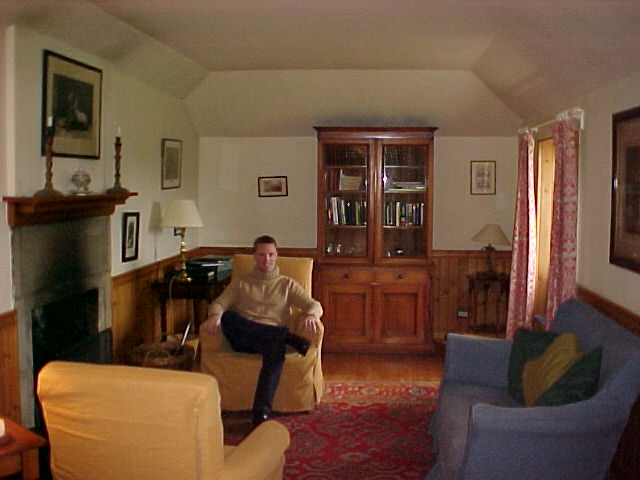 Living Room
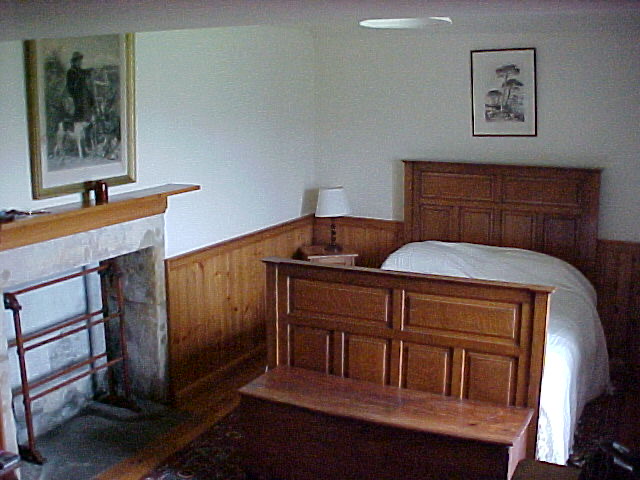 Main Bedroom
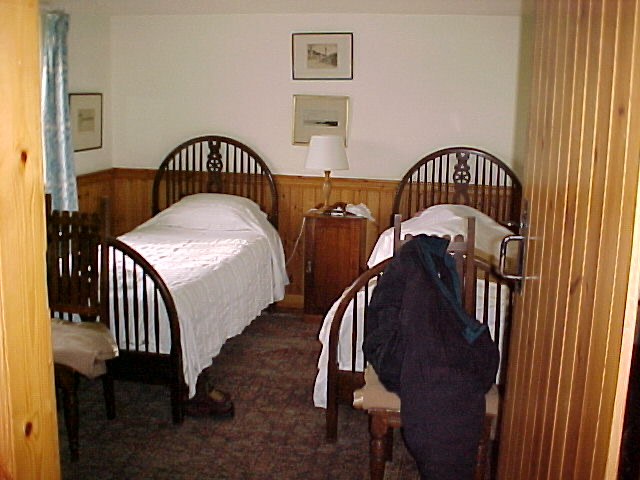 Guest Bedrooms
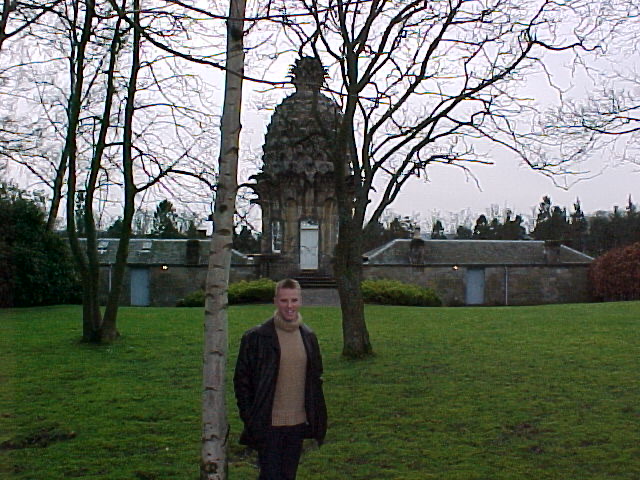 The Pineapple after coffee
Two Cities, One Edinburgh
My immediate reaction to Edinburgh was that it somehow felt older and more visibly medieval than London.
Rhett was quick to jump in and explain the reason for that.
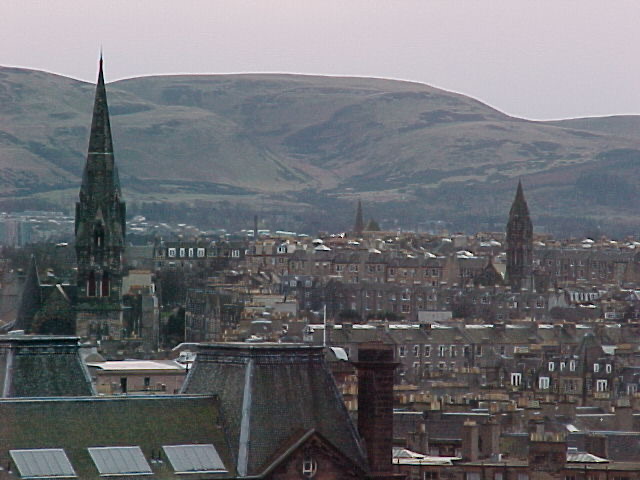
Edinburgh’s historic center is essentially two dramatically different cities sitting side by side. The Old Town grew organically along the ridge descending from Edinburgh Castle, creating a dense medieval maze of narrow closes, wynds and tall buildings packed tightly together.
Across the valley, the New Town was almost the opposite.
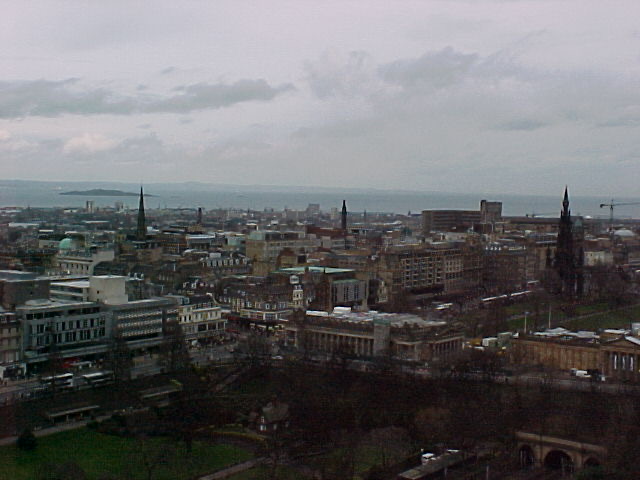
Beginning in 1767, Edinburgh expanded outward with a carefully planned neoclassical district of broad streets, formal squares and elegant terraces. Construction continued through a series of extensions into the 19th century, creating a striking contrast between the crowded medieval city and the ordered Georgian one.
Today UNESCO recognizes the Old and New Towns together as a World Heritage Site precisely because that contrast survives so clearly.
And standing above both is Edinburgh Castle.
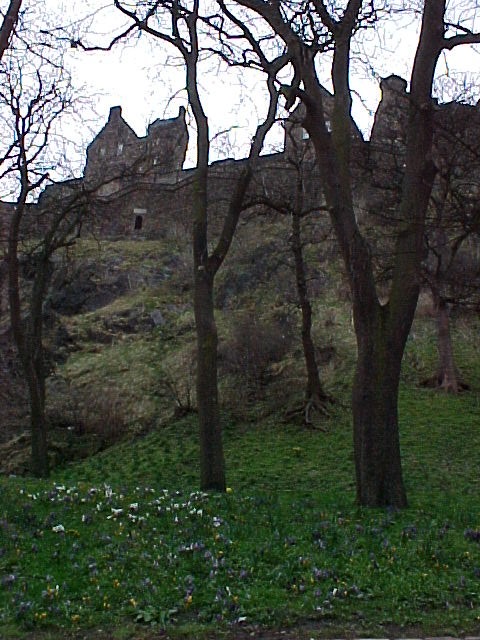
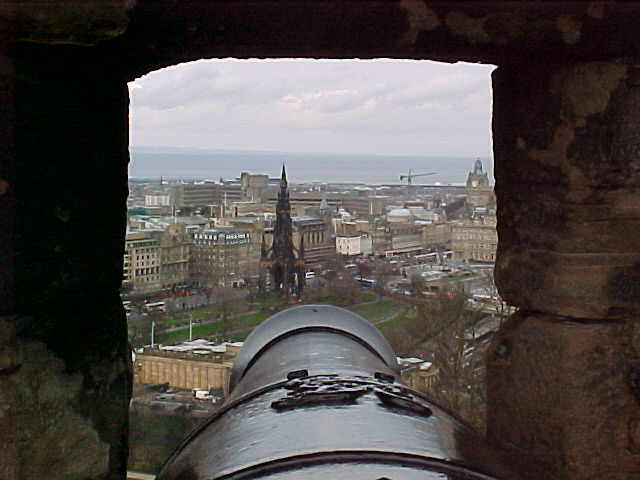
The castle occupies Castle Rock, an ancient volcanic outcrop that rises dramatically above the city and has been strategically important for centuries. Rather than one building, it is a sprawling fortress complex that evolved over generations: part royal residence, part military stronghold, part arsenal and eventually national monument.
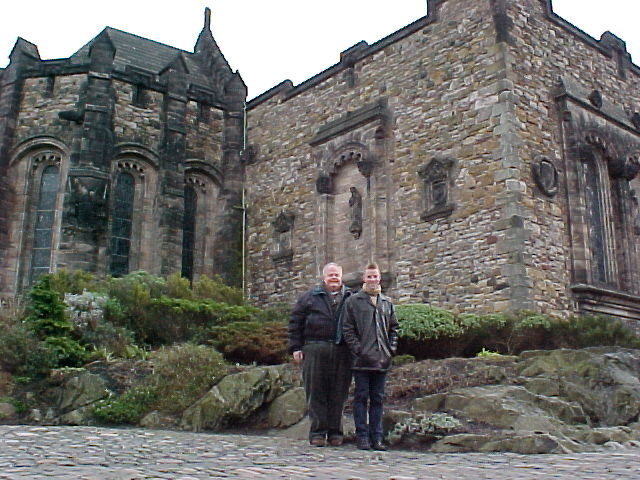
One of its smallest buildings is also its oldest. St Margaret’s Chapel, built in the 12th century by David I in memory of his mother, is the oldest surviving structure within the castle. Much of what surrounds it was destroyed, rebuilt and expanded repeatedly as Scotland’s kings, armies and enemies fought over the fortress.
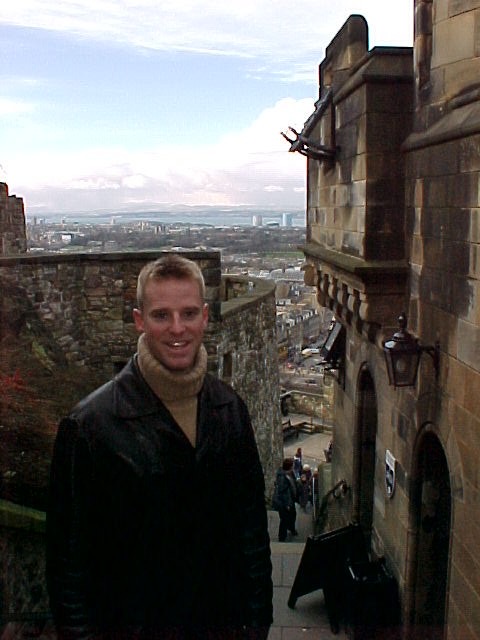
From the castle walls, the history suddenly made visual sense. On one side were the tightly packed roofs and crooked streets of the medieval Old Town. On the other, the broad avenues and orderly geometry of the New Town.
Two very different ideas about how a city should work, separated by a valley and several centuries.
The Royal Mile
From the castle we headed downhill along the Royal Mile, the historic spine of the Old Town.
The majority of Edinburgh’s best-known attractions seemed to cluster either directly on it or within a few blocks: museums, monuments, ghost stories, kilt shops, bagpipe players and enough Scottish symbolism to eliminate any question about which country we were in.
Despite the name, the Royal Mile is not actually one street. It is a succession of streets running roughly one Scots mile from Edinburgh Castle downhill to the Palace of Holyroodhouse. Narrow closes and passageways branch away from it in the medieval fishbone pattern that still defines much of the Old Town.
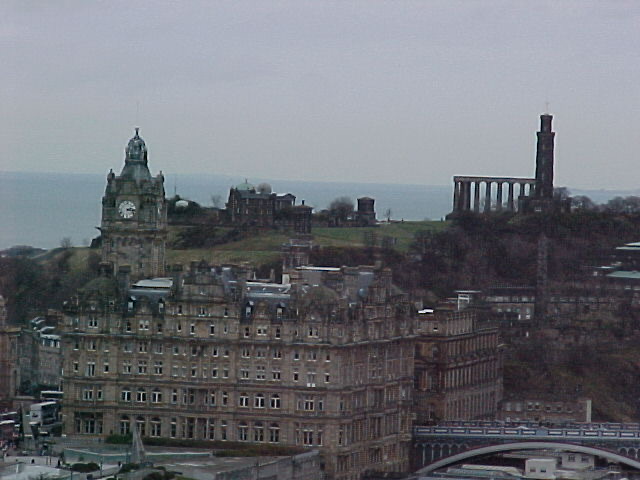
At the bottom sits Holyroodhouse.
The palace developed beside a 12th-century abbey and eventually became one of Scotland’s principal royal residences. Mary, Queen of Scots lived there after returning from France in 1561, and her apartments became the scene of one of the more notorious episodes of her reign: the 1566 murder of her secretary, David Rizzio, who was dragged from her presence and stabbed by conspirators.
And Holyroodhouse is not merely historic. It remains the monarch’s official residence in Scotland today.
After spending most of the afternoon walking through several centuries of Scottish history, the winter weather finally won.
More accurately, the wind was messing up my hair.
We headed back toward Airth for dinner, choosing something closer to The Pineapple rather than repeat another late-night drive through the Scottish countryside.
 Palace of Holyroodhouse
 View from a defense cannon
Countryside Dining, Scottish Edition
That evening we returned to Edinburgh for dinner at Martin’s, a small husband-and-wife-run restaurant that had come highly recommended by one of Rhett’s friends back in the U.S. The food was traditional Scottish fare—the sort of warm, hearty meal that felt exactly right after a cold, blustery day walking around Edinburgh. What I remember much more clearly, though, was the service.
When we reached the cheese course, the owner appeared and began introducing the selections with elaborate stories about where each cheese came from, accompanied by photographs of the animals—and, apparently, some of the people—responsible for making them.
No one needed to work that hard to sell me a cheese course. We were obviously ordering it anyway.
But we happily listened.
Dinner had become dinner theater.
We returned to The Pineapple relatively early, planning a substantial breakfast the next morning followed by a leisurely drive back to Edinburgh. Our train didn’t leave until later in the afternoon, leaving plenty of time for one last walk through the Old Town—and perhaps another pint—before heading south to London.
It was, by our standards, an unusually sensible plan.
Then Scotland changed it.
Snow on the Pineapple
We woke Sunday morning to find the entire landscape covered in fresh snow.
The countryside that had looked dark and vaguely threatening when we arrived was suddenly spectacular. Beyond Dunmore, the Ochil Hills rose above the Forth Valley, their ridges and contours sharply defined by the fresh powder. It was such a beautiful way to wake up that we almost forgot about the architectural quirk we had found so amusing the day before.
Remember that “open-air courtyard” separating the bedrooms from the property’s only bathroom?
We remembered it too.
Now in the snow.
Breakfast was considerably less aristocratic than the accommodations. At that point in my twenties, scrambled eggs and cheese over toast, hot coffee, English bacon and Scottish sausage represented the outer limit of my cooking skills. Nonetheless, it was hearty, homemade, and served beneath one of Britain’s most eccentric pieces of Georgian architecture.
Afterward, we packed the car slowly. Each trip outside with another bag became an excuse to stop for a moment and take in how completely the overnight snow had transformed the landscape.
Eventually, though, it was time to leave.
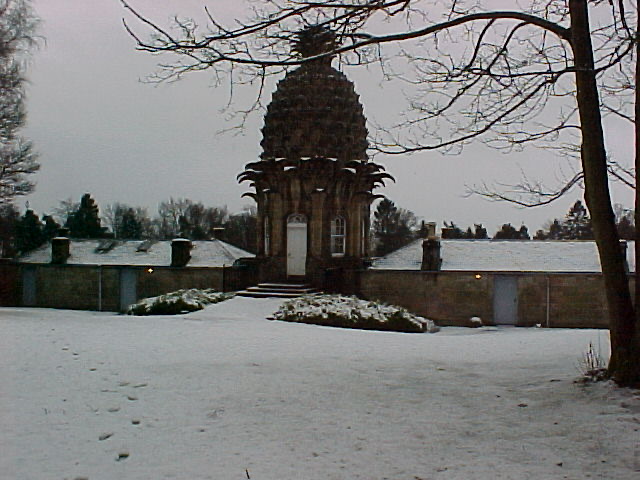 Snow on the Pineapple
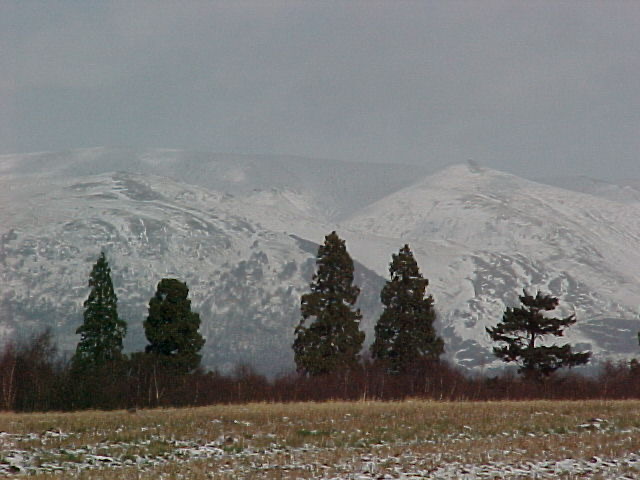 The Ochil Hills
Your Car Became Stuck
Before pulling away, I took one final picture of our very expensive, very new Jaguar sitting beneath the tall bare trees, lightly covered in snow.
This turned out to be useful documentation.
As we were leaving, we reached the same main gate we had opened in the dark on our first night. Someone had to get out and open it, and the narrow lane offered almost nowhere to walk except the muddy drainage ditches running along either side.
Before Alex got out, I tried to be helpful. I edged the Jaguar toward one side of the track to leave him enough firm ground to walk without trudging through knee-deep mud.
That was the mistake.
The right rear tire caught the edge of the narrow track and slipped into the ditch.
I tapped the accelerator.
Nothing happened.
I tried backing up.
This was not an improvement.
The rear of the Jaguar slid even farther off the track, and suddenly our nearly new rental car was sitting deeply enough in Scottish mud that it appeared interested in becoming a permanent feature of the Dunmore estate..
More importantly, the clock was ticking toward our train back to London.
There was one comforting thought: at the rental manager’s insistence, I had purchased the insurance. While searching through the paperwork for the helpline number, I remembered him proudly explaining that the Jaguar was only two weeks old and therefore we shouldn’t have any problems.
He had failed to account for us.
When I finally reached the rental company, I chose my words carefully.
“Your car became stuck.” I explained calmly.
Not I drove your car into the mud.
Not I buried your nearly new Jaguar beside a giant 18th-century pineapple.
Your car became stuck.
Language matters.
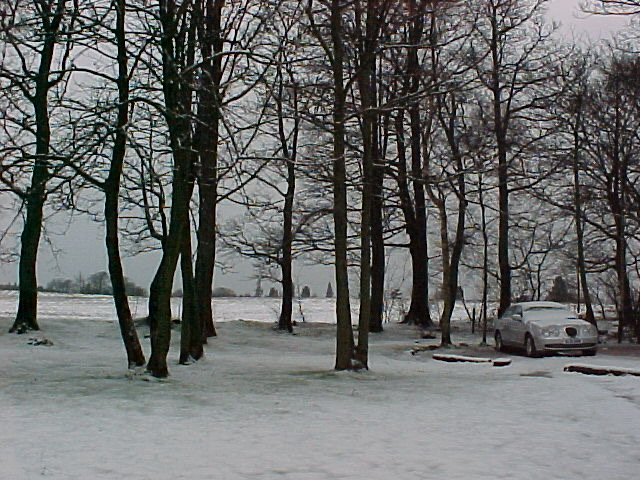 Before moving the Jaguar
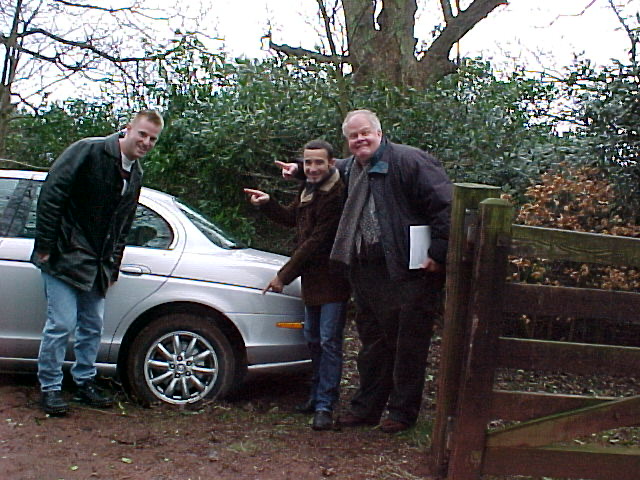 Stuck in the mud
Enter the Scottish Superhero
After what felt like an eternity, with the clock ticking ever closer to our departure time, someone pounded on The Pineapple’s heavy wooden door.
And I mean pounded.
The force of the knock suggested that whoever was standing on the other side might simply be able to pick up the Jaguar and carry it back to Edinburgh.
I opened the door. My assessment was not far off.
Standing outside in the snow was an enormous Scotsman who looked remarkably like the Gorton’s Fisherman had been personally dispatched to rescue us.
He surveyed the situation. The muddy lane was too narrow for his tow truck. We had two choices: find someone with a tractor or push the Jaguar out ourselves. The only person I knew who owned a tractor, my grandmother, was on the other side of the Atlantic.
We went with pushing.
The Scotsman instructed me to get behind the wheel and apply the accelerator very gently when he gave the word. Then he positioned himself behind a car weighing nearly two tons and, with what appeared to be only token assistance, somehow heaved the Jaguar back onto solid ground.
Within moments, we were free.
Before I could properly thank him, our Scottish superhero disappeared back down the snowy lane almost as quickly as he had arrived.
We took what was now truly our final look at The Pineapple, climbed into the rescued Jaguar and headed toward Edinburgh.
Concrete roads had never looked so luxurious.
Revisiting This Post in 2026: The Weekend That Stuck
Looking back, I remember surprisingly little about the meals or even the expensive car.
I remember the train hugging the North Sea. I remember Rhett and me wandering through Edinburgh Castle, trying to absorb the history of a city we could barely begin to understand in a weekend. I remember that enormous stone pineapple emerging from the darkness at the end of a muddy road. I remember waking to snow and having to walk outside just to get to the bathroom.
And, naturally, I remember sinking a two-week-old Jaguar into a Scottish ditch.
Twenty-four years later, The Pineapple makes even more sense to me as a travel destination than it did then. It wasn’t a castle at all, but an eccentric 18th-century architectural folly—an extraordinary piece of Georgian history that relatively few visitors to Scotland ever get to call home, even temporarily. Landmark Trust had made it just inhabitable enough for the modern world: electricity, plumbing and heat layered carefully into a building that still required you to step outside to cross from one room to another.
At the time, those quirks were inconveniences.
Today, they’re the parts I remember.
More than anything, though, I remember the company, the laughter and the feeling that we had stumbled into an experience none of us could possibly have planned quite this way.
A giant pineapple. Edinburgh. Fresh snow. A stranded Jaguar. Rhett beside me for all of it.
What a weekend.
Which, come to think of it, explains exactly why I booked it.