There are certain assumptions you make when you move to London. One of mine was that the British pound sat comfortably atop the world’s currencies — especially against the dollar at the time, which made living there painfully expensive.
So I assumed everywhere else in Europe had to be cheaper.
I was about to learn otherwise.
The Land of the Beautiful People
Sweden had a reputation for beautiful people, and within about five minutes of boarding the flight from London to Stockholm, I decided the reputation was justified. Even the passengers seemed unusually stylish, although not in the conspicuous designer way I had noticed in France and Italy.
Swedish style felt different: clean, restrained and almost deliberately uncomplicated.
The same turned out to be true of Stockholm.
The city’s complexity comes from its setting. Stockholm spreads across fourteen islands where Lake Mälaren meets the Baltic Sea, so water isn’t simply scenery; it is part of the city’s basic structure. Bridges, canals and ferries stitch neighborhoods together, and almost every turn seems to open onto another view across the water.
Stockholm was so photogenic that I went through two rolls of film that weekend, along with two memory cards in my new digital camera — someday I hope digital cameras will match 35mm so I’ll only need to lug around one.
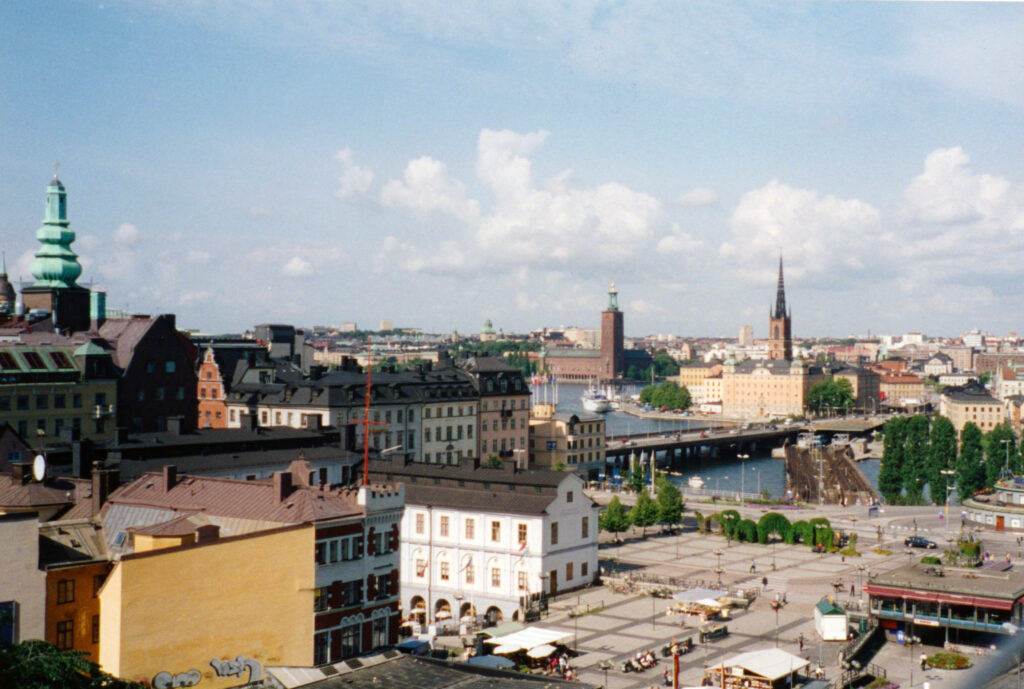 Stockholm stretched across the water, with City Hall and Riddarholmen on the skyline.
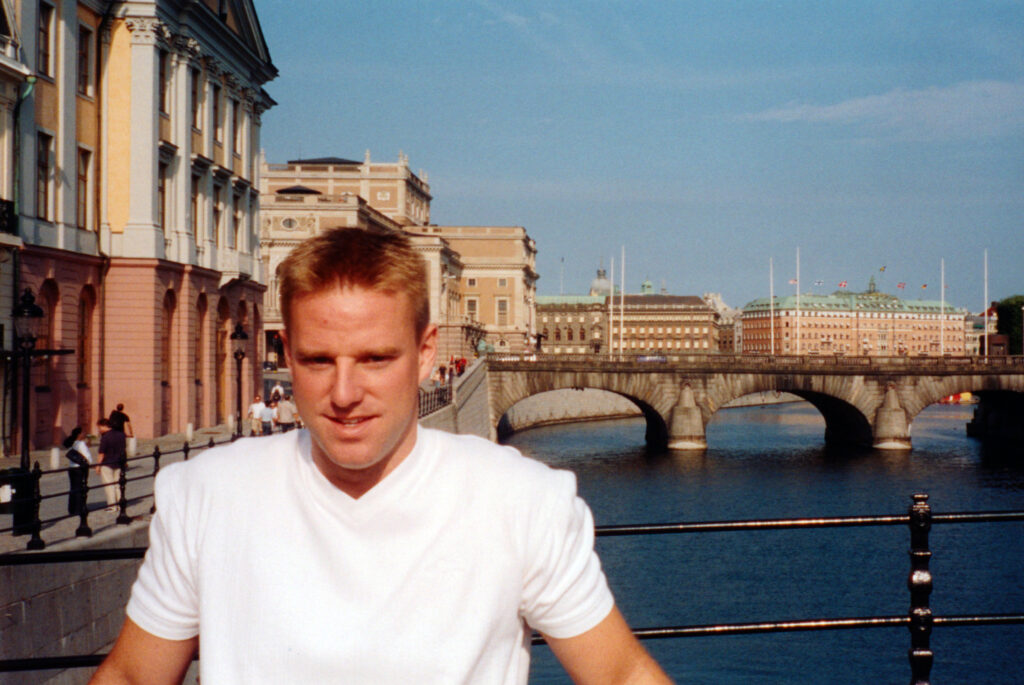 My first look at Stockholm: water, bridges and monumental buildings seemingly everywhere.
Simple Doesn’t Mean Plain
We had arrived Friday early afternoon which gave us the opportunity to dive into the Lonely Planet Pocket Guide and complete at least one of the famously detailed walking tours.
What struck me most about Stockholm was its restraint.
Florence had overwhelmed me with ornament — carved stone, frescoes, statues, domes, columns and buildings designed to announce the wealth and power of the people who commissioned them. Stockholm seemed to make the opposite argument: beauty didn’t have to prove anything.
The buildings were colorful without being gaudy, the streets elegant without feeling staged, and even the people seemed to follow the same aesthetic — stylish, but rarely showy.
Long before I knew anything about Scandinavian design, IKEA had opened in Pittsburgh and introduced me to a very different idea of aesthetic: pale woods, clean lines, simple shapes and objects designed around how people lived.
Walking around Stockholm, I began to realize that IKEA hadn’t invented that aesthetic. It just commercialized a northern European design tradition.
You could see it even in Gamla Stan, where Stockholm’s oldest streets twisted between narrow buildings painted in ochres, reds and yellows. The neighborhood was centuries old, yet much of it still felt remarkably modern still compared with the Renaissance spectacle I had just seen in Florence.
Outside the Old Town, that restraint became even more obvious: simple façades, strong geometric forms, generous windows (windows in London feel like an afterthought in comparison), uncluttered public spaces and an extraordinary amount of water and greenery woven directly into the city.
It also began to make sense why the Nordic countries had developed such a reputation for quality of life. Stockholm felt designed around living rather than simply impressing — walkable neighborhoods, public waterfronts, parks, bicycles, ferries and beautiful everyday spaces that people actually used.
But simple didn’t mean plain. In Stockholm, simplicity was the point.
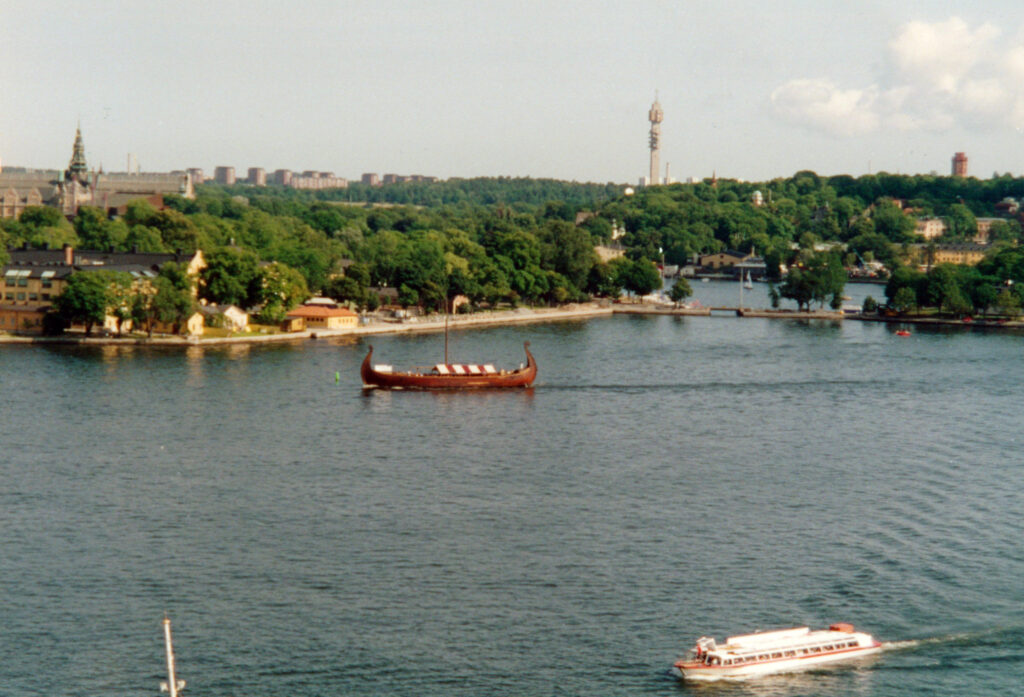 Stockholm’s green islands and waterways made the city feel unusually close to natur
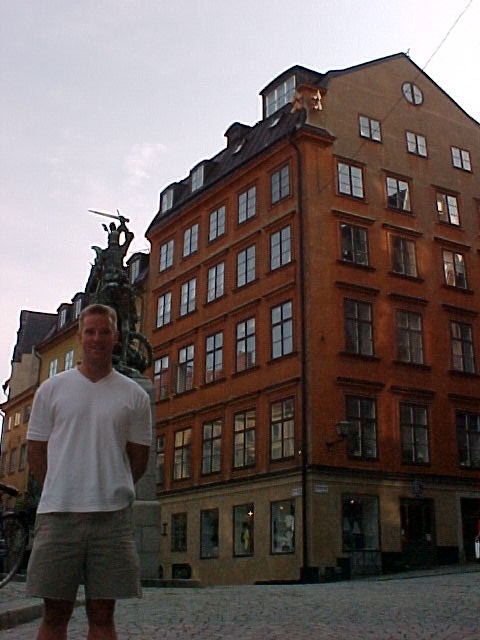 The warm-colored buildings and cobblestone streets of Gamla Stan.
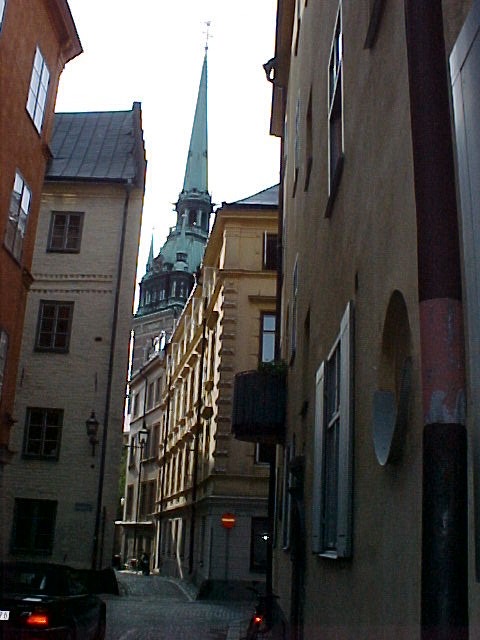 One of Gamla Stan’s narrow streets, where Stockholm’s medieval footprint is still easy to see.
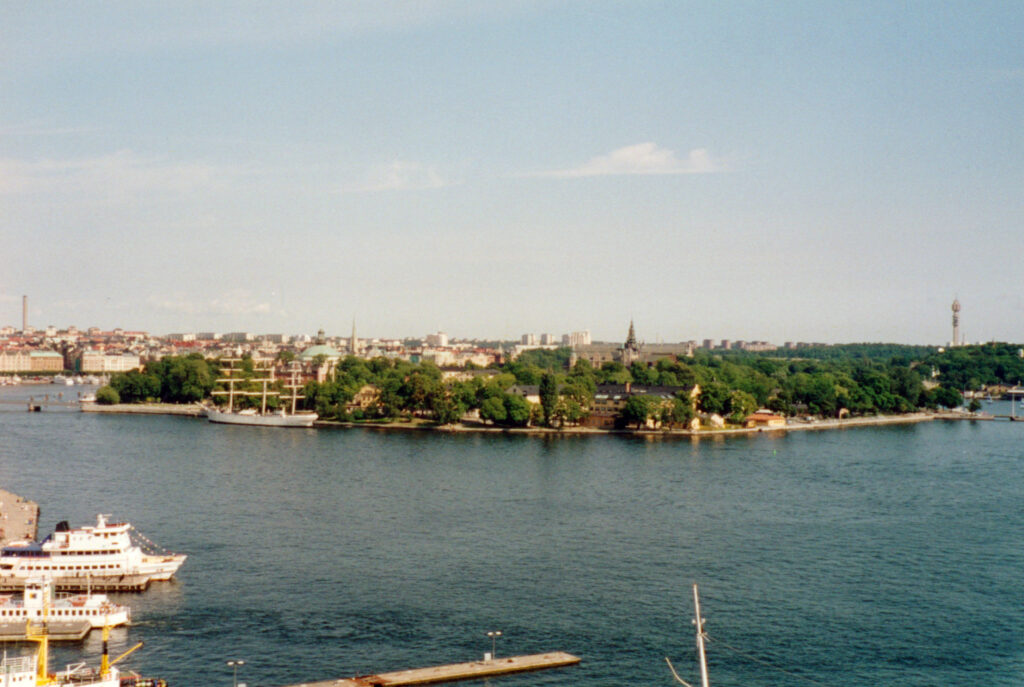 Looking across Stockholm’s islands — blissfully unaware that I was also conducting an expensive experiment in international currency exchange
A Minor Misunderstanding About Money
Living in London had accustomed me to the pound being painfully valuable, and somewhere along the way I turned that observation into a completely unsupported economic principle: every other currency must therefore be worth considerably less.
Sweden used kronor, and kronor came in reassuringly large numbers. That seemed like enough information.
Stockholm’s stores were filled with exactly the sort of clothes I had been admiring on everyone around me: simple, modern, beautifully made and free of unnecessary embellishment. So I shopped. And I mean I shopped — beautiful merino wool sweaters and enough new clothes to return to London with a Scandinavian wardrobe makeover substantial enough to suggest I had personally discovered Nordic design.
About a month later, my credit-card statement arrived.
Apparently the Swedish krona had not agreed to participate in my theory of global monetary policy. My wardrobe refresh eclipsed even my mortgage payment that month.
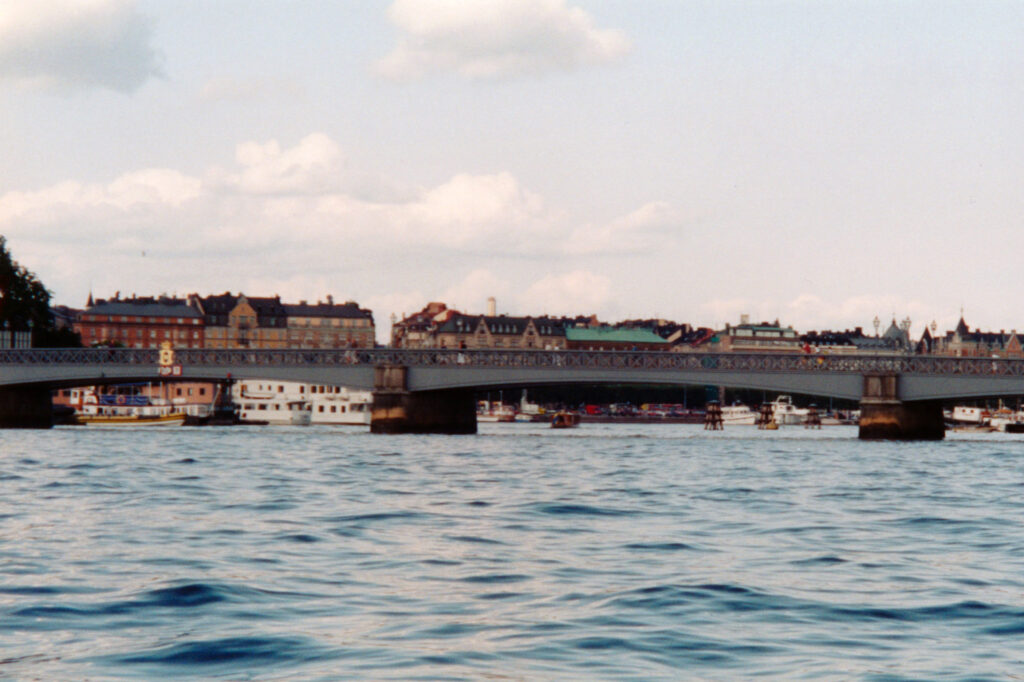 Numerous bridges connect neighborhoods
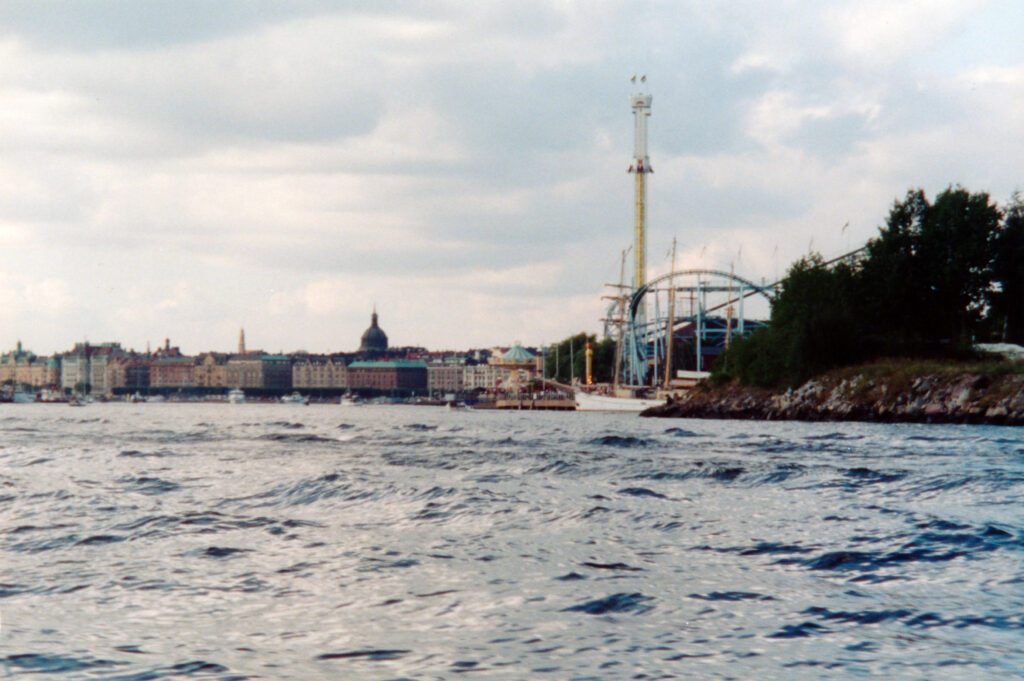 Gröna Lund on Djurgården Amusement Park
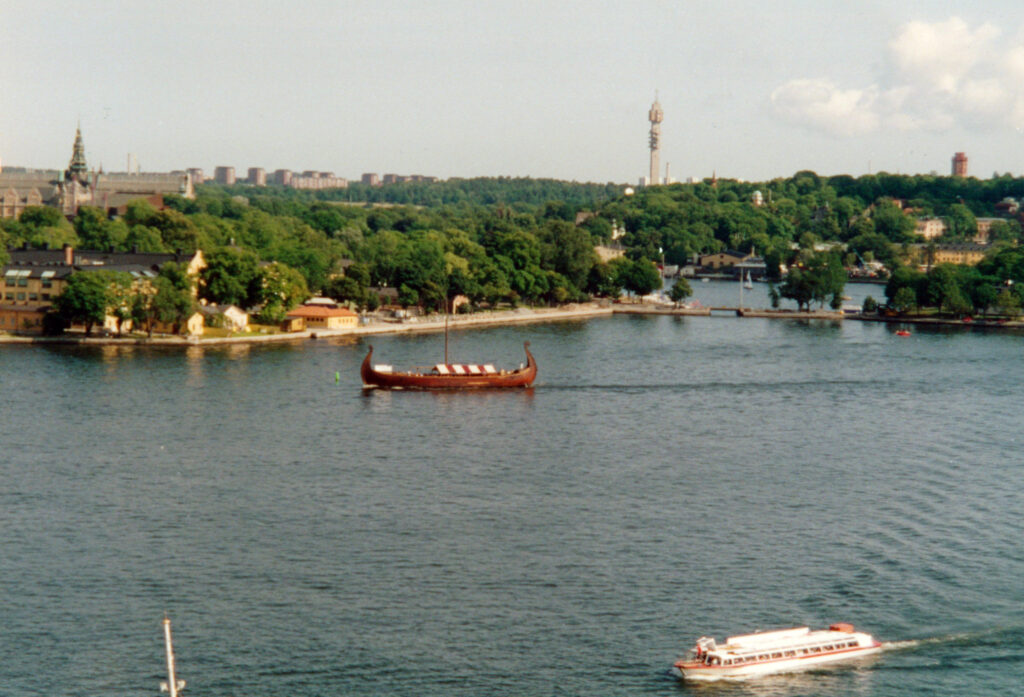 Homes rising directly from the rocky shoreline.
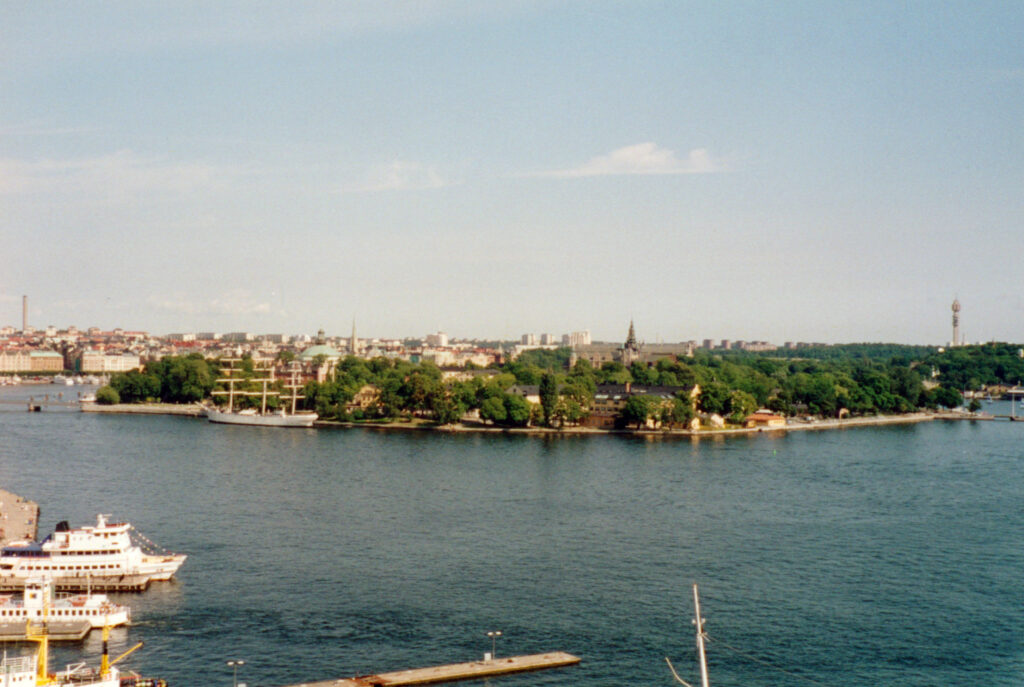 City intertwined with the sea
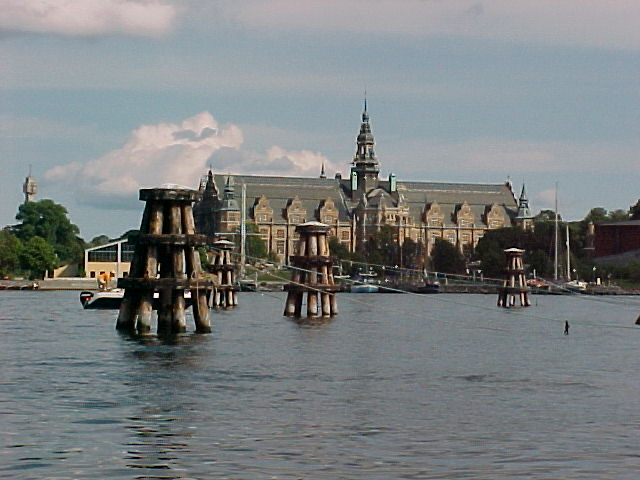 Buildings appear to float
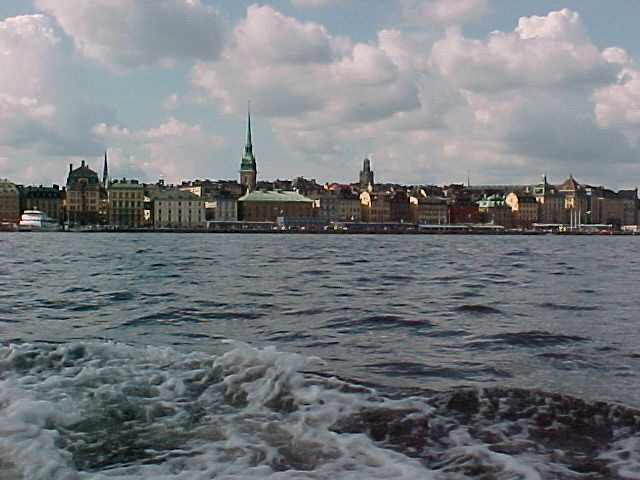 Neighborhoods abut open water
Saturday by Water
I suppose you could go to Stockholm and ignore the water, but I wouldn’t recommend it. In a city divided among islands, getting on a boat isn’t simply a peaceful way to sightsee; it’s one of the fastest ways to understand how Stockholm fits together.
The water explains why the city is here in the first place. Stockholm grew around the narrow passage where Lake Mälaren meets the Baltic Sea, a strategic position that allowed it to control trade between Sweden’s interior and the wider Baltic world. Ships carrying iron, copper and other goods from inland Sweden passed through here on their way to European markets, earning medieval Stockholm a reputation as the “lock of Mälaren.” Water wasn’t something Stockholm eventually learned to accommodate; it created the city.
We hired a boat and headed out among the islands, where Stockholm seemed to alternate effortlessly between city and nature. Blocks of stately buildings gave way to rocky shorelines and dense trees, only for another neighborhood, palace or church spire to appear across the next stretch of water. We passed Gröna Lund on Djurgården, its amusement rides looking almost surreal against the historic skyline, and continued weaving between islands until Stockholm began to feel less like a single city than a collection of neighborhoods floating across the sea.
Somewhere along the way I became so distracted by the views that I violated one of my fundamental rules of travel: make sure I’m in most of the photos. The few pictures of me that day came after we got off the boat, including one at Nationalmuseum and another underground in what looked like the ruins of some forgotten building.
Back on land, Nationalmuseum offered something different from the collections I had been seeing elsewhere in Europe. Alongside familiar European masters were Swedish artists such as Carl Larsson, Anders Zorn, Ernst Josephson and Carl Fredrik Hill, giving me a chance to see the country through painters I barely knew before arriving. I liked the collection enough to buy the museum’s official book, adding to my rapidly growing collection of coffee table books from the world’s leading museums.
On the Metro ride back to the hotel, we entered through Kungsträdgården station and discovered that Stockholm’s fascination with art extended underground. Carved deep into the bedrock, the station was designed by artist Ulrik Samuelson as a kind of archaeological collage, filled with columns, sculptures and architectural fragments recalling buildings that had disappeared from the city above.
Much of the imagery refers to Makalös Palace, the enormous 17th-century palace that once stood beside Kungsträdgården before later becoming a theater and burning in 1825. Some genuine fragments from demolished Stockholm buildings were incorporated into the station alongside replicas and artistic reinterpretations, creating something that felt less like public transportation than a ruin discovered beneath the city.
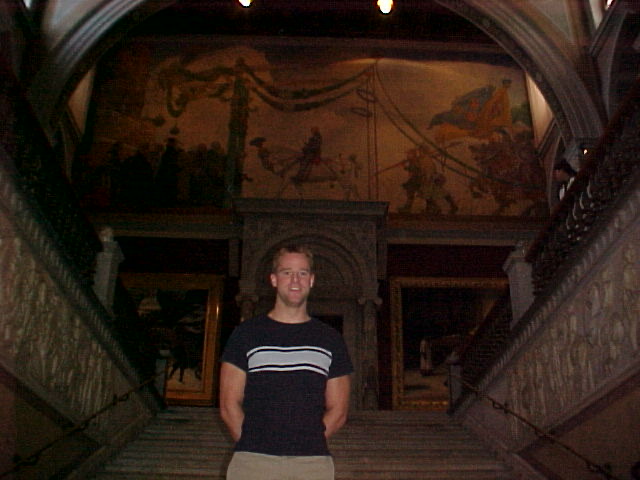 Inside Stockholm’s Nationalmuseum
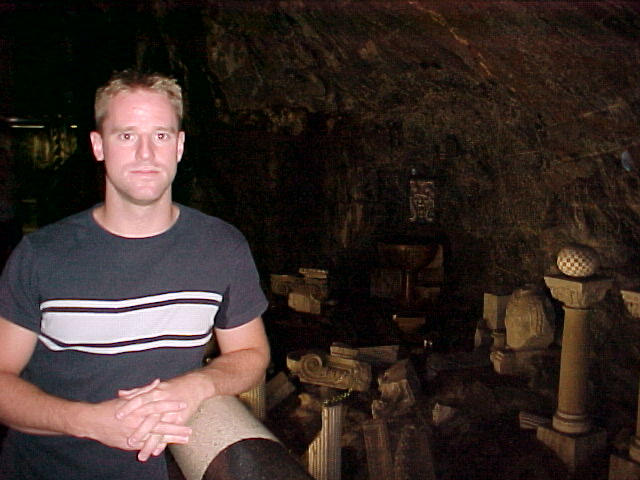 Kungsträdgården metro station requires very serious looks(?)
Six Walking Tours on Two Wheels
If Saturday was about understanding Stockholm from the water, Sunday was about connecting everything on land. Our Lonely Planet Pocket Guide offered eight different walking tours of the city, far more than we could reasonably do in a day. Then we saw bicycles and realized the walking tours didn’t actually have to be walked.
We rented bikes, examined routes and figured that with Stockholm’s bridges, bike paths and compact neighborhoods we could knock out six of the eight in a single day. It turned out to be one of the best ways I had found to explore a European city: fast enough to cover real distance, slow enough to notice what you’re passing, and easy enough to stop whenever something looks interesting or delicious.
And in Stockholm, something looked interesting constantly. We crossed bridges, rode through old neighborhoods and eventually entered the enormous green spaces of Djurgården, where the city seemed to disappear surprisingly quickly behind trees, fields and waterfront paths.
Djurgården’s landscape wasn’t an accidental patch of green left behind by development. Swedish kings had controlled the land for centuries, eventually turning it into a royal hunting ground stocked with deer and other game. Later generations gradually transformed it from an exclusive royal landscape into a place associated with taverns, recreation, theater, music and public entertainment. An evolution of use that explains why museums, amusement rides, historic homes and remarkably wild-looking parkland all coexist there today.
That history also explains why Djurgården feels less designed than preserved. There is no single architect or master plan behind what we were riding through; instead, centuries of royal ownership protected large pieces of landscape while Stockholm grew around them. Places such as Rosendal Palace added another layer of architecture and gardens, but the dominant design element remained the landscape itself.
Today Djurgården forms the southern heart of the Royal National City Park, a protected ribbon of forests, fields, historic buildings and waterfront stretching through the capital. It became the world’s first National City Park specifically because Stockholm had managed to retain something increasingly rare in a major city: a huge interconnected landscape valuable not only for nature and history, but simply for people to use.
Riding through it made another part of Stockholm’s appeal click for me. Here was a European capital where you could spend the morning exploring museums and centuries-old neighborhoods, ride a bicycle for a few minutes, and suddenly find yourself under old oak trees beside the water.
We weren’t choosing between sightseeing and spending a day outdoors.
Stockholm had designed itself so anyone could do both.
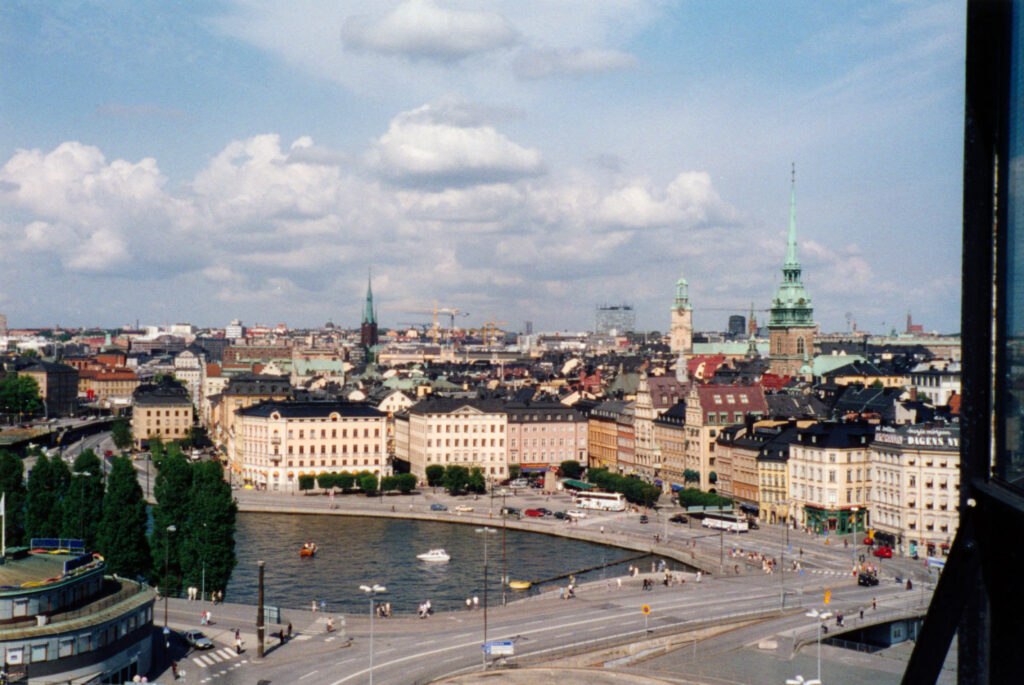 One of the wide views across Stockholm that kept interrupting our tour
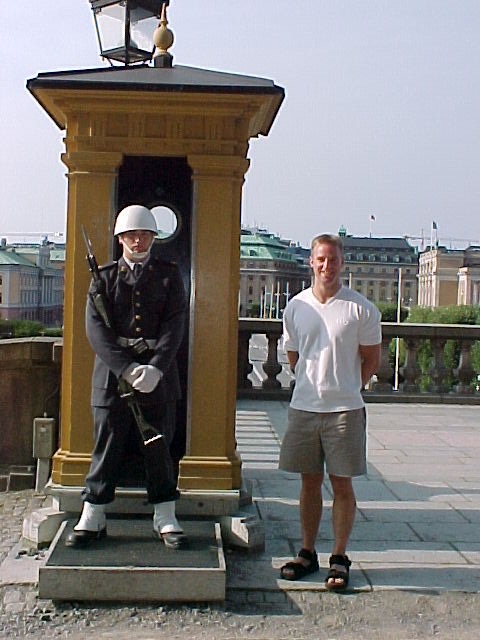 Swedish Palace guard
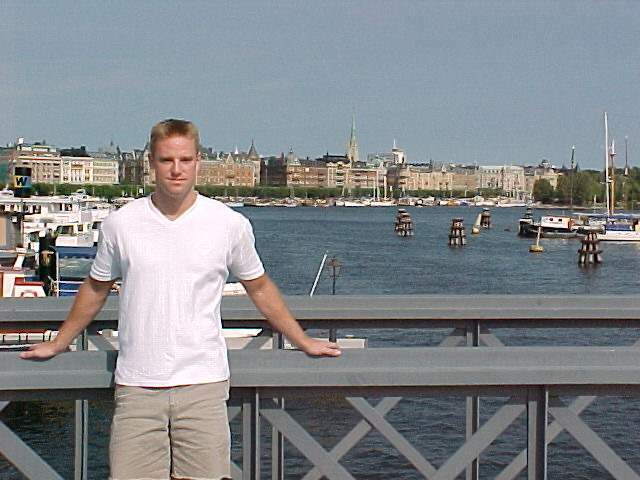 Recruiting a passing Swede as our temporary photographer.
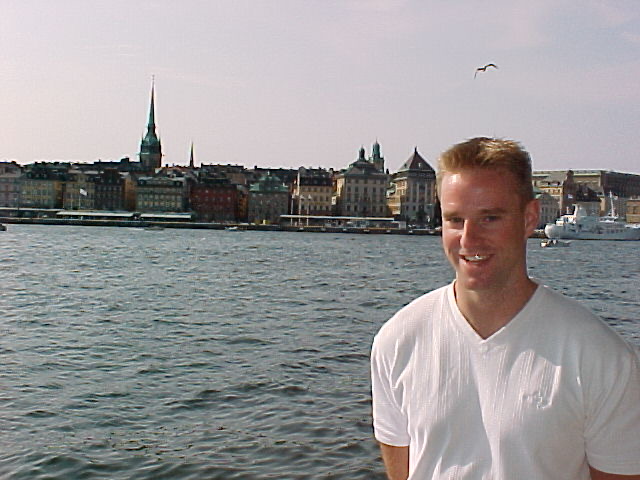 City intertwined with the sea
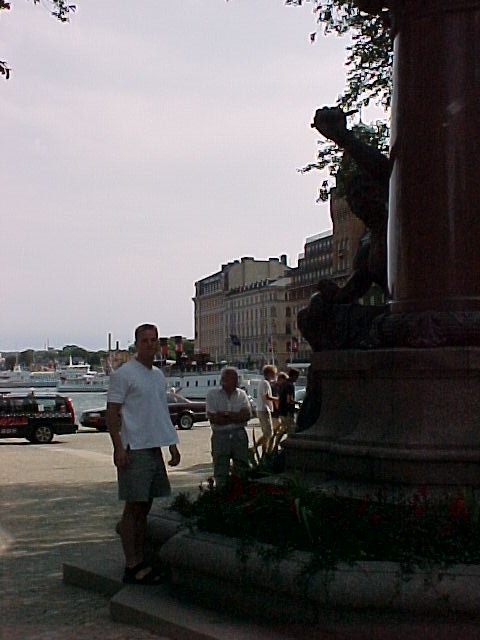 Stockholm on foot
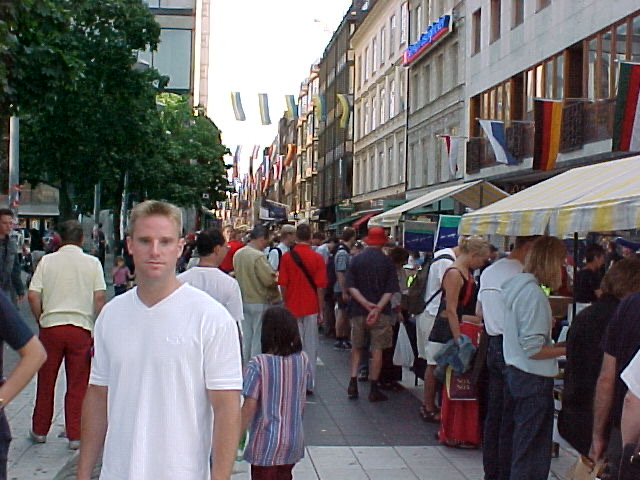 Shopping Streets
Guards, Meatballs, and a Boat in the Rain
One thing I kept noticing throughout Stockholm was how friendly people were. Whenever I tried balancing my camera on a wall, bench or whatever object looked vaguely stable enough to take a timed photograph, some passing Swede would inevitably stop and offer to take it for me instead. It happened often enough that by Sunday I had apparently outsourced much of my travel photography to the citizens of Stockholm.
The most surprising example came at the Royal Palace. Designed largely by Nicodemus Tessin the Younger in a restrained Roman-inspired Baroque style, the enormous symmetrical palace manages to feel imposing without the theatrical ornament I had just seen in Italy. Even more surprising were the Royal Guards: one actually took my camera and photographed me standing with another guard. After months of watching the famously rigid guards outside London’s royal palaces, this seemed almost subversive.
Somewhere between the palace, parks and bridges, I inevitably found the shopping streets again, which given my complete misunderstanding of the exchange rate was becoming increasingly dangerous. Food was considerably less hazardous. Throughout the weekend we stopped at cafés, restaurants and late-night stands trying to eat as Swedish as possible, including the classic combination of meatballs, mashed potatoes, gravy and tart lingonberry jam. It sounded strange but tasted amazing.
By Sunday night the weather had turned, but Stockholm still had one more surprise. We found a boat moored near the Old Town with a rooftop restaurant, sat outside having drinks in the rain, and then discovered that below deck was one of the city’s large dance clubs. A floating nightclub in the rain seemed like an entirely appropriate way to finish a weekend in a city built around water, so we went downstairs.
When London Became Home
Monday afternoon I flew back to London, and that evening over dinner at Pizza Express something unexpectedly important registered.
London felt like home.
Only a few months earlier I had arrived there as an American temporarily living overseas, learning my neighborhood, deciphering the Tube and trying to make a foreign city feel familiar. Now I could disappear to Sweden for a long weekend, land back at Heathrow and feel the unmistakable comfort of returning somewhere that belonged to my everyday life.
But the biggest surprise came after I left. I wasn’t returning to London anymore.
I was home.
Looking Back from 2026: Simplicity, With Interest
Twenty-five years later, what I remember most clearly about Stockholm is how coherent the city felt.
The water, architecture, parks, bicycles, clothing and even the way people presented themselves all seemed to share the same basic idea: good design didn’t require excess.
I understood that aesthetically in 2001.
Financially, it took another month.
Those four merino sweaters survived for years, which at least allowed me to retroactively classify the entire incident as an investment rather than an exchange-rate catastrophe. I still had one in circulation until last year, moving out of the Crown house I finally let it go.
And the bicycle day has stayed with me for another reason. We weren’t racing through Stockholm to check attractions off a list. We had simply found a better way to connect experiences that had originally been presented to us as separate walking tours.
Six Lonely Planet walks became one long ride through a city of islands. Twenty-five years later, that still is my preferred way to explore new cities and landscapes, most recently in Bordeaux.