Two Guides, One Paris
Paris has been sitting there just across the Channel since I moved to London, but somehow I’m only now getting there. This will be my first visit as an adult, and I should be spending the week reading guidebooks, studying maps and figuring out exactly what I want to see.
Instead, I’m helping coordinate the merger of J.P. Morgan and Chase Manhattan Banks, which, believe me, leaves very little time for contemplating the finer points of French art, architecture, and history.
Fortunately, I’m traveling with two people who render advance planning almost unnecessary. Rhett, my next-door neighbor and a professor of European history back in Washington, has approached the weekend with the kind of methodical preparation I normally reserve for travel agents. He knows the history, understands what we are looking at and has a very definite idea of what I absolutely cannot leave Paris without seeing.
Alex, whom I’m dating, brings an entirely different kind of expertise. His dear friend Christoelle lives in Paris, which means once he arrives we will meet up with her then have an actual Parisian showing us the cafés, restaurants, neighborhoods and places people here go when they aren’t standing in line for the Eiffel Tower.
Rhett can explain how Paris became Paris.
Christoelle can show us how Paris lives now.
Could you imagine a better way to first experience the city of lights as an adult? Well, almost adult: I’m in my 20s.
Waterloo, Naturally
Alex is delayed by his work in television production, so he will follow us on a later Eurostar and return to London before we do. That leaves Rhett and me making both ends of the journey together, beginning Friday evening at Waterloo Station, which in 2001 is still the London terminal for the Eurostar.
And yes, every single time I hear the word Waterloo, ABBA immediately begins playing in my head.
I meet Rhett in the terminal, greet him enthusiastically and head straight toward the checkin desks. He follows for a few steps before looking up at the sign.
“What are we doing? This is the first-class queue.” he questioned with one eyebrow raised and added emphasis on the British word for what Americans call a line.
“Welcome to Deloitte travel,” was all I needed to say.
We both laughed but I was only partly kidding. It turns out the first class train tickets in Europe are only 10% to 20% more than a standard class. Not the 200% to 500% more to fly in first class and there are a lot of perks so I highly recommend only traveling in first class on the European rail networks.
Once aboard, we settle into our seats and discover that first class on a European train may be one of civilization’s better ideas. The difference from coach isn’t simply a wider seat. There is meal service, wine service and an actual waiter circulating through the car.
When it’s our turn for service, in a heavy French-English accent he presents us in with a choice between English cheeses and wines or French cheeses and wines.
Rhett looks at him and, in French, asks, “Le vin anglais, ça existe vraiment?” — Does English wine even exist?
The waiter smiles.
“Not if you ask me.”
From that moment forward, we become his favorite passengers. Plates of French cheese begin appearing. Then additional courses. Then more wine. Somewhere along the way our simple train trip to Paris turns into a rolling French tasting menu, paired with enough wine that I begin wondering whether Rhett and I will actually be capable of exiting when the train stops.
It turns out Paris is a remarkably effective sobering agent.
Paris After Dark
We arrive Friday night, but not so late that either of us is willing to waste our first hours in Paris by going directly to bed. We drop our bags at the hotel and head back out with no real itinerary other than walking until something interesting presents itself.
Paris does not make us wait very long.
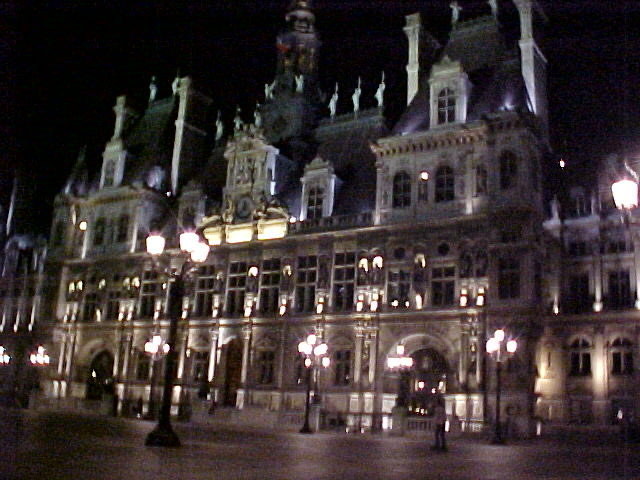
The name City of Light sounds suspiciously like tourism-board hyperbole until you actually walk through Paris at night. Buildings aren’t simply illuminated; their architecture seems designed around the light. Statues emerge from shadows, bridges reflect in the Seine and entire façades glow against the dark sky.
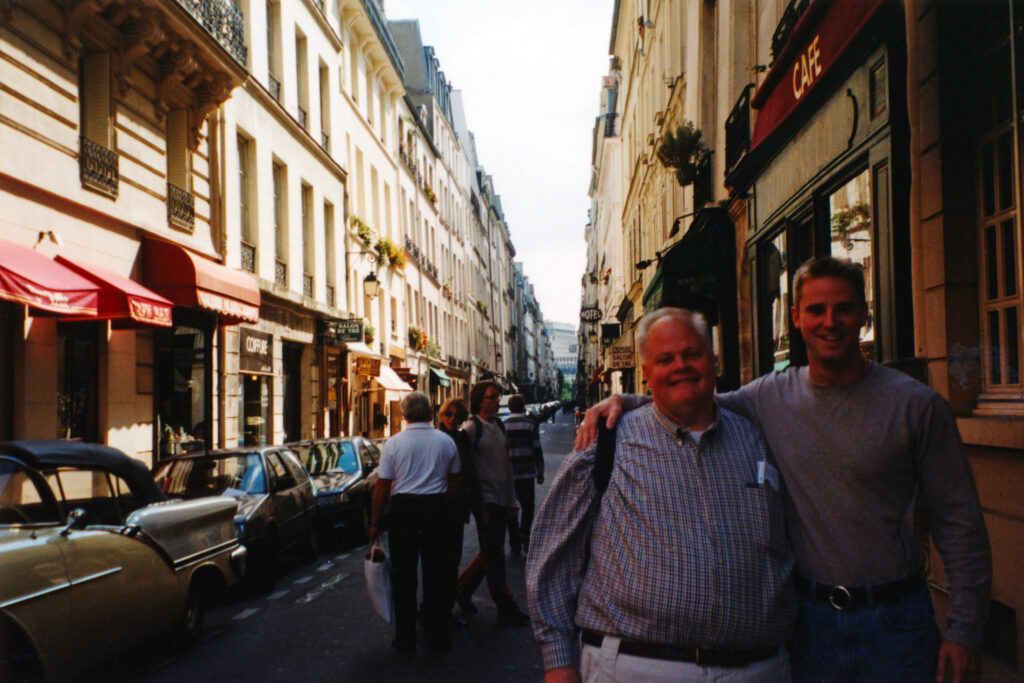
We wander toward the Left Bank, stop at one of its famous cafés and do very little beyond drink, talk and take in the city around us. After the frenzy of work in London and the abundance of our moving feast on the Eurostar, doing almost nothing feels perfect.
Tomorrow we can start learning Paris.
Tonight, I just want to look at it.
The Professor’s Paris
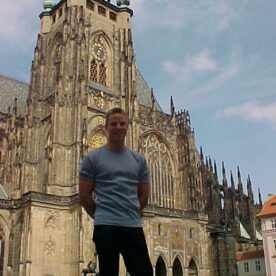
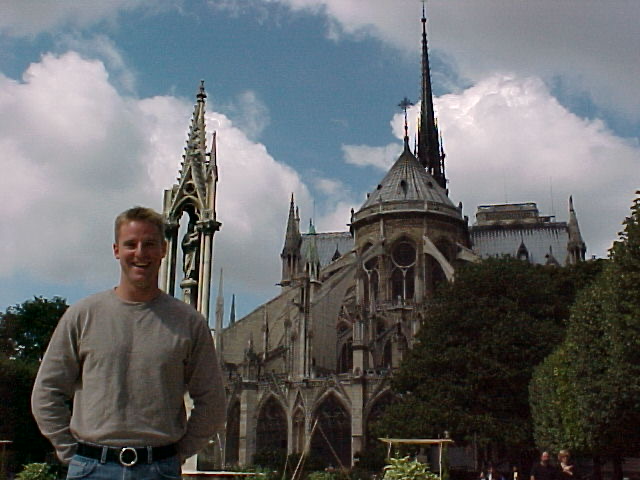
Saturday morning begins on the Île de la Cité, the island in the Seine around which medieval Paris developed. From our hotel we cross a short bridge and suddenly find ourselves standing in the oldest heart of the city.
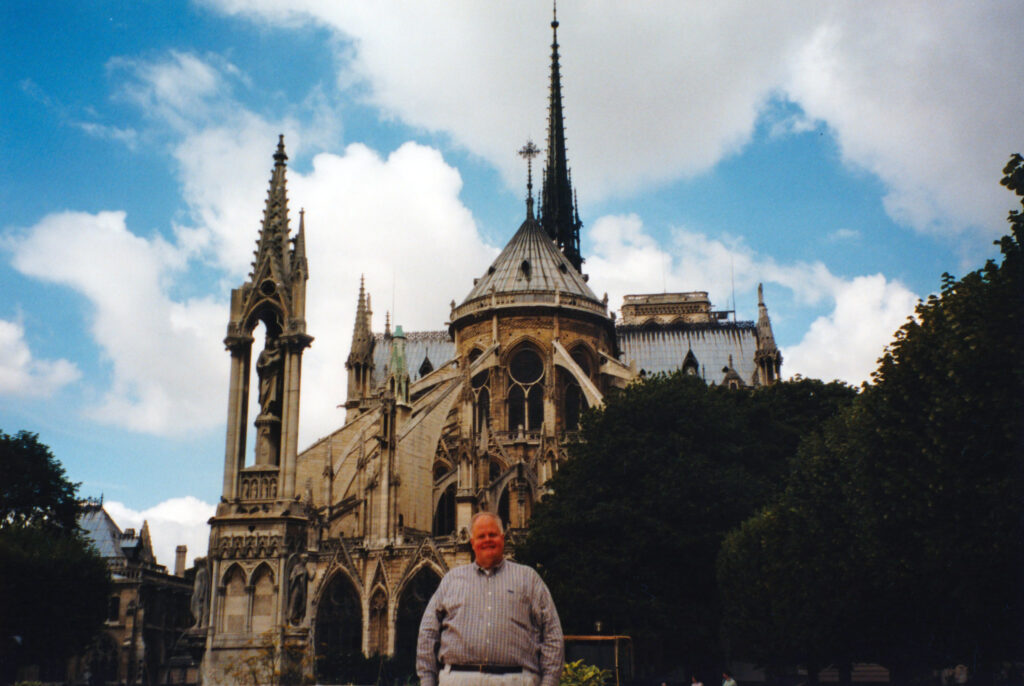
Notre-Dame dominates the island, and even after centuries of photographs, paintings and postcards, its scale is different when you are standing beneath it. We tour the cathedral and then do something wonderfully Parisian and remarkably simple: buy pastries and eat breakfast outside in the churchyard.
Traveling with Rhett changes places like this. He doesn’t simply know when something was built; he understands why it mattered. A cathedral becomes part architecture lesson, part political history and part explanation of how religion and power shaped medieval Europe.
Then you walk upstairs and almost forget all of that.
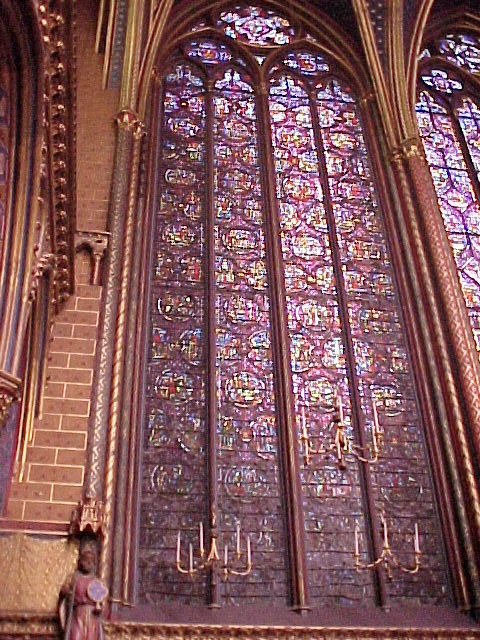
The walls seem to disappear into stained glass. Vast windows rise between impossibly narrow supports, flooding the upper chapel with colored light and making the Gothic ceiling appear as though it is floating above us.
This is exactly why having a European-history professor as your next-door neighbor is useful.
Only a few minutes away we also visit Sainte-Chapelle, built in the 13th century by King Louis IX to house some of Christianity’s most important relics, including what was believed to be Christ’s Crown of Thorns. The chapel was therefore more than an extravagant act of faith. Possessing relics of that stature strengthened the French monarchy’s claim to spiritual as well as political importance.
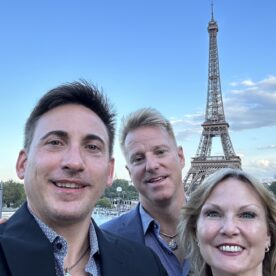
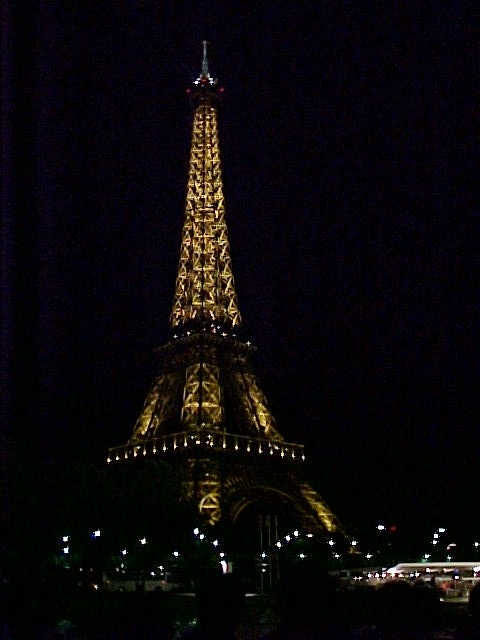
From medieval Paris we jump several centuries and head toward the most conspicuous monument in the city. Christoelle meets us near the Eiffel Tower, and Rhett and I make absolutely no effort to pretend we are too sophisticated for one of the world’s largest tourist attractions.
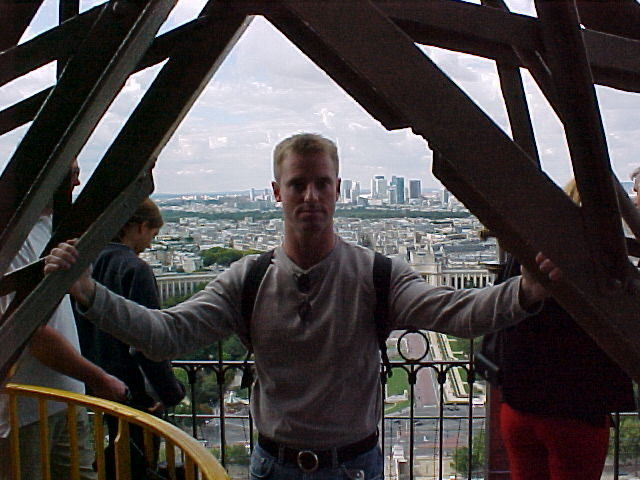
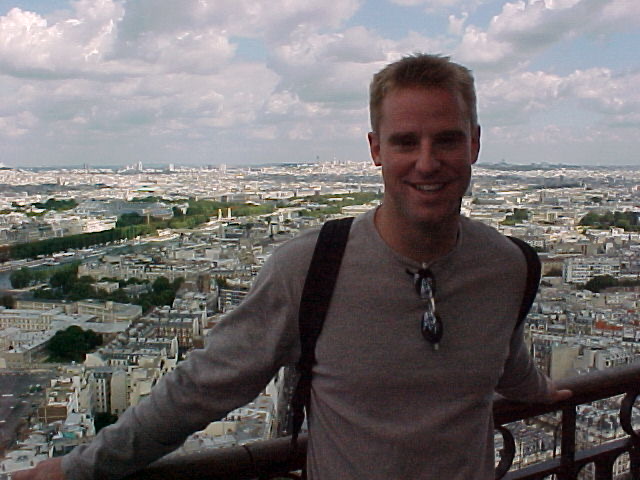
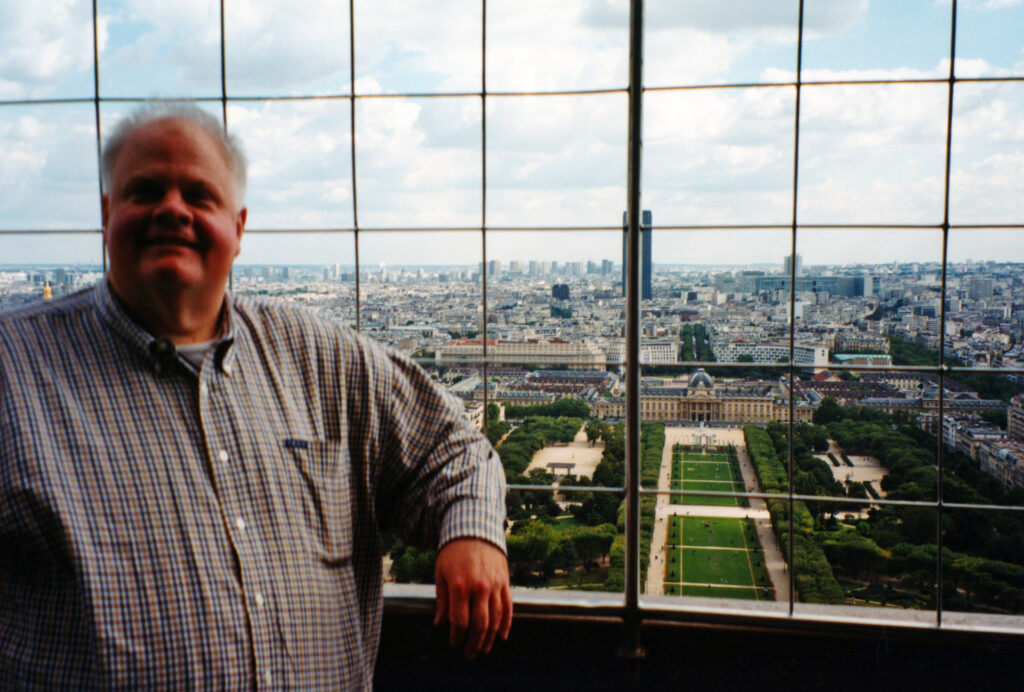
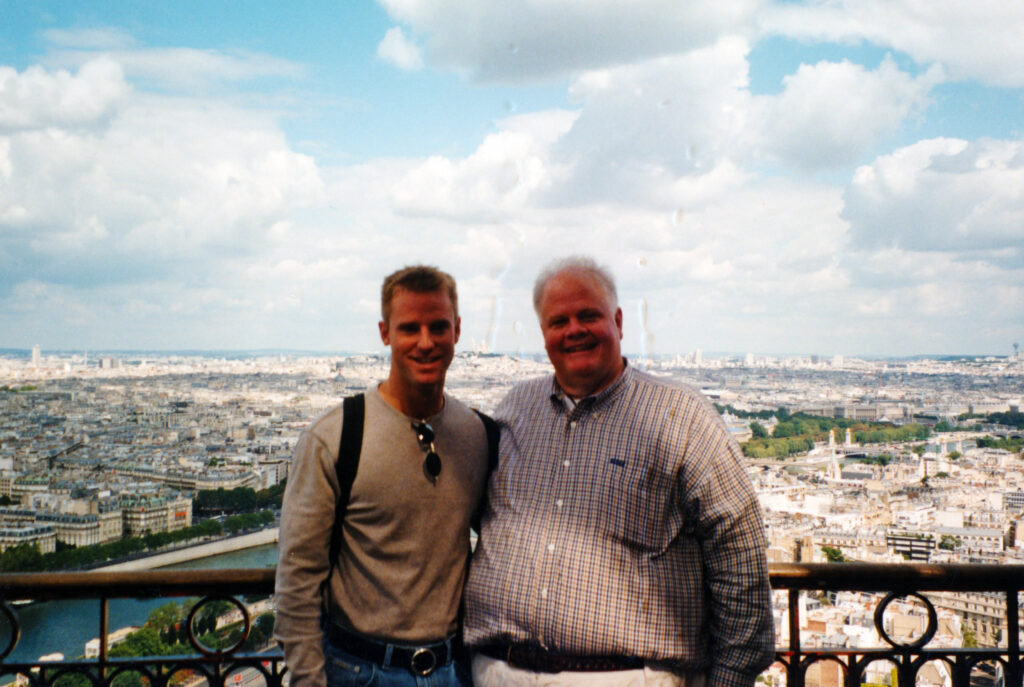
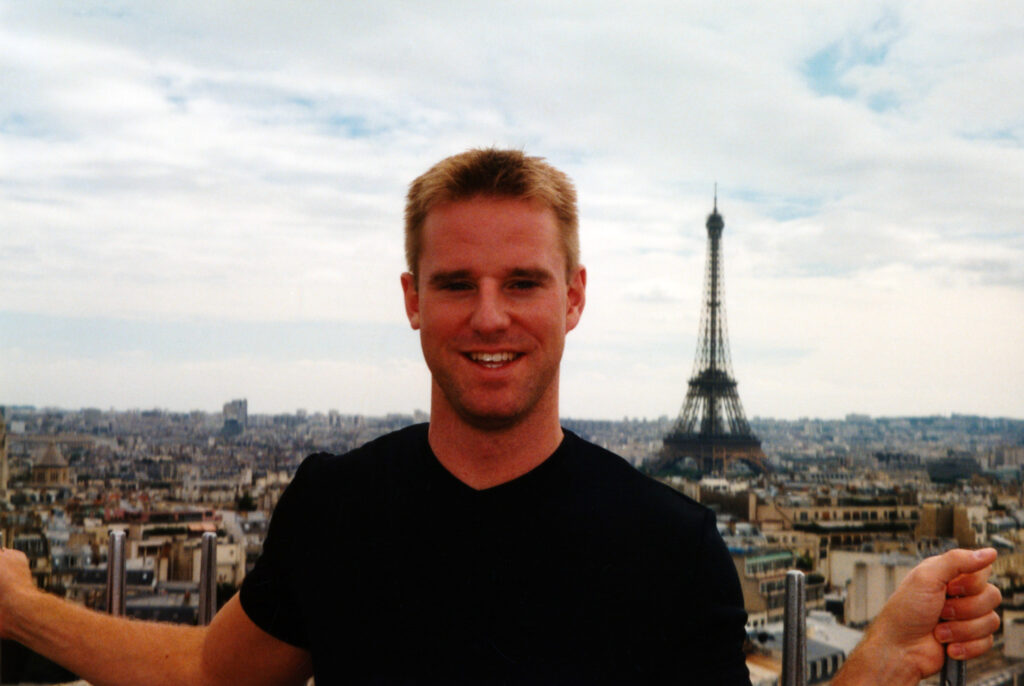
We are going to the top. From above, Paris suddenly makes geographic sense. The Seine curves through a landscape of monuments, boulevards and remarkably consistent rooftops, the city spreading in every direction below us.
Naturally, we also take the photograph that every tourist with questionable judgment eventually takes.
A Parisian’s Paris
With Christoelle joining us, the weekend shifts.
Rhett has spent the morning showing us the Paris of kings, cathedrals and medieval relics. Christoelle now starts introducing us to the Paris of cafés, food, fashion and neighborhoods.
Lunch is Champagne, foie gras and the kind of long meal that makes American dining seem unnecessarily rushed. At a neighboring table, a beautifully dressed woman prepares to leave by simply standing and waiting until the restaurant staff rearranges the furniture around her so she can make her exit without troubling herself.
I take careful notes in case I ever need to make a dramatic exit later in life.
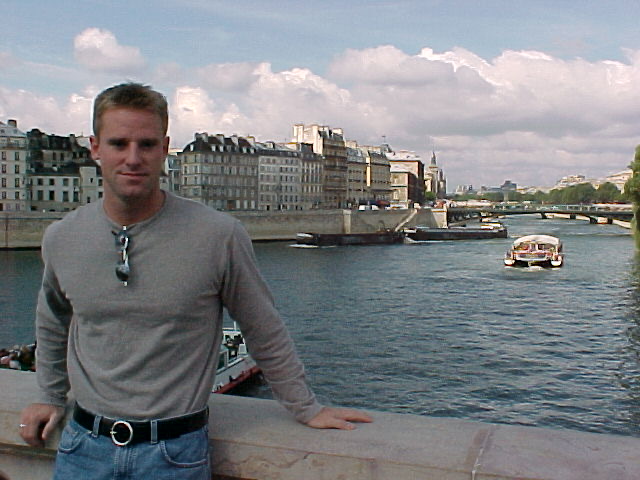
By evening we are back along the Seine, this time seeing Paris from the water. The effect of the lighting that impressed Rhett and me the previous night becomes even more dramatic from a boat. Reflections stretch across the river, bridges appear out of the darkness and the Eiffel Tower glows above the city.
Paris may have spent the day teaching us its history, but at night it seems far more interested in showing off.
After the cruise, Alex and I head out to sample some of Paris’ famous gay nightlife that Christoelle recommends. Rhett sensibly exercises academic judgment and turns in for an early night. Or as early as you can have in Paris.
Modern Art and Monumental Views
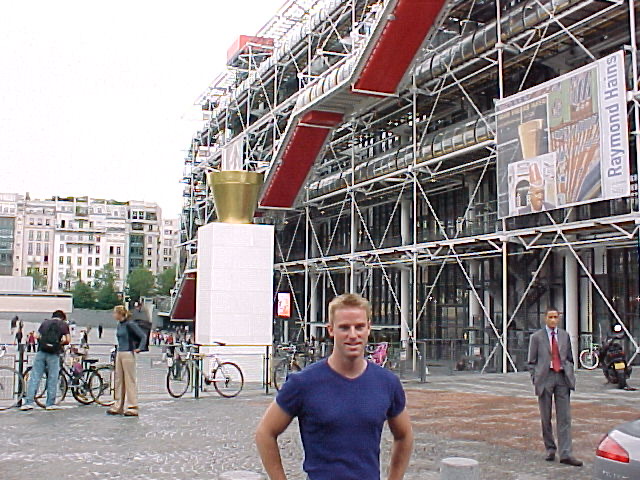
Early Sunday morning we decide to divide and conquer. Rhett heads off to do some research leaving Alex and I to ourselves. We head directly to the Centre Pompidou, the attraction I am most excited to explore. Even the building, whose radical “inside-out” architecture — once detested by Parisians — is now yet another of the world’s most recognized landmarks. And yes, it is a bit ugly.
But I love it before we even walk through the door.
Inside, we spend far too much time at a traveling exhibition devoted to Alfred Hitchcock and the visual techniques behind his films. What is supposed to be one stop becomes several hours, and then the permanent collection delivers Matisse, Dalí, Kandinsky, Warhol and one recognizable modern masterpiece after another.
This is my kind of museum.
I was going to pick up the book of the museum’s official collection. I didn’t want to lug the large coffee table format book around so decided to return later only to find the museum closed. (Re-reading this post in 2026 I realize this would happen to me on two later visits to Paris as well, one with my mother and even the latest trip with Ramiro and Michelle. To this day Centre Pompidou remains the only official museum catalog that I don’t own.)
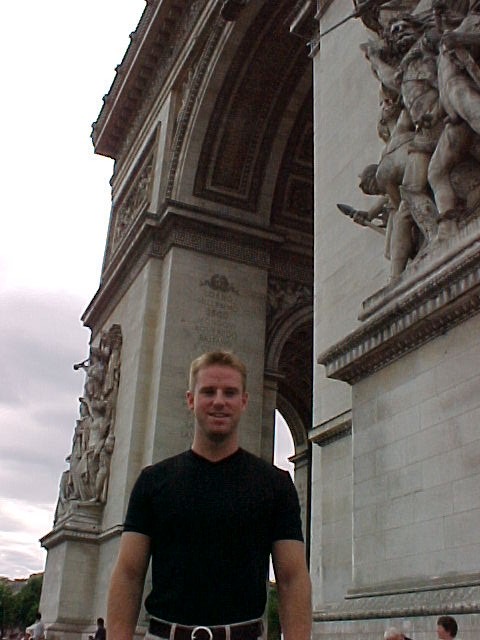
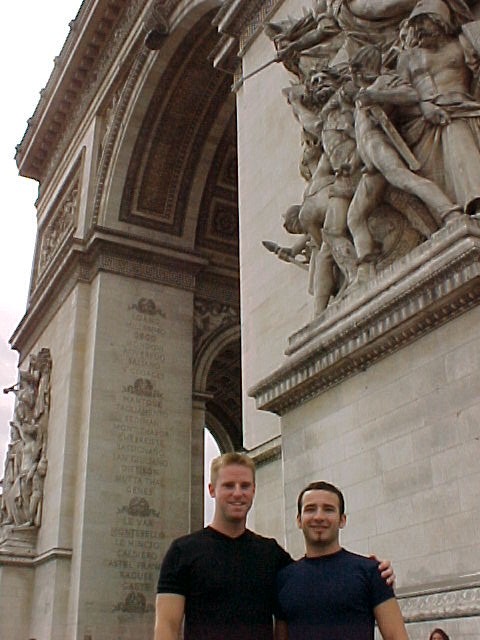
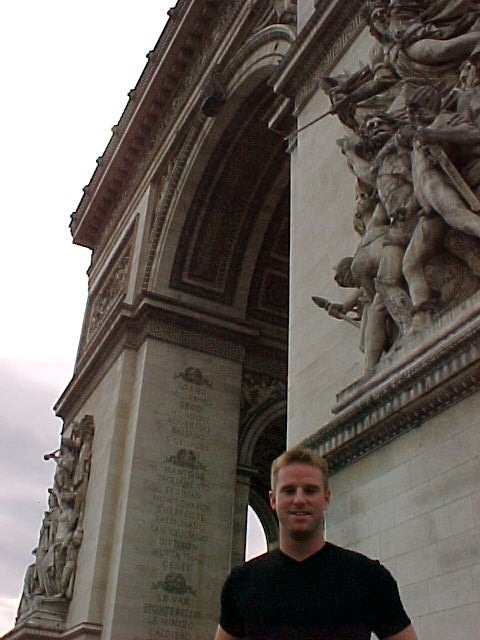
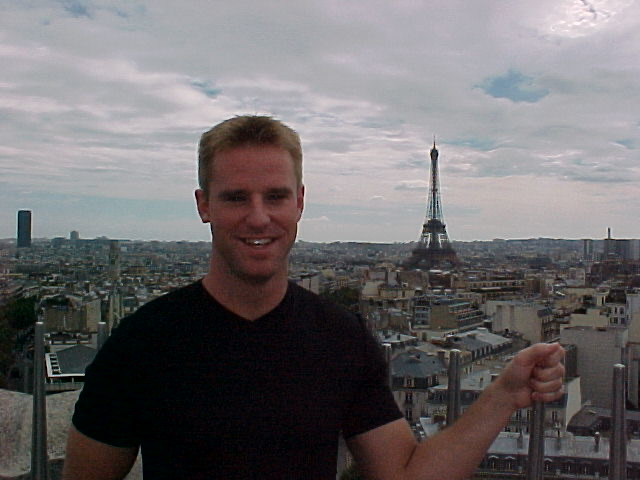
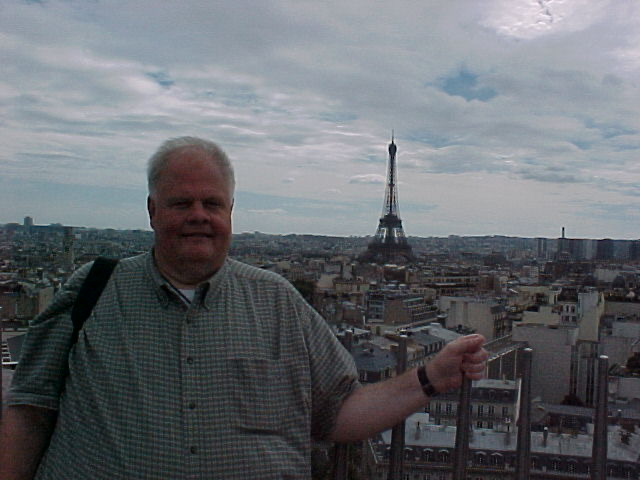
Eventually we reunite with Rhett and Christoelle at the Arc de Triomphe. Standing at the center of the radiating avenues planned through Paris, the Arc is less an isolated monument than the anchor of an enormous piece of urban theater.
Obviously we climb it.
Well, we take the elevator up. We walk down though, which definitely counts.
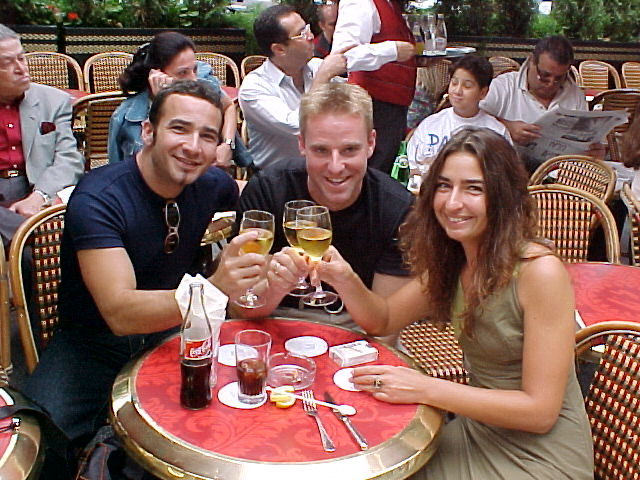
From there we continue along the Champs-Élysées, where Paris performs yet another personality change. Medieval churches and revolutionary monuments give way to fashion, cafés, expensive storefronts and perhaps the world’s most famous avenue for seeing and being seen.
I do my part.
Just Rhett and Me Again
Alex has to return to London Sunday evening, leaving Rhett and me alone again for the final part of the weekend.
We decide to have a proper French dinner at Les Philosophes on Rue Vieille-du-Temple in the Marais. It is exactly the sort of bustling Paris neighborhood restaurant I had hoped we’d find, and I order the steak tartare.
As we’re walking in, Rhett gestures grandly toward the door.
“After you, mademoiselle.”
Without missing a beat, I reply, “Merci beaucoup, MADAME!”
Rhett loses it.
I’m rather pleased with myself, both because the response comes instantly and because after roughly forty-eight hours in France I clearly consider myself bilingual. Unfortunately, Rhett’s laughter sets me off, which makes him laugh harder, which makes me laugh harder, and within minutes the two of us are sitting in a very proper Paris restaurant behaving exactly like the loud Americans we absolutely do not want to be.
Every time we regain control, one of us looks at the other and it starts again.
By the second course I’m convinced we’re going to be asked to leave. Instead, something wonderful happens. The people at the tables around us begin smiling and then laughing too. They have absolutely no idea what is funny, which somehow makes the whole thing even funnier.
For a few minutes, an inside joke between two Americans becomes a shared joke across half a French dining room.
Then the steak tartare arrives.
I have eaten steak all over the world, but this is the best I have ever had. Rich, perfectly seasoned and unmistakably French, it caps a dinner that has somehow become one of the most memorable meals of my life.
Paris has given us Gothic cathedrals, royal chapels, modern art, Champagne and illuminated monuments.
What I will probably remember longest is Rhett and me laughing until we could barely breathe.
Rain, Revolution and the Louvre
Monday morning brings yet another and entirely different Paris. The skies have turned gray, the temperature has dropped and rain has settled over the city. Fortunately, Rhett knows of a small indoor attraction that might occupy us for a few hours.
The Louvre.
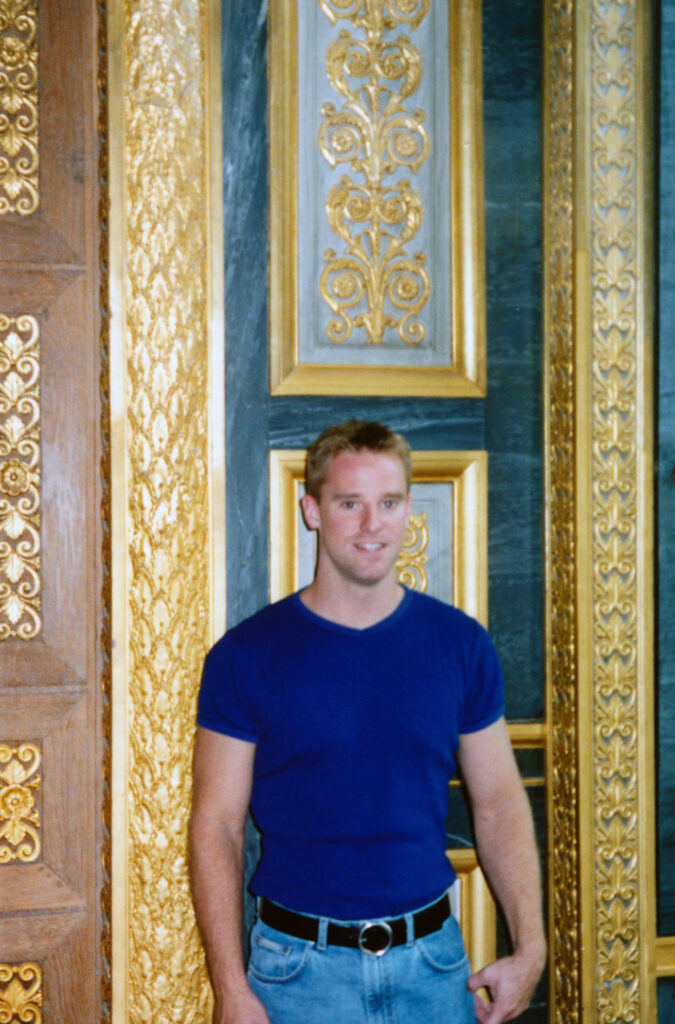
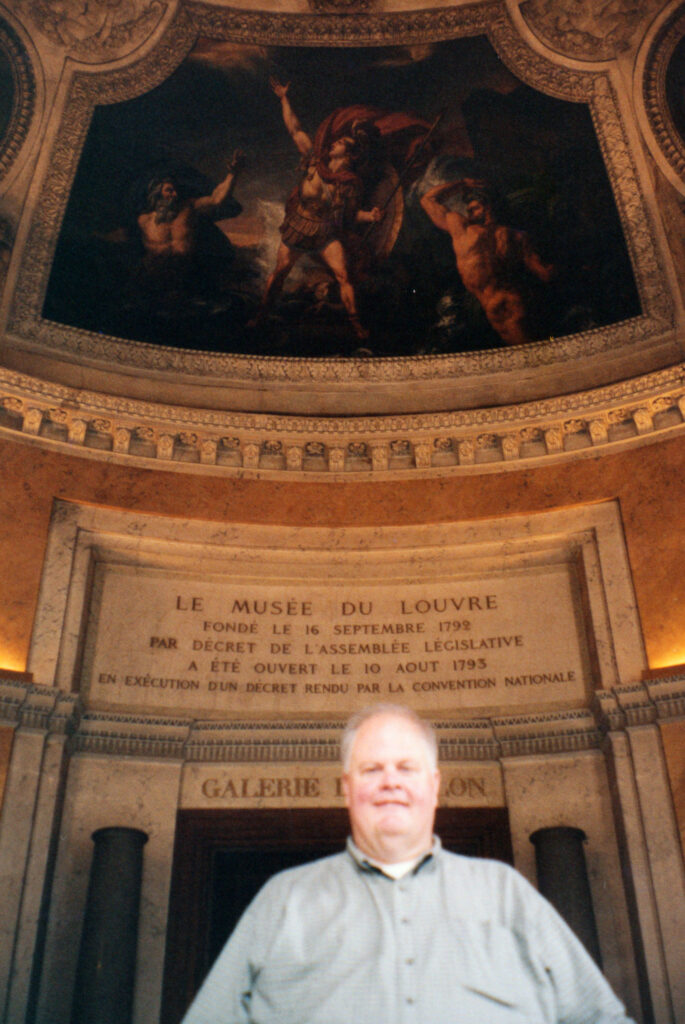
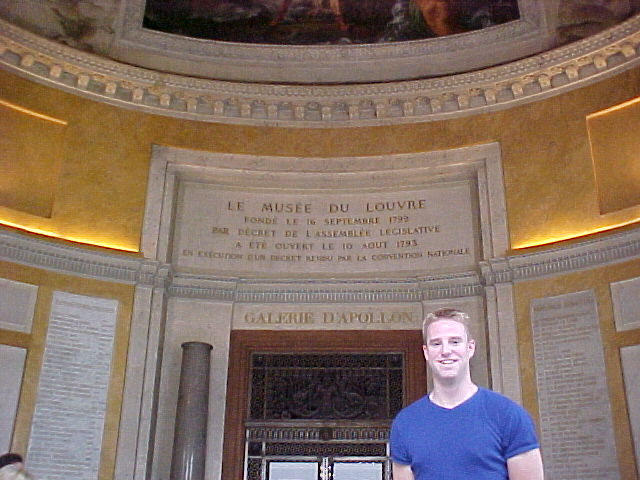
Calling the Louvre a museum almost understates what it is. Long before tourists came here to search for the Mona Lisa, this was a royal palace, expanded and transformed by generations of French monarchs. Walking through it with Rhett means that the building and the collection begin to overlap: kings, court life, monarchy, revolution and the extraordinary amount of history required to transform a royal residence into one of the world’s great public museums.
This is where Rhett is completely in his element.
He walks me through galleries while explaining the French Revolution and the monarchy that preceded it, connecting paintings and rooms to people and events rather than letting them become an endless sequence of objects behind velvet ropes. His fascination with French history is infectious, helped considerably by the fact that anyone who has seen the astonishing quantity of fleur-de-lis decorating his home already knows that Rhett has never been entirely neutral on the subject of French royalty.
I tease him that he is probably Marie Antoinette reincarnated.
The art is extraordinary, even if I prefer the Pompidou. But Rhett makes me appreciate the Louvre differently. The paintings are only part of it. The palace itself tells the story of the people who built it, occupied it, lost it and ultimately opened it to everyone else.
My favorite part of the Louvre isn’t a particular masterpiece.
It’s Rhett’s tour.
Eventually even the Louvre runs out of time. We head back to the station, board the Eurostar and retrace the route to London that began the weekend, only now without quite as much cheese. Rhett is staying with me for another week, and although the merger will drag me back into work almost immediately, we already have dinners and London plans ahead of us.
Paris, though, has been ours.
Revisiting This Post in 2026: The Paris I Remember
Twenty-five years later, I remember the monuments, but they’re not what makes this trip important to me.
I remember Rhett standing in Waterloo wondering why I was marching him into the first-class line. I remember him challenging a French waiter on the very existence of English wine and being rewarded with what seemed like every cheese in France. I remember standing beside him on the Arc de Triomphe and listening as he turned the Louvre into a lesson on the French Revolution.
Most of all, I remember Les Philosophes.
I can still picture the two of us sitting there trying desperately to stop laughing because we did not want to be those Americans, only to discover that half the restaurant was now laughing along with us. Nothing particularly important happened that night, which may be precisely why the memory feels so important now.
Rhett was much more than my neighbor and interesting traveling companion. He taught European history at Marymount University outside Washington, and years later his life was taken suddenly in downtown D.C. when a motorist died behind the wheel and struck him.
Losing him changed the value of memories like these.
When I originally wrote about Paris in 2001, I thought I was documenting Notre-Dame, Sainte-Chapelle, the Eiffel Tower, the Louvre and a very good steak tartare. What I was actually preserving were a few days with a friend who could make a medieval chapel fascinating, a French waiter conspiratorial and an elegant restaurant dissolve into laughter.
Rhett spent his career teaching people that history matters because the lives behind it matter.
It seems fitting that, all these years later, he is still teaching me the same lesson.