The Brochure I Kept for Reasons
Years before I have any realistic expectation of seeing Australia, the country is already marketing itself directly to me.
While I’m an undergrad at Duquesne University, I see a television ad filled with beaches, blue water and beautiful, sun-soaked men playing in the sand. There is an 800 number, so naturally I call it and order a glossy travel booklet from the Australian tourism board. A few weeks later, an entire booklet of beaches, sunshine and even more sun-soaked men arrives in Pittsburgh.
I keep the booklet in my room for reasons that make considerably more sense after I eventually come out.
The seed, however, is planted.
Now work has handed me an almost absurd way to finally get here. My JPMorgan/Chase merger project requires a first-class, round-the-world business trip through the company’s major hubs to make sure the integration is actually working, sending me across the Atlantic and then the Pacific — and giving me the perfect excuse to turn the final leg into a long vacation in Sydney.
Alex, whom I’m dating in London, happens to be back home in Australia at the same time. He went to Sydney to spend Christmas with his family, so the trip also gives me a chance to see the city through the eyes of someone who grew up here and to meet the family and friends I’ve heard about back in London.
The Day I Don’t Exist
Saturday, January 26th, I do not exist anywhere in this world.
Everyone reading this probably does. You wake up, eat, go to ATMs, talk to people and do all sorts of normal Saturday things. Not me. I leave Los Angeles on Friday the 25th, fly for 14 hours and land in Sydney on Sunday the 27th.
At no point do I exist on the calendar on Saturday the 26th.
Apparently, there is an imaginary line somewhere in the Pacific powerful enough to erase an entire day from your life.
Despite the 14-hour duration, the flight isn’t bad at all. I don’t know what everyone complains about. We take off from Los Angeles and the next thing I remember is, “Mr. Moniot, please put your seat up, we’re landing.” Maybe I’m exhausted from the business meetings in Houston. Maybe it has something to do with the pre-flight champagne. Maybe it’s the first-class lie-flat seat. Whatever the reason, I sleep the entire trans-Pacific flight and would happily do it again.
Without much of a headwind, we arrive more than an hour early. I clear customs, collect a Volvo convertible and am waiting before Alex even reaches the airport. The extra time also gives me a minute to consider a logistical problem that feels completely normal in 2002 and slightly insane today: my mobile phone doesn’t work here, I don’t have a local number for him, and there is certainly no app in my pocket telling either of us exactly where the other one is. If his plans change or my flight arrives somewhere unexpected, we’re basically relying on both of us showing up where we said we would.
Luckily, he does, and we drive directly to the nearest beach for an early-morning swim and breakfast.
I haven’t seen him for a little over two weeks, and there is something strange about seeing someone you know from London suddenly tan, surrounded by palm trees and completely on his own turf. The first beach he takes me to is one where he spent time growing up, and I try to imagine a childhood where the ocean is somewhere you can simply walk or ride your bike whenever you want.
Coming from western Pennsylvania, I can’t quite process that concept.
From there we head to his family’s house in Sydney’s Eastern Suburbs. I quickly learn that “suburb” means something different here than it does in America; these can be dense, close-in neighborhoods fully integrated into the city rather than endless subdivisions somewhere beyond it.
I meet Alex’s mother and his sister Mirna over very strong Italian coffee, then his sister Carmen joins us for a walk along the harbor and ice cream. By afternoon, we are exactly where that old Australian tourism booklet promised I would someday be: Bondi Beach.
We spend the afternoon swimming and lying in the sun before checking into the spectacular W Sydney at Woolloomooloo. The hotel occupies part of the enormous old Finger Wharf, built for Sydney’s wool trade nearly a century ago and converted into a hotel and apartments only a few years before we arrive. The whole structure stretches out over Woolloomooloo Bay, and our room looks directly onto the water.
From there begins a recurring Sydney pattern: beach, food, drinks, friends, repeat. I think I spend well over half the trip in a bathing suit.
This is my kind of vacation.
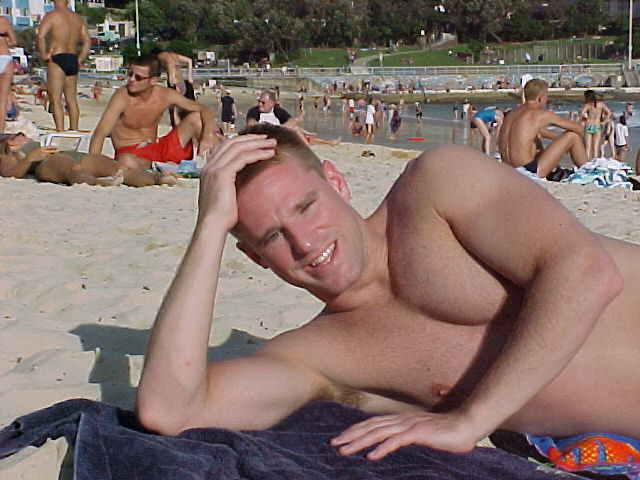 Enjoying flight recovery at Cronulla Beach
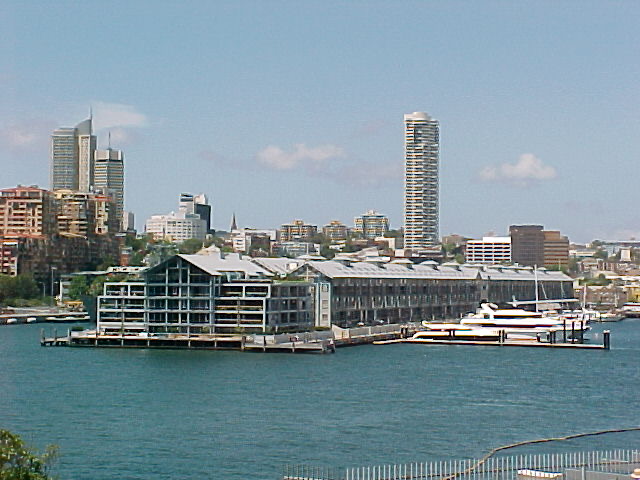 Sydney W Hotel smack in the harbor
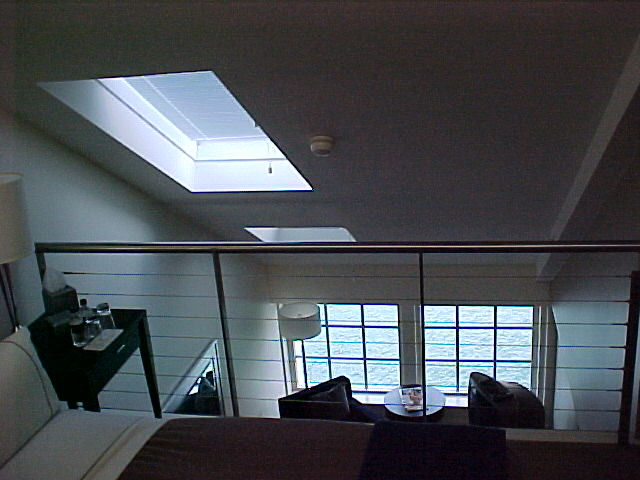 Loft style room with views like I’m on a cruise ship
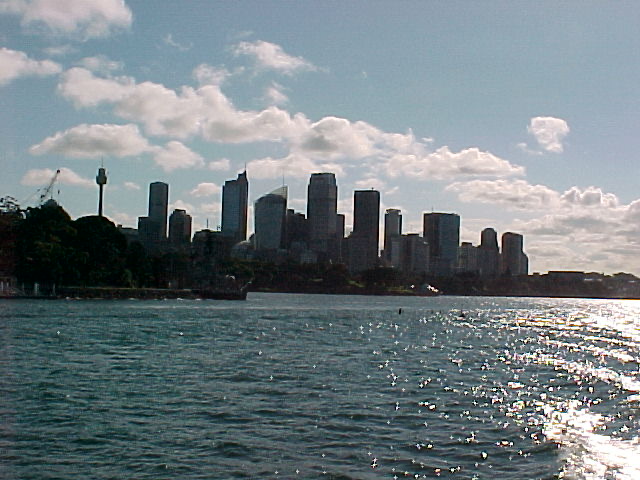 View from the Room
Sydney Is Married to the Water
Much like Stockholm, Sydney is married to the water.
The harbor doesn’t simply border the city; it penetrates it, branching into coves and bays that divide neighborhoods while ferries, bridges and roads try to pull them back together. Downtown Sydney becomes a natural crossroads because so much movement eventually funnels toward the center.
It’s one of those cities whose geography explains its personality before anyone needs to.
On Monday we leave The W and explore the neighborhoods east of downtown Sydney. Elizabeth Bay, Paddington, Edgecliff and Woollahra are part of the city’s Eastern Suburbs, an affluent patchwork of Victorian terraces, Art Deco apartment buildings, leafy parks, polished shopping streets and yacht-filled bays. Imagine picking up parts of San Francisco’s Nob Hill and dropping them somewhere between Beverly Hills and Santa Monica: hilly, sunny, pristine and highly refined. And because Sydney Harbour keeps folding into the landscape, spectacular water views seem to appear whenever the streets crest another hill.
Eventually we find one of those views across the harbor toward the Opera House, Harbour Bridge and skyline. Then we return to the serious business of vacation and spend the afternoon at Bronte Beach.
The weather offshore is becoming increasingly violent, producing waves that crash into the beaches with considerably more force than anything I’ve experienced at home. We spend enough time getting pounded by the surf to understand why Australians take ocean safety so seriously.
Afterward we trade salt water for dinner with more of Alex’s family, then cross through central Sydney toward the Inner West, where we’ll spend the next several nights with his friends Douglas and Richard in Leichhardt.
Leichhardt is already famous as Sydney’s Little Italy. Italian immigrants began settling here in significant numbers during the early 20th century, but the community expanded rapidly after World War II, drawn partly by affordable housing and available work. By now Norton Street is lined with Italian cafés, restaurants, bakeries and businesses; the Italian Forum, a huge piazza-style complex that opened only two years ago in 2000, makes the neighborhood’s identity fairly impossible to miss.
Their house immediately feels warmer and less restrained than so many London interiors I have seen over the past year: high ceilings, strong colors, big windows and rooms that seem designed to connect to the outside rather than protect from it.
Sydney itself has the same feeling.
The next few days are punctuated by beaches, outdoor cafés, Oxford Street shopping and meeting an expanding cast of Alex’s friends.
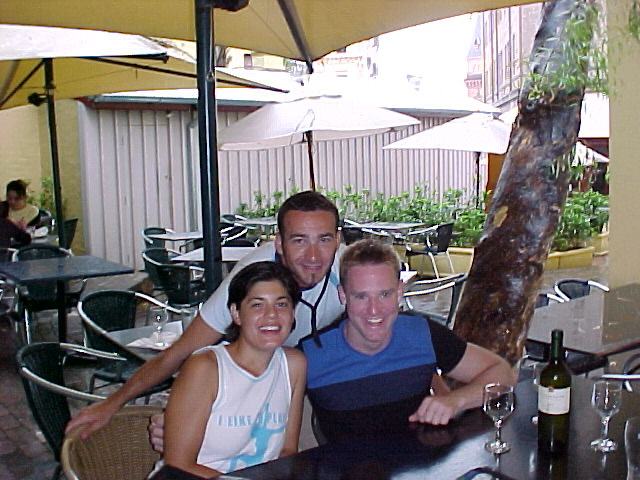 A rainy Sydney day put to its best possible use: lunch, wine and friends
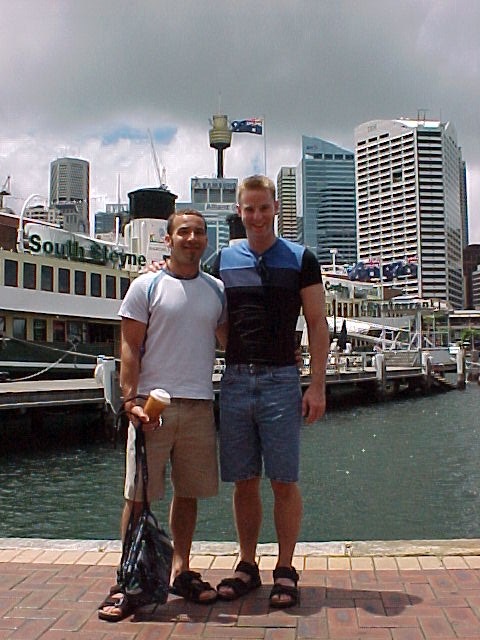 Alex and me at Darling Harbour
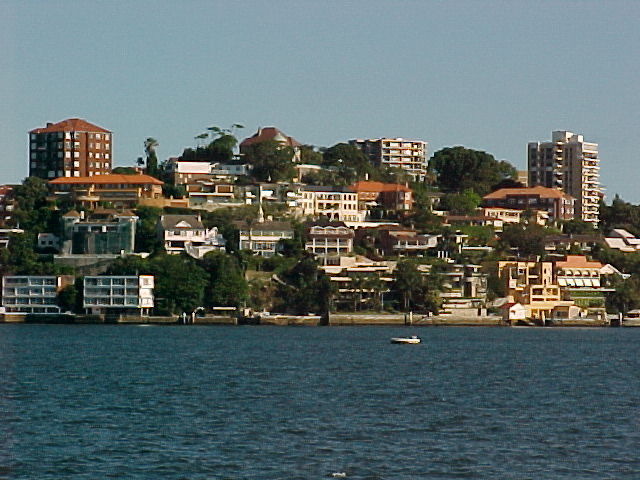 Neighborhoods rising directly out of Sydney harbor
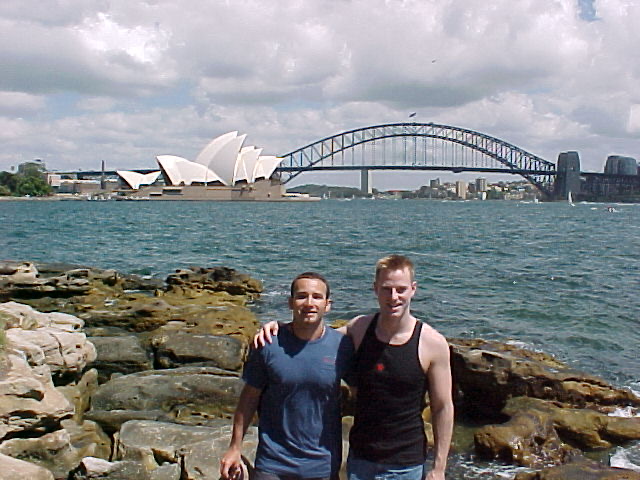 Alex and me with the Sydney Opera House and Harbour Bridge behind us.
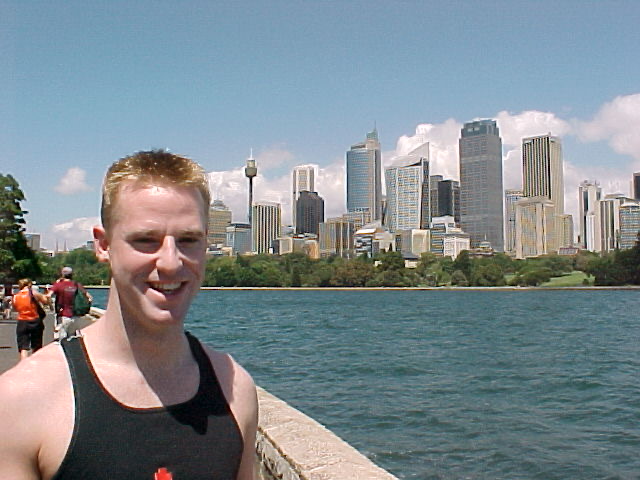 Sydney’s skyline from across the harbor
Australian Wildlife
Tuesday morning we point the Volvo west and leave Sydney for the Blue Mountains.
You know how when you’re about to visit somewhere exotic, people start giving you advice about its dangers, even if they’ve never actually been there themselves? For Australia, apparently everyone back home is an expert on the wildlife.
So many deadly animals. The deadliest animals on Earth. If I don’t get killed by a spider or stung by a bluebottle, then surely I’ll hit a kangaroo with the car.
Well, several beaches into the trip, and now about 40 miles west of Sydney on the M4, I haven’t experienced much wildlife yet, deadly or otherwise, except for a bug or two in my hair. And with January weather like this, there is absolutely no way I’m putting the top up.
So when I see a billboard advertising a wildlife park, I yank the car to the left — still reminding myself that Australians drive on the other side of the road — and head down the motorway off-ramp.
Australia’s long geographic isolation has produced an extraordinary collection of animals found nowhere else in the wild: kangaroos, koalas, wombats, platypuses and an entire cast of marsupials that seem almost purpose-built for tourism brochures. Everyone else can keep warning me about the venomous ones. I’m only interested in the fluffy and fun half of Australian wildlife.
I am fully aware that the place exists largely so people like me can pay money to feed animals that would otherwise have no interest whatsoever in meeting us.
I do it anyway.
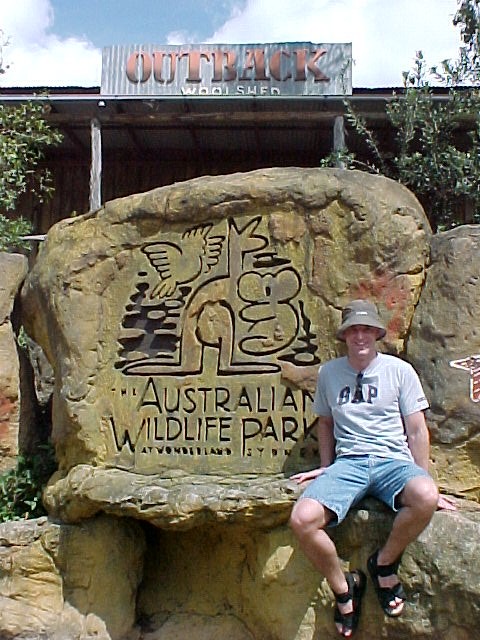 Australian wildlife tourist trap on the road to the Blue Mountains
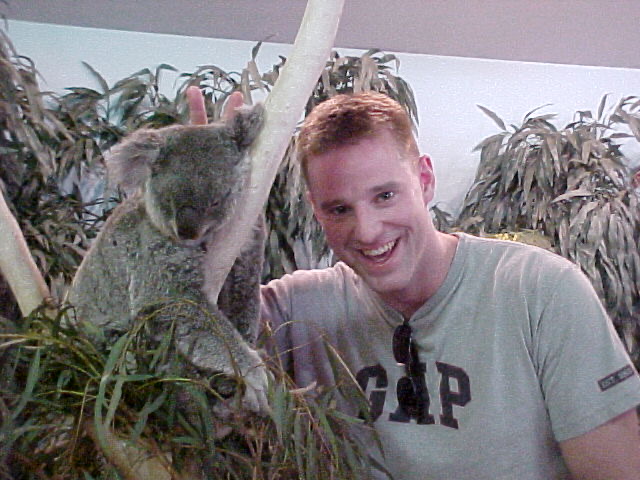 Australia koala encounter
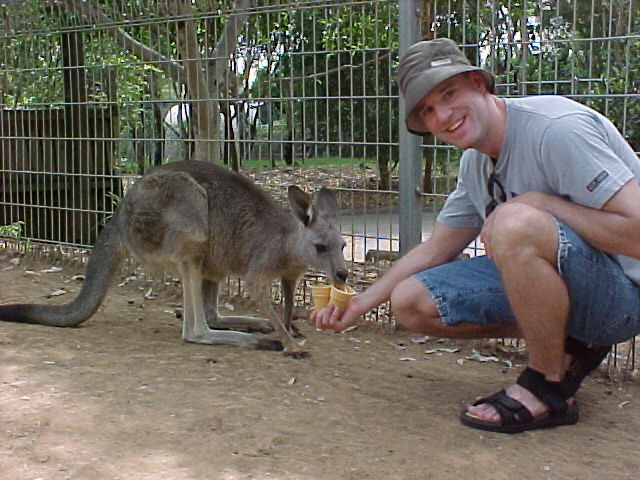 Making friends with a kangaroo
Blue Mountains, Kangaroos and the World’s Steepest Railway
Soon the suburbs disappear and the landscape changes dramatically. The Blue Mountains are not really a range of sharp alpine peaks; they are an enormous sandstone plateau carved into escarpments, cliffs, waterfalls and deep eucalyptus-covered valleys.
The drive climbs steadily toward Katoomba, where we stop for lunch before hiking toward Wentworth Falls.
The trail drops down the cliff face toward the falls, sometimes using stairs cut into or attached directly to the rock. We hike far enough down to reach the water, climb through the rocks and stand directly beneath the falls.
Next is Echo Point and the Three Sisters, three sandstone towers standing above the Jamison Valley. They are among the most recognizable formations in the Blue Mountains and rise from Gundungurra Country, part of a landscape with Aboriginal connections stretching back thousands of years.
They are impressive, unquestionably beautiful and absolutely worth seeing.
For about five minutes.
From there we head to Katoomba’s Scenic Railway, advertised rather aggressively as the steepest passenger railway in the world. The 52-degree track was originally built for mining in the 1880s and was converted into a tourist attraction in 1945, which means the slightly alarming contraption we’re about to ride actually has a practical industrial past. It is still officially the world’s steepest passenger railway, so apparently the advertising isn’t exaggerating this time.
After a rapid and considerably more jarring-than-expected descent into the Jamison Valley, a peaceful walk through the rainforest seems in order. Our return will be aboard the Scenic Cableway, a much smoother aerial car that opened only two years ago in 2000 and climbs from the valley floor back to the top of the escarpment.
We spend so much time wandering beneath the canopy that we fail to notice Scenic World is about to close. Apparently rainforests have business hours. We barely hear the operator’s final call and suddenly find ourselves running through the forest for the last cable car of the day, narrowly avoiding what would otherwise be a several-hour hike back up to the Volvo.
Dinner in Katoomba consists of fire-fried crocodile, kangaroo roast and emu. Only in Australia can I sit down to dinner and realize I’m eating both animals that flank the country’s coat of arms.
At this point I’m half expecting koala for dessert.
By the time we leave Katoomba it is nearly dark, but the weather is warm enough that the top stays down. We drive the two hours back toward Sydney with the last light disappearing behind us and the mountains, while unfamiliar Southern Hemisphere stars begin appearing overhead.
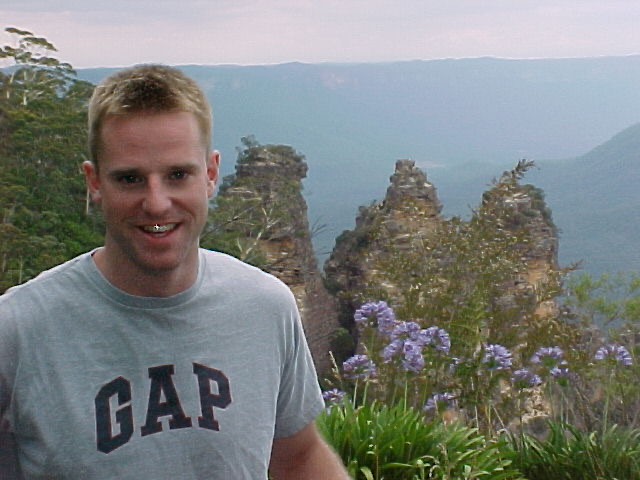 At Echo Point with the Three Sisters behind me
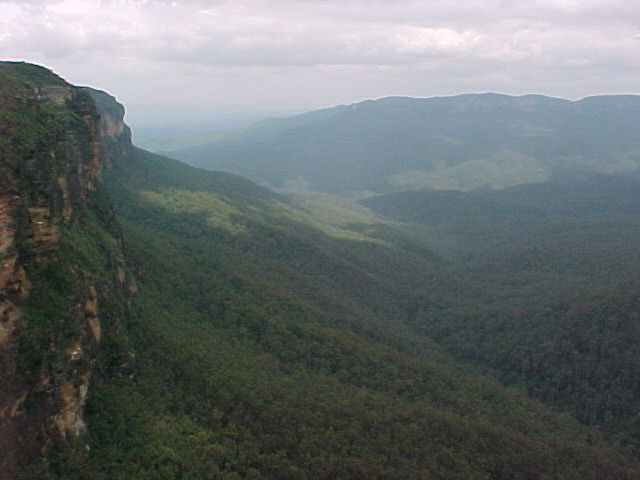 The eucalyptus-covered valleys of the Blue Mountains west of Sydney
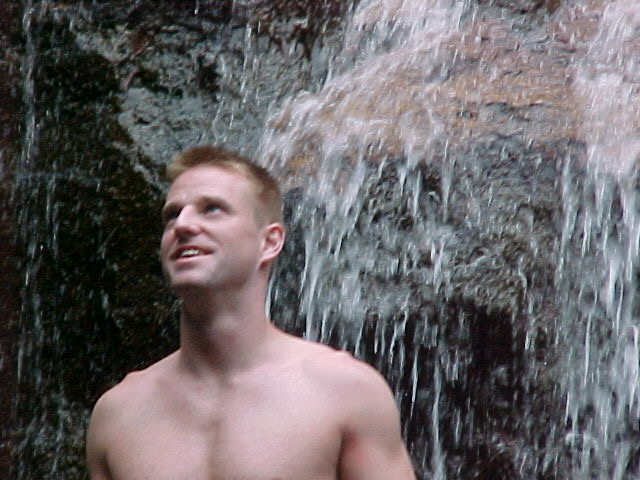
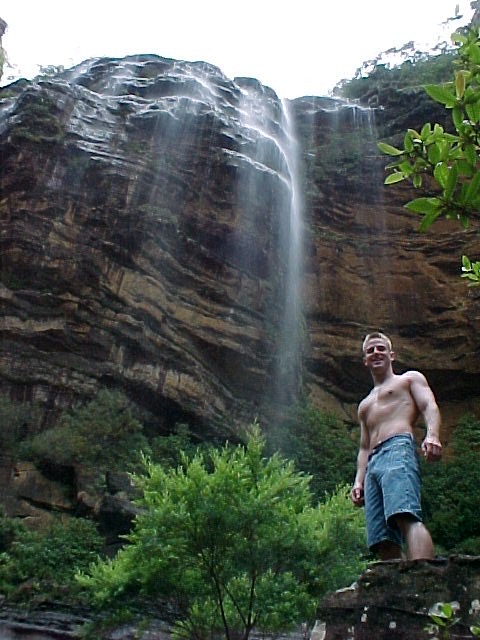 At the base of Wentworth Falls after the hike down
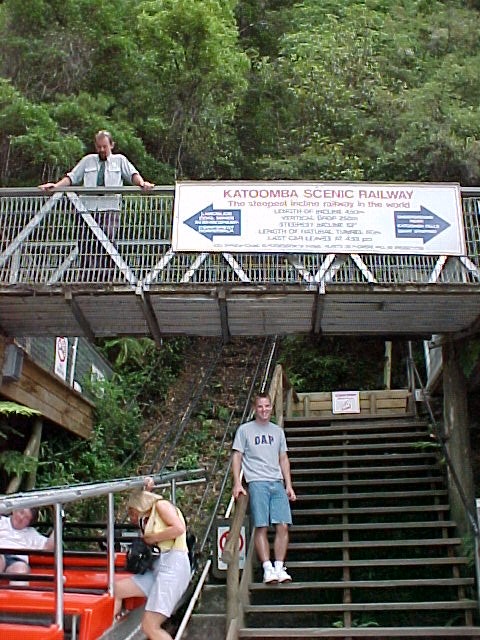 At the bottom of the Katoomba Scenic Railway, where they finally explain just how steep the thing is
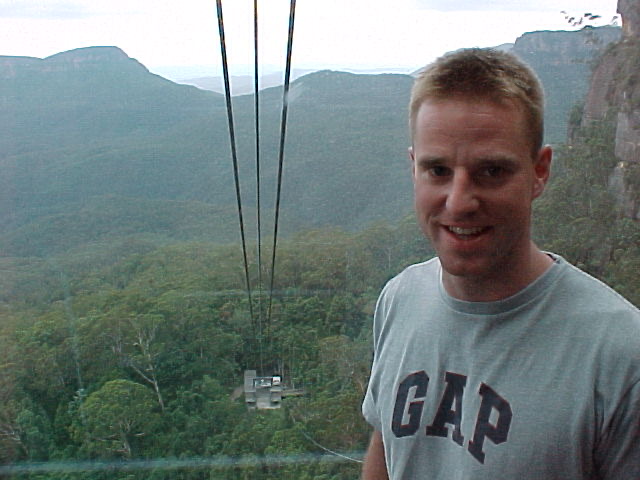 Crossing above the Blue Mountains rainforest after descending into the valley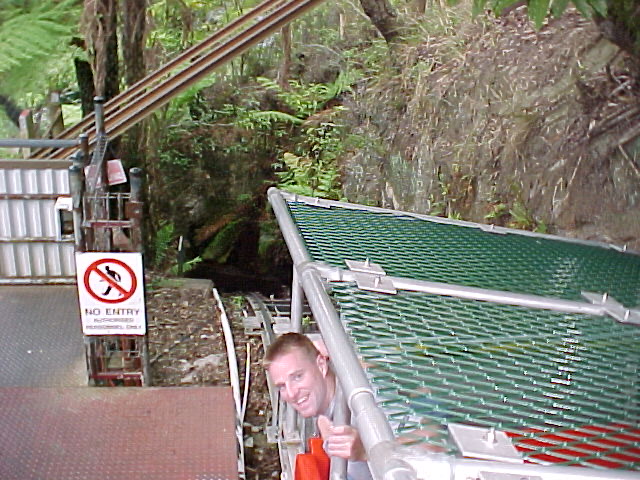
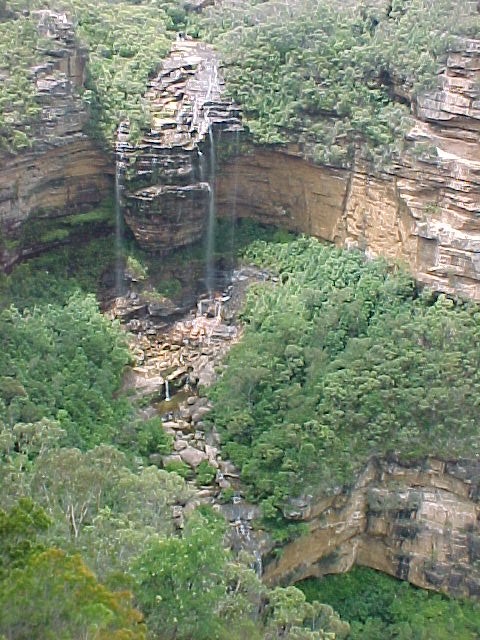 Wentworth Falls dropping into the valley below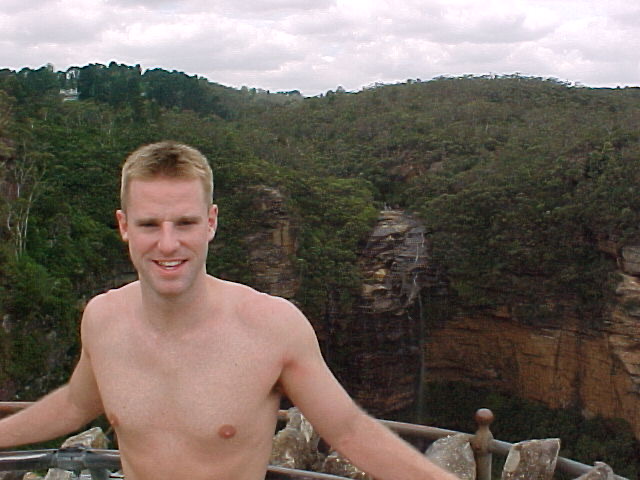
An Opera House Worth Seeing From Every Angle
Back in Sydney on Wednesday, we settle into another pleasantly unhurried day: enormous raisin toast and coffee, more shopping along Oxford Street, lunch outside and then a tour of the Sydney Opera House.
The building is already so familiar from photographs that seeing it in person produces the strange sensation of recognizing something I’ve never actually seen before.
The tour explains why its construction became almost as famous as its architecture. Danish architect Jørn Utzon designed the building, but political conflict and spiraling construction problems led him to leave the project years before its completion; the Opera House finally opened in 1973 without him present. Between this, the fashion, the furniture and half the buildings I love, I’m beginning to think the 1970s may have been an unusually productive decade.
For all the controversy, standing beneath those enormous tiled shells makes it difficult to argue with the result.
Conveniently, the tour ends at the box office. We take the hint and buy tickets for Saturday’s matinee of one of my favorite operas, Puccini’s La Bohème. From Circular Quay we catch a ferry across the harbor toward Manly Beach. This is where Sydney’s relationship with the water really makes sense: commuting here can mean standing on the deck of a boat while the Opera House and skyline slide behind you.
As the ferry approaches the mouth of the harbor, North Head and South Head form the narrow gateway that protects this enormous maze of bays and coves from the open Tasman Sea beyond. Along the way, hillsides rise directly from the water, covered with houses designed to take maximum advantage of the harbor views.
We spend the rest of the afternoon at Manly Beach, adding yet another iconic Sydney beach to an increasingly long list.
That night we take Douglas, Richard and our friend Brett to dinner to thank them for putting us up. Conversation eventually turns to Australian immigration and the rights available to same-sex couples here, and I find myself thinking how far ahead Australia seems compared with the United States.
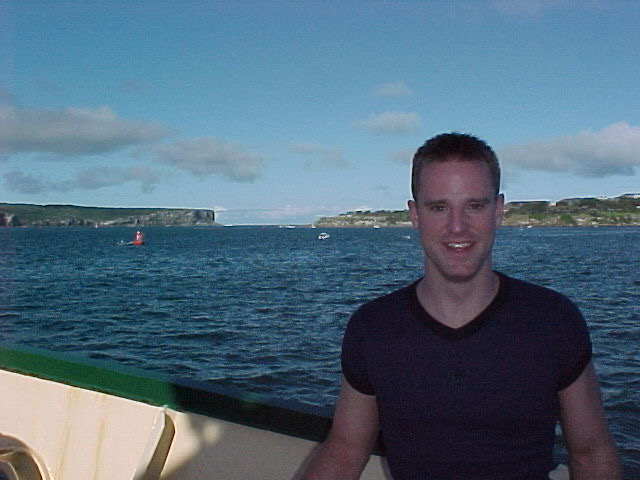 On the ferry toward Manly with the entrance to Sydney Harbour in the distance
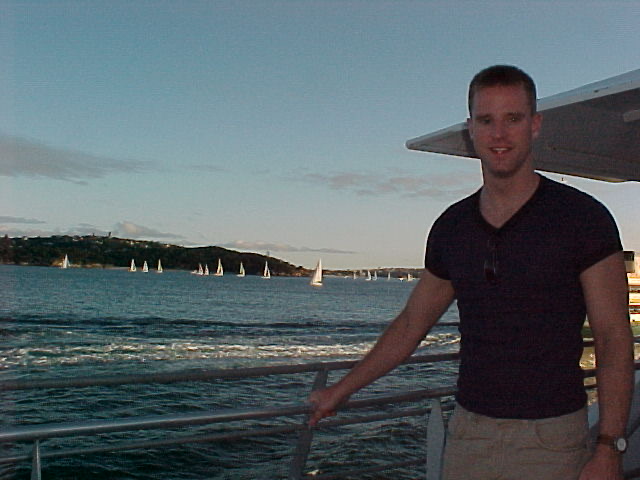 Sydney waterfront living at its best
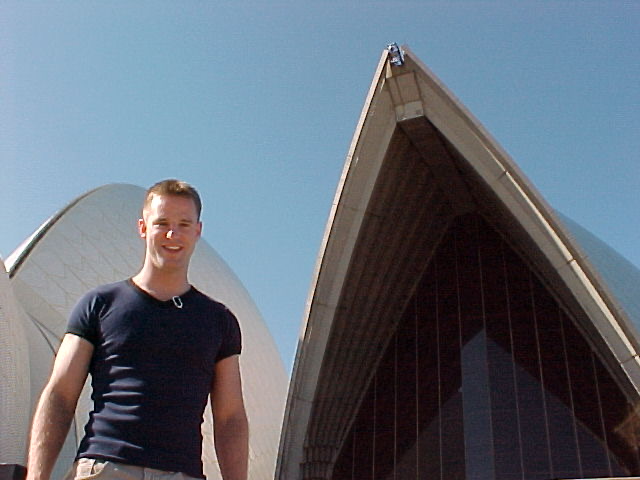 Up close with the Opera house
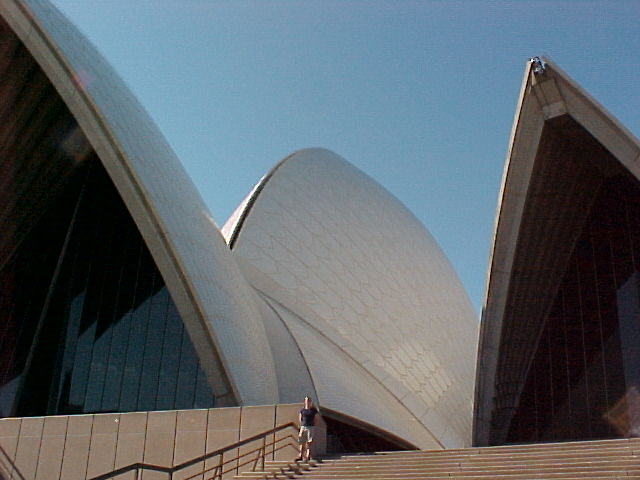 Opera House sails are more massive and sculptural from ground level
Bridge Climb Day, in a Monsoon
Thursday the rain arrives in earnest.
This isn’t polite London rain. Buckets of warm water seem to fall vertically from the sky all day, so we surrender and turn the day into a long progression of food, wine and cafés.
Rain or shine, with tickets booked months in advance — and no refunds or exchanges — Friday is Bridge Climb Day.
The Sydney Harbour Bridge opened in 1932, but the idea of letting ordinary people harness themselves to it and climb to the top of the steel arch is surprisingly new: BridgeClimb only began operating in 1998, less than four years before we’re here.
Today it is absolutely pouring.
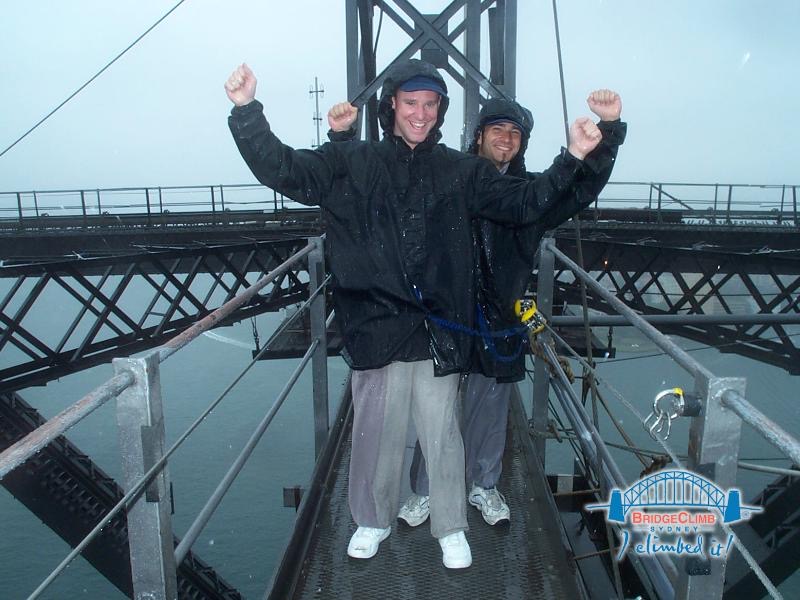
“Wow, you’re in for a treat,” exclaims our tour guide, before adding enthusiastically, “It almost never rains this time of year. You don’t know how lucky you are to experience this climb in weather like this.”
I suppose anyone can enjoy climbing a bridge in the sunshine without lightning overhead. At this point I’m committed, although several people in our group look considerably less convinced.
Before being allowed onto the bridge, we have to attend a class in what I generously describe as mountaineering techniques. I’m kidding. The training area has a replica section of the climb, including a ladder, and we have to demonstrate that we can climb up and back down before they clip us into the safety system. Once we’re attached to the bridge, abandoning the whole idea becomes considerably more complicated.
The hardest part is that we are forced to wear profoundly unfashionable jumpsuits.
Despite this indignity, and having proved we can successfully operate a ladder, we harness in.
There’s no turning back now.
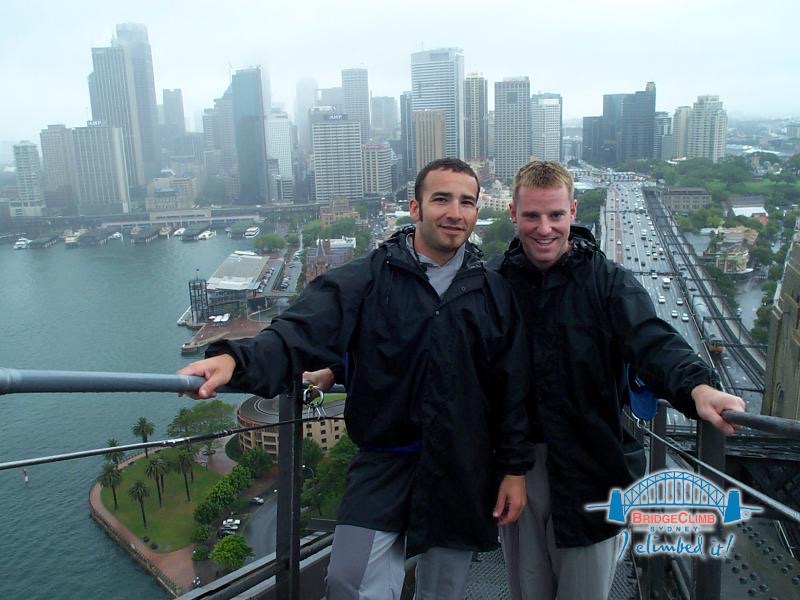
The climb begins inside the enormous steel structure rather than on top of it. We work our way upward through a series of ladders until, at one point, we emerge through a hatch into the middle of the bridge deck. Suddenly Sydney traffic is rushing past on both sides while we continue climbing inside the protective steel cage between the lanes.
Once the ladders are behind us, the experience changes completely. We step onto the great curved arch itself and begin walking toward the summit. This is the part I expect to test my unease with outdoor heights, but the steel beam beneath us is so broad that there is surprisingly little sensation of standing on an edge. You can’t simply look straight down the way you can from a cliff.
And even if you could, there is too much else to look at. Sydney Harbour opens beneath us, with the Opera House, skyline and water competing for attention the entire way up.
Eventually we reach the top of the arch with Sydney spread out below us.
The rain destroys any possibility of postcard-perfect weather but actually makes the experience more memorable: wind, clouds and sheets of rain sweep across us as we stand on top of one of the world’s most recognizable bridges.
Our guide may have been selling the weather pretty hard, but by the time we reach the summit I have to admit he has a point.
Back on the ground, we eventually check into another hotel, this time in Darling Harbour, and head to Sydney’s bohemian Newtown for Vietnamese food before the next day’s considerably more civilized entertainment.
Puccini in the afternoon, Priscilla at night
Saturday is culture day.
My plan is simple: wake up, order a large breakfast in bed, read the newspaper and spend the morning relaxing before a matinee of La Bohème.
Instead, the wake-up call never comes.
Breakfast becomes coffee, the newspaper becomes a few seconds of CNN and the relaxing morning becomes a frantic search for two missing orchestra-level tickets.
I distinctly remember putting them somewhere “safe.”
This is never a good sign.
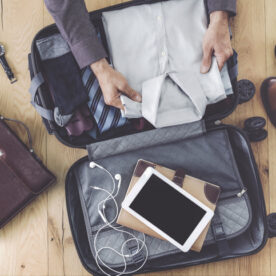
We empty both suitcases twice before I finally remember one zipper pocket I have deliberately avoided searching. Apparently, at some point, I decided the safest possible place for expensive Puccini tickets was the part of my suitcase I reserve for dirty clothes.
Not an obvious connection, perhaps, but Puccini and dirty laundry have apparently been sharing space in my mind all morning.
We make it to the Opera House before the curtain rises and even have enough time for a glass of champagne overlooking the harbor.
After the matinee the sun makes a brief return, so we go directly back to Bondi for another afternoon at the beach. Apparently one opera is enough culture for daylight hours.
That night comes our second “opera,” although this one involves considerably more sequins. We head inland to Erskineville for The Priscilla Experience at the Imperial Hotel.
The Imperial has been a fixture of Sydney’s gay community since LGBTQ entrepreneur Dawn O’Donnell bought the old neighborhood pub in 1983 and turned it into a welcoming venue with regular drag performances. Then the Imperial became famous well beyond Sydney when its drag shows appeared in the opening and closing scenes of the 1994 film The Adventures of Priscilla, Queen of the Desert. Priscilla-themed shows became a regular part of the Imperial’s entertainment afterward, so tonight we’re essentially watching the movie’s Sydney home continue the story onstage.
Puccini in the afternoon, Priscilla at night. Sydney takes an expansive view of culture.
I appreciate that.
One Last Day at the Edge of the Pacific
Sunday is our last full day together, and this time we actually manage the slow morning we intended to have the day before.
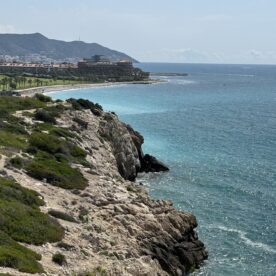
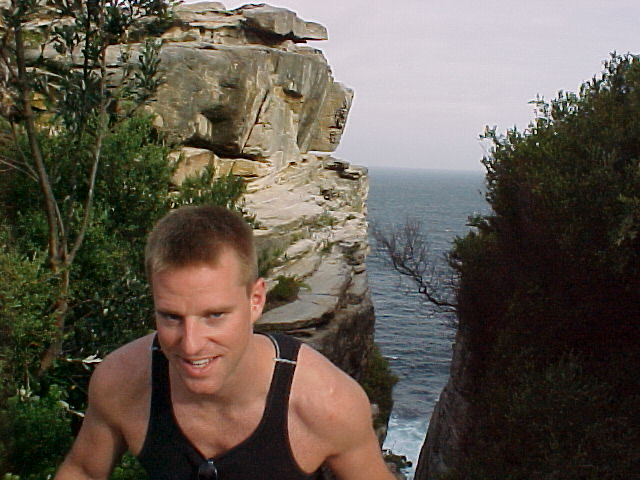
We drive to Sydney Harbor National Park. Instead of getting wet and sand covered, we decide start a costal hike towards Sydney Harbor’s entrance to the Pacific. Sandstone ledges instead of sand, fewer people, and small rock beaches with clear pools of water line the hike. On the east side of the narrow hike, Pacific water crashes directly against rocky cliffs. On the harbor side, gentle waves invite swimming. From there we continue to South Head, walking toward the cliffs and lighthouse where Sydney Harbour finally opens into the sea.
There is something wonderfully dramatic about standing here. Behind us lies one of the world’s great natural harbors, filled with ferries, sailboats, neighborhoods and a city of millions. In front of us there is nothing but the Pacific. If you travel due east from Sydney along the exact same line of latitude (33°51′ S), the first land you reach is Chile in South America.
We stay until another wall of rain approaching from the ocean convinces us it’s time to leave. Though putting the top up feels like putting a lid on this beautiful vacation.
Alex’s parents are preparing a large family dinner, so we head back for an enormous combination of Argentinian and Australian food: empanadas, veal parmesan, salads, vegetables, homemade wine and a gigantic fluffy dessert called Pavlova, a beloved and iconic Australian meringue-based dessert with a crisp, crunchy outer crust and a soft, marshmallow-like interior.
Alex follows me to the airport, we say goodbye, and I leave Sydney for Singapore. His Australia, which I’ve heard about for months in London, has now become part of my own experience too.
I don’t sleep on the eight hour flight. Instead I finish Kafka’s The Castle, read Armistead Maupin’s The Night Listener cover to cover and make a start on James Patterson’s Roses Are Red.
After months of seemingly constant travel, I’m finally ready to stay put in London for a while and make everyone else come to me. Fortunately, they’re about to oblige: Rhett, Tim, Keith, Warren, Steve and my mother are all coming in March alone.
I’ve already made plans for Rhett. I’ve rented us a castle in Scotland between Edinburgh and Glasgow.
Why live in the land of the Queen if I can’t be one every now and then?
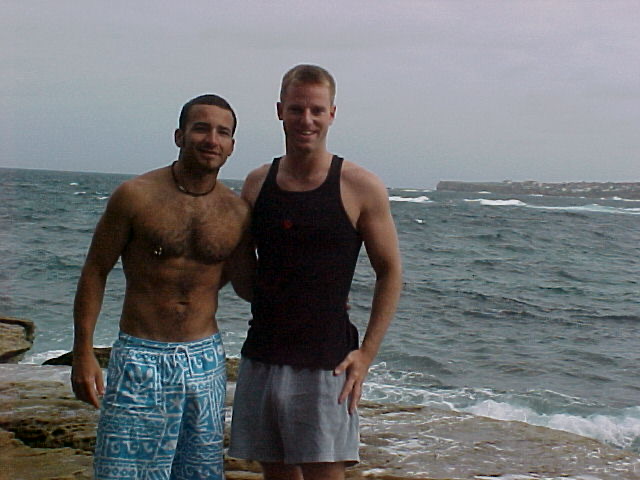 Alex and me exploring one of the rocky beaches along Sydney’s coast
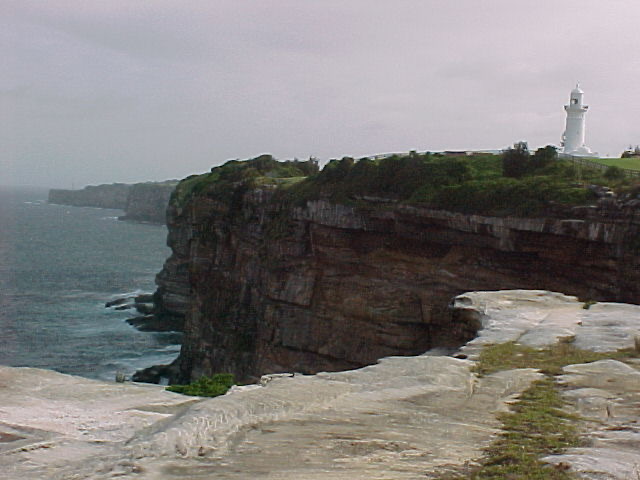 Hornby Lighthouse above the cliffs at South Head, guarding the entrance to Sydney Harbour.
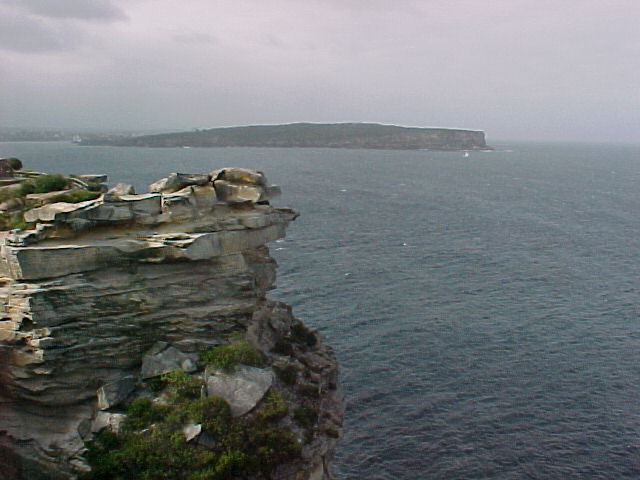 At South Head as another storm moves toward the coast
 At South Head as another storm moves toward the coast
Revisiting This Post in 2026: The Country That Became Home
The biggest thing I couldn’t know in February 2002 was that Australia wasn’t going to remain a place from an old tourism booklet or even a particularly memorable vacation.
Nine months later, in November 2002, I moved there.
I would stay until November 2007.
That changes the meaning of this trip considerably in hindsight. I arrived expecting beaches, sunshine, koalas, the Opera House and the kind of adventure Australia had been selling me since I was a college student in Pittsburgh. I got all of those things, but I was also unknowingly being introduced to the rhythms of a country that would soon become home: mornings outside, neighborhoods organized around cafés, cities oriented toward the water and the assumption that good weather should be used rather than merely admired through a window.
What also strikes me is how differently I approached Sydney from the European cities I was visiting at the time. In Paris, Prague or Scotland, I was increasingly learning to read a place through the centuries layered beneath it. Sydney wasn’t that kind of trip for me. I wanted the beaches, the cliffs, the ferries, the Blue Mountains and the sense that almost anything worth doing could somehow happen outdoors.
Maybe that’s exactly why it got under my skin.
The Australian tourism board planted the seed years earlier with a television commercial and a suspiciously compelling glossy booklet. The JPMorgan/Chase merger gave me an improbable first-class route across the Pacific. And Alex gave me something no tourism campaign could: an introduction to Sydney through family dinners, friends’ homes, neighborhood cafés and the beaches where someone actually grows up.
At the time, I thought I was simply extending a business trip into a very good vacation.
Instead, I was getting my first glimpse of the place where I would spend the next five years of my life.