The plan for my summer side-travels has been fairly simple: start with northern Europe while the weather is good and keep moving south as autumn arrives, chasing the sun until I run out of continent.
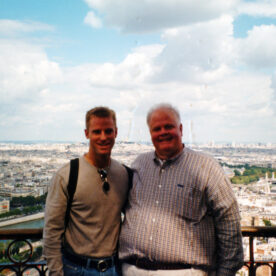
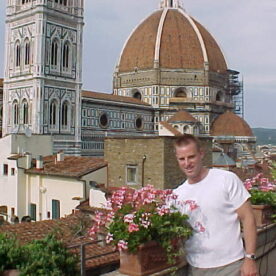
There have been exceptions. Florence came early because Rhett insisted I needed to see it, and Paris is a good visit anytime.
But Portugal has always been sitting at the bottom of the map as the finale.
Of all the places on my list, Lisbon somehow seems the most exotic. Portugal spent centuries building a maritime world that stretched through Africa and India to Southeast Asia and, most importantly from my American perspective, across the Atlantic to Brazil. Somewhere along the way, my imagination blended all of that equatorial geography together and decided Lisbon itself must be somehow tropical.
It isn’t.
What I find instead is far more surprising: a dry, brilliantly bright city sitting on a huge river at the edge of the North Atlantic, with palms growing beside stone buildings and tiled façades climbing steep hills. The climate feels far closer to coastal California than to the tropical world I had imagined.
Also, I wasn’t packed for the cool weather as soon as the sun disappeared so once again found myself shopping for clothes. Apparently I can cross Europe with a Lonely Planet guide and a passport, but packing the correct wardrobe remains beyond my abilities.
San Diego, Not Singapore
The biggest surprise is how dry Lisbon feels. The sun is warm, but the air isn’t humid, and the Atlantic breeze feels much cooler than I expect. The hills are sun-bleached rather than lush, and even with palm trees scattered around the city, the landscape feels unmistakably Mediterranean rather than tropical.
About ten minutes outside without a coat is enough to make me reconsider my geography. A quick check of the globe reveals that Lisbon sits at almost exactly the same latitude as St. Louis. Its Mediterranean climate brings dry summers, while the Atlantic moderates the temperatures enough that Lisbon has much more in common climatically with San Diego than Singapore.
Earthly empires are not meteorological systems, apparently.
The other surprise is how much of the city feels worn around the edges. Beautifully restored buildings sit beside others where maintenance appears to have been postponed for several generations. My first instinct is naturally to compare Lisbon with London’s West End, where I’m living, or with the polished centers of northern European capitals, but my Lonely Planet Pocket Guide keeps giving me reasons to look beneath the surface.
Lisbon has been destroyed, rebuilt, occupied, expanded, neglected and reinvented repeatedly. Portugal itself has been a democracy for only twenty-seven years and part of the European Community for only fifteen. The rough edges aren’t the absence of history.
They are part of it.
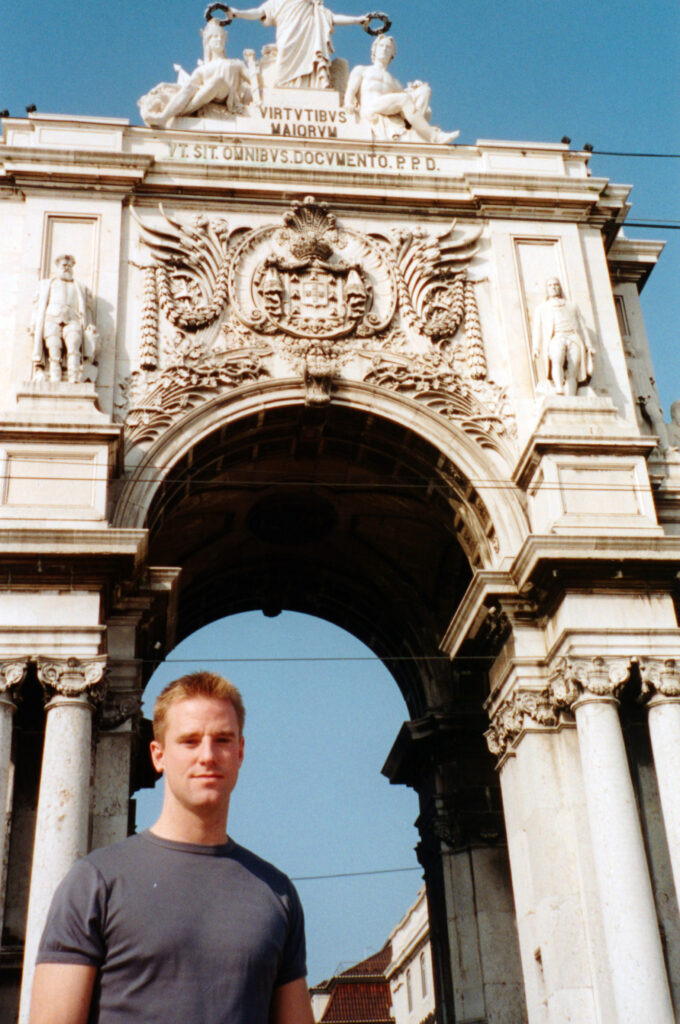 Beneath the Rua Augusta Arch, the monumental gateway between the rebuilt Baixa and Praça do Comércio
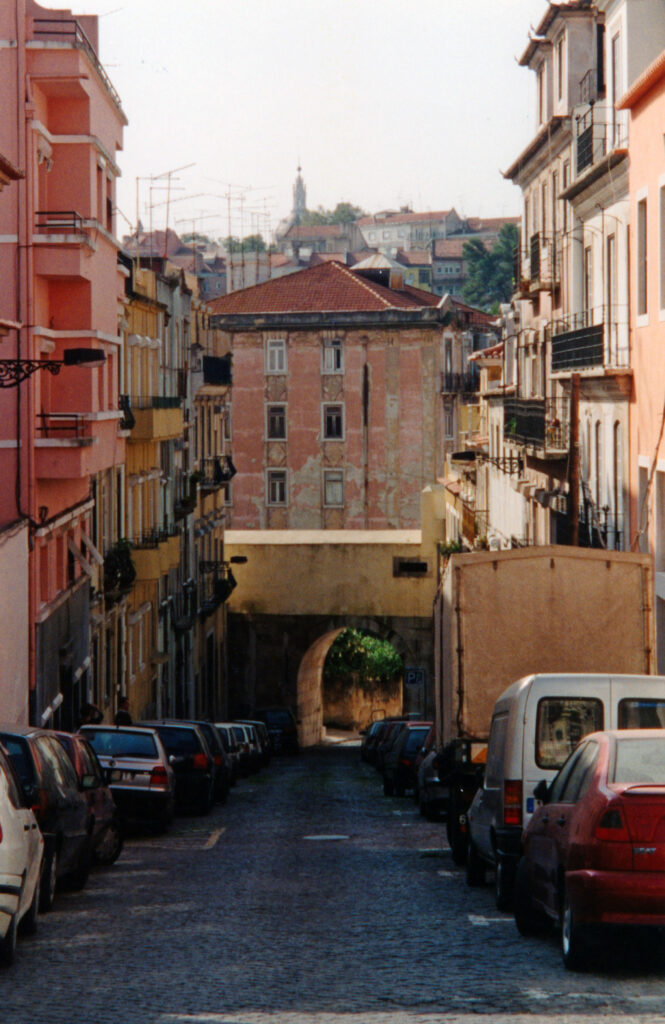 Lisbon climbing one of its seemingly endless hills, the tightly packed buildings immediately announcing that this is going to be a city explored vertically.
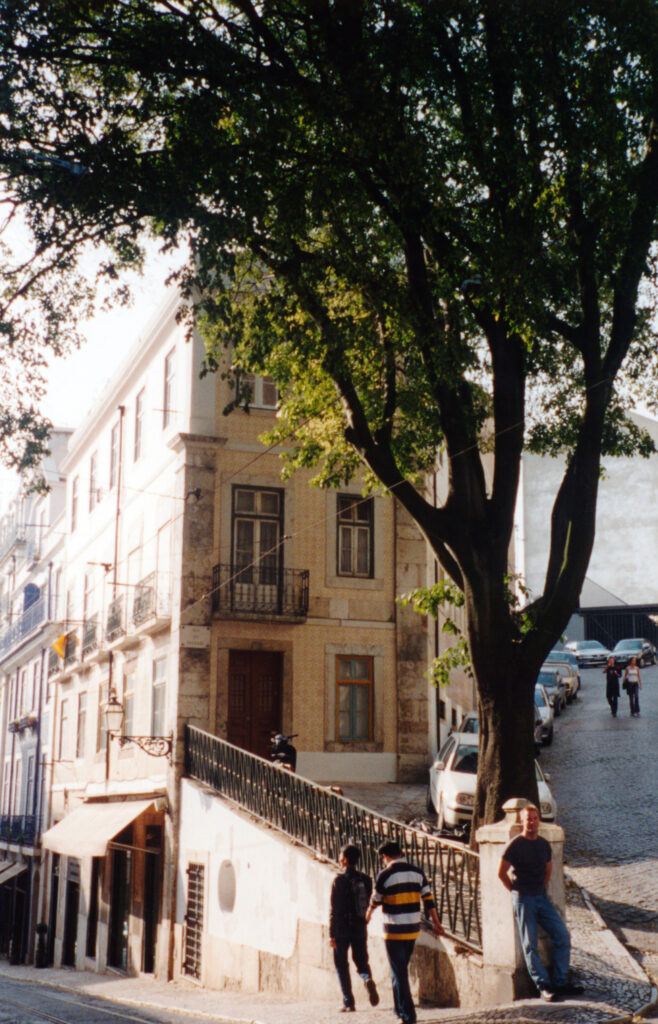 A quieter Lisbon hillside: tiled façades, cobblestones and mature trees catching the afternoon light.
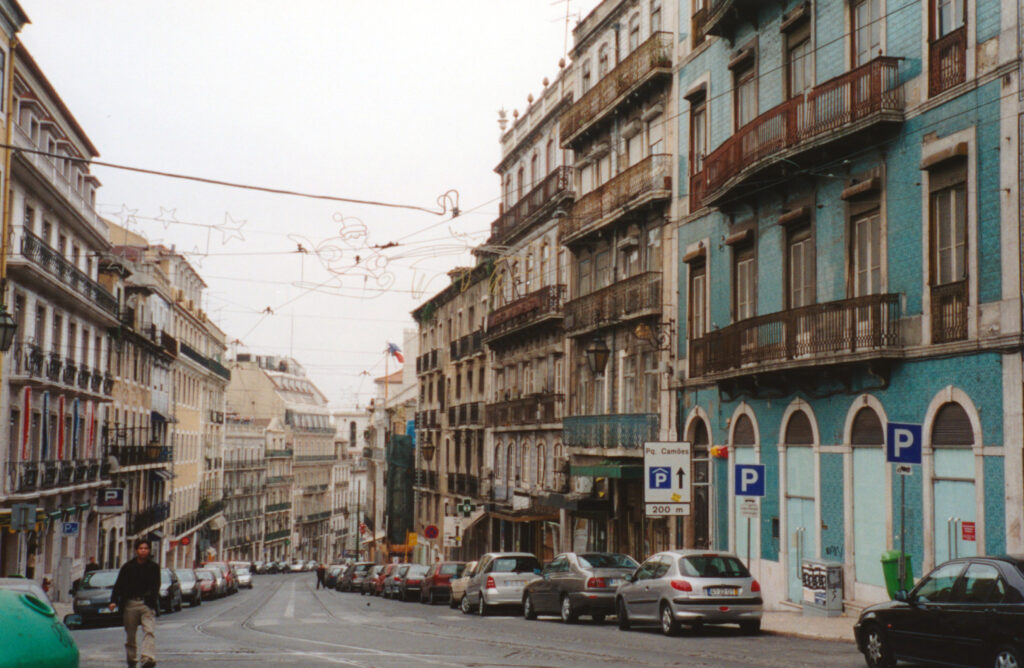 Looking downhill toward Praça Luís de Camões, with Lisbon’s tiled façades, balconies and tram tracks filling the street
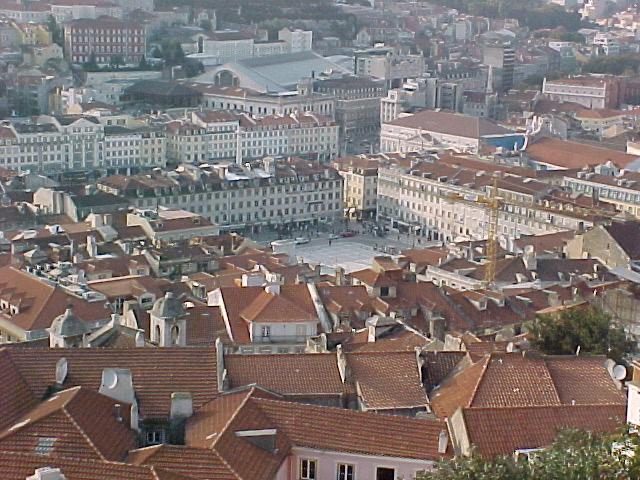 Looking down from Castelo de São Jorge over Lisbon’s red-tiled rooftops.
The Earthquake That Rebuilt a City
Nothing explains central Lisbon better than the earthquake.
On All Saints’ Day in 1755, one of the most destructive earthquakes in recorded European history struck the city, followed by a tsunami rushing up the Tagus and fires that burned for days. Much of Lisbon’s commercial and political heart was destroyed, with thousands of buildings collapsing or becoming uninhabitable.
The response changed the city permanently. Under the Marquês de Pombal, the lower city — the Baixa — was rebuilt with broad, straight streets, standardized blocks and buildings incorporating flexible timber structures intended to perform better during future earthquakes. Authorities also systematically gathered reports about how the earthquake had behaved across Portugal, work that helped lay the foundations for modern seismology and disaster analysis.
The First Lonely Planet Walking Tour of the Trip
History lesson complete, I pull out my Lonely Planet Pocket Guide and start the first of its self-guided walking tours through Lisbon.
The route begins at the Rua Augusta Arch, which opens into Praça do Comércio, a vast riverfront square occupying the area where Portugal’s royal palace stood before the earthquake destroyed it. What today looks like an elegant ceremonial entrance into Lisbon was created out of catastrophe: a new city opening itself toward the Tagus River, which was the source of Portugal’s wealth.
For once, the grand architecture isn’t simply decoration. It is a national recovery plan made out of stone.
The rational geometry disappears quickly when the walking tour starts climbing into Lisbon’s older neighborhoods.
Away from the rebuilt downtown, Lisbon returns to narrow streets, stairways, tiny squares and buildings that seem to have negotiated their positions with one another rather than consulted a city planner. This is the older Lisbon, climbing toward the castle and preserving much more of the irregular street pattern that existed before the reconstruction.
Along the way I reach Lisbon Cathedral, which looks almost defensive because, in many ways, that is exactly the world into which it was born. Construction began after the Christian conquest of Lisbon, and earthquakes have damaged and altered it repeatedly since. The result is less a perfectly preserved medieval church than a building that has absorbed a seismic amount of history into its walls. It remains Lisbon’s working Catholic cathedral and the principal church of the Patriarchate, so despite its age it is very much still serving its original purpose.
Eventually I reach Castelo de São Jorge, and my temptation to dismiss it as “not another European castle” lasts about thirty seconds.
The hill has been strategically important for thousands of years because it overlooks both the city and the Tagus river. Its fortifications have Islamic origins, with a Moorish citadel here by the 11th century, when Lisbon was already an important port. Eventually Afonso Henriques captured Lisbon with the help of northern European Crusaders, is crowned king for his success, and transforms one of Iberia’s most strategically valuable ports into the young kingdom of Portugal.
The castle later became a royal residence, suffered heavy damage 1755 earthquake and was restored only in the 20th century. So even the medieval-looking fortress I’m walking through isn’t frozen in one period.
Like Lisbon itself, it is layers pretending to be a single building.
The climb is worth it even if you care absolutely none about history, which, admittedly, was me before becoming neighbors with Rhett. From the castle walls, Lisbon spills down the hills in every direction: red roofs, church towers and tightly packed neighborhoods running toward the enormous sheet of water below. After spending the morning navigating the city one steep street at a time, suddenly I can see how all the pieces fit together.
From up here the geography finally clicks. Lisbon isn’t simply beside the Tagus; it commands an enormous waterway connecting inland Portugal with the Atlantic. Long before airplanes turned cities into destinations, this was the equivalent of sitting beside one of the great highways of the old world.
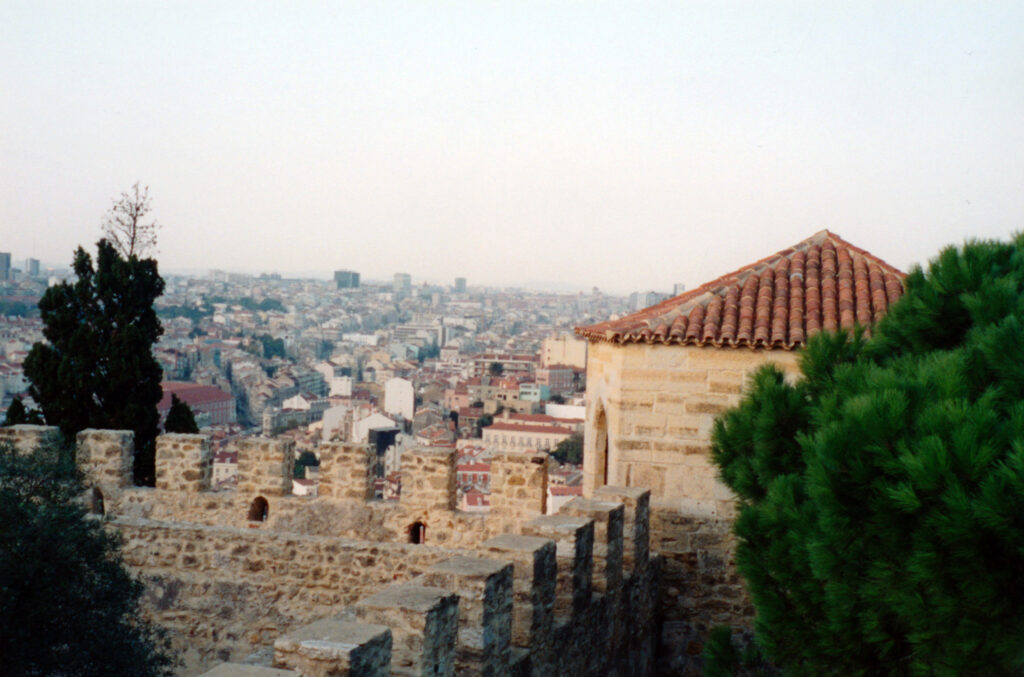 The walls of Castelo de São Jorge with Lisbon spreading down the hillside beyond them
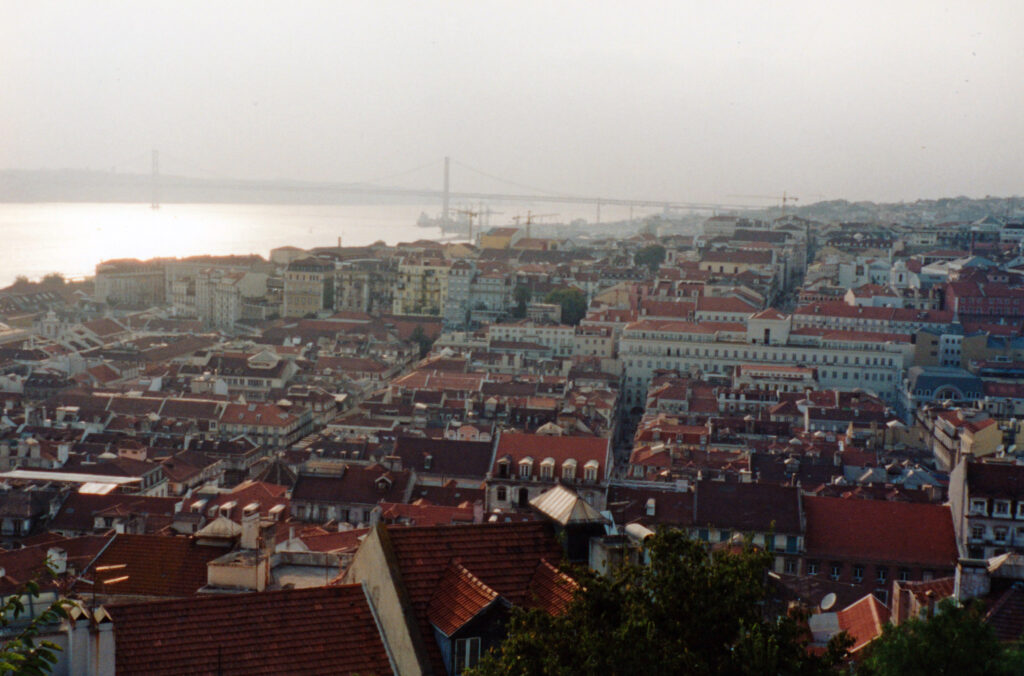 Lisbon and the Tagus from the castle, one of those views that immediately explains why this hill mattered strategically
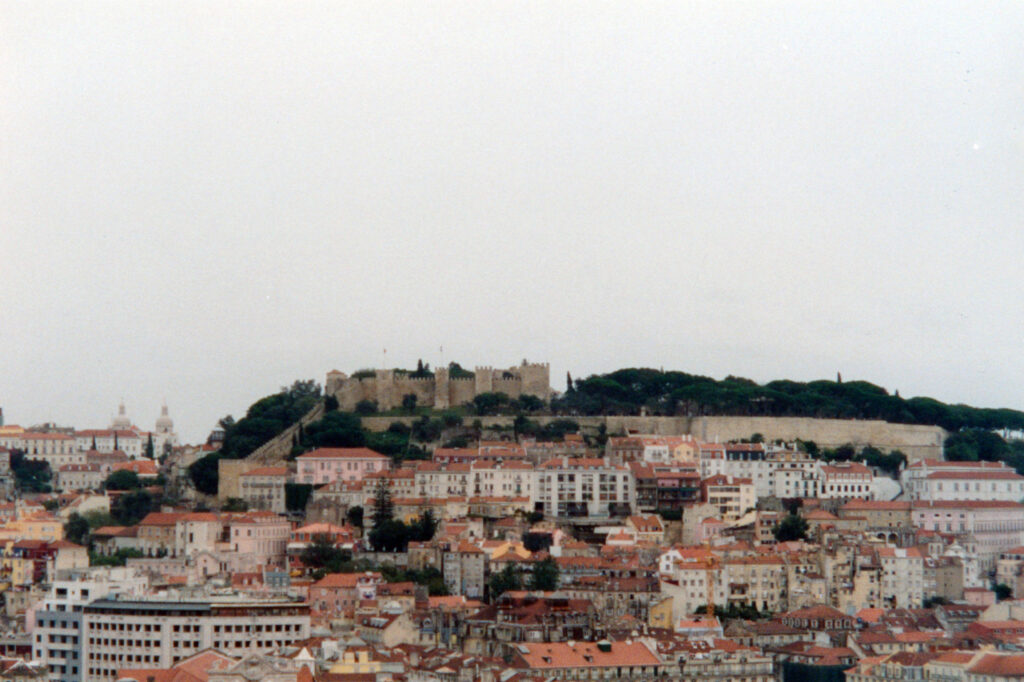 Castelo de São Jorge rising above the red roofs of Lisbon
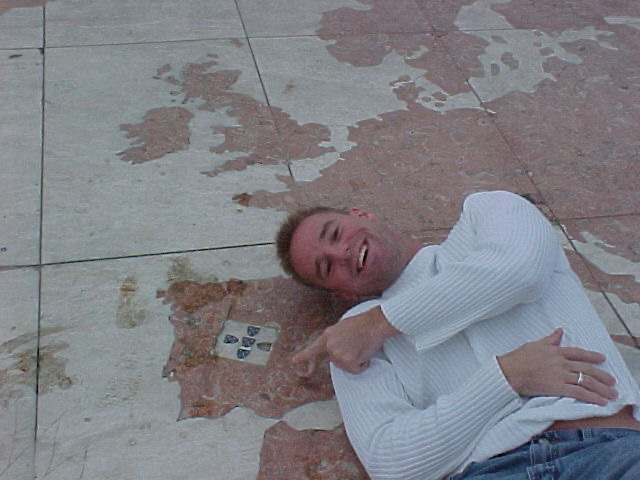 Lying across Portugal on the map at the Monument to the Discoveries, a suitably undignified way to mark the southern end of my summer travels.
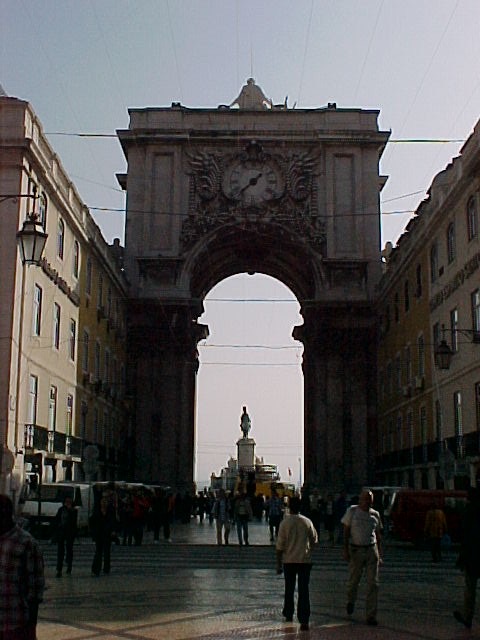 The Rua Augusta Arch opening from Lisbon’s rebuilt Baixa toward Praça do Comércio and the Tagus River
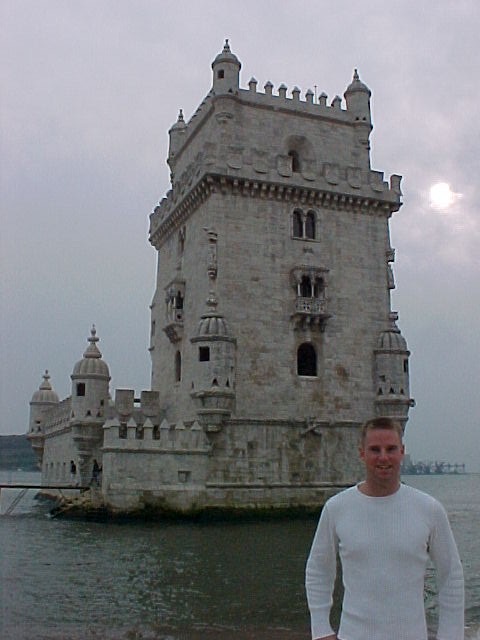 At the Tower of Belém, the ornate riverside fortress built during Portugal’s great age of maritime exploration
A City Built for Hills
Getting back down introduces another Lisbon specialty: transportation designed for people who eventually got tired of climbing.
By the late 19th century the city had begun building funiculars to connect neighborhoods separated by its steep hills. They are not really tourist novelties, although they’re certainly picturesque; they are pieces of urban infrastructure created because Lisbon’s topography makes a few blocks on a map considerably more ambitious in real life.
Between the hills are small gardens, neighborhood squares and outdoor markets that give Lisbon a much more intimate scale than the enormous monuments along the river suggest.
The more we walk, the less interested I become in deciding whether Lisbon is beautiful in the same way as Paris or Florence. It isn’t. Its appeal is the collision: formal squares and crumbling façades, palm trees and cool Atlantic air, medieval streets and electric trams.
And Lisbon is making me work harder for it.
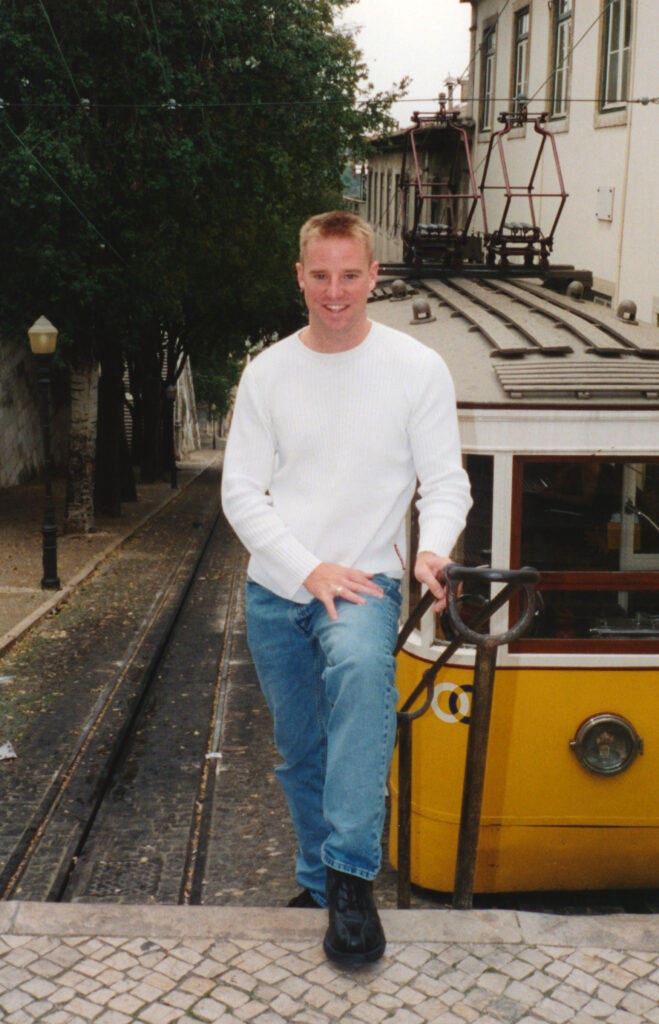 One of Lisbon’s historic yellow funiculars doing the work my legs are increasingly less interested in doing
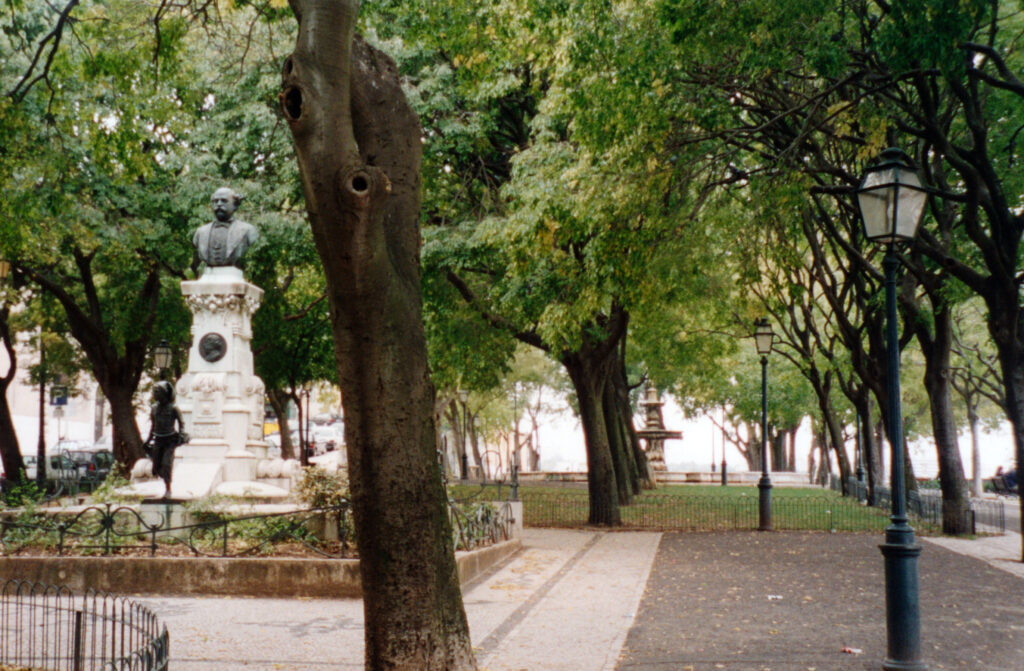 One of Lisbon’s shaded neighborhood gardens, a green break from the surrounding hills and stone streets.
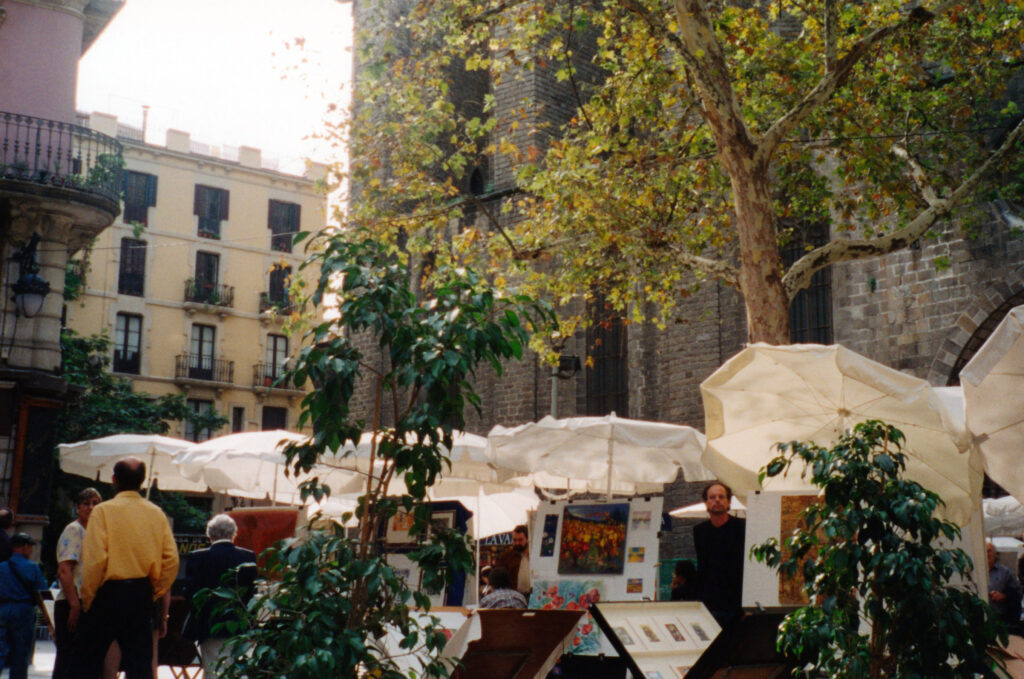 An outdoor art market tucked beside one of the old stone church
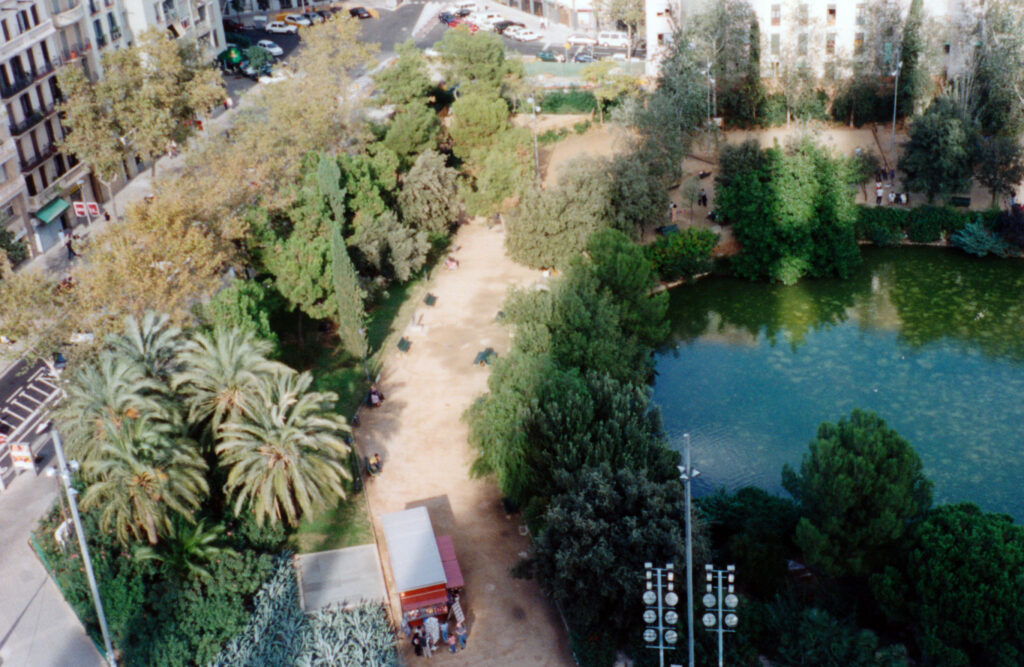 A surprisingly green pocket of Lisbon seen from above, palms and gardens packed into the dense city
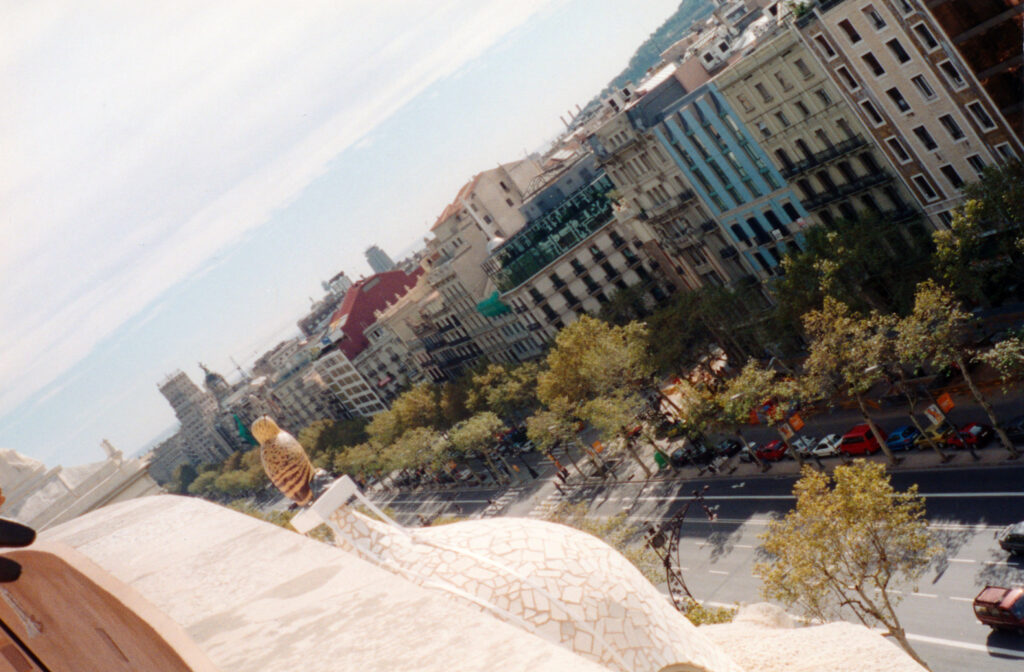 Looking across central Lisbon from above, the city stacked across its hills
Lisbon After Dark
When night arrives and the city changes personalities completely.
Buildings that look sleepy during the day open into unexpectedly modern bars and clubs, with interiors far more contemporary than their façades suggest. Suddenly Lisbon feels younger, louder and much more cosmopolitan. After a day spent walking through medieval streets, fortifications and earthquake reconstruction, ending up inside a sleek European club is another reminder that the city refuses to stay in one century.
Maybe some of Lisbon’s buildings aren’t abandoned.
They’re just nocturnal.
Following the Tagus to Belém
Sunday morning the Lonely Planet Pocket Guide comes back out for another self-guided walking tour, this time following the Tagus west toward Belém.
This is where Portugal’s history stops being primarily European and becomes global.
Before reaching the monuments, the 25 de Abril Bridge stretches across the Tagus toward Almada. It immediately looks familiar to an American eye — a giant red suspension bridge with more than a passing resemblance to San Francisco — but its name carries an entire political history.
The bridge opened under Portugal’s authoritarian Estado Novo government as the Salazar Bridge. After the Carnation Revolution ended the dictatorship in 1974, it was renamed for April 25, the date of the revolution. In 2001, that democratic revolution is only twenty-seven years in the past, making what looks like ordinary infrastructure a giant red reminder of how recently modern Portugal reinvented itself.
Farther west stands the Tower of Belém, one of the great symbols of the Portugal I had imagined before arriving.
Built during the reign of Manuel I, the tower helped defend Lisbon’s harbor while also serving as a ceremonial gateway to Portugal’s rapidly expanding maritime world. Its elaborate Manueline stonework celebrates the same age in which Portuguese sailors were pushing around Africa and across the Indian Ocean, connecting Europe directly with trading networks stretching as far as India and Asia.
Vasco da Gama’s (remember him from high school) voyages had opened a direct sea route between Europe and India, helping turn Lisbon into one of the great crossroads through which goods, people, ideas and enormous fortunes moved between continents.
This is the Portugal I had been expecting.
I was just looking for it in the weather instead of the history.
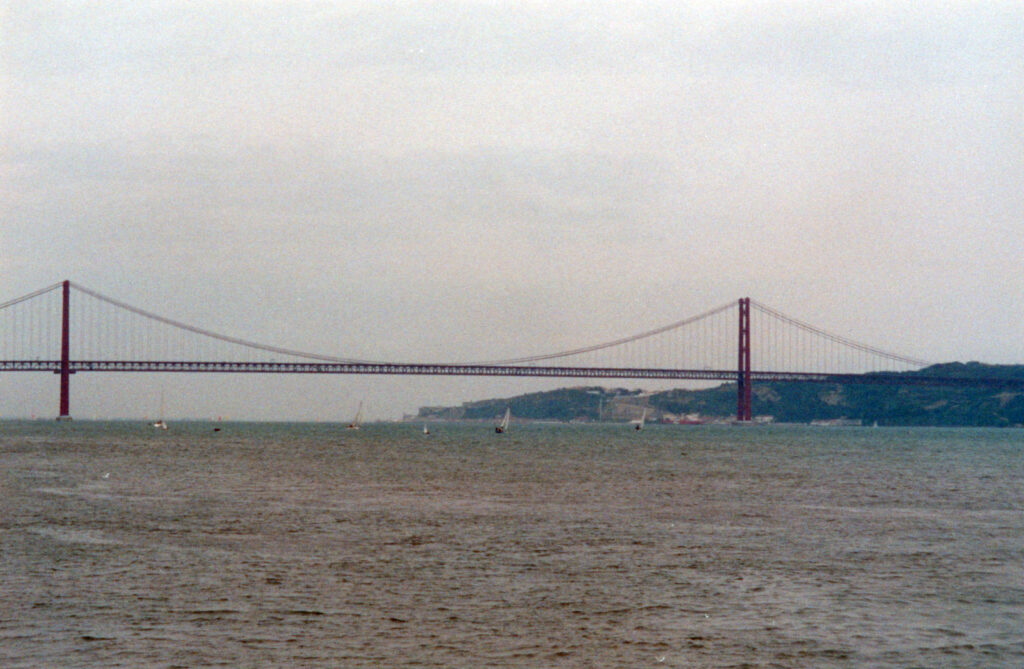 The 25 de Abril Bridge crossing the Tagus toward Almad
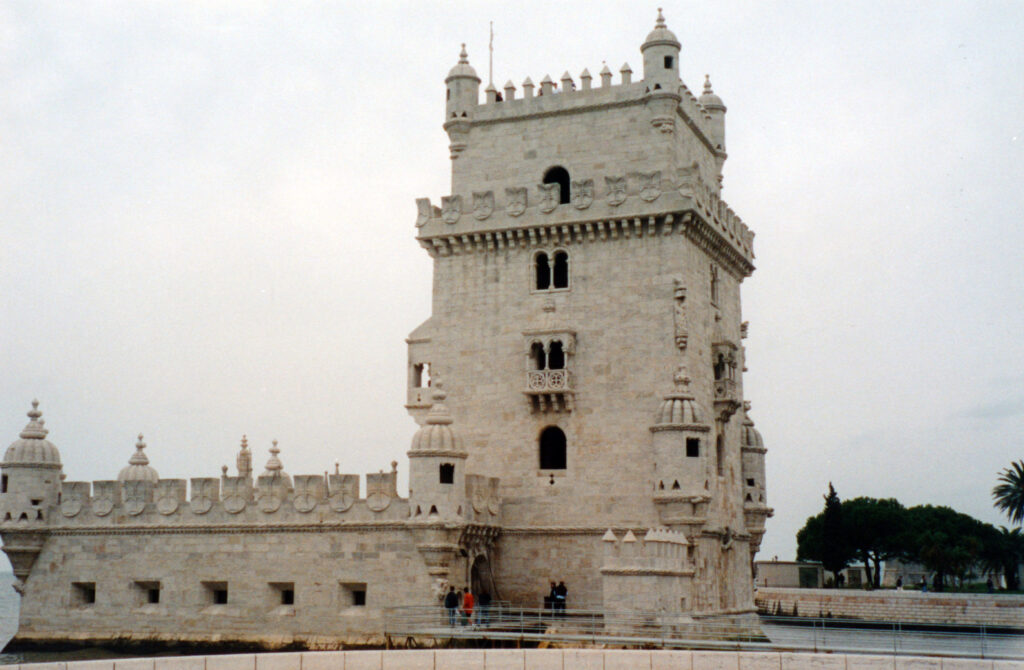 The Tower of Belém on the Tagus, more intricately decorated than its original military purpose might suggest
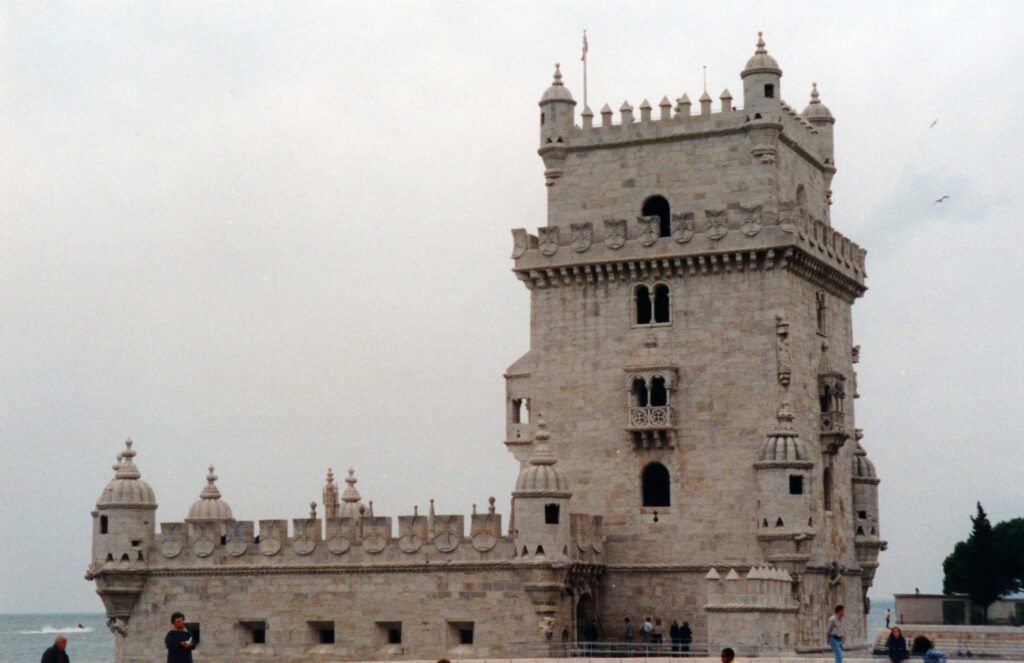 A closer view of the Tower of Belém and its ornate Manueline stonewo
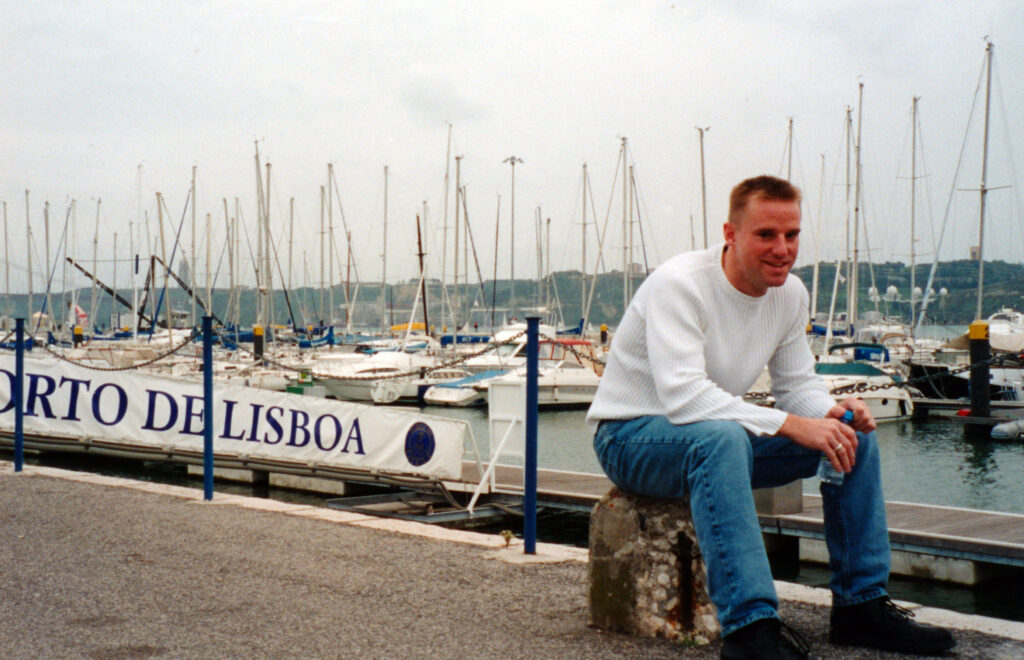 At the Porto de Lisboa, with the forest of sailboat masts behind me and the Tagus opening toward the Atlantic
Portugal Builds a Monument to Itself
A short walk away is the Padrão dos Descobrimentos, the Monument to the Discoveries, and it may be the most interesting monument of the weekend precisely because it isn’t nearly as old as it looks.
Portugal once sat at the center of one of the world’s great maritime networks. Ships leaving this stretch of the Tagus helped redraw European maps of the world, shifted international trade toward the Atlantic and created connections whose cultural consequences are still visible from Brazil to Africa to Asia.
The monument celebrates those achievements in the form of a giant stone ship — although from certain angles it looks suspiciously like an enormous sword — with Prince Henry the Navigator at its prow and a procession of explorers, navigators, cartographers, missionaries and patrons following behind him.
But the monument tells two histories at once. The original version was created for the Portuguese World Exhibition in 1940, when the Estado Novo dictatorship was using Portugal’s Age of Discovery to celebrate a modern imperial identity. The permanent stone version standing here followed only in 1960.
So what initially looks like a monument from Portugal’s 15th- and 16th-century golden age is actually a striking piece of 20th-century monumental design — one era of Portugal deliberately telling the story of another.
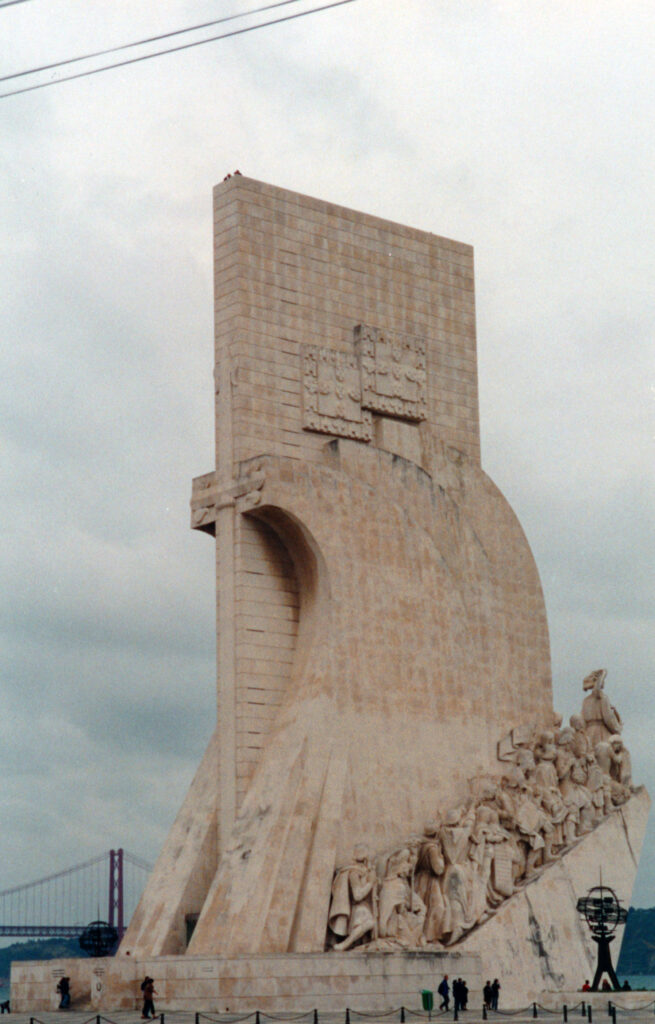 The Monument to the Discoveries projecting toward the Tagus like the prow of an enormous stone ship
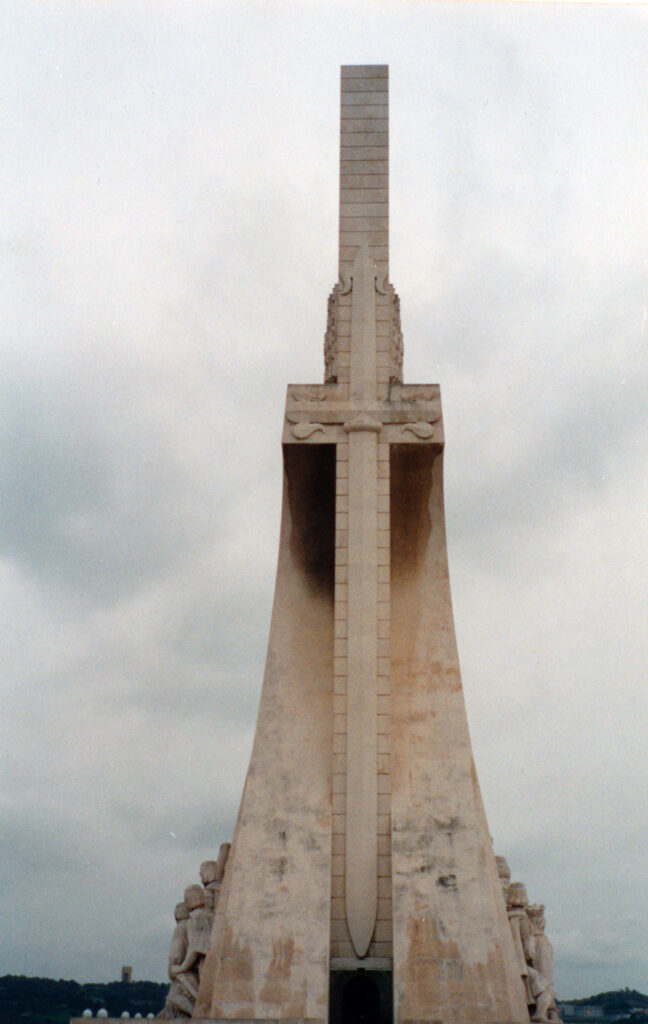 The monument from the front, its caravel-like form becoming even clearer
The End of my 2001 European Tour
By Sunday afternoon I realize Lisbon has actually delivered exactly what I wanted from the final trip of the summer. Just not in the way I expected.
It isn’t exotic because it feels tropical. It feels different because it occupies a strange intersection of worlds: Mediterranean and Atlantic, European and global, medieval and modern, imperial and post-imperial. The worn façades that initially surprise me sit beside one of Europe’s great stories of destruction and reconstruction and the monuments at Belém point toward a period when this relatively small country connected the world’s known continents.
The trip officially brings the Todd Moniot Tour de Europe, Summer 2001, to an end. From the UK to Italy, Scandinavia to Spain, Paris to Prague, and now as far southwest as Lisbon, I’ve managed to cover a remarkable amount of Europe without becoming any better at packing.
Next time I come to Portugal, though, I think I head north.
There is apparently an entire region devoted to Port wine.
Who knew?
Revisiting This Post in 2026: The City I Was Learning to Read
The most prophetic sentence in my original Lisbon post was probably one I tossed away almost as an afterthought: maybe it’s a city I’ll appreciate more in hindsight.
Twenty-five years later, that’s exactly what happened. What I interpreted in 2001 as contradictions were really the story of Lisbon sitting in plain sight.
Even my surprise at the climate says something about how I understood Portugal then. I knew Portugal through the places its sailors had reached — especially Brazil — more than I understood Portugal itself, so I expected some version of those places to have washed back onto Europe.
Instead I found a dry Atlantic city of steep hills, cool ocean air, tiled buildings and enormous historical reach.
I had saved what I thought would be the most exotic destination for last.
Lisbon’s final surprise was that I had been right, just for completely the wrong reasons.