Florence may be the most beautiful city in the most beautiful region I have ever experienced.
Now several months into living in London, where sunshine feels more like a rumor than a weather pattern, Florence sunshine is shocking. Terracotta roofs, pale stone buildings, bicycles, outdoor cafés, narrow streets, wine, and morning to night sunlight.
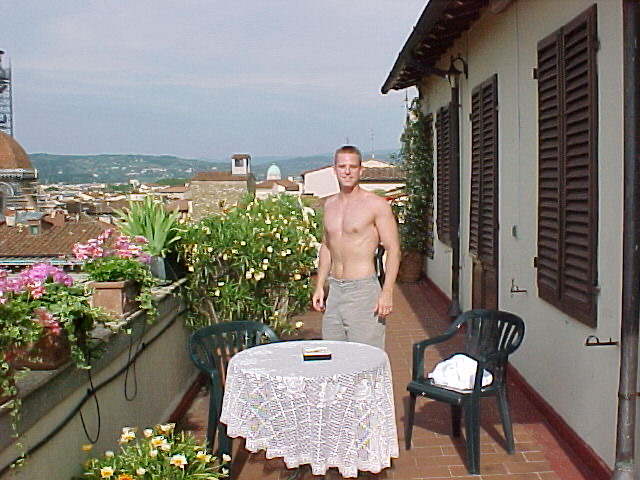
From my private terrace at the Hotel Nuova Italia, Brunelleschi’s enormous red dome seems almost close enough to touch. Walk a few blocks and it disappears behind the buildings. Turn another corner and there it is again, towering over everything.
I have come to Florence partly to get out of London and partly to meet up with a friend who is hosting a tour of Italy. Rhett, my friend and, whenever I return to Washington —and I still don’t a have a date for that yet — neighbor Rhett is here chaperoning a Marymount University study-abroad program. He teaches European history, so I am essentially getting a private tour of the birthplace of the Renaissance from someone who studies it for a living.
But Rhett doesn’t arrive until Saturday. I arrive late Thursday.
Friday, Florence has an entirely different curriculum for me in mind.
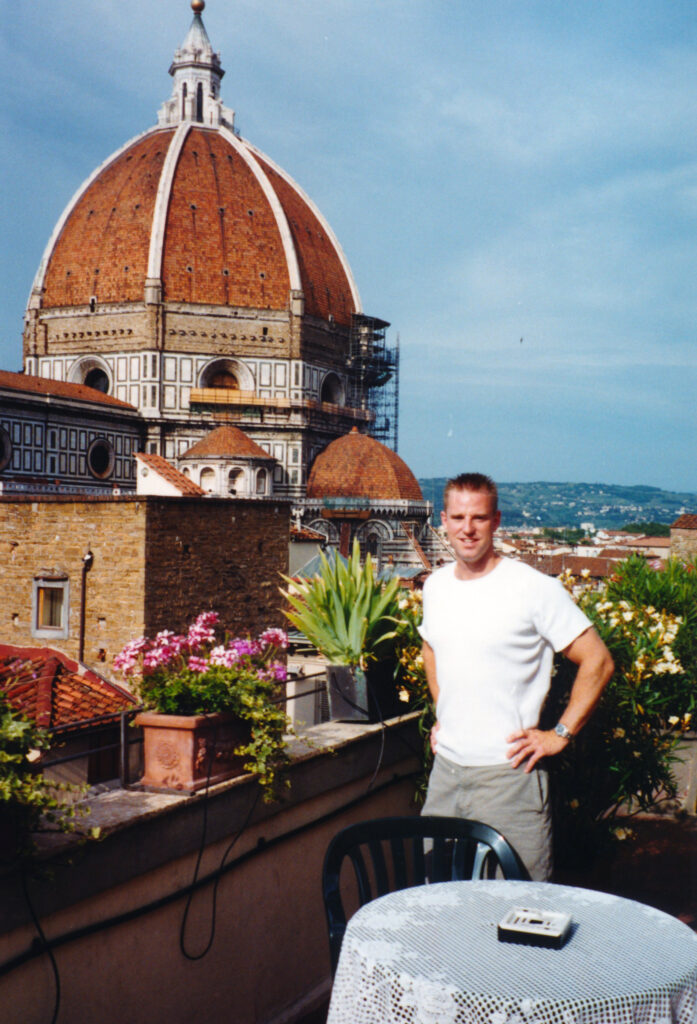 The view from the hotel terrace, with Brunelleschi’s dome
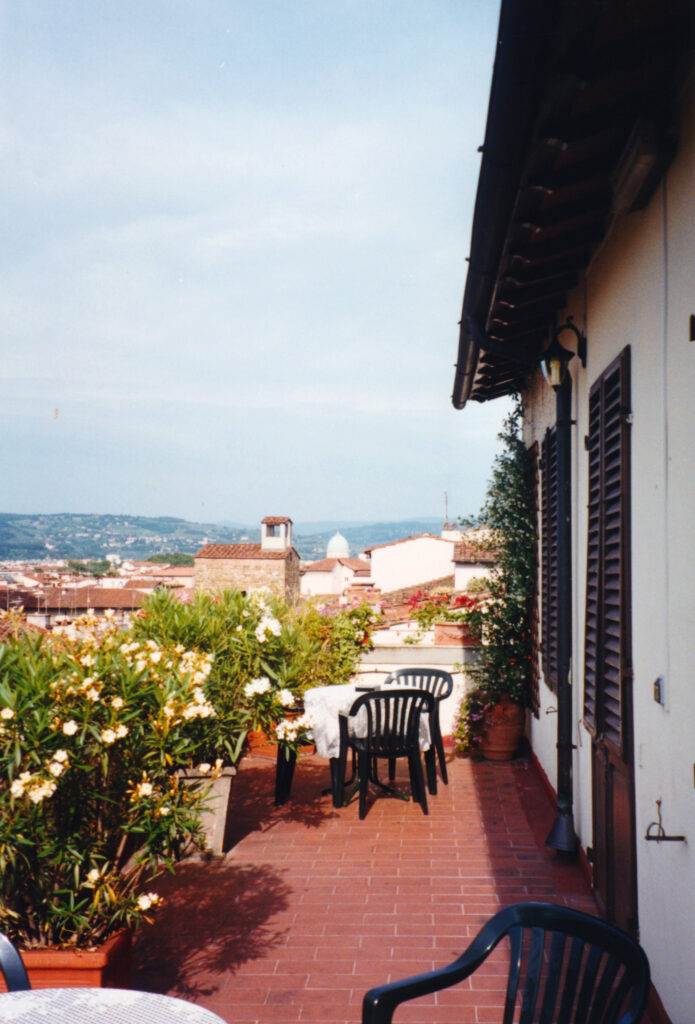 The hotel terrace overlooking the rooftops of Florence.
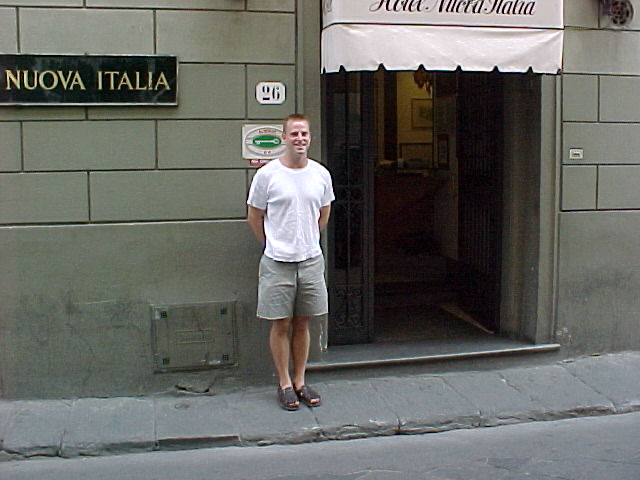 Hotel Nuova Italia, my base in central Florence.
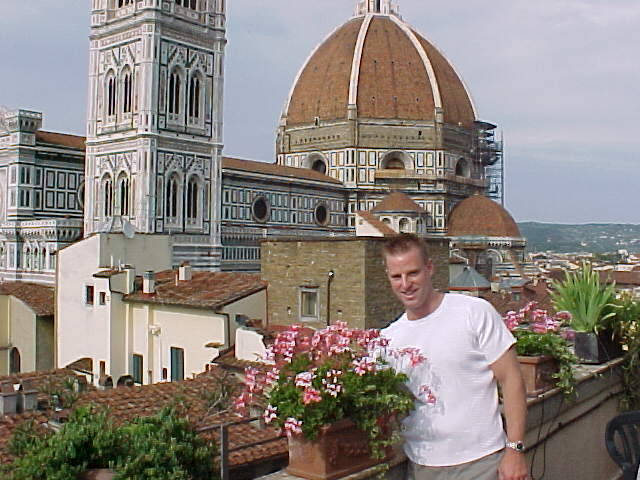 The view from the hotel terrace, with Brunelleschi’s dome
A City to Myself
This is one of the first times I have flown somewhere essentially on my own.
There is something liberating about arriving in a foreign city knowing that nobody is waiting for you and, for the next day or so, nobody particularly knows where you are. This is 2001. There is no iPhone in my pocket, no Google Maps, no texts to coordinate where and when, no location sharing, and no restaurant reviews appearing as little stars on a screen.
You get a hotel address, remember to buy a Lonely Planet Pocket Travel Guide at the airport before you depart, and figure it out.
So Friday I simply wander, choosing three of the guide’s suggested walking tours. Florence turns out to be particularly good for wandering. Narrow streets burst open into piazzas. Cafés spill onto sidewalks. Scooters occupy every available square inch of pavement. And everywhere, no matter which direction I walk, Brunelleschi’s dome keeps appearing between the buildings.
Then, I duck into a recommended cafe and meet Stefano.
Stefano is Italian, beautiful and, as it turns out, an underwear model. Apparently Florence has additional plans for my long, “Bank Holiday Monday” weekend.
What follows is one of those travel encounters that develops at a speed that would seem completely irrational at home but perfectly reasonable when you’re alone on a summer holiday in Italy. We spend Friday together, then Friday night altogether. Spontaneous, uncomplicated and hot enough to make the Tuscan sun seem comparatively cool.
I had come to Florence expecting Renaissance art. By Saturday morning I had already received a comprehensive education in the Italian human form.
As it turns out, Rhett’s lesson plan is about to continue the theme.
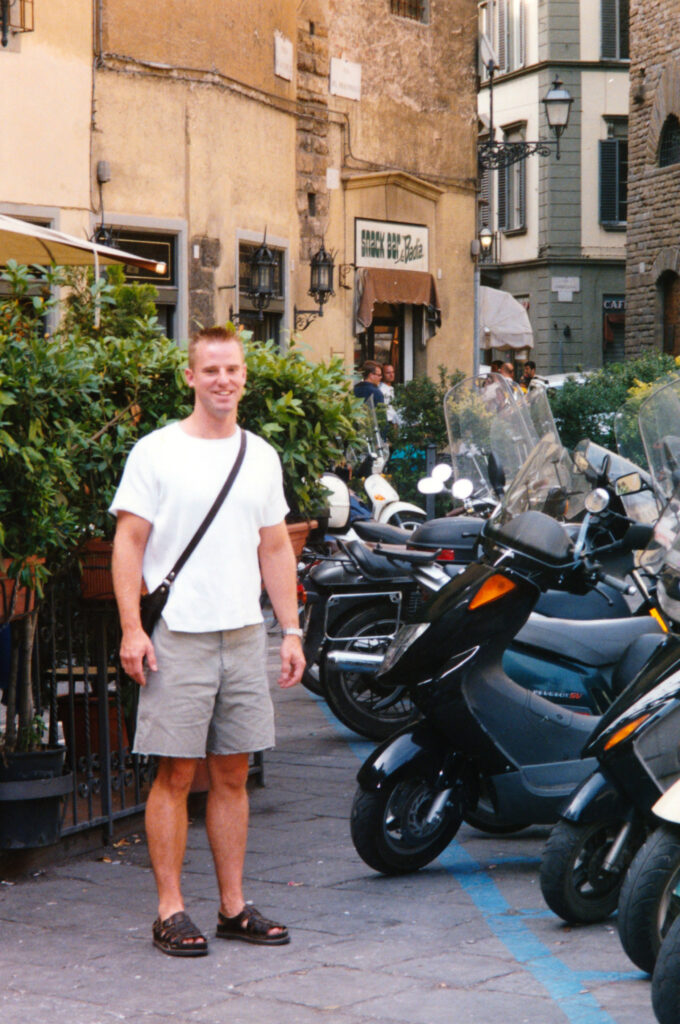 Florence in a photo: sunshine, scooters & cafés
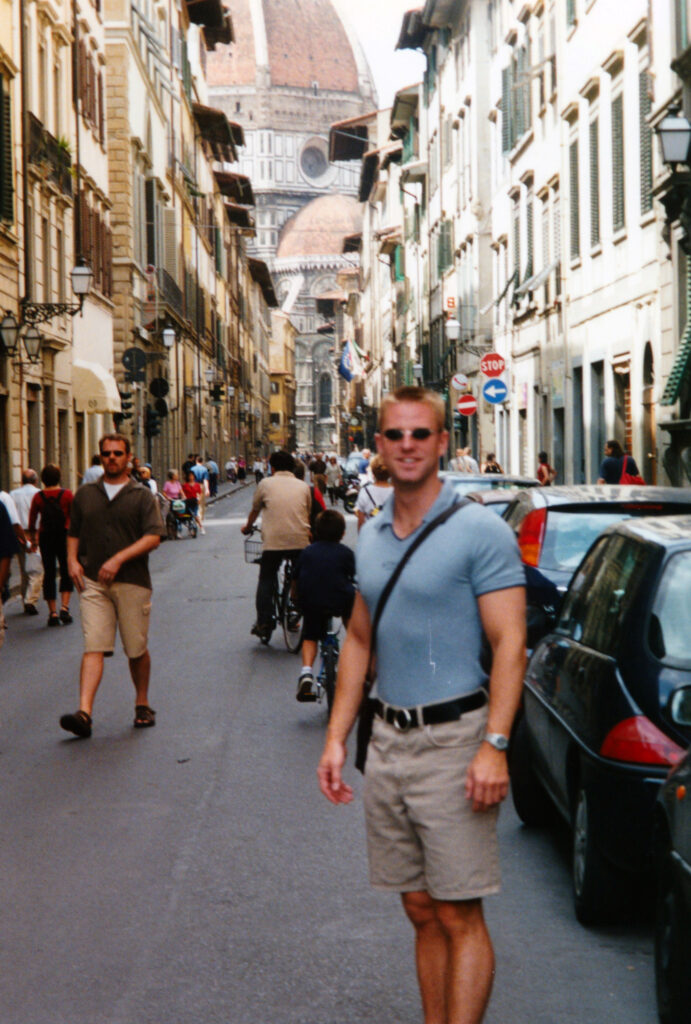 Me on the way to Il Duomo
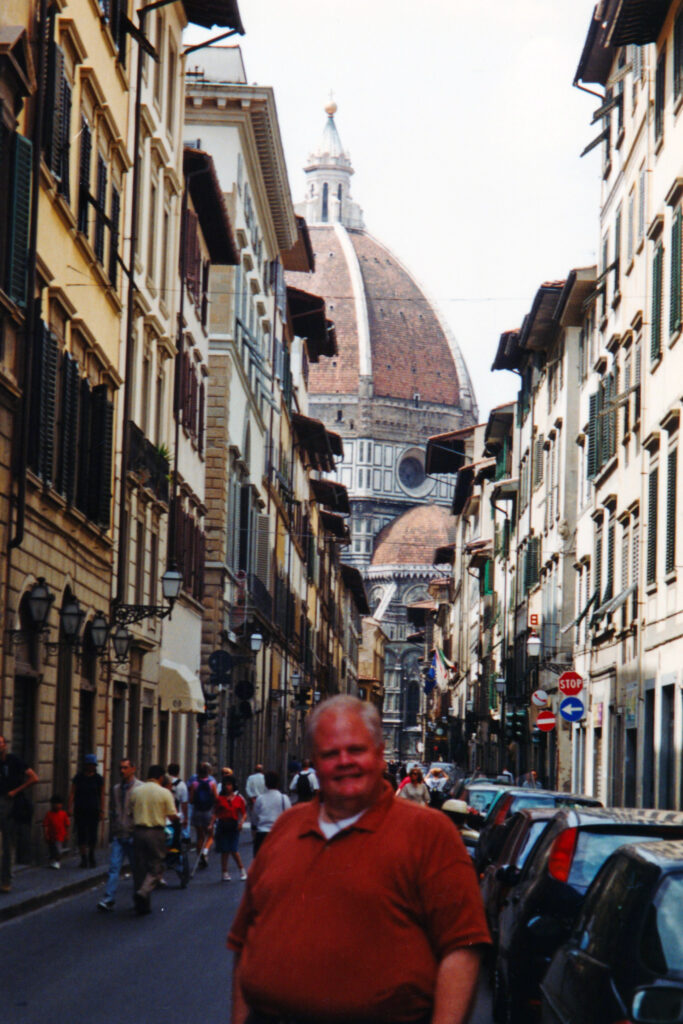 Rhett on the way to Il Duomo
An Awkward Change of Professors
Weeks before this trip, Rhett and I made a plan: Saturday morning, my hotel lobby, 9:30 AM.
That’s it.
There are no Saturday-morning texts confirming that he is on his way, no tracking his little blue dot across Italy, no “I’m downstairs.” We simply agreed weeks earlier that Rhett would show up at my hotel on Saturday morning at 9:00 AM.
And he does.
There is something almost quaint about it now, but this is simply how travel worked in 2001. You make a plan and then trust that another human being will honor it. There was, however, one complication I failed to anticipate when we made the arrangement: Stefano is there with me, both of us smiling sheepishly.
Italian hotels required identification from overnight guests, so his ID spent the evening at the front desk. Retrieving it requires all three of us to converge in the same cramped space at the same time. Before Rhett could introduce me to the Renaissance, I had to introduce him to Stefano.
There is an awkward hello. Stefano retrieved his identification. Rhett absorbed the situation with a sly sparkle in his eye, then within minutes my weekend changes gears completely.
After an awkward goodbye, Rhett and I go to breakfast.
Breakfast Before the Renaissance
We start the day the way almost every great day in Italy should begin: enjoying breakfast outside at a café.
The formula is simple: exceptional coffee, pastry, sunshine and people moving through the streets around us. It is a relaxing moment to prepare for the onslaught Rhett has planned for the next several hours.
Because we have a list: the Davids, the Bargello, the Medici Chapels, the Accademia, the Uffizi, churches, exhibits, sculptures, paintings.
And Rhett has another advantage beyond knowing what all of these things are: academic credentials.
Summer lines outside Florence’s great museums can stretch for hours. Rhett flashes his university identification, has a brief conversation with someone at the entrance and, more often than not, we politely bypass a line filled with sun drenched tourists. I decide immediately that full time travel with a professor is highly underrated.
But the real benefit isn’t skipping the lines. Rhett doesn’t march me past famous objects and tell me their names. He explains why they matter.
Two Davids, Two Ideas
Our first stop is an in-depth exploration of the “Two Davids.” The first is Donatello’s at the Bargello. We breeze politely past a line that looks capable of consuming a significant portion of the day, and with a wave of Rhett’s academic credentials we soon find ourselves standing in front of one of the most provocative sculptures of the early Renaissance.
Created in bronze during the fifteenth century, Donatello’s David is extraordinary before you even begin discussing what it means. Europe has produced almost nothing like this for centuries: a nearly life-size, freestanding nude inspired by the classical world.
Rhett tells me not simply to look at it, but to walk around it. Most tourists don’t seem to be doing that. I’m fairly certain that in my mid-twenties I wouldn’t have thought to do it either. But it changes everything.
From the front, David appears male: a young warrior standing above Goliath’s severed head, an enormous sword in his hand. Move behind him and the impression changes. His body becomes softer and remarkably androgynous. His posture is delicate. His long hair curls around his shoulders. A feather from Goliath’s helmet travels suggestively upward along David’s leg. From this angle, even that enormous sword seems oddly mismatched with the figure holding it.
Rhett explains that scholars have spent generations debating the sculpture’s unusual combination of masculine and feminine qualities. Suddenly we aren’t simply looking at a biblical hero. We are talking about gender, beauty, sexuality, classical ideals and what it means to represent the human body.
The sculpture is nearly six hundred years old and somehow the argument surrounding it feels completely contemporary.
Then we go see Michelangelo’s David.
Same biblical teenager. Entirely different idea. Michelangelo’s David is deliberately larger than life: more than fourteen feet of marble. There is nothing delicate about this version. He is unapologetically male, physically powerful, tense and astonishingly alive.
More interestingly, Michelangelo doesn’t show David after defeating Goliath. He shows him before. There is no severed head beneath his feet yet. David is watching, thinking, preparing. His body is relaxed enough to stand naturally but tense enough that you can sense what is about to happen. Veins rise beneath the marble of his hand. Muscles shift across his torso. His head turns and his eyes focus toward an opponent we cannot see.
Michelangelo somehow makes a block of stone appear conscious.
Why David has decided to enter battle completely nude remains unclear to me, although I probably would have shown considerably more interest in military service had this intriguing tradition survived into the modern era.
The two sculptures together tell an extraordinary story. Donatello helps return the freestanding classical nude to Western art after centuries of absence. Roughly seventy years later, Michelangelo takes the same young biblical hero and makes him monumental.
One David invites ambiguity. The other announces certainty.
And there is something wonderfully appropriate about having this conversation in Florence the morning after meeting Stefano. The Renaissance, after all, is partly about putting human beings, their bodies, emotions, intellect and individual identities, back at the center of the frame.
Florence appears determined to make sure I understand the lesson from every possible angle.
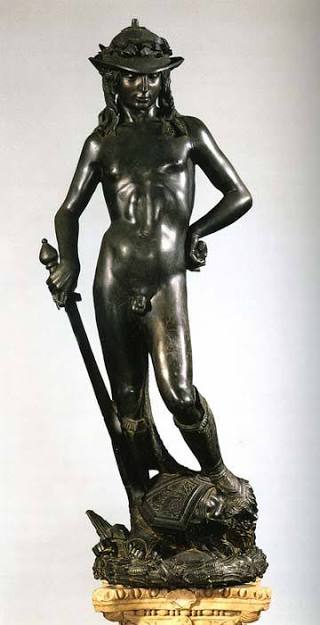 Donatello’s David: man from the front
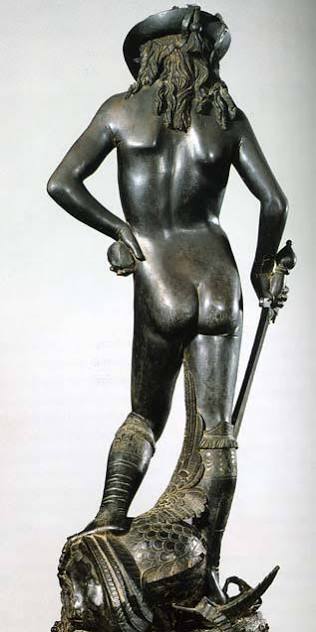 Donatello’s David: woman from behind
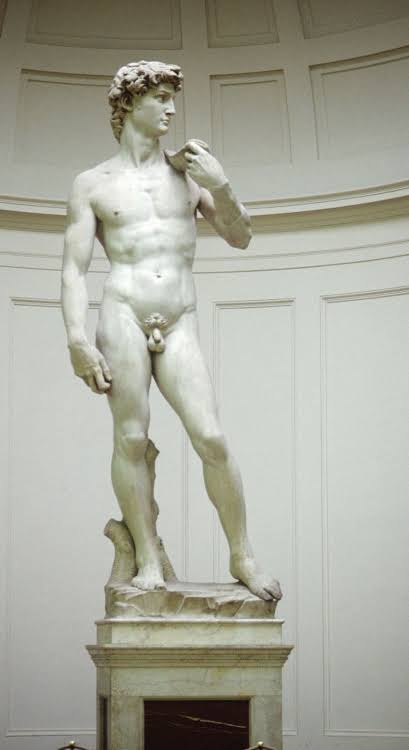 Michelangelo’s David: too realistic?
Florence and the Family Behind It
You cannot spend much time discussing Renaissance Florence before another name begins appearing everywhere: Medici.
Rhett can tell Medici stories endlessly. They begin as bankers and become political power brokers, patrons, rulers and eventually one of the most influential families in Europe. At its peak in the fifteenth century, the Medici Bank becomes one of Europe’s dominant financial institutions. Between 1435 and 1450 alone, the bank generates nearly 300,000 florins in profit: an amount representing several hundred million dollars in modern purchasing power.
And this is centuries before industrialization creates the mechanisms through which later fortunes become truly enormous.
The Medici do not simply have money. They have money in precisely the place and at precisely the moment when money can change history. Their banking network stretches across Europe. They develop an extraordinarily important relationship with the papacy. Members of the family eventually become popes themselves. Their alliances influence politics far beyond Tuscany.
But walking around Florence, the most obvious evidence of Medici power isn’t sitting in a bank ledger. It is hanging on walls, standing in courtyards, and rising above the city. The Medici understand something extraordinarily modern: power does not have to be expressed only through armies or political office. It can be expressed through culture.
Artists need workshops, materials and time. Marble has to be quarried and transported. Bronze is expensive. Churches require enormous capital. Painters need patrons willing to fund work that might take months or years.
Florence has extraordinary creative talent. The Medici have extraordinary wealth.
Put the two together and you begin to understand why one relatively small city contains such a ridiculous concentration of masterpieces. Donatello’s David itself becomes closely associated with Medici patronage and eventually stands in the courtyard of their palace.
Suddenly the sculpture Rhett and I have just studied isn’t merely an artwork. It is religion, sexuality, money, politics, classical history and Florentine civic identity cast together in bronze.
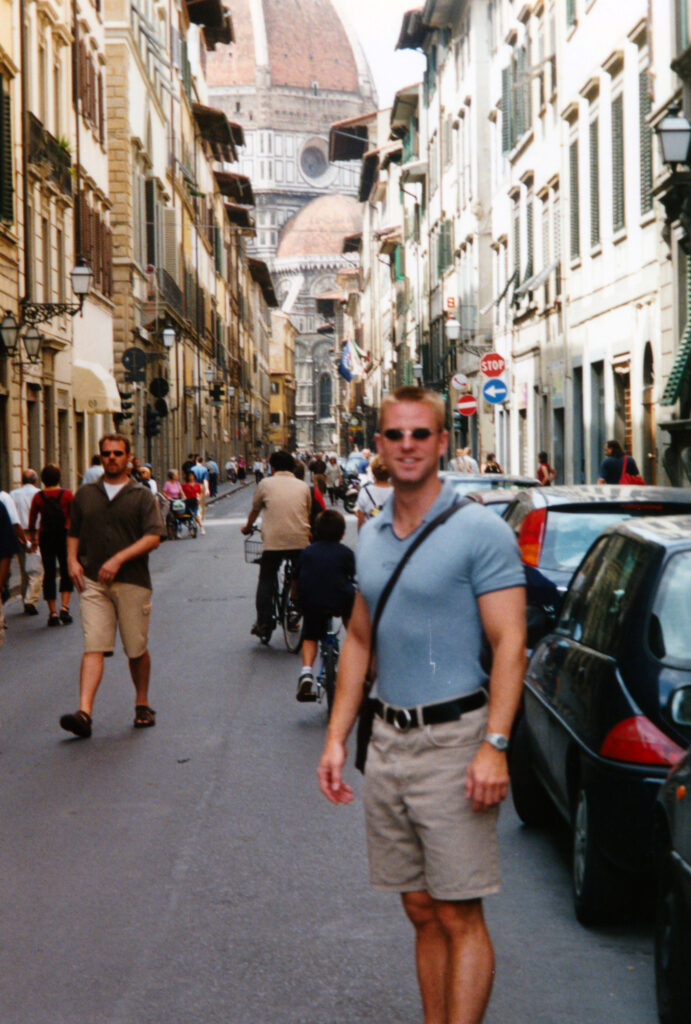 You’re never out of the shadow of the Duomo
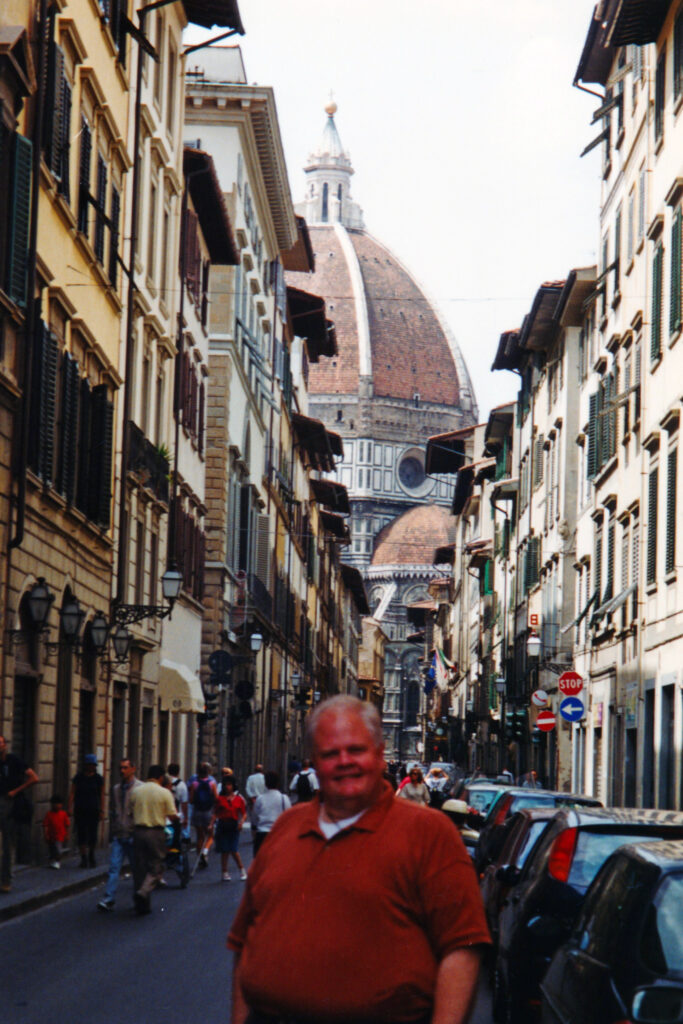 You’re never out of the shadow of the Duomo
When Paintings Learned to Breathe
This begins connecting with art-history classes I took as an undergraduate.
One of the things that fascinated me then was how dramatically European painting changes around the Renaissance. Look at much earlier medieval religious art and the difference is obvious. Figures typically stand against dark or gold backgrounds. Space can appear flat. Scale, well, there isn’t any: these paintings are decidedly one dimensional. There is only one dominant focal point, often a face or religious figure, and basically little sense of any connection to the physical world there figure resides in.
Then something extraordinary begins happening. Oil based paints are invented.
With this creation comes the ability to blend colors. With the ability to create color gradients, artists almost instantly evolve paintings to develop depth. Distant landscapes are now possible and recede toward distant points. Multiple focal points emerge: a figure in the foreground with a depth of people farther away become progressively smaller. Bodies acquire volume. Landscapes stretch toward endless horizons. Shadows, beams of light, and the feeling of time and movement now become possible to depict.
Oil paint facilitates this transformation because artists can blend colors more gradually, build translucent layers and create subtler transitions between light and shadow. But Rhett’s Florence is making clear that no single invention creates the Renaissance.
It is perspective, mathematics, anatomy, observation, classical ideas rediscovered after centuries, new painting techniques, and mounds of Medici money allow extraordinarily talented artists to explode with an endless stream of art.
The result is profound.
Paintings stop merely occupying walls. They begin opening them. You can stand in front of a great Renaissance painting and look into it. There are bodies in the foreground, buildings behind them, mountains in the distance, clouds above those, angels twisting into the sky. Light enters from one direction while shadows establish the depth of everything around it.
The artists haven’t simply learned to paint people more realistically. They have learned to create worlds.
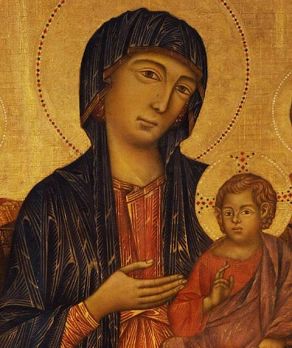 Art Before the Renaissance
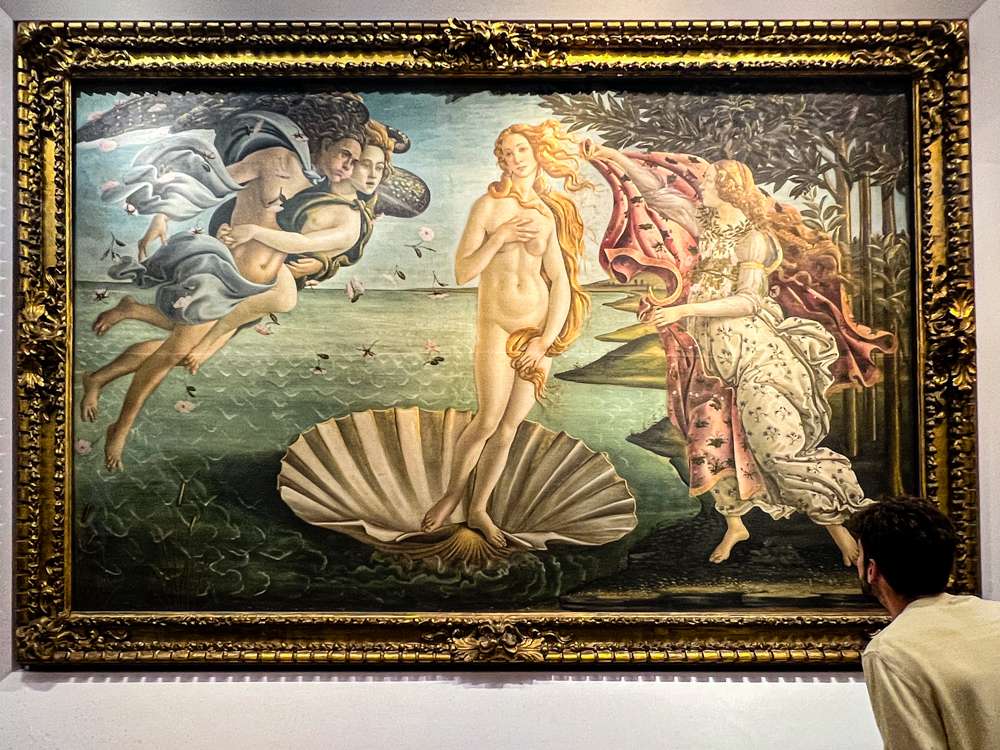 Art After the Renaissance
Under Brunelleschi’s Impossible Dome
Then there is Florence itself.
The Renaissance here doesn’t feel like a historical period. It feels like an architectural condition.
And Rhett is literally and figuratively walking me through it.
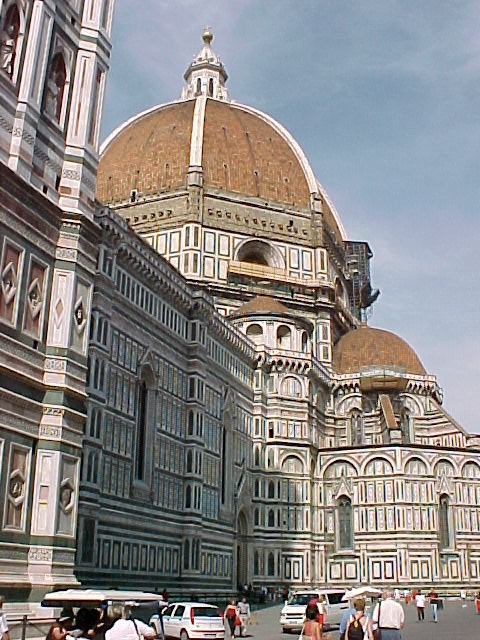
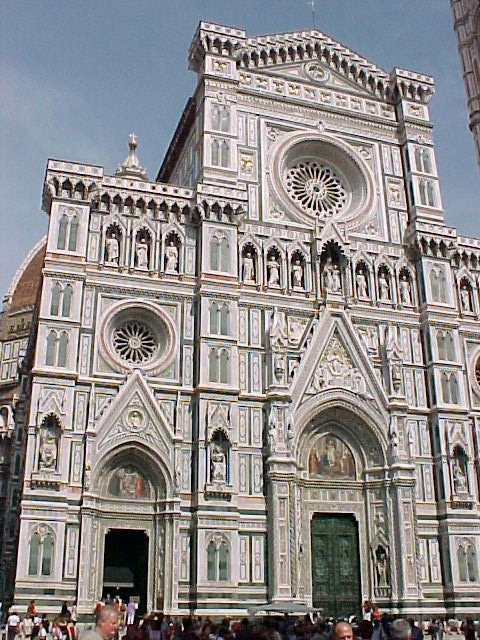
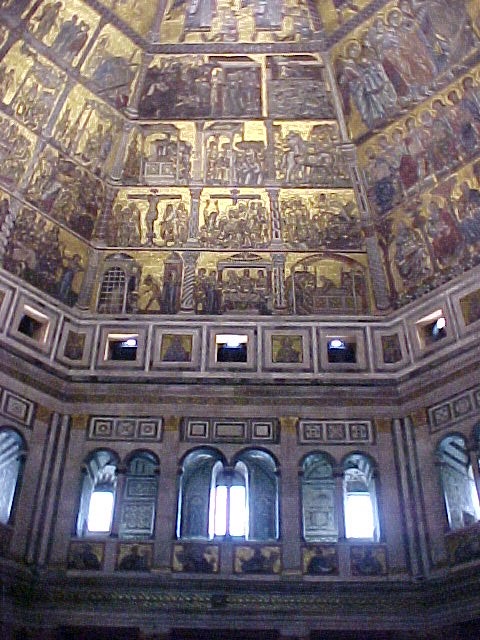
Ill Duomo, the Cathedral of Santa Maria del Fiore, dominates the city. Wrapped in elaborate green, pink and white marble and crowned by Filippo Brunelleschi’s enormous brick dome it towers over all. The cathedral was under construction for generations when Florence encountered a rather substantial problem: it had designed a cathedral requiring an enormous dome without anyone knowing exactly how to build anything that large. Traditional wooden centering would require extraordinary quantities of timber. The span was enormous. The engineering problem seemed almost absurd.
Brunelleschi solves it anyway.
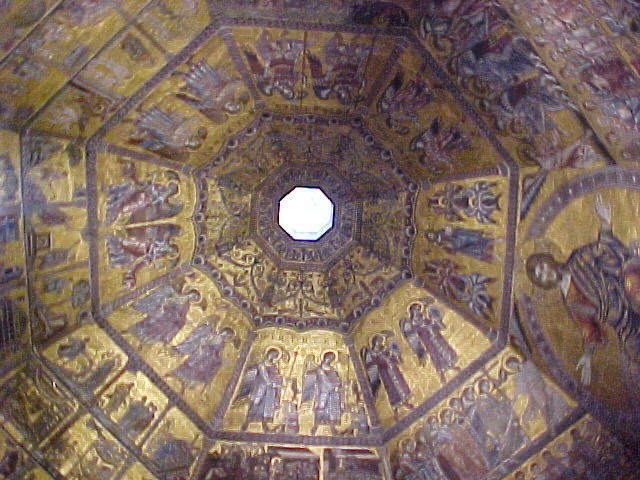
He devises a double-shell dome and innovative brickwork that allows the structure to support itself as it rises. Six centuries later, it remains one of the largest Christian churches ever built and features the largest brick-and-mortar masonry dome in the world, even larger than the Hagia Sophia in Istanbul.
After lingering in the plaza take in the view we eventually leave, walk down another street, turn through another piazza, disappear into another museum, and eventually the dome appears again. That is one of the peculiar things about Florence. it is impossible to be out of sight of the Duomo for long.
Across the Arno
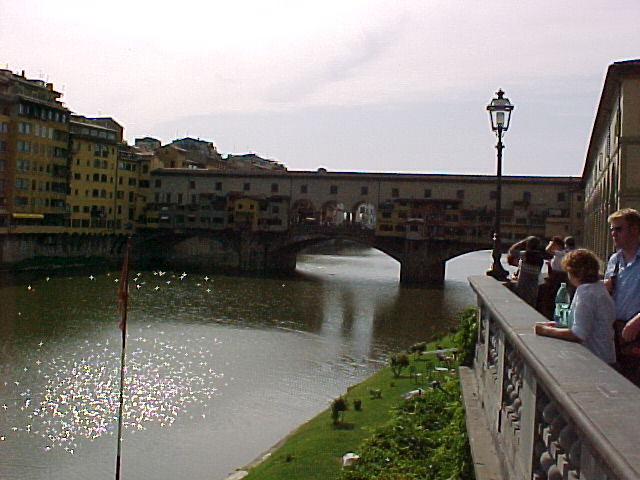
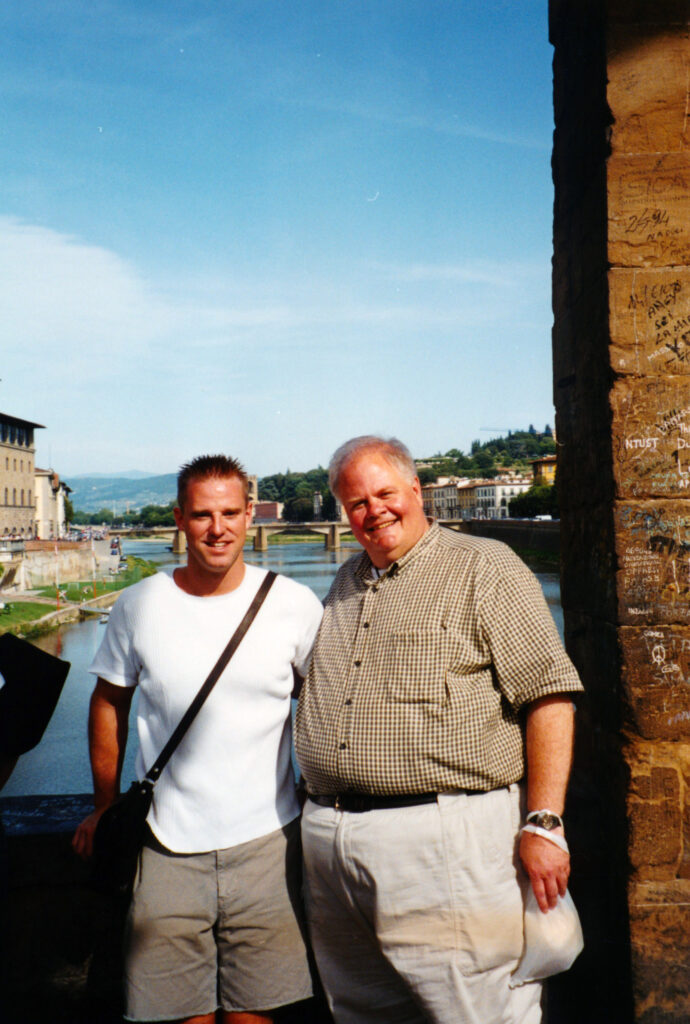
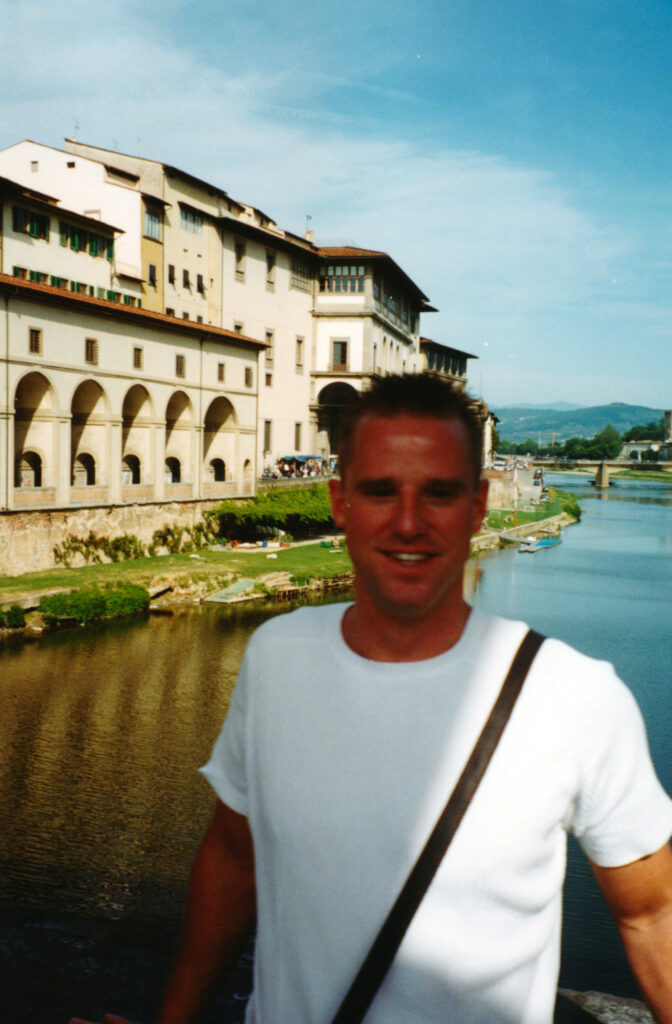
The Ponte Vecchio is practically unavoidable once we leave the Uffizi, so naturally we cross it. The medieval bridge is lined with goldsmiths and jewelers, a tradition that has defined it for centuries. After a day buried in museums, sculpture and Medici history, it feels almost refreshing to encounter a Florentine landmark whose primary purpose is shopping.
Later that evening, though, we cross the Arno again under very different circumstances. We change out of our touring clothes, dress properly for dinner and walk all the way across the river to Trattoria Cammillo, a Florentine institution that has been family-run since 1945.
Cammillo feels exactly like the kind of restaurant that should appear in a Godfather movie: white tablecloths, monogrammed plates, old-world service and, most reassuringly, far more locals than tourists. The menu is deeply Tuscan—ribollita, pastas, meats—but it also has a few wonderfully idiosyncratic specialties, including an artichoke frittata and, unexpectedly, curry chicken with chutney.
Determined to eat like Italians celebrating a special occasion—in this case, thanking Rhett for essentially giving me a private tour of Florence—I take charge and order for both of us: appetizers, a pasta course, a meat course and dessert.
Sunday Swim
By around three Sunday afternoon, after cramming several centuries of Western civilization into a day and a half, I am ready for a different kind of Florence.
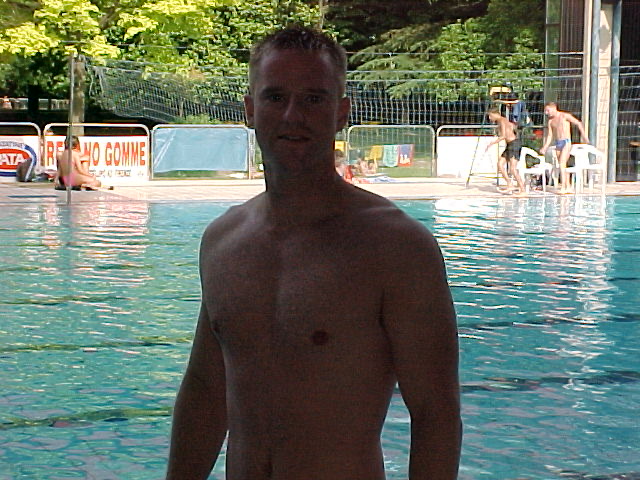
Whenever I travel by myself, I try to find an Olympic-size pool and swim laps. It is a slightly strange personal tradition, but as a former college swimmer, I have discovered that a good pool tells me something about a city. Call it my own completely subjective quality-of-life index.
Florence passes.
After a little research and a cab ride conducted at approximately the speed of light, I find an outdoor pool used mostly by locals and spend the afternoon swimming laps under the Tuscan sun. After museums, churches, sculpture and enough Renaissance history to fill a semester, there is something perfect about returning to something completely familiar.
Back at the hotel, I dry out on the balcony with the Duomo still hovering over the rooftops, then get ready to meet Stefano for drinks and one final night together.
For a weekend that started with no real plan beyond meeting Rhett in the lobby on Saturday morning, Florence has managed to become unexpectedly difficult to leave.
Revisiting This Post in 2026: What Rhett Left Behind
Reading the original version today, I’m struck by how little I understood about what I had been given that weekend.
At twenty-something, I mostly knew that Florence was beautiful, the museums were extraordinary, the food was excellent, Stefano was intoxicating, and having a professor along meant we didn’t have to stand in line. It felt like one spectacular long weekend in a city that seemed determined to overwhelm every sense at once.
What I understand now is that Rhett taught me how to look at it.
He connected Donatello to Michelangelo, Michelangelo to the Medici, the Medici to Florence, and Florence to a Renaissance that fundamentally changed Western art and thought. He made history feel less like a collection of dates and names and more like a chain of ideas, money, ambition, beauty and power.
That’s what great teachers do. They make individual facts part of a larger story.
Florence also became one of the first places where I understood how much I loved traveling on my own. I arrived alone, wandered without much of a plan, met someone I never could have planned to meet, swam laps with locals, and let the city unfold around me. Stefano and I stayed in touch by email for about a year before eventually losing contact, as people do.
Rhett left something different behind.
But more than any of those things, I remember standing beside Rhett while he explained why something created five hundred years earlier still mattered.
Twenty-five years later, I still catch myself looking at art and architecture the way he taught me to.
I’m still listening.