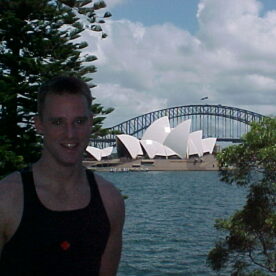
Barcelona began as a last-minute extension of my birthday: a cheap flight from London and a weekend built around two names I had been looking forward to experiencing in their own city: Pablo Picasso and Antoni Gaudí.
As someone who can happily lose a day in art museums, Barcelona wasn’t just another European weekend. Picasso had spent some of his most important formative years here, while Gaudí had effectively turned parts of the city itself into sculpture. I was going to spend two days immersed in both.
First, however, I had to actually get there.
The Failed Launch
I had been sick all week with a fairly spectacular head cold and fever, and by Thursday night I was packing in something approaching a pharmaceutical fog.
Friday afternoon I left work and made the long trek from central London to Stansted Airport for the cheap Go Airlines flight to Spain. After more than an hour on the Stansted “Express”, followed by another half hour standing in the check-in line, I made a teeny tiny, almost insignificant, discovery.
I didn’t have my passport.
There are several things that can complicate international travel. Not possessing the document that allows you to travel internationally remains fairly high on the list. So instead of Barcelona, Friday night became another train ride back to London and an early night before trying again Saturday morning.
There was, however, one unexpected benefit to this stupidity: I had also forgotten my camera.
Forgetting the passport had saved the photography for this post, and my growing photo album.
An added benefit was another good night sleep to knock out the cold. Let’s face it, if I had made it to Barcelona there was no way I was spending the first night in a hotel asleep. So early the next morning — and feeling much better — the second attempt. And this time with passport and camera both physically confirmed before leaving the flat. A few hours later the plane landed in Barcelona, I checked into a hotel in the old city, took a hot shower and headed outside immediately for coffee.
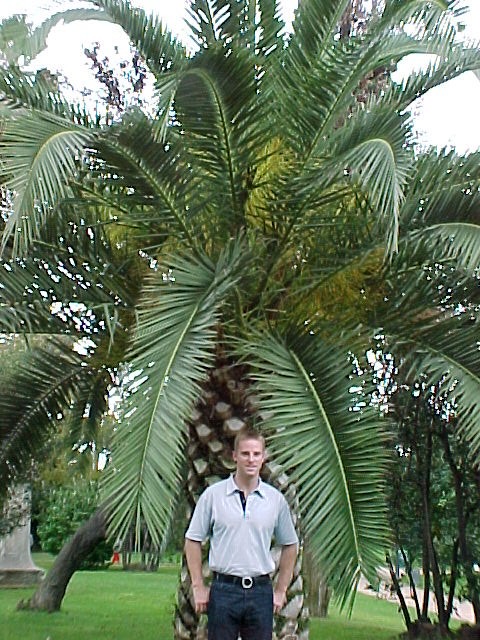 Palm trees and old buildings: my first impressions of Barcelon
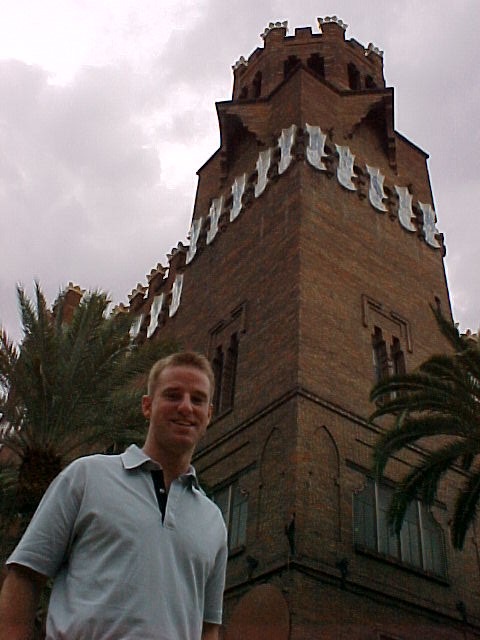 Barcelona’s layers of old stone, narrow streets and Mediterranean light
Picasso Before Picasso
My first priority was the Museu Picasso.
Obviously.
The largest museum in the world dedicated to a single artist, it occupies five adjoining medieval palaces along Carrer de Montcada, their Gothic courtyards and stone stairways making the setting almost as interesting as the collection itself.
And Barcelona is exactly where a Picasso museum belongs, because this was where Picasso became Picasso.
His family moved here in 1895 when he was fourteen. He enrolled at the Escola de Llotja, fell into Barcelona’s increasingly experimental artistic circles and held his first public exhibition in the city in 1900, at nineteen. Even after moving permanently to Paris in 1904, Barcelona remained central to his artistic identity.
That history explains why this museum feels so different from a greatest-hits parade of Cubism. Much of the collection is Picasso before the Picasso everyone recognizes: astonishingly accomplished academic studies by a teenager, experiments with new styles flowing between Barcelona and Paris, work from the Blue Period, and later paintings showing him returning again and again to the artists who came before him.
I left the museum bookshop with Yve-Alain Bois’ Matisse and Picasso, a book I had been particularly hoping to find. Bois traces the decades-long relationship between the two artists as something close to an artistic chess match: admiration, rivalry and an almost compulsive awareness of what the other guy was doing.
They met in 1906 and spent much of the next half-century responding to, borrowing from and trying to outdo one another.
Much of it reads like hate mail written in paint.
Naturally, I started skimming it while patiently waiting for the cashier.
That idea fascinated me almost as much as the paintings themselves. Art history gets far more interesting when masterpieces stop appearing as isolated flashes of genius and start looking like what they often were: conversations, arguments and occasional acts of one-upmanship between extraordinarily talented people..
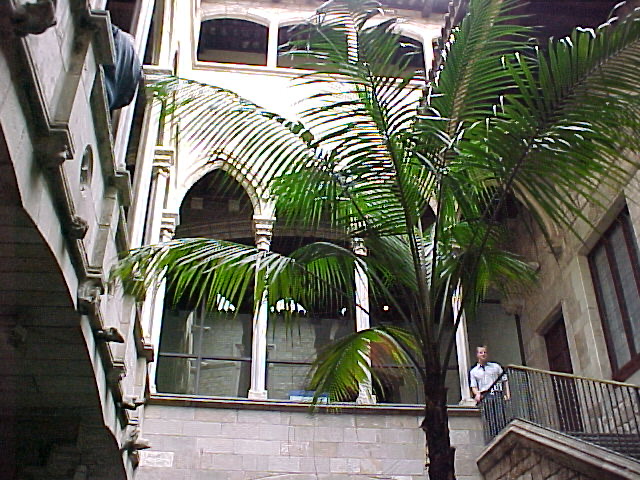 Entrance to the legendary Museu Picasso
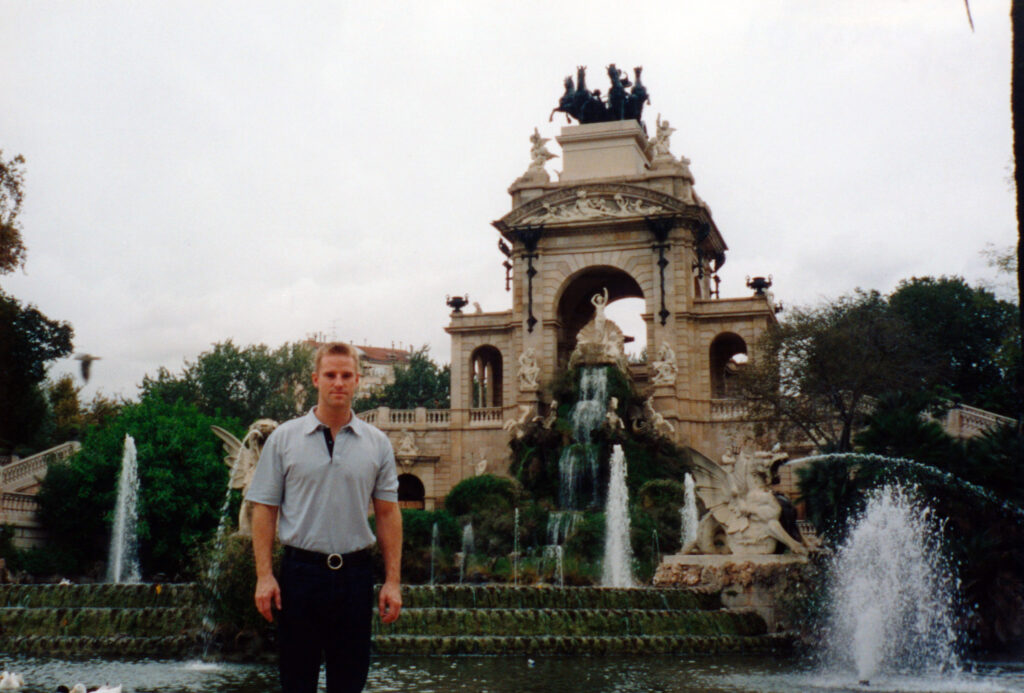 The Cascada Monumental in Parc de la Ciutadella
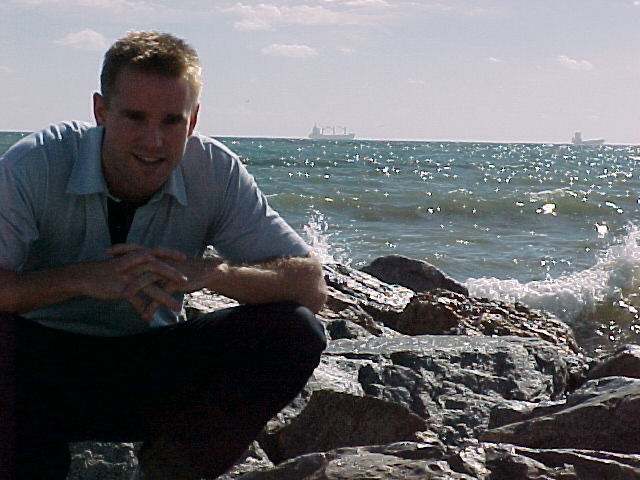 Barcelona’s shoreline
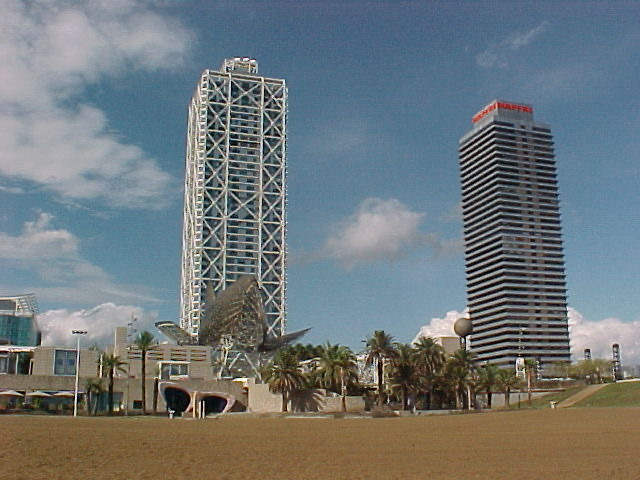 New Barcelona rising tall at the shore
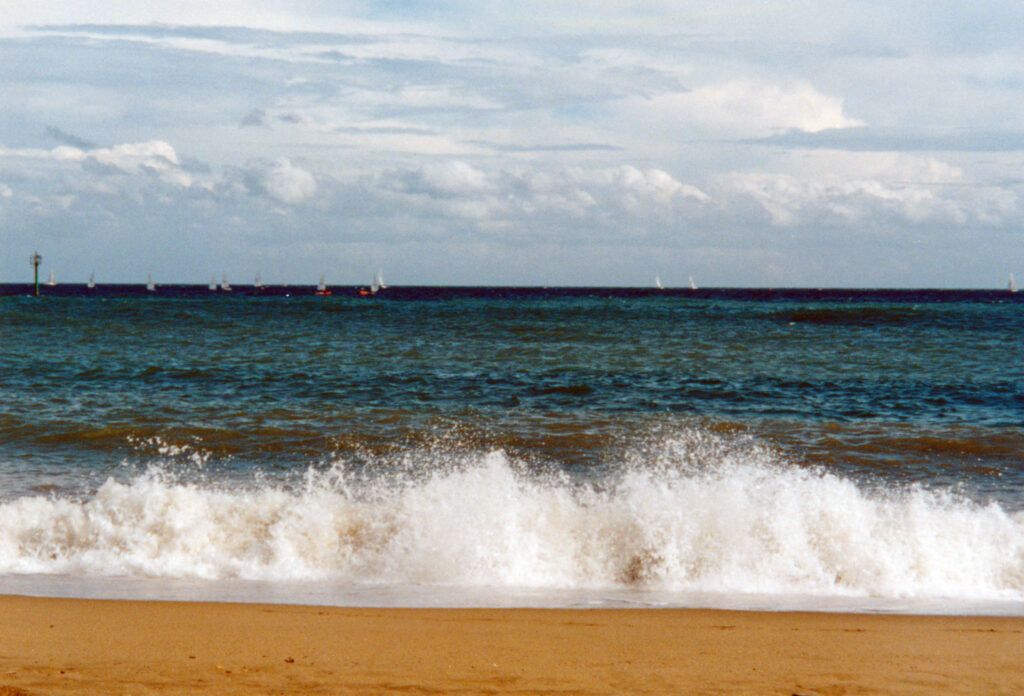 October surf rolling onto Barcelona’s Mediterranean shore
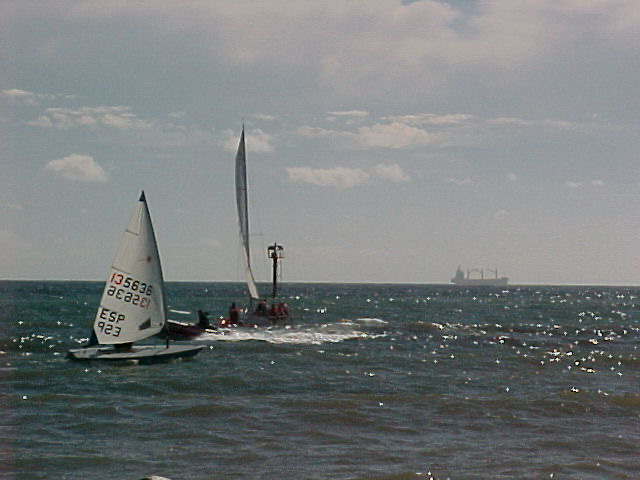 Sailboats dancing across the Mediterranean
From Picasso to the Mediterranean
Heading toward the water took us through another piece of Barcelona’s artistic history, Parc de la Ciutadella.
Its enormous Cascada Monumental was designed by Josep Fontserè in the 1870s, with a young Antoni Gaudí assisting on parts of the project. Long before the buildings that would make him famous, Gaudí was already leaving fingerprints on the city.
From there, we kept walking until Barcelona opened onto the Mediterranean.
The temperature was somewhere in the 70s, which apparently qualified as winter to the locals. I grew up in Pittsburgh and spent years swimming competitively — a sport perversely conducted during actual winter — so as long as the Mediterranean remained liquid, I considered it swimmable.
I stripped down and dove in.
Coming back out of the water, I was immediately reminded that Barcelona’s relationship with the Mediterranean was much newer than it looked. For much of its modern history, the city had been cut off from the waterfront by rail lines, industry and port facilities. The 1992 Olympics changed that dramatically, opening the city back toward the sea with new beaches, the Olympic Village and Port Olímpic.
Only nine years later, much of it still looked brand new. It was a striking contrast: behind me, the old Barcelona of Gothic streets, Picasso and Gaudí; in front of me, a city that had just reinvented its entire waterfront.
Montjuïc: The City from Above
From the shoreline we headed up Montjuïc, the broad hill rising above Barcelona’s harbor.
Even the climb revealed another layer of the city’s history. The Palau Nacional had been built as the monumental centerpiece of Barcelona’s 1929 International Exposition and later became home to the Museu Nacional d’Art de Catalunya. Within only a few miles, Barcelona seemed to move effortlessly from medieval streets to nineteenth-century industrial expansion, Modernisme, world’s-fair grandeur and the very recent architecture of the 1992 Olympics.
Higher still stood Castell de Montjuïc, which in 2001 was still home to the city’s military museum.
The fortress had originally been built to defend Barcelona during the Catalan Revolt in the seventeenth century, but over time its purpose became considerably more complicated. After the Bourbon victory of 1714, Montjuïc increasingly became a way to control the city below rather than protect it. During the nineteenth century, Barcelona was actually bombarded from the hill three times and the castle later became notorious for political imprisonment and executions.
Not exactly the scenic overlook I had expected. But the view finally gave me a sense of Barcelona’s true scale.
For some reason, I had arrived expecting something closer to a picturesque Mediterranean resort city. Instead, an enormous, dense metropolis spread below me — industrial and elegant at the same time, packed between the mountains and the sea.
Barcelona suddenly felt much bigger than a weekend.
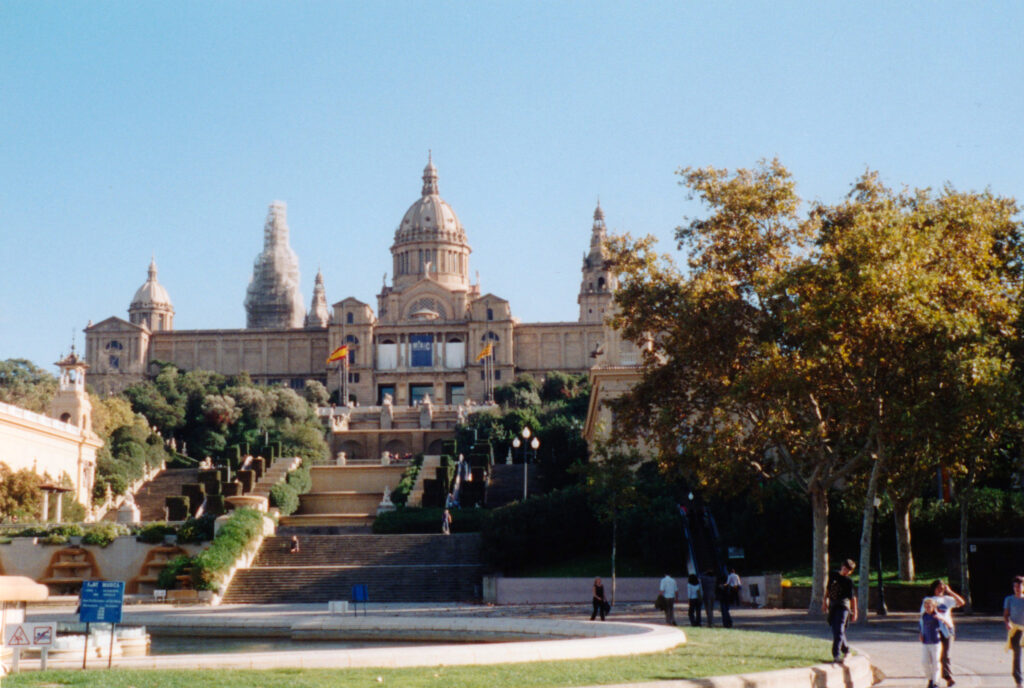 The Palau Nacional rising over Montjuïc
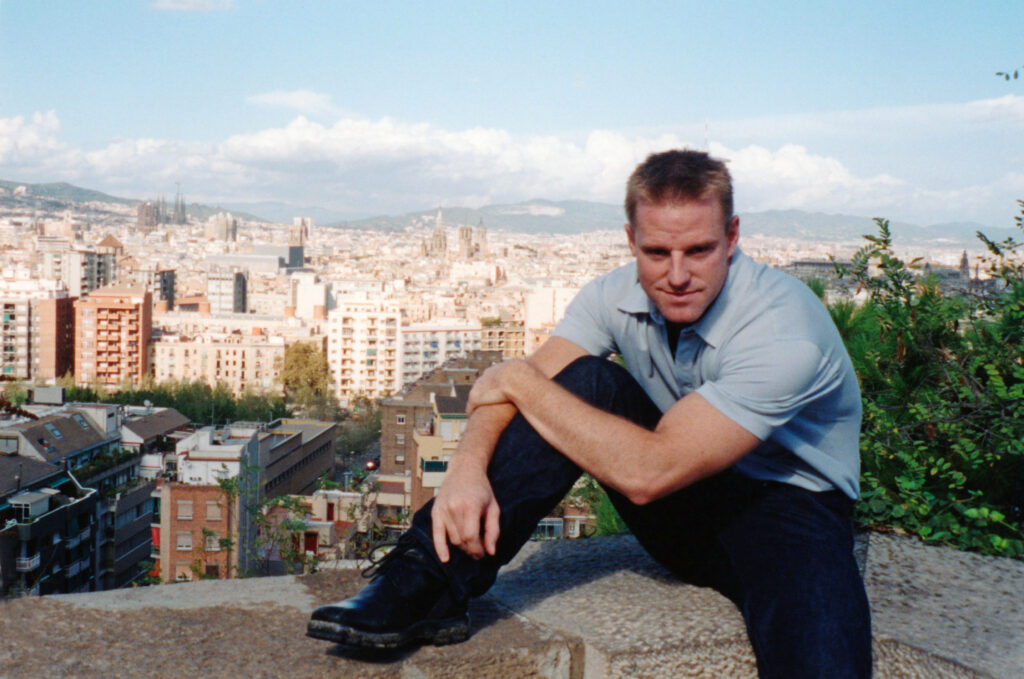 Sitting above Barcelona on Montjuïc
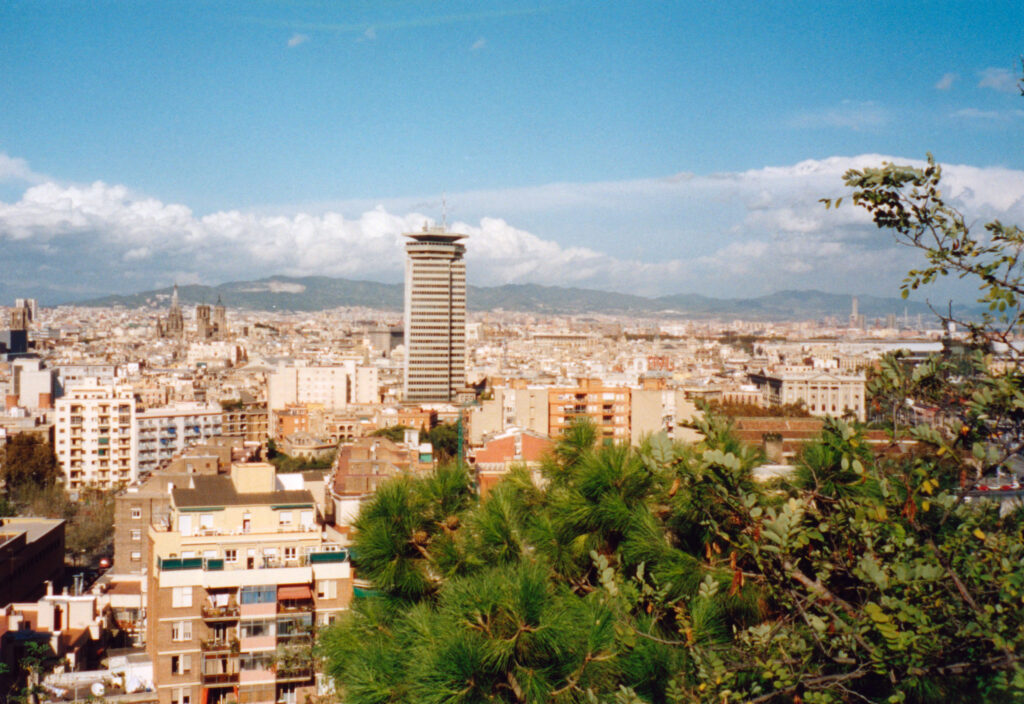 Barcelona spreading toward the mountains from Montjuï
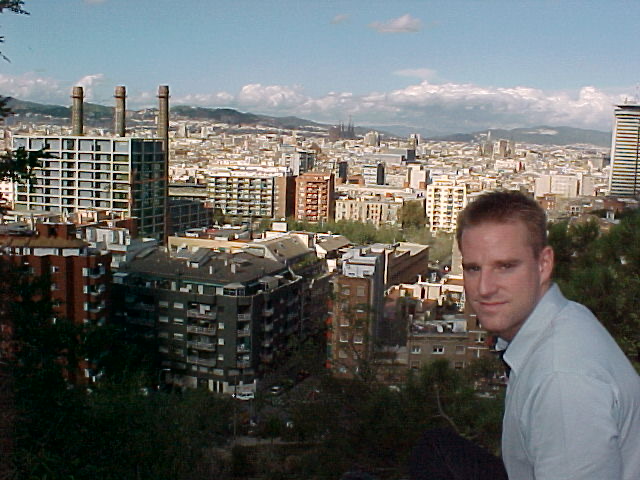 Another view across Barcelona from Montjuïc
A City Missing Corners
Walking back through Barcelona, I began noticing something unusual about the streets themselves.
The blocks weren’t quite square. Every corner had been sliced off at a 45-degree angle, turning what should have been an ordinary four-way intersection into something closer to a small public square.
There was a reason for it.
When Barcelona finally demolished its medieval walls in the 1850s, the city suddenly had an enormous amount of room to expand. Barcelona held a competition for the new district, which was won by architect Antoni Rovira i Trias — only to have the Spanish government overrule the city and impose a radically different plan by engineer Ildefons Cerdà.
Cerdà laid out the Eixample as an enormous grid of nearly square blocks, but chopped off all four corners of each one. The chamfers improved visibility and gave carriages more room to turn while allowing more light and air into the intersections. The unintended aesthetic benefit is even better: Barcelona essentially gets a little plaza every time two streets cross.
It was one of those ideas that seemed completely obvious once I saw it, which is usually the mark of very good design. I admired Cerdà’s urban planning all the way back to my hotel, where I decided to embrace another local innovation considerably more enthusiastically.
The siesta.
Why not? The stores were closed, the city had gone quiet and everyone else seemed to be doing it.
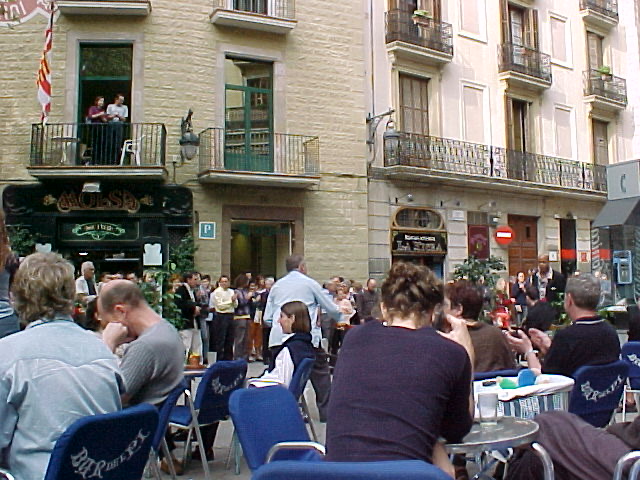 Sunday brunch, art for sale and Barcelona settling into its day
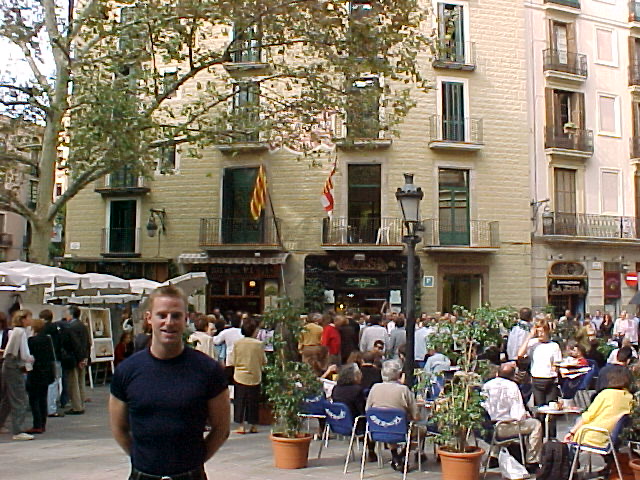 Musicians filling the streets and squares
Sunday with Gaudí
Sunday was Gaudí day.
The morning began slowly over Spanish pastries, chorizo and coffee strong enough to wake me from a coma in a cafe surrounded by artists selling their work and musicians playing in one of Barcelona’s public squares.
Then we headed for Casa Milà.
When a Building is Sculpture
Casa Milà — better known as La Pedrera — looks like someone took an apartment building and melted it slightly.
Gaudí designed it between 1906 and 1912 for businessman Pere Milà and his wife, Roser Segimon. It became his last major secular building and one of his boldest architectural experiments, using columns instead of conventional load-bearing walls to create unusually flexible interior spaces.
Its nickname, La Pedrera, roughly “the stone quarry,” was originally more insult than compliment, aimed at the building’s massive, irregular stone façade.
Then you reach the roof.
Chimneys, stair towers and ventilation shafts rise above the building like warriors, masks and abstract sculptures. Gaudí wasn’t simply disguising mechanical equipment; he seemed unwilling to accept that anything functional had to be ordinary.
And from up there, Barcelona suddenly arranged itself into an architectural timeline. Gaudí’s early-twentieth-century forms filled the foreground while the Hotel Arts and Torre Mapfre — products of the city’s 1992 reinvention — rose beside the Mediterranean in the distance.
A century of architectural ambition in a single view.
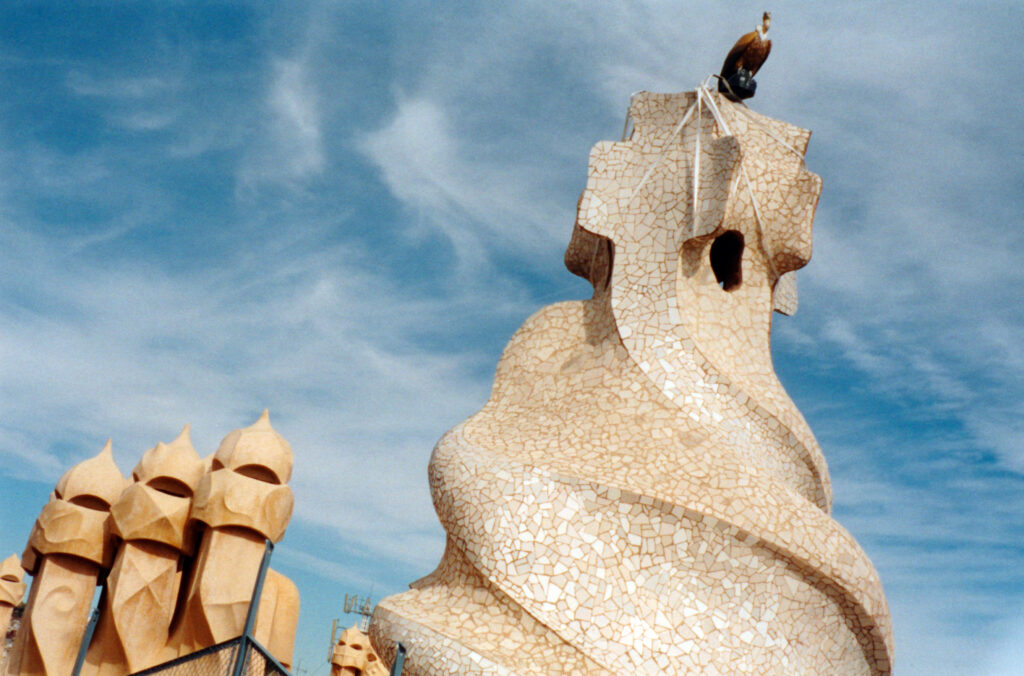 Gaudí’s rooftop chimneys and ventilation towers at La Pedrera
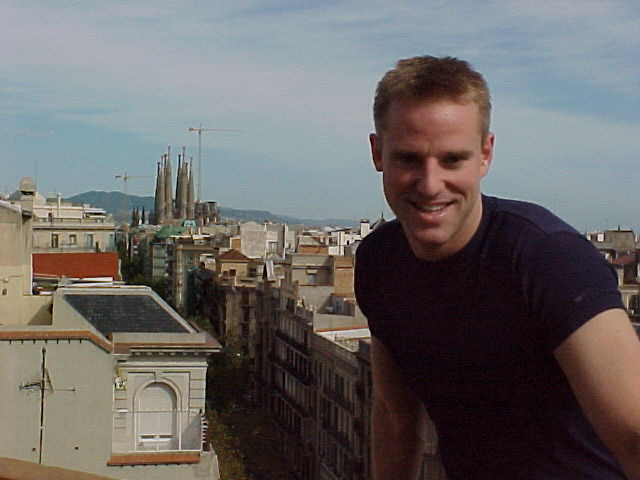 From the roof of La Pedrera with Sagrada Família rising in the distance
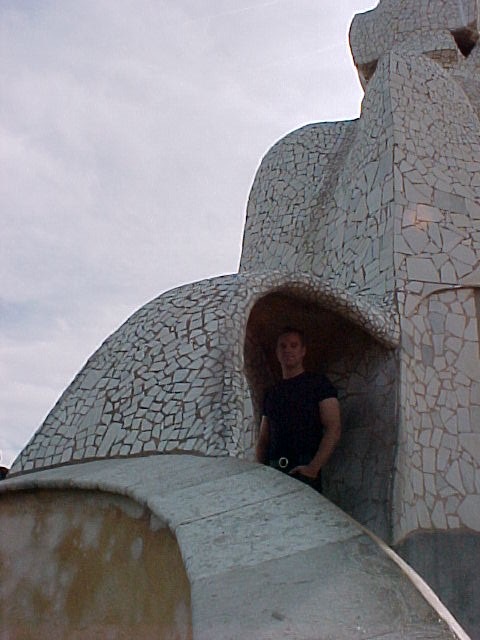 La Pedrera: a roof also made for the perfect pose
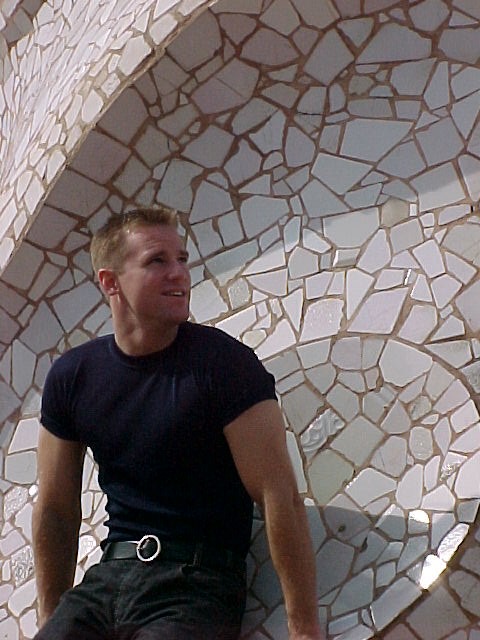 La Pedrera: a roof also made for the perfect pose
Sagrada Família: Building the Impossible
From La Pedrera we headed toward the project that eventually consumed Gaudí’s life: the Basílica de la Sagrada Família.
Construction had begun in 1882 under architect Francisco de Paula del Villar, but Gaudí took over the following year and radically transformed the project. By 1914 he had abandoned almost all other work to devote himself to the basilica, yet when he died in 1926, only one of the eighteen towers he envisioned had been completed.
In 2001, Sagrada Família was still unmistakably a construction site. Cranes hung above the towers, large portions of the interior remained unfinished and new stonework seemed to emerge from scaffolding in every direction — which somehow made the whole thing even more extraordinary.
The Nativity façade felt less like the exterior of a conventional church than an ecosystem rendered in stone. Human figures emerged from leaves, animals appeared between saints, columns branched like trees and almost every surface seemed to be growing, twisting or moving.
I felt like I had wandered onto the set of a Tim Burton film.
Visitors could still climb high into the completed towers, which we naturally did, winding upward through narrow passages until Barcelona opened beneath us all the way to the Mediterranean. From that height, the cranes and unfinished sections became part of the experience rather than an intrusion on it.
What struck me most was that I wasn’t really visiting a historic monument in the conventional sense. Most of Europe’s great cathedrals had been finished centuries before I arrived; this one was still being shaped around me.
I was visiting history while it was still being built
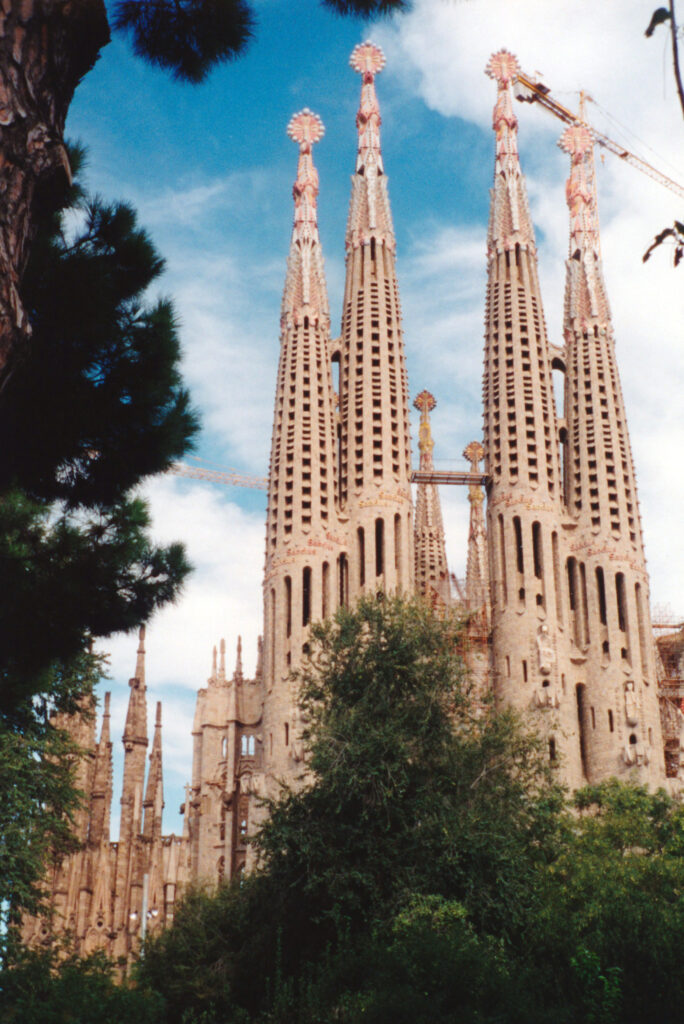 Gaudí’s original towers rising through the trees
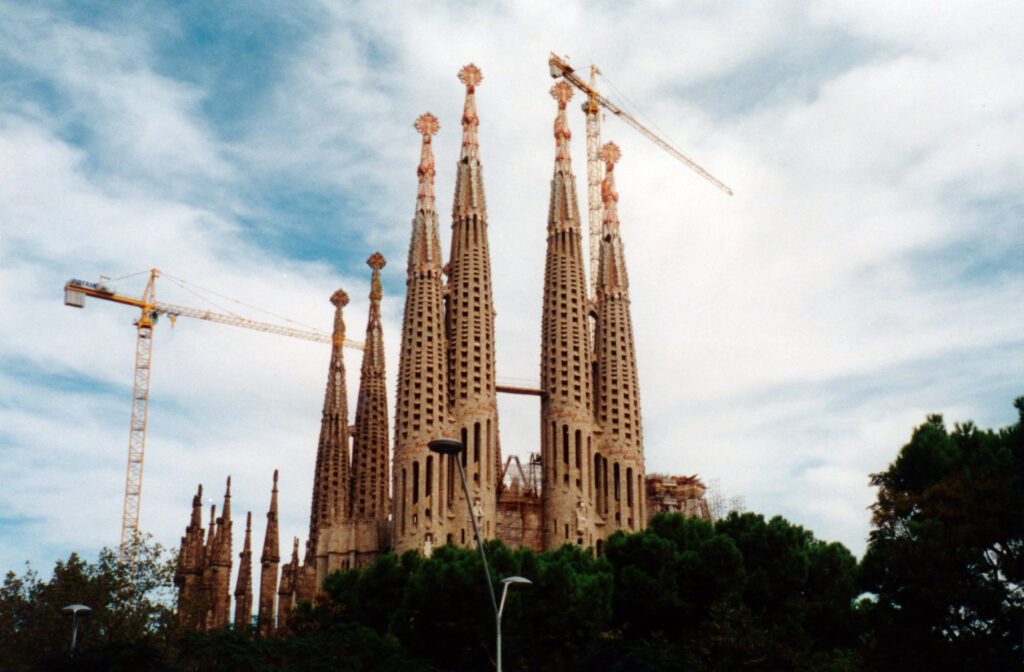 Sagrada Família under construction in 2001
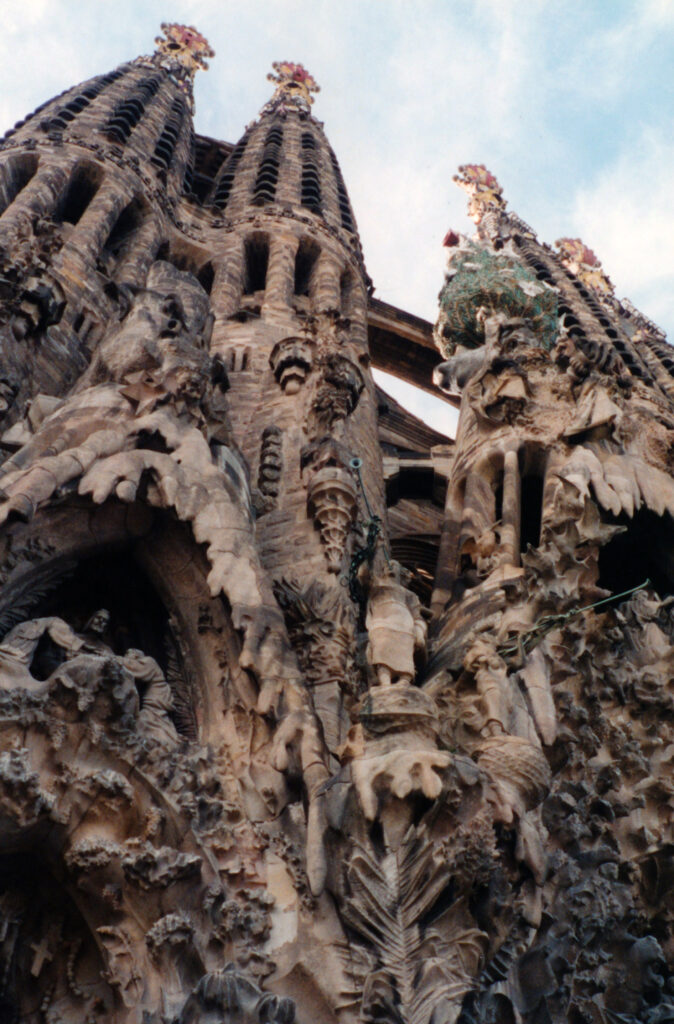 The Nativity façade, where biblical scenes, plants, animals and stone seem to grow together
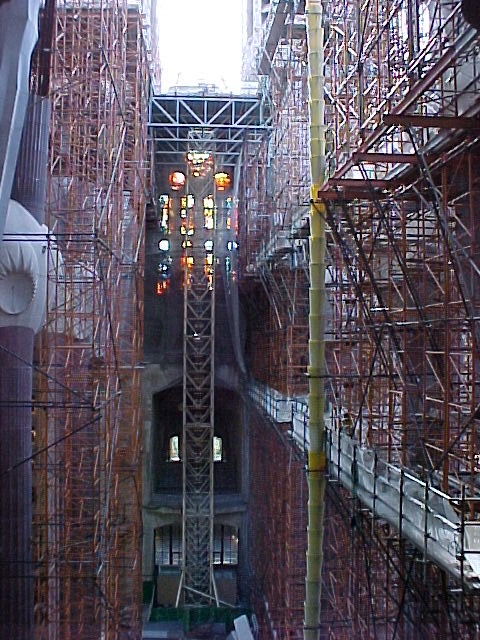 Sagrada Família still very much under construction
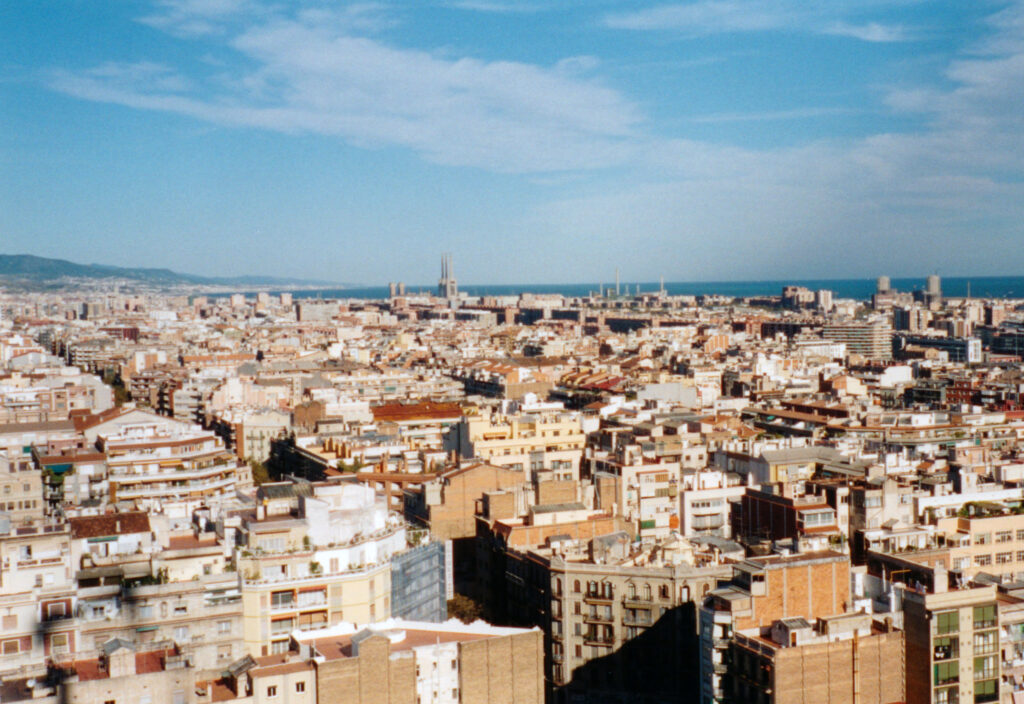 Looking across Barcelona toward the Mediterranean from Sagrada Famíli
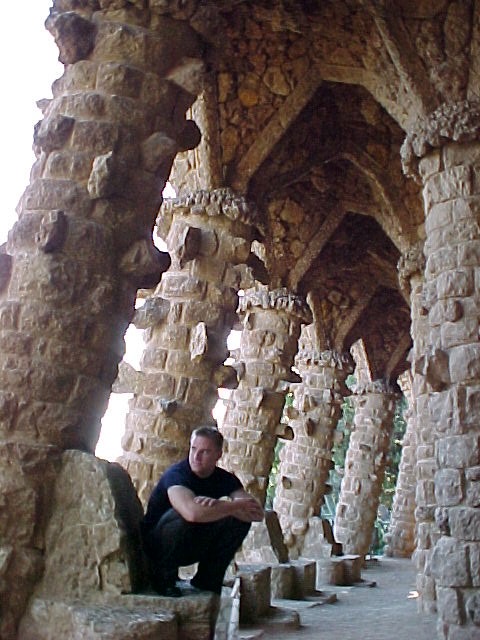 Park Güell
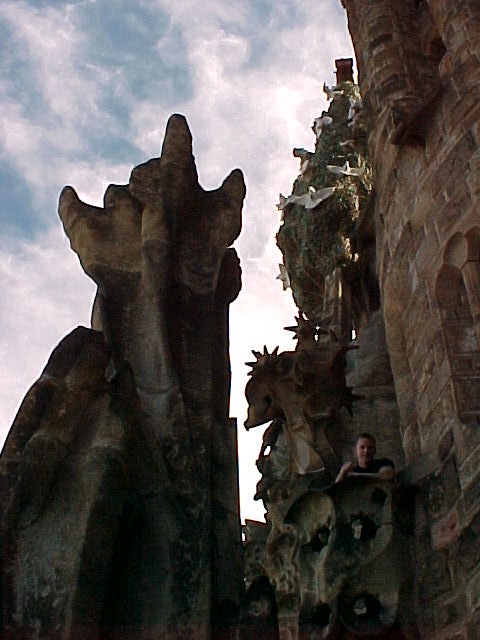 Climbing through the Sagrada Família, surrounded by Gaudí’s sculptural stonework
Park Güell: Gaudí’s Beautiful Failure
Our last major Gaudí stop took us farther uphill to Park Güell, which, despite the name, had never been intended as a park at all.
Industrialist Eusebi Güell hired Gaudí in 1900 to create an exclusive residential development inspired by the British garden-city movement. The plan called for roughly sixty large home sites woven into landscaped roads, viaducts and public spaces, all positioned to preserve views across Barcelona and toward the Mediterranean.
It was a spectacular real-estate failure.
The location was difficult to reach, the restrictions on building were extensive and buyers simply never materialized. Only two of the proposed houses were completed before the project was abandoned in 1914; Barcelona later acquired the property and opened it as a public park in 1926, turning a failed subdivision into one of the city’s most distinctive public spaces.
What survived is probably more interesting than the neighborhood ever would have been. Rather than flattening the hillside, Gaudí designed around it, creating stone columns, paths and viaducts that appear to grow directly out of the landscape. Architecture, engineering and nature keep trading places until it becomes difficult to tell where one ends and another begins.
By the time we finished wandering through Park Güell, Gaudí no longer seemed like an architect whose buildings I had come to see. He felt more like an artist who had somehow been given an entire city as his medium.
A Weekend Was Never Going to Be Enough
By Sunday evening I had reached the same conclusion I had in Paris: two days were nowhere near enough. Barcelona was too large, art and history too extensive and the nightlife apparently operating on a schedule designed specifically to defeat me.
But that was also the great luxury of living in London. Most of Europe was suddenly close enough that I didn’t have to conquer a city in one trip. Barcelona didn’t need to be completed.
I would simply come back.
Looking Back from 2026: The City as an Art Lesson
Looking back twenty-five years later, what stands out is how perfectly that weekend captured what I was beginning to love about traveling while living in Europe: arriving somewhere because of one interest and leaving with an entirely different understanding of the place.
I had gone to Barcelona because I loved art. I wanted Picasso and Gaudí. Instead, the city connected them for me.
Picasso’s work made more sense after seeing the Barcelona where he became an artist. Gaudí’s buildings made more sense after seeing a city that had repeatedly reinvented itself — through the 1888 Universal Exposition, Modernisme, the 1929 International Exposition and the 1992 Olympics — without completely erasing what came before.
Even the things I didn’t know enough to appreciate at the time now fit into the story. The fountain where I posed in Parc de la Ciutadella had been touched by a young Gaudí. The beaches I treated as timeless Mediterranean Barcelona were largely the product of an urban transformation less than a decade old. The fortress I joked about for bombing the city represented centuries of tension between Barcelona and the governments that controlled it.
And the city I left in 2001 convinced that a weekend could never be enough eventually got its second visit. I returned with Ramiro in 2024, this time with three weeks, peak summer weather and enough time to explore Barcelona, far more deeply before continuing down the Garraf Coast, and north along the Costa Brava.