I am only in Singapore for 28 hours, which is nowhere near enough time to understand the culture of an island, city, state and country all rolled into one.
It is, however, apparently enough time for me to develop opinions.
Singapore is my first real encounter with Asia, and almost immediately it collides with whatever vague picture of Asia I have constructed in my head. I expected something unfamiliar and perhaps a little difficult to navigate. Instead, I arrive in one of the most organized, modern and English-friendly cities I have ever visited.
Skyscrapers dominate the skyline. Global brands are everywhere. Shopping malls seem less like individual buildings than a connective tissue holding the city together. English appears on signs everywhere, although Singapore actually has four official languages: English, Malay, Mandarin and Tamil.
At first I interpret all of this modernity as somehow making Singapore less Asian. I am beginning to suspect that might say more about my expectations than it does about Singapore.
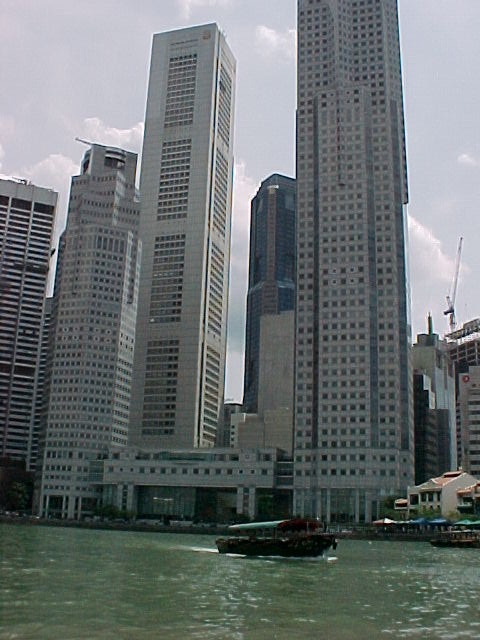 The modern financial district seen from the river that created it.
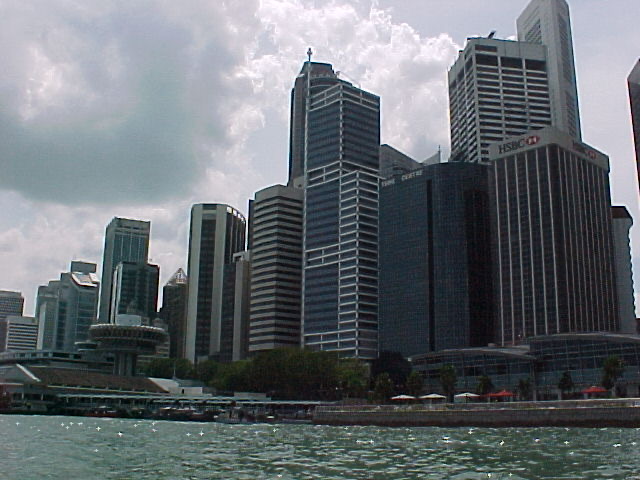 Singapore’s financial district rises directly from the waterfront, a skyline built around the trade that has defined the city.
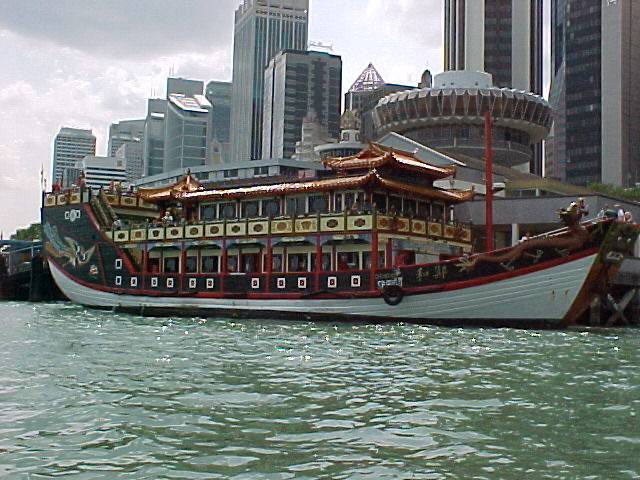 Singapore’s towers and river traffic — nearly two centuries of the same basic business model expressed in completely different architecture
The Luxury City Tour
Normally I travel with a Lonely Planet pocket guide folded open to one of its walking tours, using it to tell me not only where to go but why what I am looking at matters. With only 28 hour layover from Sydney back to London I didn’t grab one. Also, the equatorial heat at sea level isn’t conducive to long walks outside.
Instead, I grabbed one of those glossy magazines hotels used to leave in the room showcasing local attractions, maps and excursions. I do the unthinkable.
I book a guided bus tour.
The optimistically named Luxury City Tour immediately reminds me why I normally explore cities on foot. Everything arrives through a bus window accompanied by a cheerful script, and the city is presented less as a place to understand than as a very successful product.
Still, with only 28 hours, the tour has one undeniable advantage: efficiency.
And Singapore clearly understands efficiency.
Orchids and the Garden City
Our first stop is the National Orchid Garden, which initially strikes me as an unusually gentle choice for one of the city’s premier attractions.
Then I start learning what the gardens actually represent.
The National Orchid Garden is part of the Singapore Botanic Gardens, established at its present site in the 1800s. The gardens were never simply decorative. British-trained botanists used them to experiment with commercially valuable tropical plants, and their work helped spread rubber cultivation throughout Southeast Asia, transforming the region’s economy. Orchid breeding began here in earnest in the 1920s, eventually helping create another important Singapore industry: tourism. The National Orchid Garden itself opened only in 1995.
Singapore’s obsession with greenery is equally deliberate. Beginning in the 1960s, the government made tree planting and landscaped public space part of the country’s development strategy. The result is a strange but increasingly appealing combination: one of the most intensely urbanized places on earth that has also decided plants are infrastructure.
Suddenly the orchids seem less frivolous.
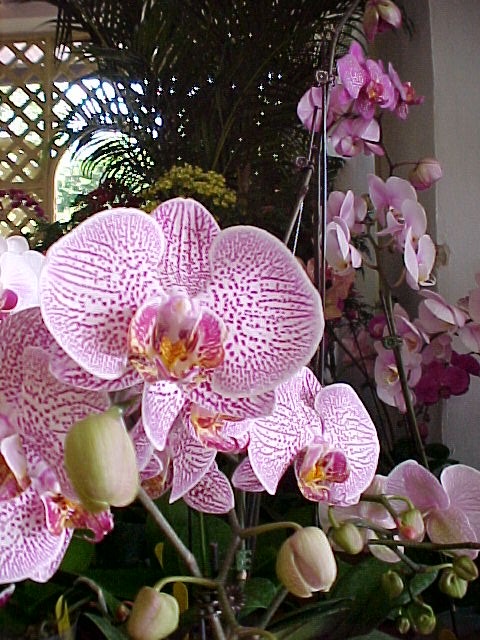 Orchids at the National Orchid Garden
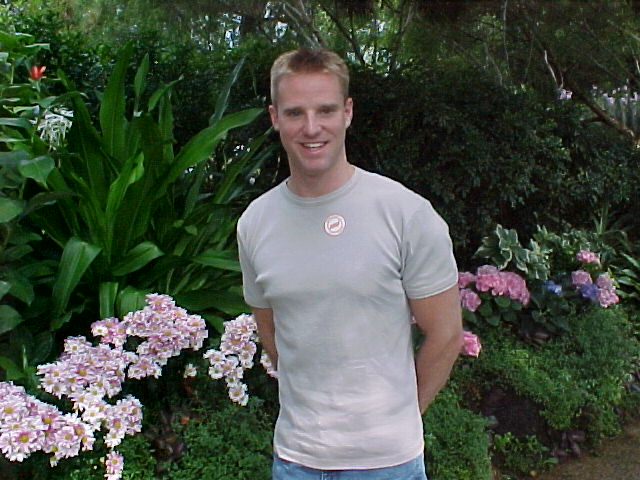 Discovering that Singapore takes its orchids very seriously
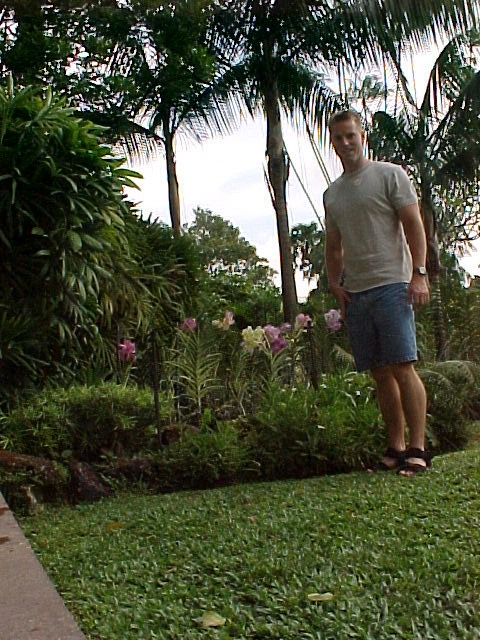 Tropical landscaping inside the Botanic Gardens
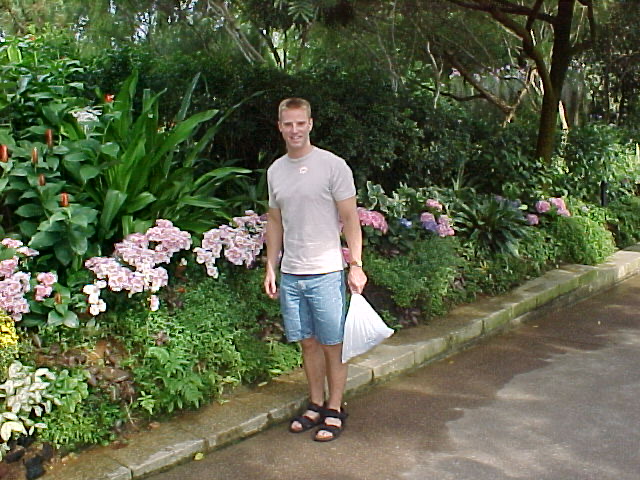 Proof that I survived an attraction devoted almost entirely to plants
Finding Older Singapore
The city tour next takes us through Chinatown and Little India, treating them as parallel “ethnic districts.” Their histories turn out to be considerably more interesting than that shorthand suggests.
Chinatown does trace much of its geography to the colonial town plan drawn up after the British established their settlement. Raffles divided the growing town into areas associated with different communities, and the Chinese settlement expanded southwest of the Singapore River into what became a dense neighborhood of merchants, laborers, temples and shophouses. Different streets were associated with different dialect and clan groups, creating a social geography within Chinatown itself.
Little India developed differently. It was not actually designated as the Indian quarter in Raffles’ town plan. The community grew around Serangoon Road as Indian workers, traders and families were drawn to industries here. The name “Little India” is comparatively recent, for much of its history the district was simply Serangoon.
This is finally the Singapore I want to slow down and explore. The streets narrow, shophouses replace office towers, temples appear between stores and markets, and several cultures seem to be occupying the same few blocks simultaneously.
I buy Chinese porcelain, a wooden Indian vase and a pair of metal meditation balls. My bargaining technique remains hopelessly simple: I see something I like, ask how much it costs and buy it, which probably makes me the easiest customer in Singapore.
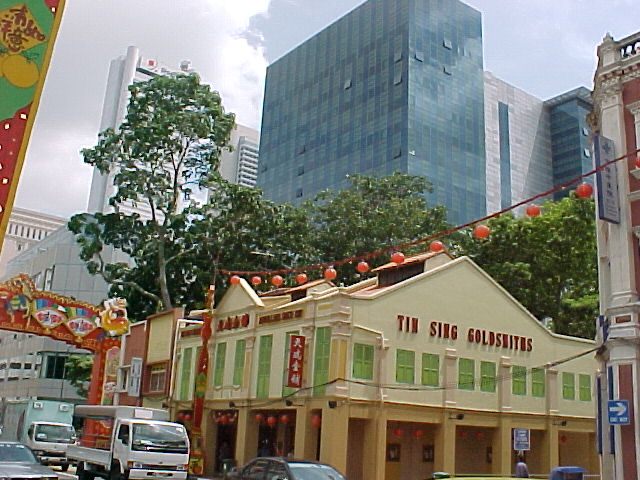 Traditional shophouses, Chinese signage and lanterns sitting almost defiantly beneath Singapore’s modern towers
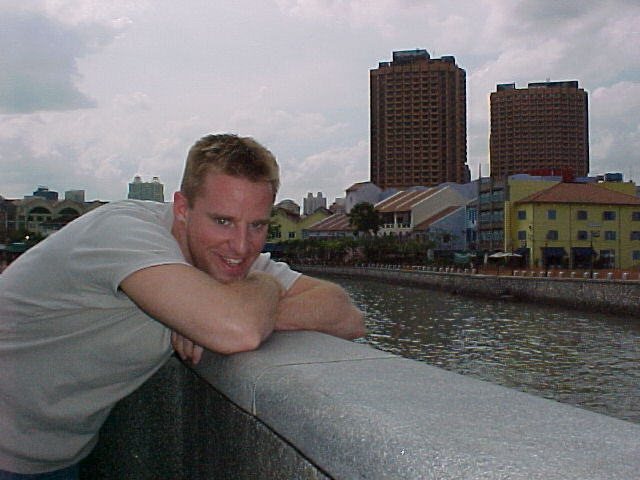 Along the Singapore River with Boat Quay behind me, where warehouses and commerce once crowded the waterfront
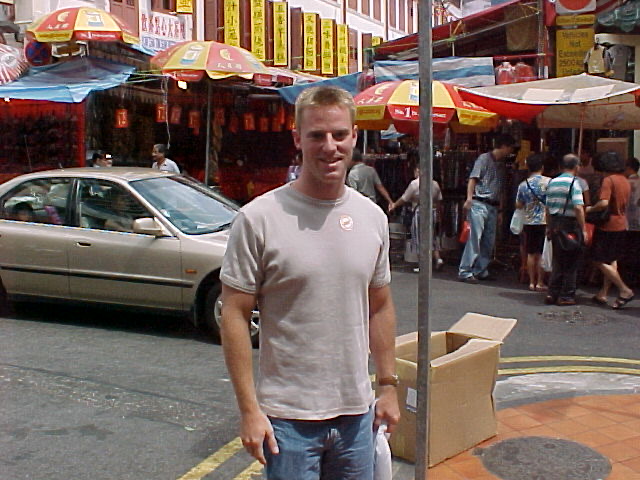 Exploring Chinatown, where the scale and rhythm of the streets finally feel completely different from Singapore’s financial center.
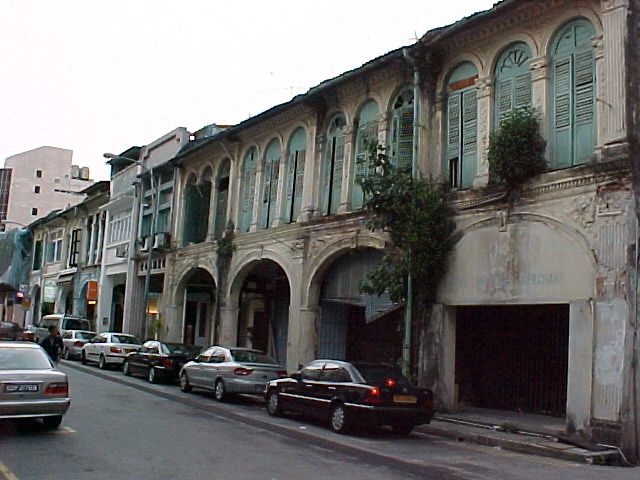 Weathered shophouses preserve an older layer of Singapore behind the glass-and-steel city.
Raffles, the Merlion and a Strategic Anniversary
Downtown introduces me to two names I barely knew this morning and will apparently know very well by tonight: Merlion and Raffles.
The Merlion looks ancient enough to demand an elaborate legend, but it is actually one of Singapore’s newest traditions. The half-fish, half-lion creature was designed in the 1960s as the logo of the Singapore Tourist Promotion Board. Its fish body represents Singapore’s relationship with the sea, while the lion refers to Singapura, or “Lion City.” The statue itself was installed at the mouth of the Singapore River in the early 1970s.
It needs a better legend, though, so I’ll just invent that it has been guarding the harbor against pirates for centuries.
Raffles is another matter entirely, and by pure coincidence I am visiting on a surprisingly important anniversary.
Exactly 183 years ago today, on February 6, 1819, Stamford Raffles signed an agreement with Sultan Hussein Shah of Malisia, allowing the British East India Company to establish a trading post here. It did not instantly turn Singapore into a British colony, full British sovereignty came later.
Raffles’ great insight was geography. Singapore sits beside the Strait of Malacca at one of the most important maritime crossroads on earth, linking the Indian Ocean with the South China Sea and the trading worlds of Europe, India, China and Southeast Asia. By making Singapore a free port, the British created a magnet for ships, merchants, capital and immigrants from across the region.
That decision explains far more of the city in front of me than any heroic statue does.
Geography still matters. The ships have been joined by airplanes, but Singapore remains a natural crossroads between Europe, Asia and Australia. Changi Airport has become one of Asia’s great aviation hubs, which helps explain why getting here from almost anywhere seems remarkably easy. More on that later.
The colonial story is also considerably messier than the tour guide’s script, which seems to imply everyone was delighted to be conquered and “civilized.” The Japanese capture of Singapore in 1942 shattered Britain’s aura of invincibility in Asia, even though British rule resumed after the war. Singapore gained self-government in 1959, became part of the newly formed Malaysia, eventually separating from Malaysia to become an independent country in the 1960s.
The remarkable modern city around me has therefore been built primarily in the few decades since independence, not simply handed intact from Britain to Singapore.
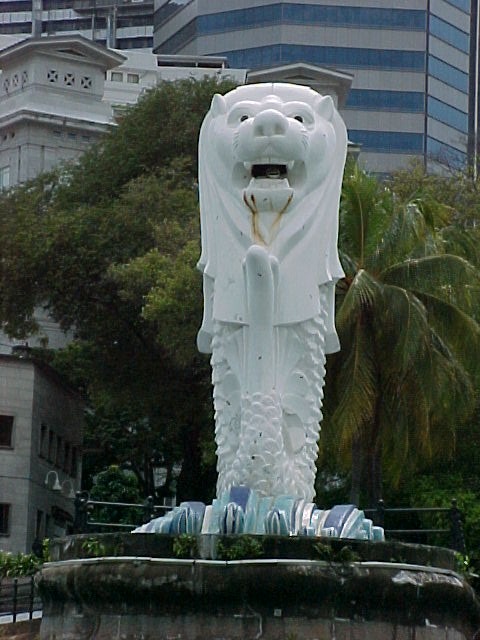 The Merlion — not an ancient guardian after all, but a remarkably successful piece of 20th-century Singapore branding
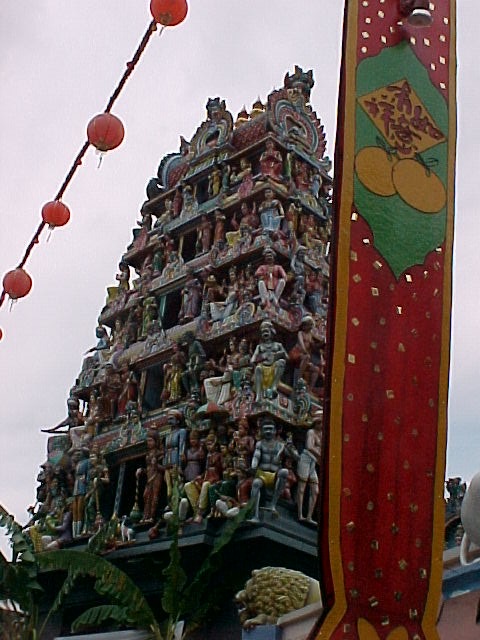 Sri Mariamman Temple rises above Chinatown
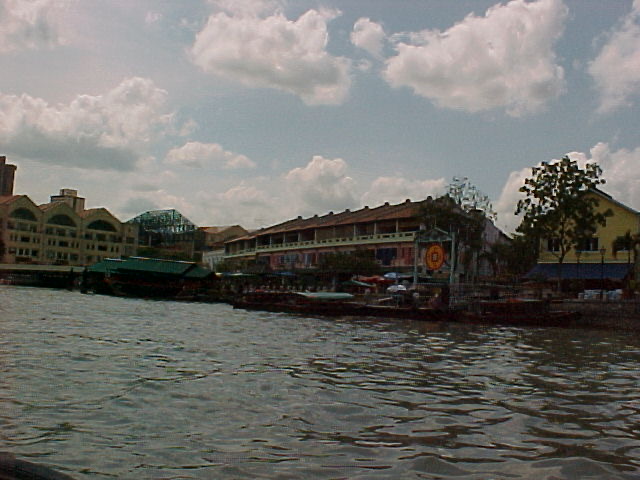 The old quays from the river, their former warehouses already reinvented as restaurants and nightlife.
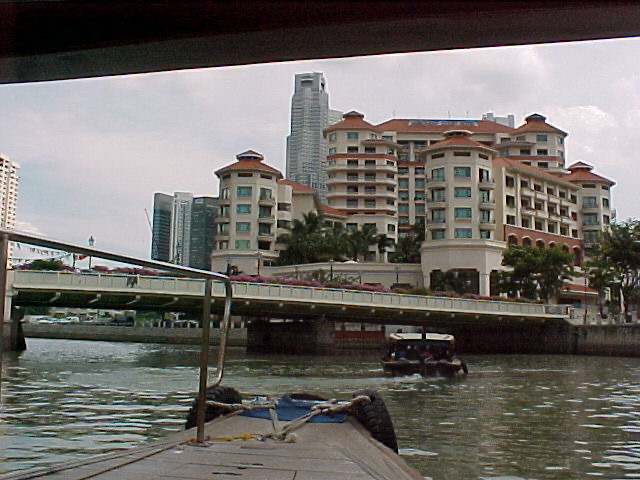 Riding a bumboat along the Singapore River, following the route that once moved cargo through the city
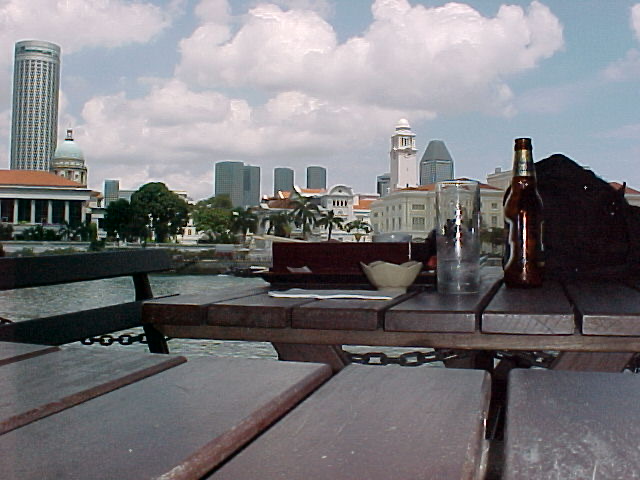 Lunch beside the Singapore River, with the civic district beyond
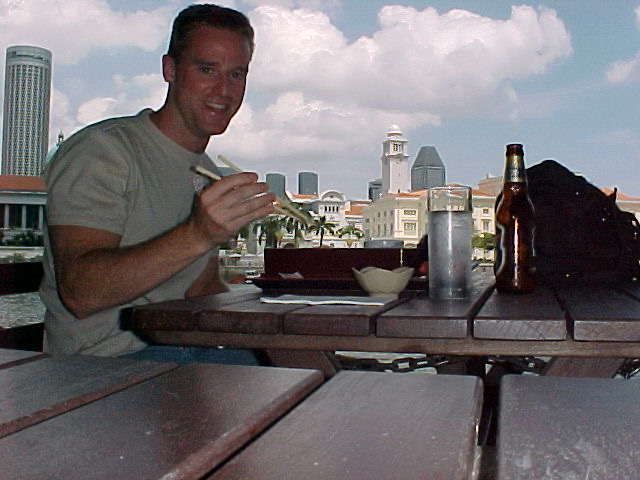 Eating sushi on the harbor.
Abandoning the Tour
I finally discover that the remaining stops on my “Luxury City Tour” are shopping malls and a diamond-manufacturing facility.
This seems like an excellent moment to escape.
I sneak off instead toward the Singapore River and Boat Quay, where the city immediately becomes easier to understand.
The river is essentially the reason modern Singapore exists where it does. Raffles insisted that the commercial center be built around it, and the swampy south bank was reclaimed in the 1820s to create Boat Quay and what eventually became Raffles Place. Warehouses and shophouses crowded the river while small cargo boats moved goods between ships in the harbor and merchants on shore.
By the 1970s, all that commerce had also turned the river into an open sewer. In 1977, Singapore began an enormous decade-long cleanup, relocating polluting industries and transforming the old working waterfront into the recreational district I am walking through today. If that sounds familiar, maybe it’s because before the Clean Air and Clean Water Acts, many major American cities were in exactly the same, well, boat. Sorry, but that one was too obvious.
The old warehouses are now restaurants and bars. Singapore has retained the physical shell of its trading past while completely changing what happens inside it.
Very Singapore.
I stop for sushi beside the water and then board one of the small river boats for a trip through the old port.
From here the whole city stacks itself vertically: shophouses at river level, colonial civic buildings beyond them, and modern banking towers rising behind everything.
Raffles Hotel and the Invention of Luxury Travel
Late in the afternoon I make my way to Raffles Hotel, which proves to be much more historically interesting than simply “the place named after that guy with the statue.”
The hotel was founded in 1887 by the Sarkies brothers, Armenian hoteliers whose family built some of Asia’s greatest hotels. Its timing was perfect. Steamships and the opening of the Suez Canal had made long-distance travel to Asia dramatically easier, and wealthy Europeans were beginning to travel through the region for pleasure rather than simply trade or imperial administration. Raffles grew from a modest ten-room hotel into one of the grand hotels of the colonial era.
The architecture is almost theatrical: white arcades, dark green shutters, tropical gardens, palms and courtyards creating an idealized version of colonial Singapore that probably never existed quite this perfectly outside the hotel walls.
It is beautiful.
Naturally, after learning all of this history, I decide the culturally responsible thing to do is order a beer.
The bill for the beer comes in at $45.
Apparently the British Empire has discovered a more reliable revenue model.
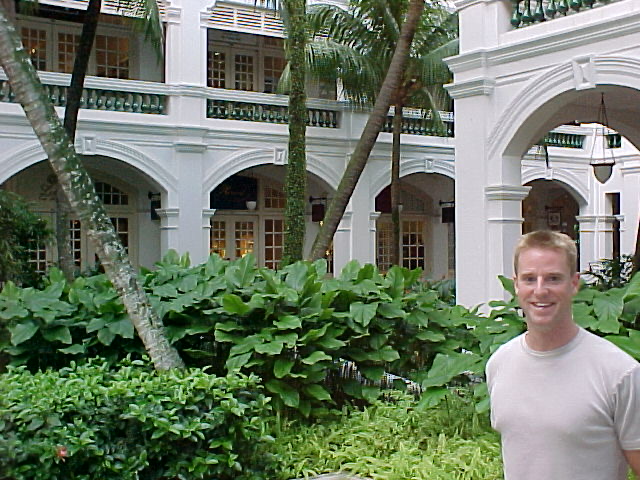 Inside the tropical courtyard at Raffles
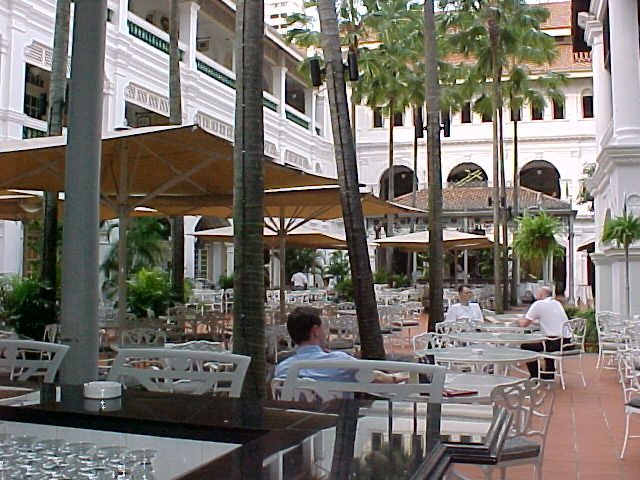 Couryard iside Raffels hotel
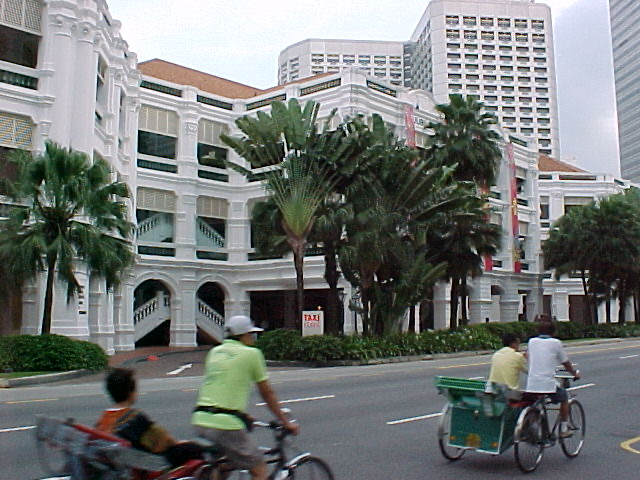 Raffles Hotel, one of the surviving landmarks of Singapore’s colonial-era travel boom
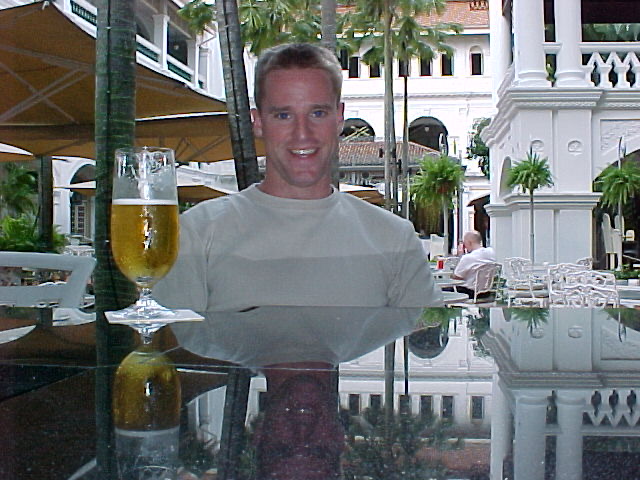 A US$45 beer at Raffles Hotel. At this price I am making absolutely certain it appears in a photograph
Seeing Singapore From the River
I spend the remaining afternoon wandering rather than checking attractions off a list.
That turns out to be the better tour.
Singapore initially struck me as a city where the old had simply been demolished to make room for the new. Walking and boating through it reveals something subtler. The old city is still here in fragments — shophouses, temples, civic buildings, quays and Raffles Hotel — but almost everything has been adapted to serve a country that has transformed itself extraordinarily quickly.
The skyline makes more sense now too. Singapore did not become wealthy despite being a tiny island with few natural resources. Its position as a trading hub is the resource.
Twenty-Eight Hours Later
By the time I head back toward Changi Airport, I know enough to recognize how little 28 hours can tell you about a place.
Changi may also be the only airport I have ever been genuinely excited to arrive at early. It has shops, restaurants and gardens, but more importantly, a 25-meter outdoor swimming pool. Yes, an outdoor swimming pool at an airport. Naturally, I pack my goggles and swim laps before my flight.
Singapore is easy to navigate, intensely commercial and almost absurdly efficient, but I am beginning to realize those things are not substitutes for its culture. They are part of it.
What fascinates me most is how many layers have been compressed onto such a small island: an old Southeast Asian trading port, a British imperial entrepôt, communities built by generations of Chinese and Indian migration, Japanese occupation and war, independence, and then one of the fastest urban and economic transformations anywhere in the world.
I came expecting my first trip to Asia to feel exotic.
Instead, Singapore has given me something more useful: my first evidence that “Asia” is far too large and complicated an idea to carry around as a single expectation.
And if I ever spend serious time exploring this part of the world, Singapore seems like a very good place to begin.
Revisiting This Post in 2026: The Asia I Wasn’t Yet Seeing
The biggest thing I got wrong in 2002 was not a particular fact. It was the frame through which I was looking at the city.
I was equating authenticity with age and expecting “Asian culture” to announce itself through temples, crowded markets, unfamiliar languages and things that looked sufficiently different from Europe or America. When Singapore gave me skyscrapers, English signs, immaculate infrastructure and shopping malls, I interpreted that modernity as the absence of culture.
Singapore’s modernity is part of its culture. This was a trading crossroads long before Raffles arrived, then a British free port drawing migrants from across Asia, and finally a remarkably young independent country that built its success around geography, education, infrastructure and global commerce.
There was one impression, however, that aged exceptionally well: Singapore as a gateway.
I have since flown Singapore Airlines a number of times between Sydney and Europe, and it remains my personal benchmark for what an airline should be. Different rankings produce different winners, but Singapore Airlines remains one of the most decorated carriers in aviation. For my money, it is still the world’s best airline.
And Changi Airport has somehow managed the same trick. In 2002, I was excited to arrive early enough to swim laps before my flight. More than two decades and a great many airports later, it is still the best airport I have ever experienced.